

Clear Business Cards: Impact on Luxury Branding
Most American luxury beauty brands struggle to stand out with generic business cards in a saturated market where first impressions count. Studies show that clear business cards are attracting attention from over 60 percent of premium brands aiming for a high-impact visual identity. For owners passionate about creating memorable connections, the innovative use of transparent materials and light interaction offers a unique way to reflect quality and sophistication that paper cards cannot deliver.
Table of Contents
- Defining Clear Business Cards In Printing
- Visual Effects And Light Interaction
- Differences: Clear, Frosted, And Paper Cards
- Critical Design Strategies For Readability
- Limitations Of Clear Card Materials
- Best Situations To Use Clear Business Cards
Key Takeaways
| Point | Details |
|---|---|
| Clear Business Cards | They offer a modern and luxurious alternative to traditional paper cards, made from transparent plastics. |
| Light Interaction | The unique optical effects of clear materials create brand sophistication and innovative design. |
| Material Selection | Choose the right substrate to enhance the perceived quality and professional identity of the brand. |
| Design Challenges | Focus on typography and readability when designing for transparency and light interaction. |
Defining Clear Business Cards in Printing
Clear business cards represent a sophisticated printing technique that transforms traditional paper-based business communication into a visually striking branding experience. These unique cards are crafted from transparent plastic substrates like PET or PVC, offering a modern alternative to conventional paper cards. Transparent plastic materials enable designers to create business cards with unprecedented visual depth and complexity.
Unlike standard paper cards, clear business cards provide a distinctive aesthetic that immediately communicates luxury and innovation. The transparency allows strategic design elements to interact with light, creating depth and visual intrigue that traditional cards cannot achieve. Printing on these transparent surfaces requires specialized techniques to ensure crisp text and graphics remain legible while leveraging the material’s unique properties.
The technical process of producing clear business cards involves precise printing technologies that maintain print fidelity on non-traditional substrates. Professional printing workflows demand specific calibration to handle transparent plastic materials, ensuring that color, text, and design elements remain sharp and professional.
Pro tip: When designing clear business cards, consider how light will interact with your design to create maximum visual impact and brand memorability.
Visual Effects and Light Interaction
The science of light interaction transforms clear business cards from simple communication tools into sophisticated visual experiences. Thin-film interference plays a critical role in creating stunning optical effects that capture attention and communicate brand sophistication. Different transparent materials produce unique light refractions, allowing designers to strategically manipulate how light passes through and reflects off the card’s surface.
Light behaves in complex ways when interacting with transparent substrates. Scientific principles of light interactions reveal how absorption, reflection, refraction, and transmission can be precisely controlled to create visual depth. Professional designers leverage these principles to craft business cards that shift appearance based on viewing angle, creating a dynamic visual experience that traditional paper cards cannot achieve.
The thickness, texture, and composition of clear business cards directly impact their light-interaction properties. Subtle variations in material density can produce extraordinary visual effects ranging from crystal-clear transparency to frosted, diffused appearances. By understanding how different plastic substrates like PET and PVC interact with light, brands can create business cards that communicate luxury through visual complexity and sophisticated optical design.
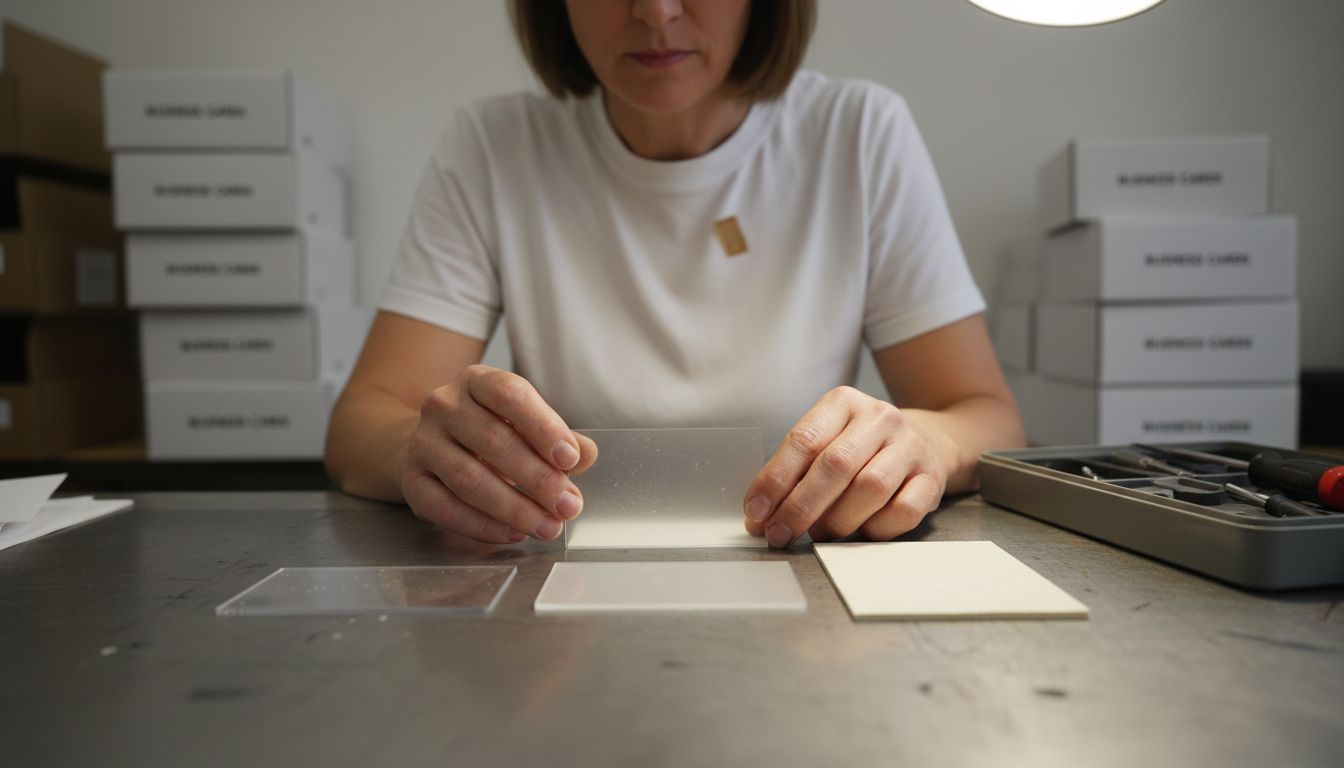
Pro tip: Experiment with card thickness and surface treatments to discover unique light-interaction effects that make your business card stand out from conventional designs.
Differences: Clear, Frosted, and Paper Cards
Business card materials represent far more than simple communication tools, serving as sophisticated brand ambassadors with unique visual and tactile characteristics. Traditional business card stocks offer remarkable diversity, ranging from heavyweight paper to innovative synthetic materials that fundamentally transform how professional identities are perceived. Each material type brings distinctive properties that dramatically influence brand messaging and visual impact.
Clear, frosted, and paper cards diverge significantly in their optical and physical properties. Paper cards leverage natural textures and absorbent surfaces, allowing deep color saturation and intricate print details. Transparent card materials introduce modern complexity, with clear cards emphasizing pure transparency and light transmission, while frosted variants create a softer, more diffused visual experience. These substrate differences enable designers to strategically communicate brand sophistication through material selection.
Material choice directly influences perceived brand quality and professional positioning. Paper cards remain traditional and versatile, offering classic weight and texture. Frosted plastic cards introduce a contemporary, sophisticated matte finish that softens light interaction. Clear cards represent the pinnacle of modern design, providing unprecedented visual depth and a sense of premium innovation that immediately distinguishes a brand from conventional competitors.
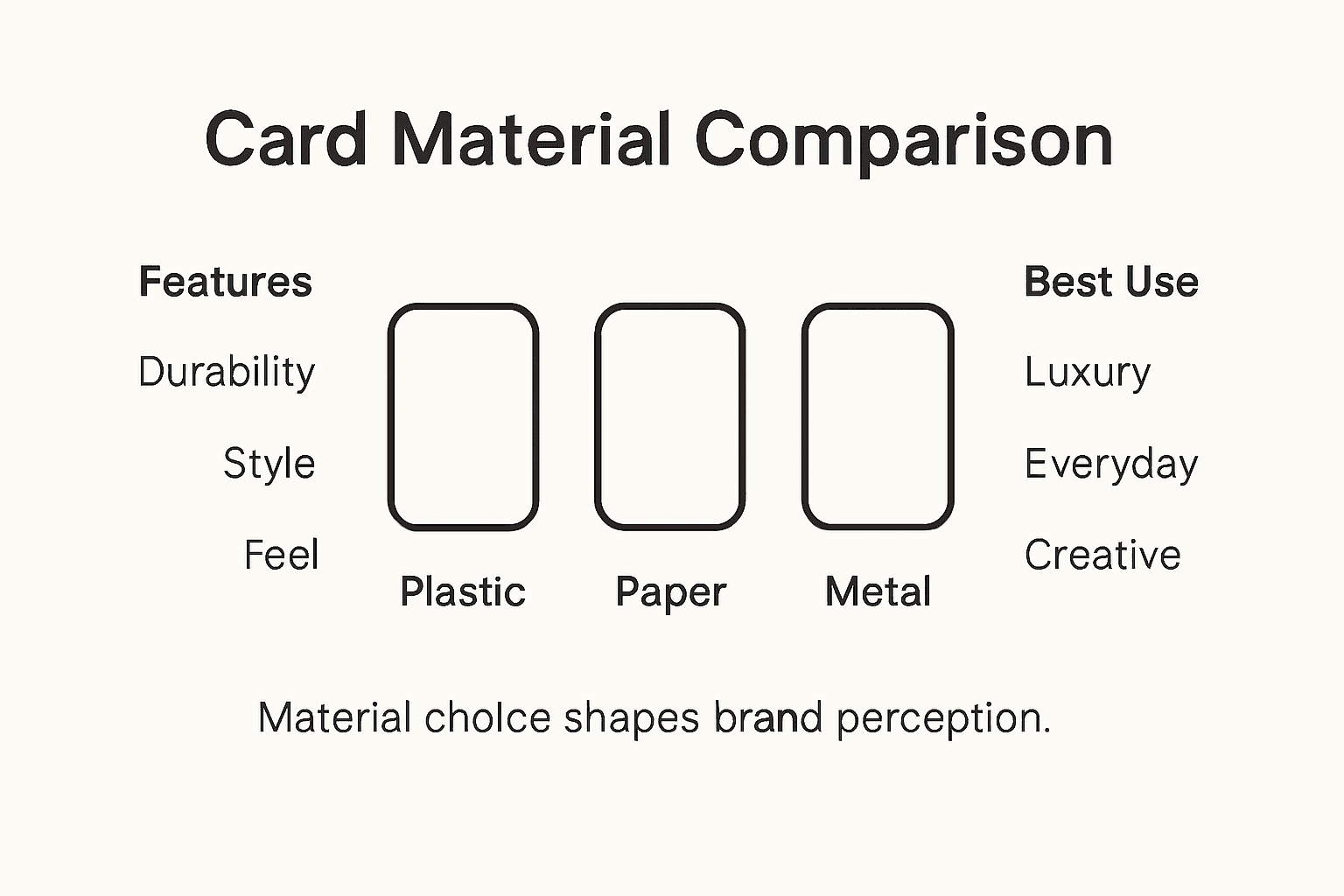
Pro tip: Select your business card material as carefully as you would choose a tailored suit, understanding that each substrate communicates a distinct message about your professional identity and brand perception.
Here’s a comparison to help you choose the best business card material for your brand:
| Material | Visual Impact | Durability | Best For |
|---|---|---|---|
| Clear Plastic | Striking depth, modern | Scratch, UV sensitive | Luxury, tech, creative fields |
| Frosted Plastic | Soft matte, diffused | Moderate scratch resistance | Contemporary, high-end design |
| Paper | Classic, textured | Easily damaged by moisture | Traditional, broad audience |
Critical Design Strategies for Readability
Typography becomes dramatically more complex when designing for transparent business cards. Readability research reveals critical design principles that demand meticulous attention to font selection, contrast, and spatial relationships. Luxury brands must navigate the delicate balance between artistic expression and functional communication, ensuring that every typographic choice enhances rather than obscures the essential information.
The unique challenges of clear and frosted substrates require sophisticated design approaches. Design strategies for technical publications/11%3A_Basic_Design_and_Readability_in_Publications) suggest using strategic layering techniques to maintain text legibility. Designers often employ opaque print layers, carefully selected font weights, and precise color contrasts to ensure that text remains crisp and readable against the transparent background. Sans-serif fonts with moderate weight typically perform best, providing clean lines that cut through potential visual complexity.
Successful readability on clear business cards demands a holistic approach to design. Negative space becomes crucial, with designers carefully managing text placement to minimize visual interference. The transparency of the card itself becomes a design element, requiring thoughtful consideration of how light, background, and printed information interact. Color selection moves beyond aesthetic preference into a strategic tool for enhancing legibility and brand communication.
Pro tip: Create multiple design prototypes and test them under different lighting conditions to ensure your clear business card remains readable in various real-world environments.
This table summarizes key technical design strategies for clear business cards:
| Design Principle | Impact on Readability | Professional Benefit |
|---|---|---|
| High contrast text | Maximizes legibility | Clear communication |
| Opaque print layering | Prevents visual clutter | Enhanced brand clarity |
| Ample negative space | Reduces distractions | Modern, premium appearance |
| Sans-serif font choice | Improves text clarity | Professional, clean look |
Limitations of Clear Card Materials
Plastic substrates introduce sophisticated design possibilities but come with inherent technical challenges that luxury brands must carefully navigate. Business card material characteristics reveal significant limitations in clear card production, ranging from durability concerns to complex printing requirements. These constraints demand strategic design thinking to overcome potential performance and aesthetic drawbacks.
The printing process for clear business cards presents unique technical obstacles. Plastic materials like PVC and PET are non-absorbent, which complicates ink adhesion and print quality. Print production guidelines highlight that these substrates require specialized inks and precise application techniques to ensure crisp, consistent imagery. Traditional printing methods often fail, necessitating advanced techniques like silkscreen or UV printing to achieve professional results.
Environmental and physical durability represent another critical consideration for clear business cards. These materials are more susceptible to scratching, UV degradation, and structural deformation compared to traditional paper cards. Luxury brands must invest in high-quality plastics and protective coatings to maintain the card’s aesthetic integrity. Thickness and flexibility become crucial design parameters, with thin cards risking damage and overly thick cards potentially feeling unwieldy or uncomfortable.
Pro tip: Always request multiple material samples and conduct thorough durability testing before finalizing your clear business card design to ensure it meets both aesthetic and functional standards.
Best Situations to Use Clear Business Cards
Creative industries represent the most natural habitat for clear business cards, where visual innovation speaks louder than traditional communication methods. Business card design strategies demonstrate that certain professional sectors inherently benefit from this sophisticated material choice, particularly those emphasizing cutting-edge design and experiential branding.
Luxury sectors like technology, design, architecture, and high-end consulting gain remarkable advantages from transparent business cards. Professional printing guidelines suggest these cards work exceptionally well in professional environments that prioritize visual storytelling and brand differentiation. Networking events, trade shows, and exclusive industry conferences become ideal platforms where these cards can create immediate conversational value and memorable first impressions.
The strategic deployment of clear business cards requires thoughtful consideration of context and audience. Industries that value visual metaphors and design innovation will find these cards most effective. Graphic designers, digital agencies, boutique consulting firms, and emerging technology companies can leverage the transparent medium to communicate their brand’s commitment to innovation, transparency, and forward-thinking design principles. The card becomes more than a contact medium; it transforms into a miniature brand experience.
Pro tip: Match your clear business card’s design complexity to your professional domain, ensuring the card’s sophistication aligns perfectly with your brand’s visual language and industry expectations.
Elevate Your Brand With Clear Plastic Business Cards
In the luxury branding world, visual impact and material sophistication are key challenges that clear business cards expertly address. With their striking depth and unique light interaction, these cards offer a bold statement about innovation and exclusivity. If you want to overcome common issues like readability and durability while communicating your brand’s premium values, exploring Clear Plastic Business Cards – BcardsCreation is a smart step.
Discover how our design-driven solutions at BcardsCreation combine expert material consultation with controlled production to create unforgettable business cards that truly reflect your brand’s identity. Start your journey today by browsing our full range of Plastic Business Cards – BcardsCreation or contact us to develop a custom piece tailored to your professional needs. Don’t let your business card be just another card – make it an experience that leaves a lasting impression.
Frequently Asked Questions
What are clear business cards?
Clear business cards are unique cards made from transparent plastic materials like PET or PVC that offer a modern alternative to traditional paper cards. They create visual depth and complexity, enhancing brand communication.
How do clear business cards impact luxury branding?
Clear business cards convey sophistication and innovation due to their striking appearance and premium materials. They can differentiate a brand in competitive markets, making a memorable impression at networking events.
What design strategies should I consider for clear business cards?
When designing clear business cards, focus on high contrast text, ample negative space, and strategic layering techniques to maximize readability. Experimenting with thickness and surface treatments can also enhance visual impact.
What are the limitations of clear business cards compared to paper cards?
Clear business cards can be more susceptible to scratching and UV damage compared to traditional paper cards. Additionally, they require specialized printing processes to ensure ink adhesion and quality, which can complicate production.
Recommended
- Raised Foil Business Cards | Thick Double-layered Art Paper – BcardsCreation
- Diamond Business Cards | Frosted Plastic | Custom shape card – BcardsCreation
- Acrylic Card Holder | Personalized Business Card Holder for Desk – BcardsCreation
- Fine Paper Double layered Business Card with Neon and Purple Foils, Th – BcardsCreation
- The Rise of Pre-Loved Luxury: Why Secondhand Designer Bags Are a Very


