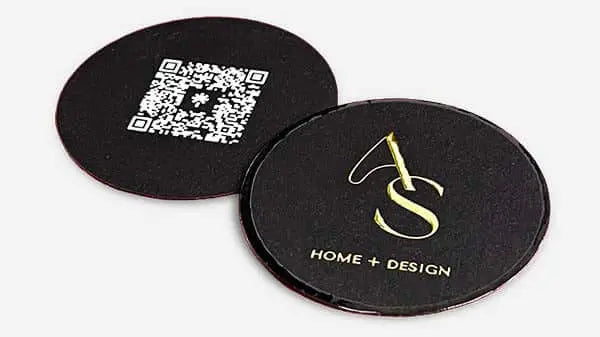


Clear Plastic Business Cards: Strategic Impact
Standing out in a saturated American market requires more than an eye-catching logo or a punchy tagline. For creative professionals and luxury brand owners, the choice of business card is a statement about intention and quality. Clear plastic business cards signal innovation, authenticity, and strategic thinking, transforming a simple exchange into an unforgettable brand experience. Discover what makes these cards different, and why the right material speaks volumes about your brand vision.
Table of Contents
- Defining Clear Plastic Business Cards
- Types and Variations of Plastic Cards
- Transparency’s Role in Design Discipline
- Real-World Applications and Brand Positioning
- Risks, Drawbacks, and Common Missteps
Key Takeaways
| Point | Details |
|---|---|
| Material Choice Matters | Clear plastic business cards are not just a trend; their material influences durability, design, and brand messaging. Select material that aligns with your brand values. |
| Design Discipline is Critical | Transparency in design amplifies both strengths and weaknesses; focus on clean, intentional aesthetics to ensure effective communication. |
| Align with Brand Strategy | Clear plastic cards should reflect genuine brand attributes such as innovation or exclusivity, ensuring they are not perceived as gimmicky. |
| Evaluate Environmental Impact | Consider sustainability implications of using plastic; be prepared to address potential contradictions if your brand emphasizes eco-friendliness. |
Defining Clear Plastic Business Cards
Clear plastic business cards represent a departure from traditional paper stock. Instead of cellulose fibers, they use transparent or translucent plastic materials—typically PVC, PET, or similar polymers—to create a card that maintains functionality while offering visual distinctiveness.
At their core, plastic cards serve as durable substitutes for conventional paper options. This distinction matters. A clear plastic card is not simply a paper card printed on plastic. It’s an entirely different product category with its own design logic, production constraints, and strategic applications.
What Sets Them Apart
Clear plastic business cards differ from standard cards in several concrete ways:
- Material composition: Rigid plastic instead of paper pulp, affecting weight, flexibility, and durability
- Visual properties: Transparency allows text and design elements to interact with light, backgrounds, and layering
- Tactile experience: Smooth, cool surface with consistent thickness, different from the grain and warmth of paper
- Production process: Requires specialized printing methods like silkscreen, UV printing, or digital overlay techniques
- Longevity: Resists water damage, creasing, and deterioration far better than paper alternatives
These aren’t minor differences. They fundamentally change how a business card functions and what it communicates.
Here’s a summary comparing clear plastic business cards to traditional paper business cards:
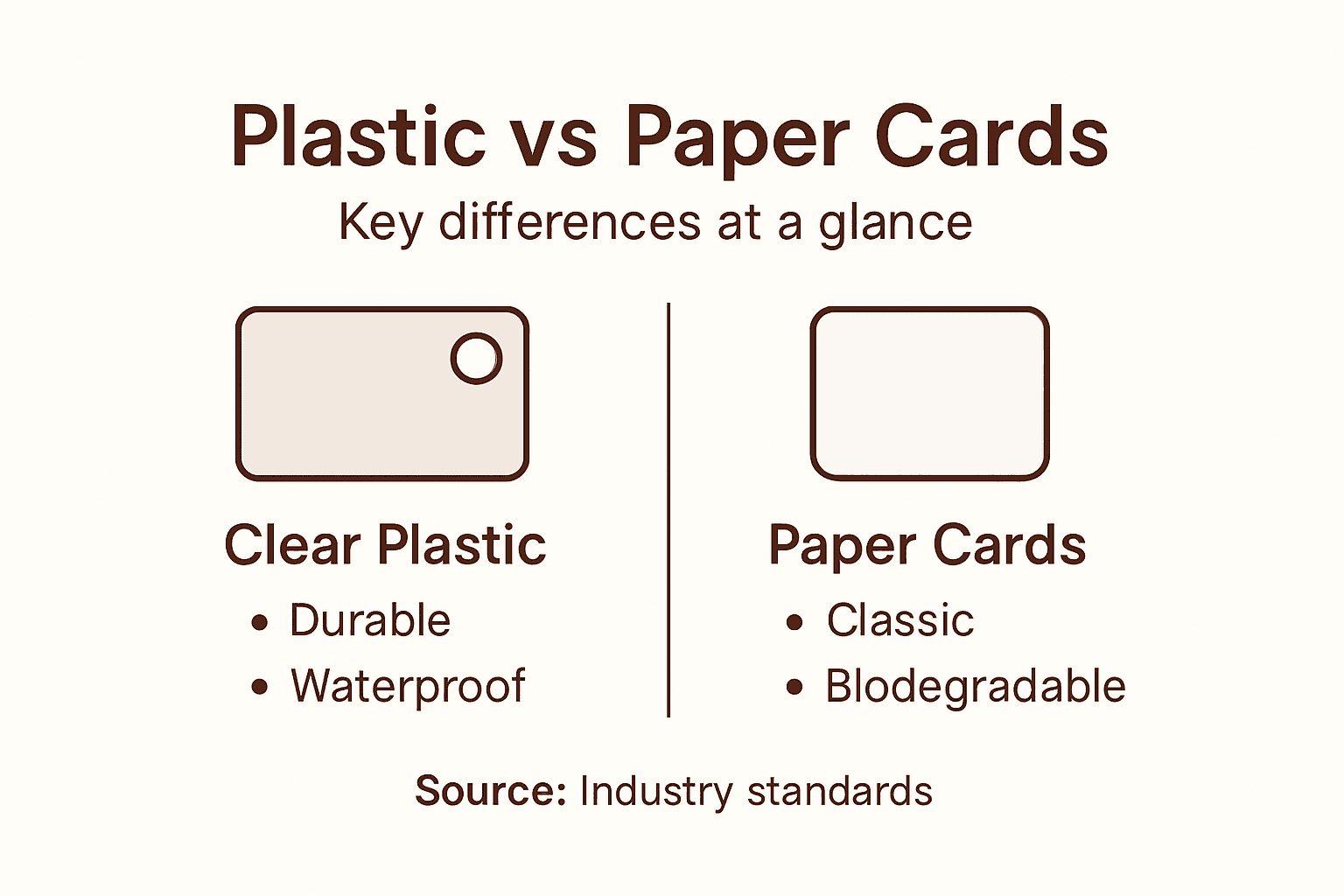
| Aspect | Clear Plastic Cards | Traditional Paper Cards |
|---|---|---|
| Durability | Highly resistant to water and creasing | Prone to wear and tear |
| Visual Impact | Modern, transparent aesthetics | Classic, opaque appearance |
| Cost | Higher production costs | Lower production costs |
| Design Flexibility | Enables layered/light effects | Supports texture and finishes |
| Environmental Impact | Challenging to recycle, plastic waste | Typically biodegradable/materials vary |
| Brand Message | Suggests innovation, exclusivity, or transparency | Suggests tradition or sustainability |
Transparency as a Design Constraint
Transparency is where the real complexity enters. Unlike paper, which is opaque, clear plastic reveals whatever sits behind it. This sounds liberating until you face the reality: poor design decisions become immediately visible.
A blurry logo. Inconsistent text alignment. Low-resolution artwork. On paper, these imperfections might pass unnoticed in person. On clear plastic, they’re magnified. The material amplifies both design excellence and design failure.
Transparency forces design discipline. You can’t hide behind texture or paper quality when your card is see-through.
When you print white ink on clear plastic, you’re essentially creating an opaque layer. When you leave areas clear, you’re inviting the viewer to see through to whatever’s behind. This requires intentional, purposeful decisions about what shows and what doesn’t.

Why Definition Matters for Your Strategy
Understanding what a clear plastic business card actually is prevents common misconceptions. Many professionals assume it’s simply a novel material—a luxury option chosen for novelty alone. That’s wrong.
A clear plastic card is a strategic communication tool when used correctly. It signals several things simultaneously: attention to material quality, design thinking, and willingness to differentiate. But only if the execution matches the intention.
Mismatched design, unclear printing, or poor material choice sends the opposite message: that you chose plastic simply because it looked interesting, not because it serves your brand.
Pro tip: Before committing to clear plastic, define your reason for choosing it—not aesthetically, but strategically. What does transparency accomplish for your brand that paper cannot?
Types and Variations of Plastic Cards
Plastic cards come in many forms, each designed for specific purposes and audiences. Understanding the different types helps you identify where clear plastic business cards fit within the larger ecosystem and what makes them strategically distinct.
The Broader Plastic Card Landscape
Plastic card innovations have evolved significantly over decades. Originally developed for payment systems, plastic card technology now extends far beyond credit and debit applications. The material itself proved so versatile that it spread across multiple industries and use cases.
Today’s plastic card universe includes:
- Payment cards: Credit cards, debit cards, prepaid cards with magnetic stripes or chip technology
- Access cards: Key cards, ID badges, membership cards
- Promotional cards: Gift cards, loyalty programs, store-specific cards
- Specialty business cards: Clear, frosted, colored, embossed, or design-customized variants
Each category serves different functional and psychological purposes. Payment cards prioritize security and durability. Access cards emphasize identification and control. Business cards focus on branding and impression.
Clear Plastic Cards Within the Spectrum
Clear plastic business cards occupy a specialized niche within the broader card market. They’re designed primarily for marketing and branding, often featuring transparent or semi-transparent materials to stand apart visually from conventional paper stock.
This positioning matters. Clear cards aren’t simply a decorative variation—they’re a strategic choice that signals intentionality about material selection and design discipline.
Common Variations You’ll Encounter
Not all clear plastic cards function identically. Understanding the variations helps you choose correctly:
- Fully transparent: Completely see-through, revealing whatever’s behind the card
- Frosted or translucent: Semi-opaque with a matte finish, softening visibility while maintaining the plastic aesthetic
- Colored tints: Clear plastic with subtle color overlays (blue, smoke, amber)
- Hybrid designs: Combination of clear sections and opaque printed areas
- Embossed or textured: Clear plastic with raised patterns or surface treatments
Each variation changes how the card communicates and what it reveals or conceals. The choice isn’t purely aesthetic—it’s functional.
Here’s a reference table outlining key clear plastic card types and their best-fit business uses:
| Card Type | Typical Use Case | Branding Signal |
|---|---|---|
| Fully Transparent | Cutting-edge tech, startups | Openness, innovation |
| Frosted/Translucent | Creative industries, boutiques | Subtlety, sophistication |
| Colored Tint | Nightlife, entertainment | Vibrancy, energy |
| Hybrid (Opaque + Clear) | High-end brands | Customization, control |
The type of clear card you choose determines what viewers see, what they don’t see, and what impression remains.
When comparing options, consider what transparency accomplishes for your specific brand message. Does full transparency enhance your design, or does it distract from it? These decisions separate strategic choices from impulse selections.
Pro tip: Test multiple variations before committing to production—clear, frosted, and tinted versions create dramatically different visual impacts when held in hand.
Transparency’s Role in Design Discipline
Transparency in plastic card design isn’t metaphorical. It’s literal and unforgiving. When your material is see-through, every design decision becomes visible, and mediocre choices get amplified.
This is where many designers struggle. They’re accustomed to paper, where surface texture, weight, and finish can mask imperfect typography or weak spacing. Plastic cards offer no such escape.
Why Transparency Demands Honesty
Transparency in design promotes openness and trustworthiness throughout the entire creative process. When nothing is hidden, your design choices must stand on merit alone. No visual tricks. No reliance on material properties to carry weak concepts.
A clear plastic card forces this reckoning:
- Typography becomes critical: Kerning, weight, and alignment are fully exposed
- Color and contrast matter intensely: Readability can’t be fudged with paper texture
- Negative space gains purpose: Empty areas on clear cards frame what’s intentional
- Production quality shows immediately: Print registration, ink consistency, and finish defects are obvious
These aren’t new design principles. They’re foundational. Clear plastic simply removes the camouflage.
The Discipline of Intentional Restraint
Good designers working with clear plastic often embrace minimalism by necessity. When everything shows, you stop adding elements just because you can. You strip away decoration and keep only what serves the brand.
This restraint isn’t a limitation—it’s clarification. Transparency in design science involves clarity of process and solution articulation, making the reasoning behind each decision explicit. On a clear card, that reasoning must be visual and immediate.
The strongest clear plastic cards share a pattern: they know what to show and what to hide. Strategic use of opaque printing (white ink, colored overlays) combined with transparent sections creates intentional composition.
A transparent card that looks like a transparent card—with no thought behind what reveals or conceals—fails. Strategic transparency requires the opposite: complete control over visibility.
What Gets Disqualified
Clear plastic exposes poor decisions instantly. This is valuable because it helps you eliminate weak directions early:
- Overly complex logo treatments that don’t scale well
- Inconsistent brand element spacing
- Typography that relies on paper texture for readability
- Unrefined color palettes
- Designs that work on screen but lack tactile presence
This filtering is harsh but necessary. It means your final card represents your absolute best work, not a compromise between what you intended and what the material allowed.
Pro tip: Design for transparency first, then consider what sections benefit from opaque printing. This inverted approach forces you to justify every design element instead of hiding behind the material.
Real-World Applications and Brand Positioning
Clear plastic business cards aren’t universal solutions. They work best when they align with specific brand narratives and business contexts. Understanding where they belong—and where they don’t—separates strategic choices from expensive mistakes.
When Clear Plastic Makes Sense
Certain industries and brand types benefit immediately from clear plastic. Tech companies often choose them because transparency aligns with innovation messaging. Design studios use them to demonstrate design thinking. Luxury brands leverage them for exclusivity and tactile differentiation.
But the connection must be genuine. If your brand doesn’t actually embody transparency, innovation, or design discipline, a clear plastic card becomes ironic rather than reinforcing.
Positioning Through Material Choice
Brand positioning involves creating a distinct image that differentiates from competitors. Clear plastic business cards serve as a physical extension of that positioning by embodying specific brand values.
Consider what your material choice communicates:
- Transparency: Honesty, openness, nothing to hide
- Durability: Longevity, reliability, quality investment
- Innovation: Forward-thinking, willingness to experiment
- Exclusivity: Attention to detail, premium positioning
- Sustainability concerns: Requires careful messaging if environmental values matter to your brand
Each message is valid, but only if your business actions support it. A sustainability-focused brand using plastic cards needs to address that contradiction explicitly.
Industries Where Clear Plastic Thrives
Certain sectors see natural adoption:
- Design and creative services: Demonstrates design competency and material awareness
- Tech and software: Aligns with innovation and forward-thinking positioning
- Luxury goods and high-end retail: Reinforces exclusivity and premium positioning
- Event planning and experiential brands: Creates memorable, distinctive touchpoints
- Architecture and construction: Shows attention to materials and finishes
Conversely, traditional industries like law, accounting, or real estate sometimes struggle to justify the choice. It can feel gimmicky rather than strategic.
The Disqualification Question
Before committing, ask yourself honestly: Does clear plastic strengthen your brand positioning, or does it distract from your actual value proposition?
If your answer is “it looks cool,” that’s not positioning. That’s novelty. Novelty fades, but positioning endures.
Material choices whisper messages about your brand. Choose materials that speak truth about who you are.
The strongest clear plastic cards come from brands that chose the material because it communicates something essential, not something trendy.
Pro tip: Before designing, write one sentence explaining why clear plastic strengthens your brand positioning. If you can’t write that sentence authentically, reconsider the material choice.
Risks, Drawbacks, and Common Missteps
Clear plastic business cards carry real disadvantages that deserve honest discussion. Choosing this material means accepting tradeoffs that don’t suit every brand or budget. Understanding these limitations prevents costly regrets.
Environmental and Production Concerns
Plastic waste contributes significantly to pollution, and clear plastic business cards are no exception. If sustainability matters to your brand identity, you must address this contradiction directly. Greenwashing—claiming environmental values while using plastic—damages credibility far more than simply choosing paper would.
Production costs also matter. Clear plastic cards require specialized equipment and printing methods. Small batches cost significantly more per unit than paper alternatives. If you’re printing 500 cards, the price difference per card is substantial.
Common Design Missteps
Designers often underestimate how transparency changes the game. These mistakes surface repeatedly:
- Ignoring backgrounds: Your card will be held against different surfaces. Test how it looks against skin, clothing, and various backgrounds
- Over-relying on color: Ink colors look different on plastic than on paper. What seemed perfect on screen might disappoint in hand
- Forgetting white space: Negative space becomes visually active on transparent material. Empty areas draw attention—sometimes unwanted
- Poor ink coverage: Thin printing shows through. Thick ink can crack or peel. Finding the balance requires testing
- Inconsistent finishes: Mixing glossy and matte sections requires precise production control
These aren’t theoretical problems. They’re real issues that emerge during production or after distribution.
Functionality Limitations
Plastic waste management presents significant challenges, including the lifecycle impact of materials. Beyond environmental concerns, plastic cards present practical issues:
- Visibility problems: Fingerprints, dust, and scratches become visible on transparent surfaces
- Storage challenges: They can warp if stored improperly or exposed to heat
- Pricing perception: Some recipients see plastic cards as gimmicky rather than premium
- Professional misalignment: Industries built on tradition (law, finance) sometimes find plastic cards diminish rather than enhance credibility
The Novelty Trap
Many professionals choose clear plastic thinking differentiation alone justifies the cost. That’s backwards thinking. Differentiation without alignment is novelty, and novelty fades.
Your competitors will eventually use plastic cards too. When they do, your differentiation evaporates. Strategic material choice survives trends; tactical choices don’t.
Choosing clear plastic because competitors use paper is reactive, not strategic. Choose it because it serves your brand’s essential message.
If you can’t articulate why plastic strengthens your positioning, the cost isn’t worth it.
Pro tip: Request physical samples before committing to production. Evaluate them against actual backgrounds, lighting, and handling conditions—not just on a design mockup.
Elevate Your Brand with Clear Plastic Business Cards That Speak Transparency and Innovation
Facing the challenge of making your business card more than just a contact detail is easier when you choose a design that embraces clarity and strategic impact. The article highlights key pain points such as the need for design discipline, purposeful transparency, and a meaningful material choice that aligns perfectly with your brand positioning. If you want a card that boldly communicates innovation, exclusivity, and trustworthiness without compromise, clear plastic cards are an ideal way to visually express those values.
Discover how our Clear Plastic Business Cards – BcardsCreation collection offers bespoke solutions that master transparency as a design element. Designed with expert guidance, advanced printing techniques, and flawless material choices, your card will stand out while reinforcing your brand message.
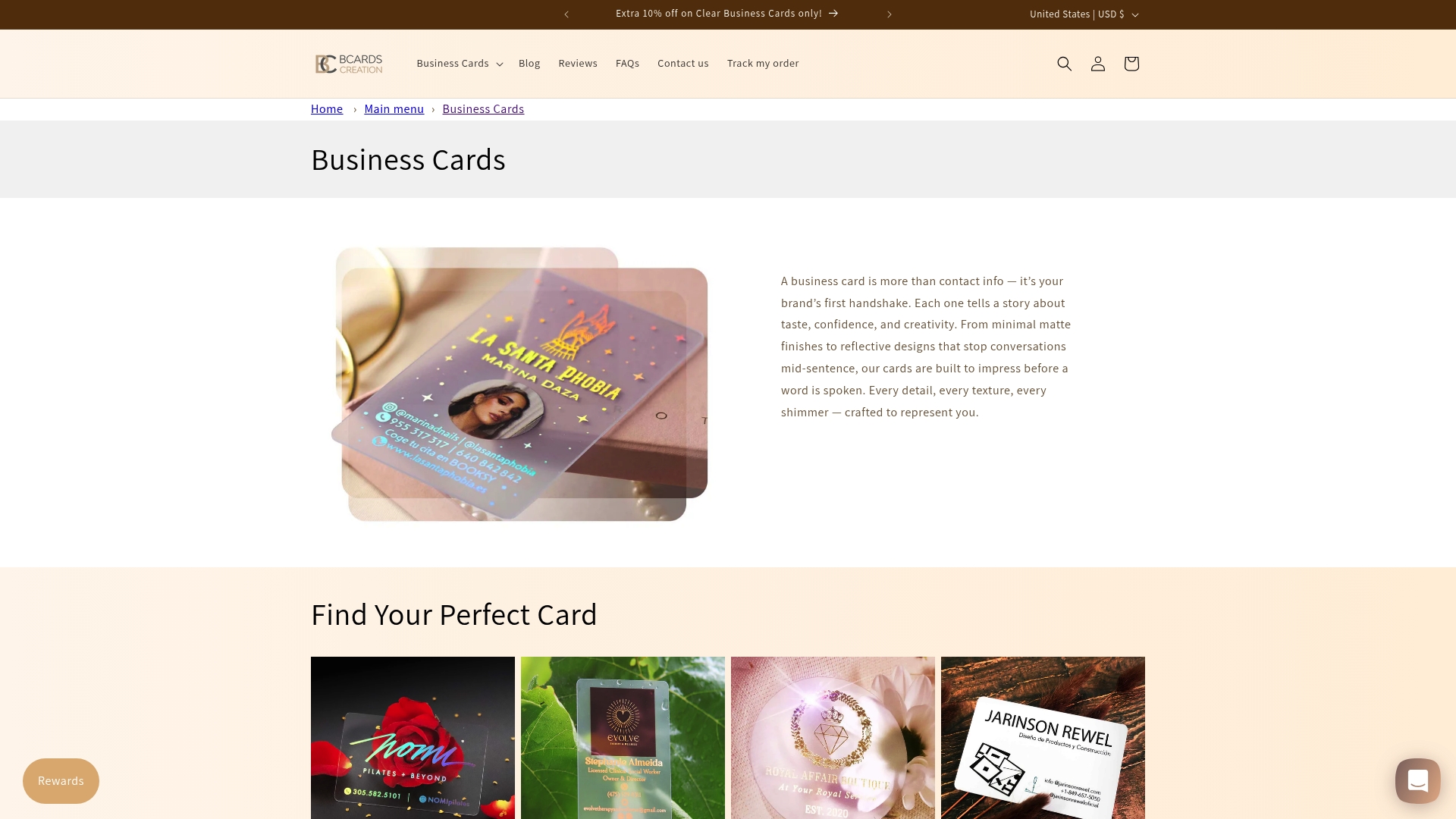
Make your first impression resonate by choosing a partner who treats business cards as powerful brand tools. Explore our full range of Plastic Business Cards – BcardsCreation or browse all our specialty options at BcardsCreation Business Cards to find the perfect fit. Act now to create a card that speaks truth about who you are and demands attention.
Frequently Asked Questions
What are clear plastic business cards made of?
Clear plastic business cards are typically made from transparent or translucent plastic materials, such as PVC or PET, which provide a durable alternative to traditional paper cards.
How do clear plastic business cards differ from traditional paper cards?
Clear plastic business cards are more durable, water-resistant, and offer a modern, transparent aesthetic, whereas traditional paper cards are generally less durable and have a classic opaque appearance.
What are the design considerations for clear plastic business cards?
Designing for clear plastic cards requires careful attention to typography, color contrast, and negative space, as imperfections in design become more visible due to the transparent material.
When should I consider using clear plastic business cards for my brand?
Clear plastic business cards are most effective for brands aiming to communicate innovation, exclusivity, or creativity, particularly in industries such as technology, design, and luxury goods.
Recommended
- Top 8 Plastic Business Cards: Clear, Frosted, Shimmer — How to Choose – BcardsCreation
- Acrylic Card Holder | Personalized Business Card Holder for Desk – BcardsCreation
- Diamond Business Cards | Frosted Plastic | Custom shape card – BcardsCreation
- Top 8 Unique Business Card Solutions for 2026 – BcardsCreation
- Blog Business Plan | Exemples & Modèles


