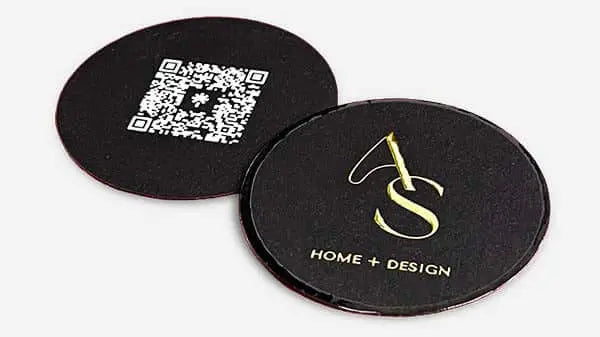


Custom Business Cards vs Templates: The Real Brand Impact
For luxury fashion brands, the smallest touch can leave the strongest impression. When every interaction matters, a business card is more than a formality—it becomes a physical statement of identity, intent, and sophistication. Custom business cards offer unrivaled opportunities for brand alignment and creative expression, setting premium labels apart from competitors that settle for off-the-shelf designs. This guide examines how distinct design strategies and material choices can turn a simple contact card into a powerful brand ambassador.
Table of Contents
- Defining Custom Business Cards And Templates
- Types Of Business Cards And Design Workflows
- Material Behavior And Brand Expression
- Adaptive Design For Strategic Positioning
- Where Templates Create Workflow And Value Losses
Key Takeaways
| Point | Details |
|---|---|
| Custom Business Cards Enhance Brand Identity | Custom cards provide a unique representation of a brand’s identity, focusing on design flexibility and material choices to convey distinct messaging. |
| Templates Offer Efficiency but Sacrifice Uniqueness | Template-based cards provide rapid solutions at lower costs but often result in generic, less differentiated branding. |
| Material Choices Impact Brand Perception | The selection of materials for business cards plays a crucial role in conveying brand values and can enhance tactile brand experiences. |
| Adaptive Design Supports Strategic Growth | Designing business cards with adaptability in mind allows for future updates and alignment with evolving brand narratives and market conditions. |
Defining Custom Business Cards and Templates
In the world of professional branding, business cards serve as critical communication tools that extend far beyond simple contact information. These compact representations of a brand’s identity encapsulate visual messaging, design philosophy, and professional positioning. Unique design characteristics define the distinction between template-based and custom business card solutions.
A custom business card represents a fully personalized design crafted specifically to reflect a brand’s unique visual language and strategic positioning. Unlike generic templates, these cards are meticulously engineered to communicate nuanced brand attributes through deliberate material, color, and design choices. The core differences emerge in several key dimensions:
- Design Flexibility: Custom cards offer unlimited creative possibilities
- Brand Alignment: Precise representation of brand identity and values
- Material Selection: Freedom to choose specialized papers, textures, and finishes
- Dimensional Precision: Exact specifications tailored to brand requirements
Templates, by contrast, provide standardized design frameworks that prioritize speed and cost-effectiveness. These pre-designed formats offer quick solutions for businesses seeking immediate professional representation without extensive design investment. They typically feature:
- Predetermined layouts
- Limited customization options
- Rapid production timelines
- Lower per-unit production costs
The fundamental trade-off lies in brand distinctiveness versus operational efficiency. Custom cards demand more strategic thinking and resources but deliver superior brand expression, while templates provide accessible design solutions with inherent compromises.
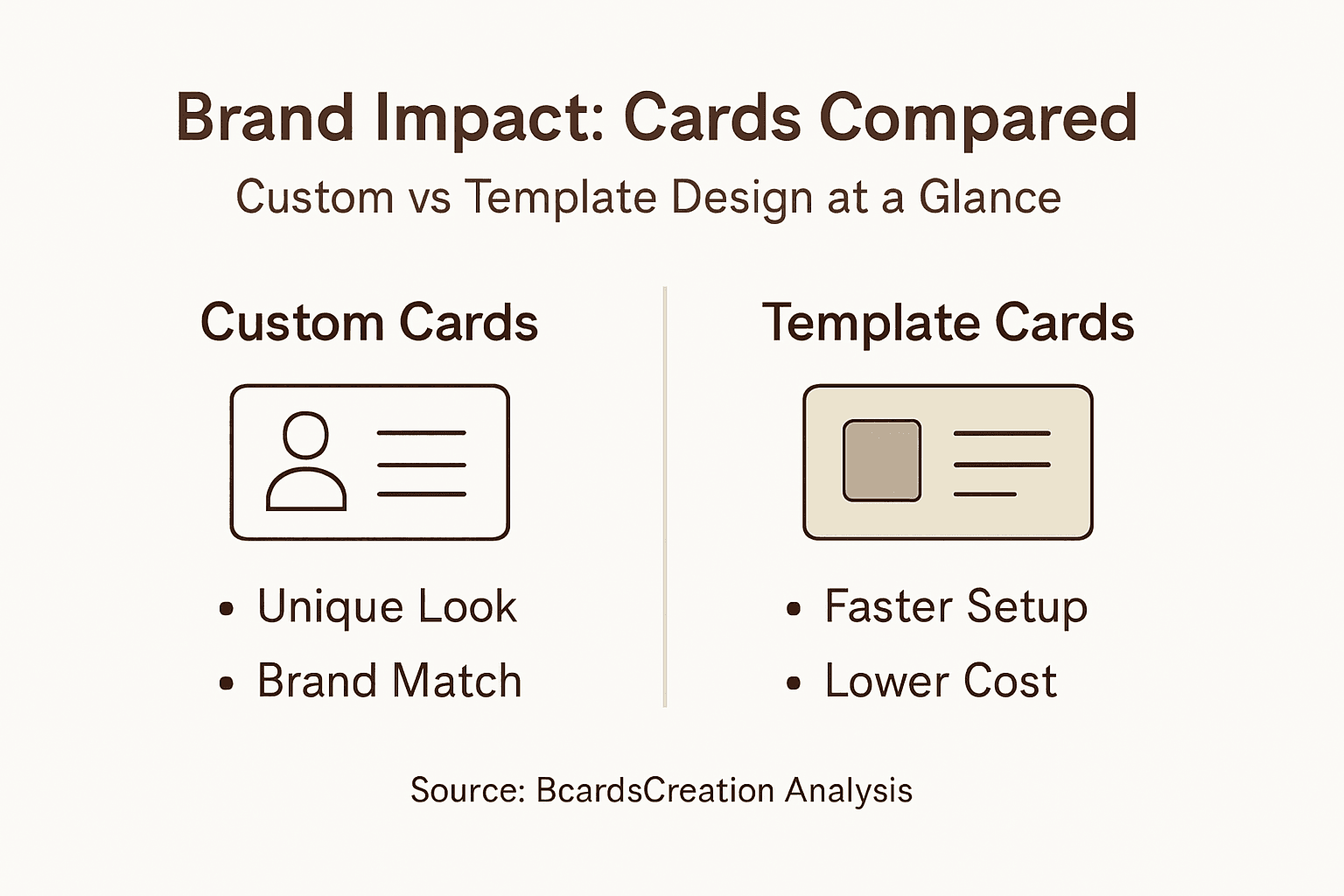
Here’s how custom and template business cards differ on key aspects:
| Aspect | Custom Business Cards | Template Business Cards |
|---|---|---|
| Visual Uniqueness | Strong brand-specific look | Generic, shared by many |
| Update Flexibility | Easily tailored over time | Constrained by preset layouts |
| Material Options | Wide array, including specialty choices | Limited, often standard paper stock |
| Brand Perception | Seen as premium and exclusive | May appear budget-conscious |
| Design Lead Time | Longer, requires collaboration | Very quick, minimal input needed |
Pro tip: Evaluate your brand’s communication goals and budget to determine whether custom design or template solutions best serve your professional positioning.
Types of Business Cards and Design Workflows
Business card design encompasses a diverse spectrum of approaches, each with unique strategic implications for brand communication. Professional design workflows reveal nuanced methodologies that transform these compact marketing instruments into powerful brand ambassadors.
The primary categories of business card types include:
- Digital-First Cards: Designed for seamless digital integration
- Print-Optimized Cards: Traditional physical design with premium tactile qualities
- Minimalist Cards: Emphasizing clean design and essential information
- Elaborate Art Cards: Complex visual storytelling through design
Each design workflow follows specific strategic paths. Design methodologies typically involve multiple critical stages:
- Brand Concept Analysis
- Visual Language Development
- Material and Finish Selection
- Production Strategy
- Final Design Refinement
Template-based workflows prioritize efficiency and standardization, while custom design approaches emphasize unique brand narrative and precise visual communication. The selection between these methods depends on multiple factors including budget, brand complexity, and strategic communication goals.
Custom design workflows offer more granular control, allowing brands to engineer precise sensory and visual experiences through:
- Specialized paper selections
- Unique dimensional specifications
- Intricate printing techniques
- Precise color matching
Pro tip: Evaluate your brand’s communication strategy and allocate design resources proportionally between standardization and creative expression.
Material Behavior and Brand Expression
Material selection transcends mere aesthetic choice, emerging as a critical communication strategy for brand positioning. Material culture studies reveal how tactile and physical characteristics communicate profound brand narratives beyond visual design.
The psychological dimensions of material behavior include several key dimensions:
- Texture Perception: Communicating brand sophistication
- Weight Implications: Signaling quality and substantiveness
- Surface Interactions: Revealing brand personality
- Durability Messaging: Demonstrating brand resilience
Paper and substrate choices become powerful nonverbal communication tools. Brand touchpoint strategies demonstrate how material selections can reinforce or undermine brand positioning through sensory experience.
Custom business cards leverage material nuances to create distinctive brand experiences. Different materials communicate unique brand attributes:
- Cotton paper suggests traditional professionalism
- Recycled materials indicate environmental consciousness
- Metallic substrates communicate technological innovation
- Translucent plastics suggest modern, cutting-edge approaches
Material selection requires deep understanding of brand personality, target audience expectations, and strategic communication goals. The physical interaction with a business card becomes a microcosm of brand perception, where every tactile detail matters.

Review how business card material influences brand messaging:
| Material Type | Brand Message | Sensory Impression |
|---|---|---|
| Cotton Paper | Timeless luxury, trustworthiness | Soft, refined texture |
| Recycled Cardstock | Eco-friendly, progressive | Slightly rough, natural feel |
| Metallic Foil | High-tech, forward-thinking | Sleek, reflective surface |
| Plastic Substrate | Modern, innovative | Smooth, flexible touch |
Pro tip: Select materials that authentically represent your brand’s core values and create memorable sensory interactions.
Adaptive Design for Strategic Positioning
Strategic positioning demands more than static design approaches. Adaptive design principles represent a dynamic framework for creating business cards that evolve with organizational transformation and market dynamics.
Adaptive design for business cards encompasses several critical strategic dimensions:
- Scalability: Designing for future organizational changes
- Flexibility: Accommodating evolving brand narratives
- Responsiveness: Quick iterations based on market feedback
- Modularity: Enabling modular information updates
Iterative decision-making processes allow brands to reimagine business card design as a continuous strategic dialogue rather than a one-time production event. This approach transforms business cards from static artifacts into dynamic communication instruments.
The core principles of adaptive design for business cards include:
- Designing with intentional white space for future updates
- Creating modular information architectures
- Developing flexible visual systems
- Implementing minimal design that supports easy modifications
Strategic positioning through adaptive design requires sophisticated understanding of brand evolution, technological shifts, and communication requirements. Business cards become living documents that reflect organizational agility and forward-thinking positioning.
Pro tip: Design business cards with strategic flexibility, anticipating potential brand and professional transitions.
Where Templates Create Workflow and Value Losses
Template-based design introduces systemic limitations that can significantly undermine brand positioning and strategic communication effectiveness. Workflow rigidity research reveals how standardized templates create unexpected value erosion across professional branding efforts.
The primary workflow and value losses emerge through several critical mechanisms:
- Creativity Suppression: Limiting unique brand expression
- Design Homogenization: Reducing competitive differentiation
- Strategic Inflexibility: Constraining adaptive communication
- Innovation Barriers: Preventing emergent design solutions
Workflow inefficiency studies demonstrate how template reliance creates cascading performance limitations. These constraints manifest through:
- Predetermined layout restrictions
- Minimal customization potential
- Reduced brand personality integration
- Standardized visual communication approaches
Templates fundamentally misunderstand modern brand communication by treating business cards as static artifacts rather than dynamic strategic instruments. They prioritize immediate production efficiency over long-term brand narrative development, creating systemic communication barriers that limit organizational storytelling potential.
Professional brands require design approaches that balance efficiency with authentic expression, moving beyond one-size-fits-all solutions toward more nuanced, contextually responsive communication strategies.
Pro tip: Invest in design processes that prioritize strategic flexibility over immediate template convenience.
Elevate Your Brand Beyond Templates with Custom Business Cards
The article highlights a critical challenge faced by professionals and brands today: choosing between generic template solutions and truly customized business cards that authentically express brand identity. If you want to avoid the common pitfalls of design homogenization and limited material choices inherent to templates, embracing custom business cards is essential. Your business card should be a powerful tool that communicates your brand’s unique story through exclusive design flexibility, premium materials, and strategic visual impact.
At BcardsCreation, we specialize in creating fully personalized business cards crafted without templates or automated editors. Experience the difference of design-driven solutions using specialty papers and refined printing techniques. From bold and memorable Custom Shaped Business Cards to tactile and sophisticated Letterpress Business Cards, each project is tailored to reflect your brand’s essence perfectly.
Don’t settle for ordinary when your brand deserves extraordinary. Discover how to communicate your professional positioning with thoughtful craftsmanship and unparalleled customization today by exploring our full collection of bespoke Business Cards. Take control of your brand impact and order now to make a lasting impression that goes beyond templates.
Frequently Asked Questions
What is the difference between custom business cards and template business cards?
Custom business cards are uniquely designed to reflect a brand’s identity and values, offering unlimited design flexibility, personalized material choices, and a premium look. Template business cards, on the other hand, use standardized layouts that prioritize speed and cost-effectiveness, resulting in less distinctive designs.
How can I ensure my business card design aligns with my brand identity?
To align your business card design with your brand identity, analyze your brand concept, develop a consistent visual language, select appropriate materials, and refine the design to reflect your brand’s values and message effectively.
What are the benefits of using custom business cards over templates?
The benefits of custom business cards include superior visual uniqueness, better alignment with your brand, flexibility for updates, a variety of material choices, and a stronger perception of professionalism, all of which contribute to a more impactful brand presence.
How does material selection impact the effectiveness of a business card?
Material selection significantly influences brand perception by communicating qualities such as luxury, eco-friendliness, and modernity. The texture, weight, and durability of the material can create memorable sensory experiences that reinforce your brand narrative.
Recommended
- Top 8 Unique Business Card Solutions for 2026 – BcardsCreation
- Diamond Business Cards | Frosted Plastic | Custom shape card – BcardsCreation
- Acrylic Card Holder | Personalized Business Card Holder for Desk – BcardsCreation
- Letterpress Business Card with full color print and real foil Rose Gol – BcardsCreation
- 7 Essential Types of Event Invitations Explained Clearly - WhenNOT Blog


