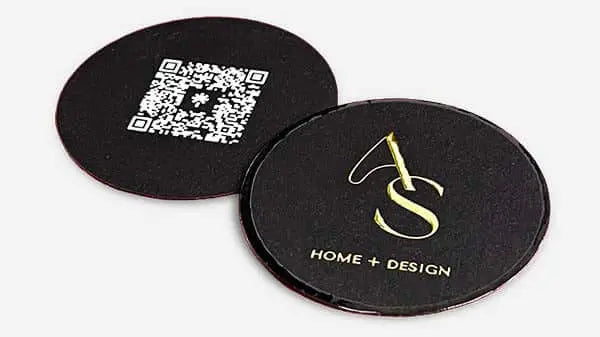


Design vs Print: Why Stunning Files Fail in Production
Creating a memorable first impression often starts with the tactile experience of holding a well-designed business card. For luxury brand owners and creative professionals in the United States, the difference between a striking introduction and a missed opportunity hinges on more than visual appeal. Mastering the balance between bold design and meticulous print production reveals the true power of a business card as a reflection of professional values and brand identity.
Table of Contents
- Design Versus Print Production Explained
- Types Of Luxury Card Materials And Finishes
- How File Perfection Can Lead To Failure
- Production Realities And Hidden Constraints
- Common Mistakes That Derail Branding Impact
Key Takeaways
| Point | Details |
|---|---|
| Understanding Collaboration | Designers must balance creativity with technical constraints in print production. |
| Luxury Materials Matter | The choice of materials and finishes significantly influences brand perception. |
| Avoiding Perfectionism | Obsessive refinement can hinder productivity; focus on functional completeness. |
| Anticipating Production Challenges | Recognize potential print production pitfalls to maintain design integrity. |
Design Versus Print Production Explained
Design and print production represent two distinct yet interconnected disciplines in visual communication. While designers craft compelling visual narratives, print production transforms those digital visions into physical realities. Understanding the nuanced relationship between these processes is crucial for creating impactful business cards and marketing materials.
In professional design workflows, print design fundamentals require meticulous attention to technical constraints. Key challenges include:
- Color accuracy translation from digital to physical formats
- Resolution and image quality preservation
- Material compatibility with printing techniques
- File format and technical specification compliance
- Color management across different printing technologies
Successful print production demands more than aesthetic excellence. Designers must comprehend the intricate mechanics of printing technologies, understanding how different substrates, ink types, and production methods interact with original design files. Digital design represents only the initial phase of a complex transformation process.
Here’s how design and print production differ and collaborate:
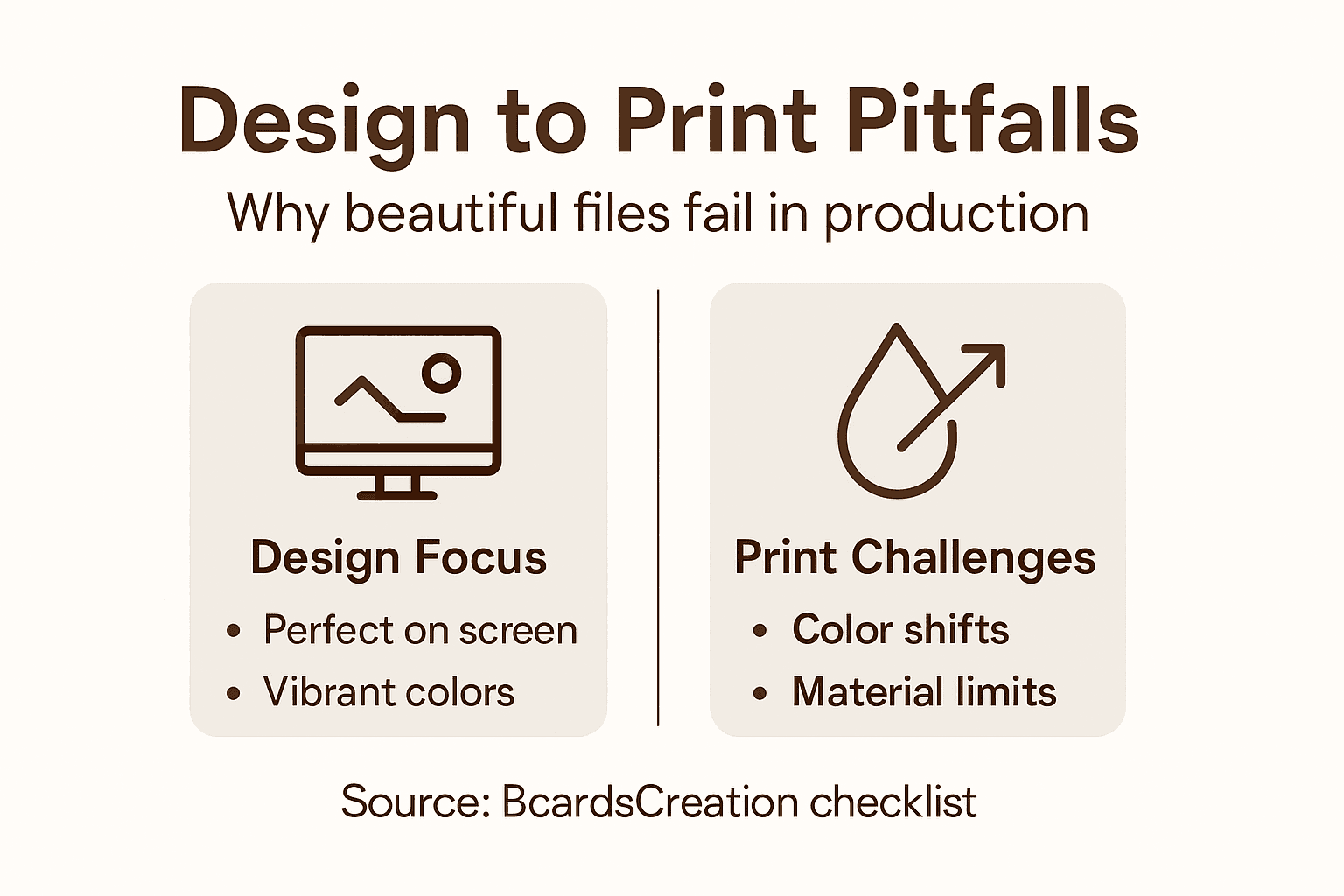
| Aspect | Design Focus | Print Production Focus |
|---|---|---|
| Primary Objective | Visual impact and aesthetics | Accurate physical reproduction |
| Key Considerations | Creativity, layout, color theory | Materials, resolution, print method |
| Collaboration Point | Prepares files for printer specs | Implements technical requirements |
| Common Pitfalls | Ignoring production constraints | Overlooking design intent |
Printing technologies have dramatically evolved, moving from traditional letterpress to sophisticated digital and offset printing methods. Each technique introduces unique constraints that designers must anticipate. Designers who fail to understand these technical nuances often experience costly reprints, color mismatches, or compromised visual quality.
Technical precision bridges the gap between creative vision and physical production.
Pro tip: Always request a physical proof and color calibration test before final production to minimize unexpected print variations.
Types of Luxury Card Materials and Finishes
Luxury business cards transcend mere contact information, serving as tangible representations of brand identity and professional sophistication. Luxury material selection involves strategic choices that communicate quality, creativity, and attention to detail through physical design elements.
Key luxury card materials include:
- Cotton paper: Soft, textured, and reminiscent of traditional stationery
- Plastic composites: Durable and modern with unique translucent options
- Metallic substrates: Sleek, reflective surfaces that convey premium positioning
- Organic fiber papers: Environmentally conscious materials with distinctive textures
- Specialty wood veneer: Unique, natural materials offering exceptional tactile experiences
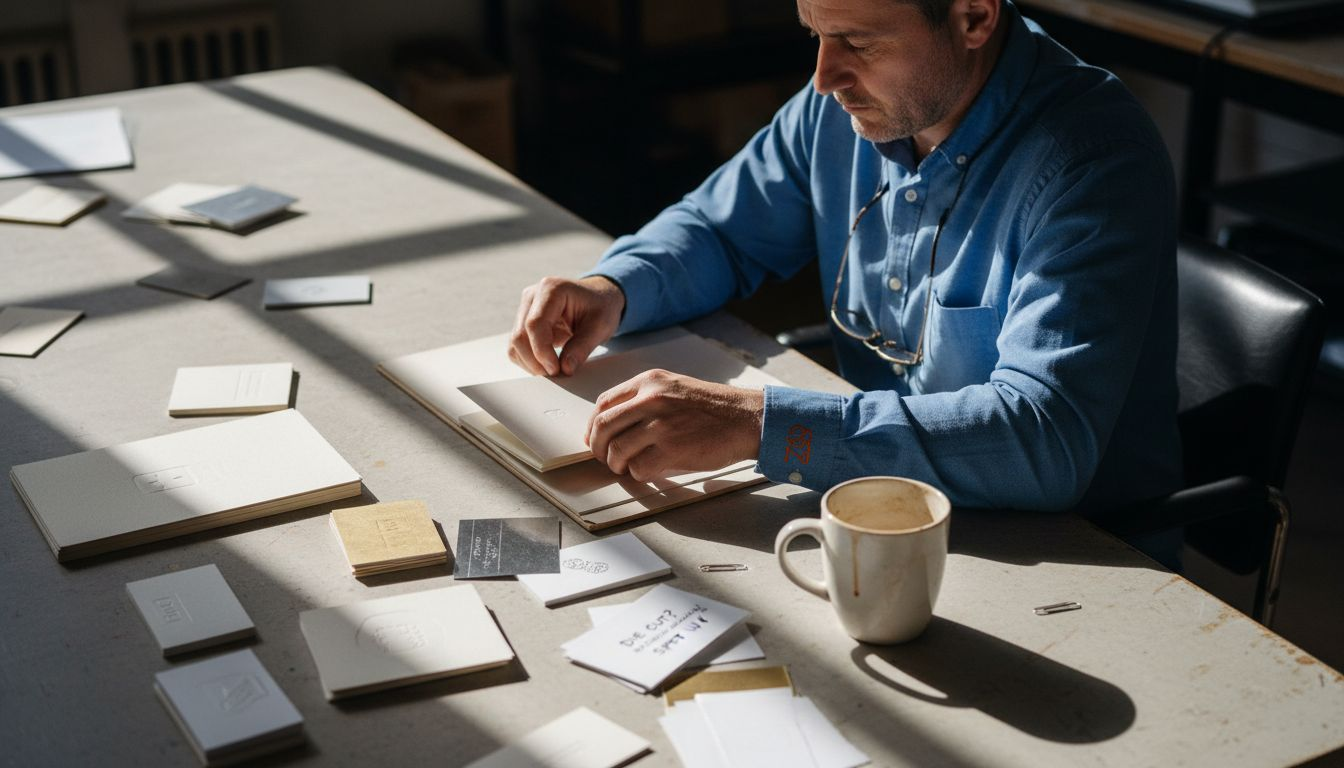
Finishes play a critical role in elevating card design. Archival material properties reveal how different treatments can enhance visual and tactile perception. Advanced finishing techniques transform standard cards into memorable brand artifacts:
Below is a summary of luxury material and finish impacts:
| Material/Finish | Perceived Brand Qualities | Touch/Feel Influence |
|---|---|---|
| Cotton Paper | Traditional, refined, trust | Soft, textured, premium |
| Plastic Composite | Modern, innovative, durable | Smooth, sleek, futuristic |
| Metallic Substrate | Prestigious, exclusive, bold | Cool, reflective, weighty |
| Wood Veneer | Unique, sustainable, artisan | Natural, textured, organic |
| Soft-touch Lamination | Friendly, approachable, elegant | Velvety, memorable, delicate |
- Soft-touch lamination creating velvety surfaces
- Embossed and debossed textures adding dimensional complexity
- Metallic foil stamping for luminous accents
- Spot UV highlighting specific design elements
- Edge painting for unexpected color interactions
Material choice is the silent ambassador of brand perception.
Pro tip: Select materials that not only look exceptional but also align with your brand’s core visual and philosophical narrative.
How File Perfection Can Lead to Failure
In the world of design and print production, perfectionism can become a critical roadblock that paradoxically undermines the very quality designers seek to achieve. Obsessive file refinement often leads to missed deadlines, increased production costs, and ultimately, compromised project outcomes.
Common perfectionistic behaviors that derail design projects include:
- Endless color correction cycles
- Repeatedly adjusting minute design elements
- Over-complicating file specifications
- Resisting collaborative feedback
- Postponing file submission due to perceived imperfections
Technical precision requires a balanced approach. Psychological barriers of perfectionism demonstrate how excessive attention to minute details can create significant workflow disruptions. Professional designers understand that functional completeness trumps theoretical perfection.
Successful production relies on understanding that files are tools for communication, not museum artifacts. Each unnecessary revision introduces potential errors, increases production complexity, and dilutes the original design intent. Experienced designers learn to distinguish between meaningful refinements and counterproductive modifications.
Perfection is the enemy of production.
Pro tip: Establish clear design review checkpoints and learn to confidently release files when they meet core project requirements.
Production Realities and Hidden Constraints
Print production standards reveal a complex landscape of technical limitations that frequently surprise designers. What appears perfect on a digital screen can dramatically transform when translated into physical materials, creating unexpected challenges in final output.
Key hidden constraints in print production include:
- Color gamut restrictions between digital and physical spaces
- Substrate absorption and texture variability
- Equipment calibration and mechanical tolerances
- Environmental factors like humidity and temperature
- Material-specific limitations in ink absorption and reflection
Technical specifications demand precise understanding. Print production workflows demonstrate that successful execution requires anticipating potential variations before they become critical failures. Professional designers develop sophisticated strategies to navigate these intricate technical boundaries.
Understanding production realities means recognizing that design files are theoretical blueprints, not guaranteed outcomes. Each material, printing technique, and environmental condition introduces subtle variables that can dramatically alter the intended visual result. Experienced professionals build flexibility into their design approach, allowing for controlled adaptation during the production process.
Design is the blueprint, production is the reality.
Pro tip: Always request physical test prints and material samples to validate design performance across different production environments.
Common Mistakes That Derail Branding Impact
Brand communication strategies reveal that seemingly minor design choices can dramatically undermine professional positioning. Business cards serve as critical brand touchpoints, where even subtle inconsistencies can erode perceived credibility and strategic messaging.
Common branding mistakes in business card design include:
- Misaligned color palettes across design elements
- Inconsistent typography and font selections
- Overcrowded or cluttered visual layouts
- Generic design that fails to communicate unique brand identity
- Neglecting material and finish choices that reflect brand positioning
Brand authenticity demands strategic intentionality. Personal branding research demonstrates that successful brand communication requires nuanced understanding of audience perception and consistent messaging across all design elements.
Professional brands must recognize that business cards are not merely information carriers, but sophisticated communication tools. Each design decision communicates subtle signals about organizational values, attention to detail, and professional sophistication. Successful designers understand that brand impact emerges from holistic, intentional design thinking that goes far beyond superficial aesthetic choices.
Your brand speaks before you say a word.
Pro tip: Conduct a comprehensive brand audit of your design elements, ensuring every visual choice intentionally reinforces your core brand narrative.
Bridge the Gap Between Stunning Design and Flawless Print Production
Many designers and professionals face the frustration of beautifully crafted files that fail in the final print due to overlooked production constraints highlighted in the article. Color inconsistencies, material mismatches, and unexpected finish outcomes can undermine your brand’s impact and increase costs. At BcardsCreation, we understand these challenges and specialize in transforming your precise vision into exceptional physical business cards with materials and techniques that honor every design detail.
Experience the power of expert craftsmanship with our range of Letterpress Business Cards and tactile Textured Paper Business Cards that combine aesthetic creativity with production excellence.
Don’t let file perfectionism or hidden print limitations sabotage your branding efforts. Choose BcardsCreation for fully custom, small-batch business cards that bridge creative vision and production reality with clarity and precision. Explore our full collection now at BcardsCreation Business Cards and secure a tangible brand impression that truly stands out.
Frequently Asked Questions
What are common pitfalls in design that can lead to production failures?
Common pitfalls include ignoring production constraints, such as color accuracy, resolution, and material compatibility. Additionally, not preparing files according to printer specifications can result in unexpected print variations and poor quality.
How can designers ensure color accuracy when transitioning from digital to print?
Designers should implement effective color management practices, including calibrating monitors and requesting physical proofs before final production. This helps ensure consistency between digital designs and printed outcomes.
What types of materials are best for high-quality business cards and why?
Luxury business cards can be made from various materials such as cotton paper for a traditional feel, plastic composites for durability, and metallic substrates for a bold look. The choice of material impacts the overall perception of brand quality and sophistication.
Why is perfectionism a problem in design and production processes?
Perfectionism can lead to endless revisions, missed deadlines, and increased costs. It’s essential for designers to recognize when files are ready for production rather than holding back due to minor perceived imperfections.
Recommended
- Letterpress Business Card with full color print and real foil Rose Gol – BcardsCreation
- Top 8 Unique Business Card Solutions for 2026 – BcardsCreation
- Top 8 Plastic Business Cards: Clear, Frosted, Shimmer — How to Choose – BcardsCreation
- Fine Paper Double layered Business Card with Neon and Purple Foils, Th – BcardsCreation
- Rola projektu 3D w meblarstwie – Klucz do personalizacji - Emmi Kuchnie - meble kuchenne na wymiar, szafy komandor, kuchnie bydgoszcz, meble na wymiar bydgoszcz, stolarz bydgoszcz


