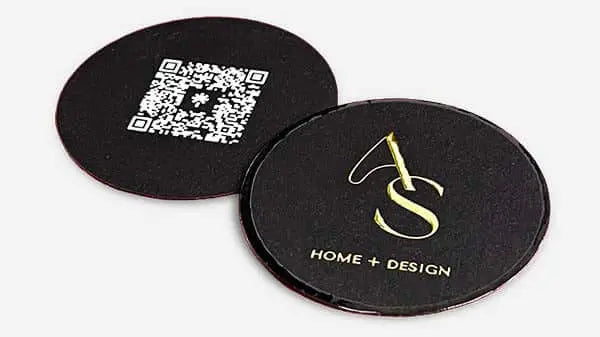


What Is Foil Stamping on Business Cards: Luxury Branding Impact
Every luxury beauty brand owner knows the difference a first impression can make at an exclusive event. Foil stamping transforms a simple business card into a statement of sophistication with metallic and textured finishes that communicate luxury at first glance. Perfected in the 19th century and now available with a stunning variety of effects, this technique helps American brands capture attention, reinforce prestige, and ensure their name lingers long after an introduction.
Table of Contents
- Foil Stamping Defined And Common Myths
- Types Of Foil And Stamping Techniques
- How Foil Stamping Works On Cards
- Material Choices And Design Considerations
- Cost, Alternatives, And Common Pitfalls
Key Takeaways
| Point | Details |
|---|---|
| Foil Stamping Versatility | Foil stamping offers a range of finishes beyond gold and silver, including holographic and textured options, allowing for unique branding opportunities. |
| Techniques Comparison | Different stamping techniques provide varying effects and complexities; understanding these options can enhance design outcomes and cost-effectiveness. |
| Material Importance | Selecting appropriate paper and maintaining clean typography are crucial for successful foil applications, ensuring optimal adhesion and visual clarity. |
| Cost Considerations | While hot foil stamping is the most premium option, alternative methods can provide effective design solutions at lower costs, making it vital to assess needs carefully. |
Foil Stamping Defined and Common Myths
Foil stamping is a sophisticated print finishing technique that transforms business cards from ordinary to extraordinary. Specialized print finishing method involves applying a thin metallic or pigmented layer onto surfaces using precise heat and pressure. This process creates stunning visual textures ranging from glossy metallics to subtle matte finishes that instantly communicate luxury and attention to detail.
Historically, foil stamping emerged in the 19th century, originally using actual gold leaf before modern synthetic foils made the technique more accessible. The method utilizes custom metal dies and carefully controlled heat application to transfer intricate designs onto paper, plastic, leather, and specialty cardstocks. Professional designers appreciate foil stamping for its ability to add dimensionality, reflection, and a tactile quality that standard printing techniques cannot achieve.
Contrary to popular misconceptions, foil stamping is not limited to gold or silver tones. Modern techniques offer holographic, matte, textured, and even color-shifting foils that provide remarkable design flexibility. Brands can select from metallic, pearl, and pigmented finishes that complement their visual identity. These options allow for nuanced branding statements that go far beyond simple color selection.
Pro Tip: When selecting foil stamping, request sample swatches to understand how different lighting conditions and paper stocks interact with metallic finishes.
Types of Foil and Stamping Techniques
Foil stamping encompasses several sophisticated techniques that offer brands unprecedented design flexibility and visual impact. Advanced foil stamping approaches include hot foil, cold foil, digital foil, and holographic printing methods, each delivering unique aesthetic and functional characteristics for premium business card production.
Hot foil stamping represents the traditional technique, utilizing heated metal dies to transfer metallic or pigmented foils directly onto surfaces. This method provides exceptional precision and depth, allowing intricate designs with crisp edges and rich metallic finishes. Cold foil stamping offers an alternative approach, using UV-curable adhesives to apply foils without heat, which enables more delicate and lightweight applications ideal for complex graphic designs.
Digital foil printing has emerged as a revolutionary technique, eliminating the need for traditional metal dies and allowing more cost-effective short-run productions. Holographic foil printing takes visual complexity even further, creating stunning multidimensional effects that shift and change depending on viewing angle. These advanced techniques enable brands to move beyond standard color printing and create truly memorable visual experiences.
Pro Tip: Request multiple foil samples to understand how different techniques interact with your specific design and paper stock, ensuring optimal visual impact.
Here’s a clear comparison of foil stamping methods and their unique attributes:
| Technique | Setup Complexity | Typical Applications | Notable Advantages |
|---|---|---|---|
| Hot Foil Stamping | High (custom dies) | Luxury cards, invitations | Deep texture, crisp detail |
| Cold Foil Stamping | Medium (adhesives) | Lightweight graphics | Fine detail, softer feel |
| Digital Foil | Low (no metal dies) | Small batches, prototypes | Fast turnaround, cost-effective |
| Holographic Foil | High | Premium branding, effects | Multi-color, shifting visuals |
How Foil Stamping Works on Cards
Foil stamping transforms business cards through a precision manufacturing process that combines heat, pressure, and specialized materials. Intricate printing method involves creating a custom metal die with the desired design, which becomes the critical template for transferring metallic or pigmented foils onto card surfaces with exceptional detail and clarity.
The technical process begins with carefully selecting a metal die that precisely matches the intended graphic or text design. This die is heated to activate the adhesive properties of the foil, which is then positioned between the heated die and the business card substrate. When pressure is applied, the heated die transfers the foil onto the card, creating a permanent bond that produces a raised, reflective finish with razor-sharp edges and remarkable visual depth.
Each foil stamping technique requires meticulous calibration of temperature, pressure, and material selection. Designers must consider factors like foil thickness, substrate composition, and the complexity of the design to achieve optimal results. Modern foil stamping allows for incredible versatility, enabling brands to create everything from subtle, understated metallic accents to bold, eye-catching holographic effects that transform an ordinary business card into a memorable branding statement.
Pro Tip: Consult with printing specialists to match your specific card design and desired foil effect, as different paper stocks and foil types can dramatically impact the final visual outcome.
Material Choices and Design Considerations
Selecting the right materials and design approach is crucial for creating impactful foil-stamped business cards. Strategic design recommendations emphasize using metallic accents strategically, focusing on key elements like logos, borders, and critical text rather than overwhelming the entire card surface.
Paper selection plays a critical role in foil stamping success. Smooth, coated papers such as silk or suede laminations provide optimal foil adhesion and create a luxurious tactile experience. Designers should prioritize bold, clean typographic choices with sans-serif fonts and generous letter spacing to prevent foil bleeding and maintain crisp visual definition. Color selection becomes a nuanced branding strategy, with combinations like dark backgrounds paired with gold or silver foil creating dramatic visual contrast that enhances readability and brand recognition.
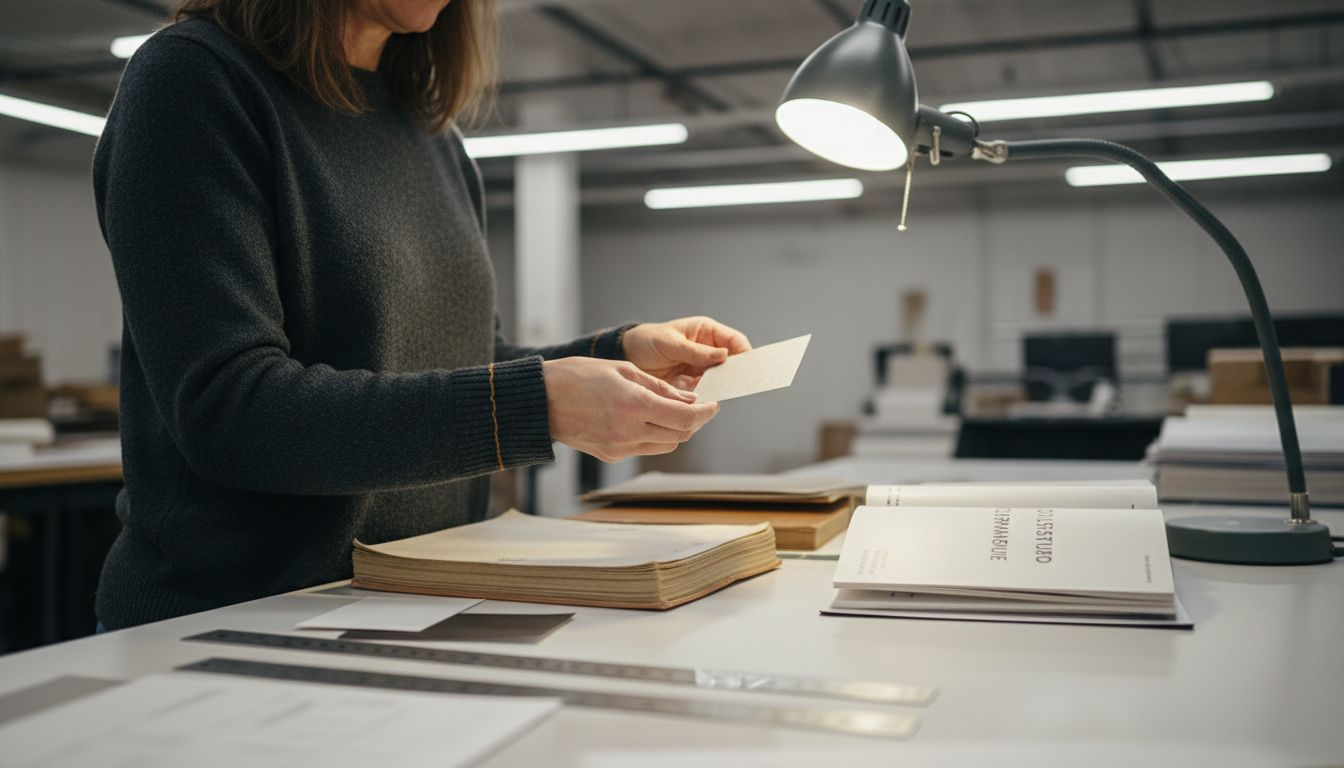
The metallic palette extends far beyond traditional gold and silver, offering holographic, rose gold, and custom color options that can communicate different brand personalities. Brands must carefully consider how foil color interacts with their underlying design, paper color, and overall visual identity. Intricate designs require particular attention, as complex patterns can lose clarity during the foil stamping process, making simplicity and strategic accent placement key to achieving a sophisticated final product.
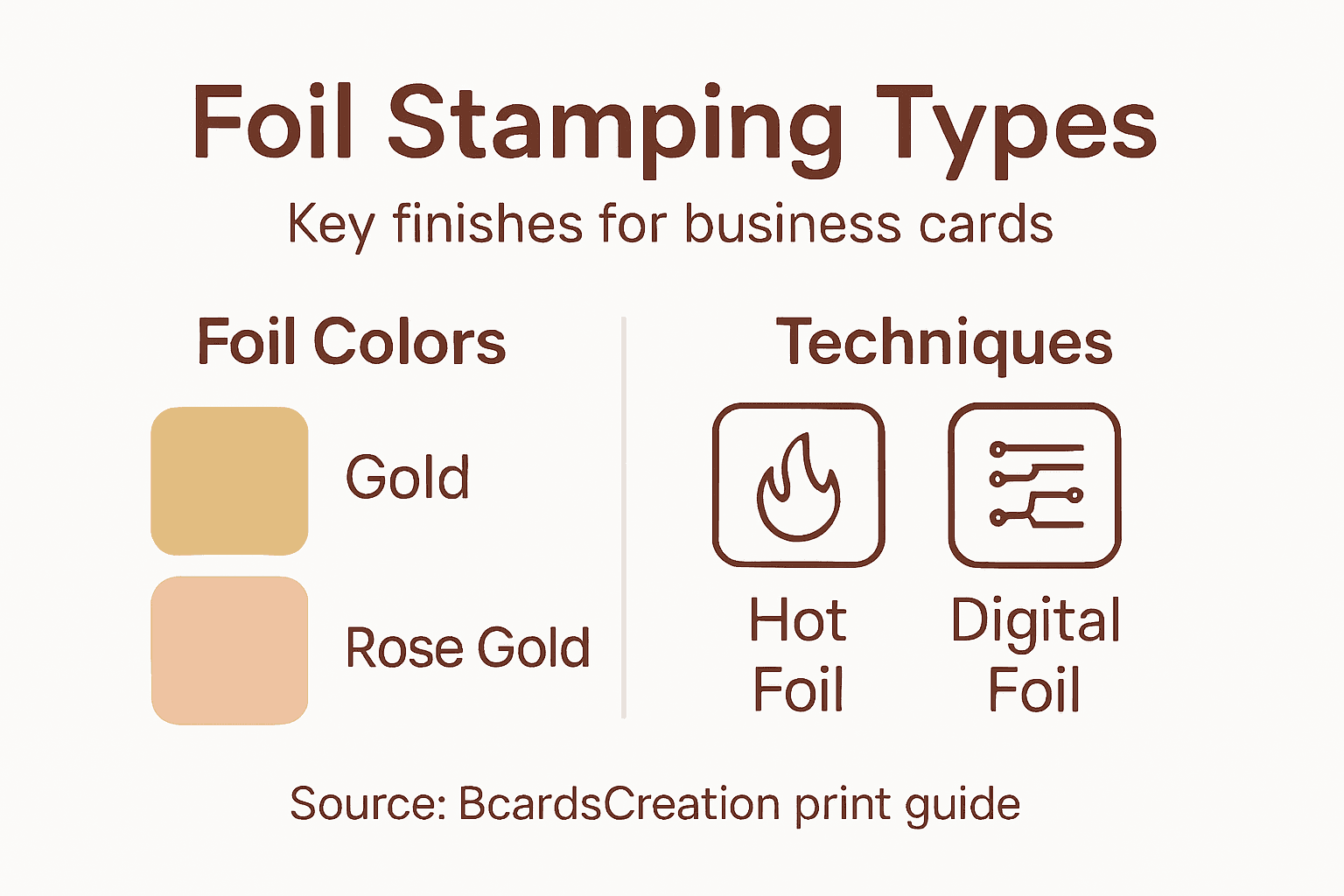
Pro Tip: Request physical foil samples and test multiple color combinations against your specific paper stock to ensure the exact visual and tactile effect you desire.
Use this summary to evaluate material and design choices for standout business cards:
| Factor | Preferred Option | Business Card Impact |
|---|---|---|
| Paper Stock | Smooth, coated | Strong foil adhesion, premium feel |
| Typography | Sans-serif, spacious lettering | Prevents blurring, enhances clarity |
| Foil Color Selection | Custom matched to brand palette | Unique branding, visual statement |
| Accent Placement | Logos, borders, key elements | Highlights message, avoids clutter |
Cost, Alternatives, and Common Pitfalls
Foil stamping represents a sophisticated branding technique with nuanced cost considerations and potential design challenges. Critical design and printing considerations reveal that seemingly minor design choices can dramatically impact the final product’s quality and perceived value.
Cost structures for foil stamping vary significantly based on production technique. Hot foil stamping, which requires custom metal dies, typically represents the most expensive option but delivers the highest quality results. Cold foil and digital foil stamping offer more economical alternatives, particularly for shorter print runs or more complex design requirements. Alternative finishing techniques like embossing, spot UV coating, and metallic inks provide comparable visual effects at potentially lower price points, giving brands flexibility in achieving their desired aesthetic.
Designers must navigate several potential pitfalls to ensure successful foil stamping. Common issues include selecting inappropriate paper stocks that prevent proper foil adhesion, creating overly intricate designs that blur or distort under stamping pressure, and poor color contrast that reduces legibility. Strategic design choices such as maintaining adequate spacing, using clean typography, and working closely with experienced printing specialists can mitigate these risks and ensure a premium final product.
Pro Tip: Request comprehensive print proofs and test multiple design iterations to identify potential foil stamping challenges before committing to full production.
Elevate Your Brand with Custom Foil Stamped Business Cards
Foil stamping offers a stunning way to turn ordinary business cards into luxurious branding tools that leave a lasting impression. If you want to avoid common pitfalls like poor foil adhesion or unclear designs, choosing the right materials and expert craftsmanship is essential. At BcardsCreation, we specialize in fully custom, design-driven solutions that combine advanced finishing techniques with unmatched attention to detail. Whether you prefer bold metallic accents or subtle holographic effects, our small-batch production ensures every card reflects your unique brand identity.
Explore our Letterpress Business Cards – BcardsCreation collection to see how foil stamping can integrate flawlessly with premium tactile finishes. For innovative shapes that complement foil details perfectly, visit Custom Shaped Business Cards – BcardsCreation. Every project is crafted individually without templates, ensuring your foil stamped cards achieve outstanding visual impact and feel.
Discover the difference that expert design guidance and material consultation make in foil stamping success. Start transforming your business cards today by visiting BcardsCreation. Act now to create a strategic branding tool that stands out and commands attention from the very first handshake.
Frequently Asked Questions
What is foil stamping on business cards?
Foil stamping is a print finishing technique that applies a thin metallic or pigmented layer onto business cards using heat and pressure, creating a luxurious and visually appealing surface.
What are the different types of foil stamping techniques?
The main types of foil stamping techniques include hot foil stamping, cold foil stamping, digital foil printing, and holographic foil printing, each offering unique aesthetics and applications for design.
How does foil stamping enhance branding?
Foil stamping adds dimensionality and a tactile quality to business cards, allowing brands to communicate luxury, attention to detail, and unique visual identities through diverse foil options and finishes.
What should I consider when designing a foil-stamped business card?
When designing a foil-stamped card, consider factors like paper choice, typography, foil color selection, and accent placement to ensure optimal foil adhesion, clarity, and visual impact.
Recommended
- Raised Foil Business Cards | Thick Double-layered Art Paper – BcardsCreation
- Letterpress Business Card with full color print and real foil Rose Gol – BcardsCreation
- SHIMMER Business Card | Silver Gold Holographic Foil Stamped – BcardsCreation
- Fine Paper Double layered Business Card with Real Gold / Silver Foils, – BcardsCreation


