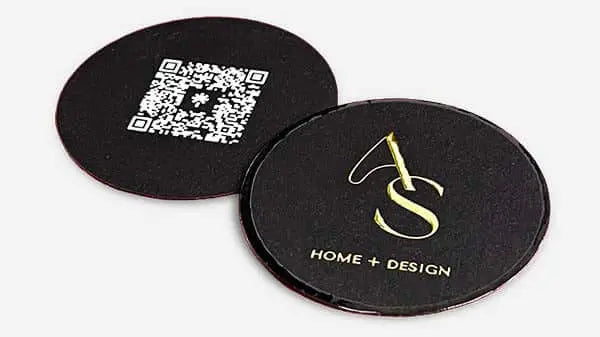


Foil Stamping: Elevating Luxury Beauty Branding
Setting your beauty brand apart in a crowded American luxury market starts with the smallest details, and few elements create a memorable impression like a beautifully crafted business card. Foil stamping transforms ordinary cards into tactile statements of quality, using heat and pressure to bond metallic or pigmented layers directly onto premium paper, all without producing environmental pollutants. For American beauty entrepreneurs committed to both sophistication and sustainability, the dry, non-polluting nature of foil stamping offers a distinct advantage for brand presentation.
Table of Contents
- Foil Stamping Defined And Common Myths
- Types Of Foil Stamping For Business Cards
- How Foil Stamping Creates Luxury Appeal
- Key Materials And Finishes For Best Results
- Cost, Mistakes, And Strategic Brand Impact
Key Takeaways
| Point | Details |
|---|---|
| Understanding Foil Stamping | Foil stamping, or hot stamping, is a dry process that enhances the tactile quality and sustainability of business cards without using wet inks or solvents. |
| Common Misconceptions | Foil stamped cards are durable, complex design is manageable, and the process is environmentally friendly, contradicting popular myths. |
| Types of Foil Effects | Choose from metallic, pigment, holographic, or cold foil based on your brand’s positioning and desired visual impact. |
| Strategic Investment | While die creation is a significant cost, investing in foil stamping can elevate brand perception and customer engagement, leading to increased loyalty and pricing power. |
Foil stamping defined and common myths
Foil stamping, also known as hot stamping, is a straightforward process despite its sophisticated appearance. A heated metal die presses specially formulated foil onto your business card surface. The foil itself is engineered with multiple layers: a reflective color layer (typically metallic gold, silver, or pigmented), a release layer that separates from the carrier, and an adhesive layer that bonds to your card stock. This is why foil stamped cards feel different in your hand than standard printed ones. The tactile quality matters in luxury beauty branding.
The process operates completely dry, which surprises many people. Unlike traditional ink printing that uses solvents and chemical curing, foil stamping uses heat and pressure to transfer pre-formed foil directly onto the substrate. This means no wet ink, no drying time delays, and no environmental pollutants released during production. For brands concerned with sustainability credentials, this is a genuine advantage worth noting.
Common myth number one: foil stamping is too delicate for business cards. Not true. Modern foil stamped cards withstand handling, shuffling, and wallet storage without degradation. The foil bonds permanently to the paper through heat and pressure, not through adhesive that weakens over time. Beauty brand founders often worry their cards will scratch or fade during transport to events. Properly executed foil stamping actually improves durability compared to some other specialty finishes.
Myth number two: the process is prohibitively complex. Complexity exists in the design and die creation phase, not in the stamping itself. Designers must account for registration accuracy and foil placement precision. This is why working with studios that handle each project individually matters. Templated solutions cannot accommodate the customization luxury brands require. The technical complexity becomes invisible to the end user when executed correctly.
Myth number three: foil stamping damages the environment. The dry process produces zero liquid waste and requires no chemical solvents. Dies are reusable across print runs, minimizing material waste. For beauty brands positioned around clean, sustainable practices, foil stamping aligns with those values more authentically than many alternatives.
Understanding these realities helps you make informed decisions about your card design. Foil stamping works best when the finish serves your brand positioning, not as decoration applied without purpose.
Pro tip Work closely with your designer to determine which brand elements benefit most from foil emphasis. A single strategic element like your logo or a signature beauty mark often creates more impact than covering an entire card.
Types of foil stamping for business cards
Foil stamping offers three primary categories, each creating distinct visual effects for your luxury beauty brand. Understanding the differences helps you choose the right finish for your positioning and audience expectations.
Metallic foils deliver the classic high-shine finish that defines luxury. Gold, silver, bronze, and copper options provide instant prestige and warmth. These foils catch light beautifully during face-to-face introductions, making your card memorable in a pile of others. Gold foil remains the most requested option for beauty brands because it signals premium positioning without excess. The reflective quality works particularly well for logos, brand names, or accent details that deserve emphasis.
Pigment foils offer a different aesthetic entirely. Unlike metallics, pigment foils provide matte or glossy finishes in virtually any color imaginable. This matters if your brand identity requires specific hues that standard metallic options cannot match. A beauty brand with a signature emerald green or deep rose tone can achieve exact color matching through pigment foils. The non-reflective quality creates elegance through subtlety rather than shine.
Holographic foils create multi-dimensional, eye-catching surfaces that shift and change with viewing angle. These work best when your brand positioning leans toward innovation, playfulness, or contemporary aesthetics. The multi-dimensional foil effects appeal strongly to younger audiences and brands positioned around cutting-edge beauty technology. Use holographic foils strategically on small elements rather than entire card backgrounds to avoid overwhelming the design.
A newer alternative gaining traction is cold foil printing, which uses UV-curable adhesives instead of heated dies. This method allows finer detail work like halftones and intricate patterns without expensive die costs. Cold foil works well for short production runs where die investment becomes prohibitive. The foil surface appears flatter than traditional hot stamping, which some brands prefer for modern aesthetics.
Your choice depends on brand personality, production quantity, and the specific impact you want to create. Metallic foils suit timeless, prestigious positioning. Pigment foils work for exact brand color matching. Holographic foils attract attention through innovation. Each serves a different strategic purpose in luxury beauty branding.
Here’s a concise comparison of foil stamping types for business cards:
| Foil Type | Visual Impact | Best For | Brand Positioning |
|---|---|---|---|
| Metallic | High-shine, reflective | Timeless, elegant brands | Prestige and luxury |
| Pigment | Matte or glossy color | Unique color identities | Subtle sophistication |
| Holographic | Multi-dimensional | Innovative, playful brands | Modern, tech-forward |
| Cold Foil | Flat, fine details | Short runs, intricate designs | Contemporary appeal |
Pro tip Request foil samples on your specific card stock before committing to full production. Foil appearance changes dramatically based on paper texture, color, and weight, so seeing samples in hand prevents costly surprises.
How foil stamping creates luxury appeal
Luxury exists in perception, and foil stamping speaks directly to how people perceive value. When a prospect holds your foil stamped card, they experience something tangible that signals exclusivity before they read a single word.
The tactile dimension matters enormously in beauty branding. Unlike flat printed cards, foil stamping creates raised or embossed surfaces that demand touch. Your fingertips feel the difference between foil and card stock. This sensory experience registers as premium quality instantly. A client who runs their thumb across a gold foil logo remembers that moment. They remember your brand because interaction deepened the impression.
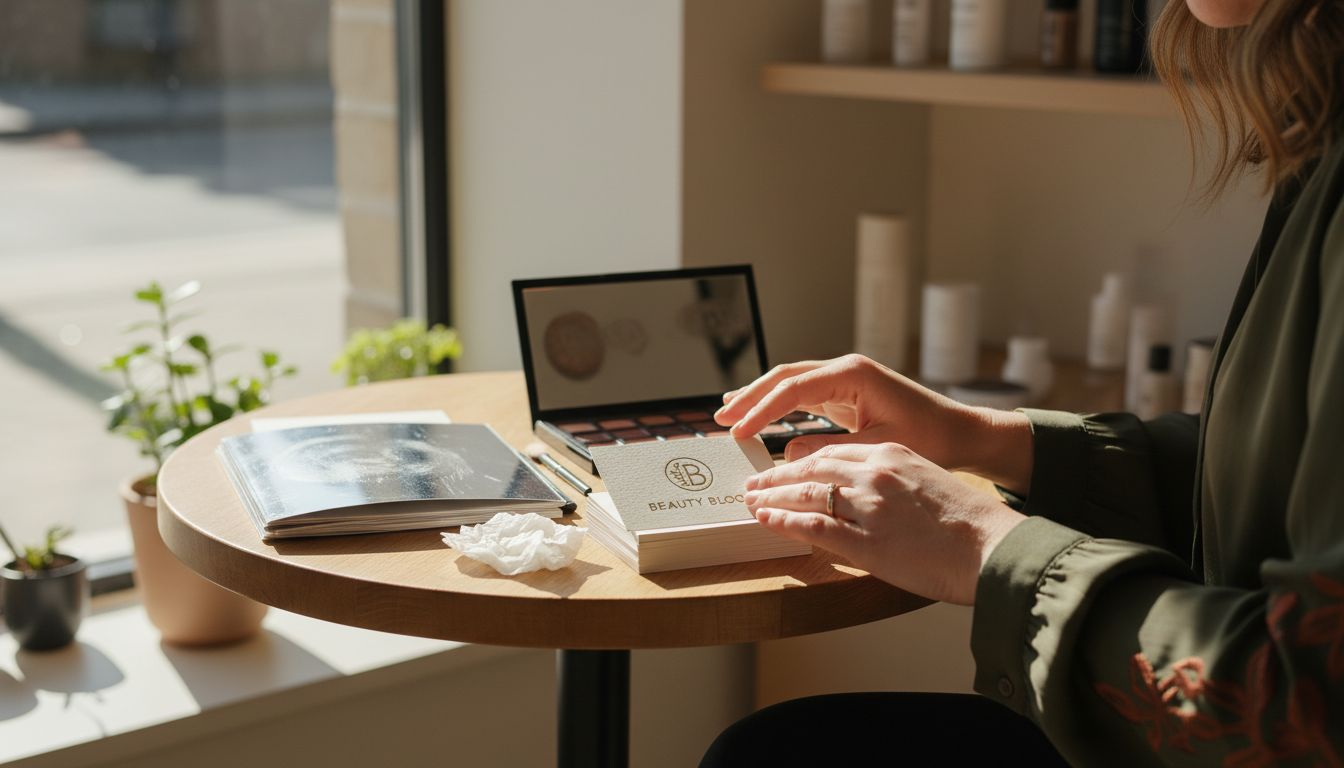
Metallic finishes carry psychological weight in luxury markets. Gold evokes wealth and heritage. Silver suggests sophistication and modernity. Copper conveys warmth and approachability within a premium context. These associations weren’t invented by marketers. They reflect centuries of cultural conditioning where metals signaled status. When your beauty brand uses metallic foils that evoke premium positioning, you’re tapping into established luxury codes.
The visual depth created by foil stamping adds complexity that flat printing cannot match. Heated dies create dimension through embossing or debossing, adding shadows and highlights that catch light differently depending on viewing angle. This visual richness rewards closer examination. A prospect might glance at a standard printed card once. A foil stamped card invites repeated viewing because the surface changes as light shifts.
Design precision amplifies luxury perception. Foil stamping allows for intricate details and fine letterforms that maintain their integrity through the application process. Delicate brand elements remain sharp and defined. This attention to detail signals that your brand invests in quality at every scale.
The exclusivity factor shouldn’t be underestimated. Not every business uses foil stamping. Choosing this finish communicates that your brand operates in a different tier. Beauty entrepreneurs and luxury brands expect this level of refinement from vendors and partners. Your business card becomes proof of your commitment to excellence before any conversation begins.
Consumers perceive bright, smooth metallic surfaces as signals of quality and exclusivity. This perception is immediate and often subconscious. Neuroscience shows that luxury purchases activate reward centers in the brain, and tactile luxury experiences strengthen that activation. Your foil stamped card triggers those neural pathways.
Pro tip Resist the temptation to foil stamp your entire card. Strategic restraint creates more luxury appeal than coverage. A single foil element on a sophisticated background communicates refined elegance better than a foil covered card.
Key materials and finishes for best results
The success of foil stamping depends entirely on material selection and finish quality. Choosing the right combination transforms your cards from nice to unforgettable.
Paper stock forms your foundation. The substrate matters as much as the foil itself. Heavier papers with smooth surfaces accept foil more reliably than thin or textured options. Luxury beauty brands typically choose papers between 80 and 100 pound card stock. Smooth finishes like uncoated, cotton blend, or silk provide ideal surfaces for foil adhesion. Textured papers can work, but require careful consideration of how foil bridges the surface.
Surface preparation is non-negotiable. Before foil stamping occurs, your card stock must be clean and ready. Any dust, coating inconsistencies, or moisture affects how the foil bonds. This is why working with studios that control the entire production process matters. Mass production facilities cannot guarantee the surface consistency that luxury requires.
Foil composition determines both appearance and durability. Quality foils contain multiple engineered layers: an adherence base that bonds to your paper, a color or metallic layer that creates the visual effect, and a release layer that separates from the carrier film. Metallic foils use vacuum-metallized aluminum or chrome to achieve their signature lustrous finish. This layered construction ensures the foil stays on your card for years, not weeks.
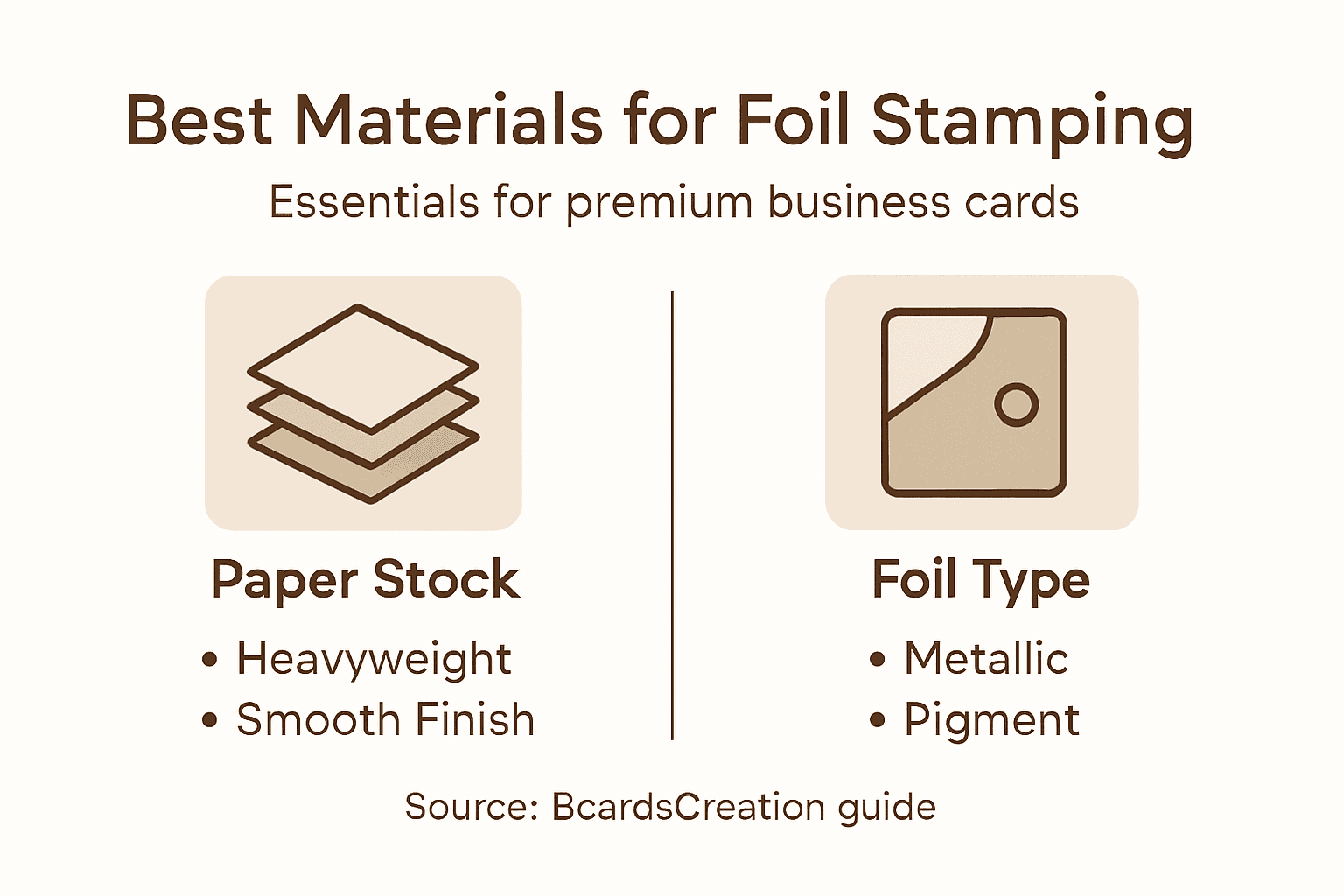
Finish options shape the final aesthetic. Matte foils provide understated elegance without reflection. Gloss foils catch light dramatically and command attention. Satin finishes split the difference, offering subtle shine without high gloss. Specialty finishes like holographic or brushed metallic add contemporary appeal. Your brand positioning should guide the choice. A minimalist beauty brand might favor matte pigment foils. A playful, youth-focused brand might choose holographic or mirror effects.
Temperature and pressure control quality. The stamping process requires precise heat application and consistent pressure. Dies must heat to specific temperatures without overshooting. Dwell time, the duration the die contacts your paper, must remain constant across every card. This precision is why industrial foil stamping produces superior results compared to DIY approaches. One degree too hot or one millisecond too long changes the outcome.
Pro tip Order samples on your exact paper stock with your preferred foil type before committing to full production. Foil appearance varies dramatically based on paper brightness, coating, and weight, so seeing actual results on your chosen materials prevents expensive revisions.
Below is a summary of key factors influencing foil stamping results:
| Factor | Why It Matters | Business Impact |
|---|---|---|
| Paper Stock | Affects foil adhesion | Enhances quality and feel |
| Surface Preparation | Prevents bonding issues | Reduces production failures |
| Foil Composition | Determines durability | Sustains premium appearance |
| Finish Options | Shapes visual style | Aligns with brand image |
| Temperature/Pressure | Controls stamping quality | Minimizes costly defects |
Cost, mistakes, and strategic brand impact
Foil stamping requires upfront investment that many beauty brands underestimate. Understanding the true cost structure and potential pitfalls helps you make decisions that protect your brand and budget.
Die creation represents the largest expense. Custom metal dies must be manufactured to your exact specifications. For small production runs under 5,000 cards, die costs can represent 40 to 60 percent of your total project investment. Larger quantities spread die costs across more units, reducing per-card expense. This is why foil stamping makes financial sense primarily for brands committed to consistent, long-term card use.
Common mistakes derail results quickly. Temperature control errors cause foil adhesion failures where the foil peels from your card within weeks. Pressure misalignment produces blurred or incomplete impressions that damage your brand perception. Die positioning mistakes shift your logo off center or create asymmetrical placement. These defects increase waste and cost significantly, eating into your budget through reprints. Working with experienced studios minimizes these risks through precision equipment and quality control protocols.
Strategic value justifies the investment. Foil stamping elevates brand perception in ways that directly impact business outcomes. Your cards become conversation starters at networking events. Clients remember foil stamped cards better than standard alternatives. Beauty entrepreneurs report that clients perceive their brands as more established and trustworthy when greeted with foil stamped cards. This perception advantage translates to premium pricing power and client loyalty.
For luxury beauty brands, the return on investment extends beyond the cards themselves. Foil stamping reinforces your positioning as a premium operator. When every touchpoint demonstrates commitment to quality, clients expect and accept higher service prices. Your cards work as a 24-7 brand ambassador that costs mere dollars per impression.
Budget strategically around die costs. If you plan significant design changes within 12 months, the economics shift. If your design stays consistent for years, foil stamping becomes increasingly cost-effective per impression.
Pro tip Lock your business card design for at least 18 months before committing to custom dies. Frequent design changes eliminate foil stamping’s cost advantage, so ensure your brand identity is mature enough to sustain consistency.
Elevate Your Beauty Brand with Expert Foil Stamping Solutions
Foil stamping offers a powerful way to transform your business cards into memorable luxury touchpoints. If you are concerned about durability, precise foil placement, or achieving the perfect metallic shine that conveys prestige and sophistication, you are not alone. Many luxury beauty brands face these challenges and seek expert guidance to align foil stamping with their strategic brand image. That is where tailored, small-batch craftsmanship makes all the difference.
At BcardsCreation, we specialize in fully custom business cards that bring your foil stamped vision to life without compromise. Our meticulous design support and controlled production processes ensure every die is crafted for lasting adhesion and perfect registration. We help you select ideal paper stocks and finishes that maximize foil impact while reflecting your unique identity.
Explore our premium business card services to experience how foil stamping can elevate your luxury beauty branding with unparalleled tactile and visual appeal.
Take the next step toward making your brand unforgettable with BcardsCreation. Connect with us today to start crafting your custom foil stamped business cards that speak volumes before you say a word.
Frequently Asked Questions
What is foil stamping and how does it work?
Foil stamping, also known as hot stamping, is a process where a heated metal die presses specially formulated foil onto a surface, creating a luxurious finish. It operates completely dry, requiring only heat and pressure to transfer the foil onto the substrate.
What are the benefits of using foil stamping for business cards in the beauty industry?
Foil stamping adds a tactile dimension and premium appeal to business cards, enhancing brand perception. It involves no liquid waste, making it environmentally friendly, and the durability of modern foil stamping techniques ensures that the cards withstand handling without degrading.
How do metallic, pigment, and holographic foils differ in appearance and use?
Metallic foils provide a high-shine finish ideal for luxury branding, while pigment foils offer matte or glossy finishes in various colors for unique brand identities. Holographic foils create multi-dimensional effects suitable for innovative and playful brand aesthetics.
What factors should be considered when choosing paper stock for foil stamping?
Choosing heavier, smoother paper stock (between 80 and 100 pound) is crucial for optimal foil adhesion. Surface preparation is also important; the paper must be clean and free from dust or moisture to ensure a flawless finish.
Recommended
- Raised Foil Business Cards | Thick Double-layered Art Paper – BcardsCreation
- Raised Foil Custom Stickers | Free Design | 3 foils – BcardsCreation
- Custom Stickers up to 1 inch, Transparent or White Stickers, Real Foil – BcardsCreation
- Diamond Business Cards | Frosted Plastic | Custom shape card – BcardsCreation
- What Is Luxury Branding and Why It Matters – Lind Creative
- Best 5 Refillable Lipstick for Clean Beauty – 2026 – Pure Light Botanical Beauty


