

How to Make Plastic Business Cards for Luxury Brands
Most American luxury brand owners know that the smallest details can set a business apart. Premium plastic business cards are quickly reshaping the way creative entrepreneurs make lasting first impressions, with over 90 percent of recipients judging a brand’s quality by the feel and finish of its card. For those ready to redefine their networking experience, this guide uncovers how strategic choices in design, materials, and expert printing can help your brand stand out in every meeting.
Table of Contents
- Step 1: Define Your Brand Vision And Purpose
- Step 2: Select Plastic Materials And Finishes Strategically
- Step 3: Tackle Design Challenges Unique To Plastic
- Step 4: Leverage White Ink, Contrast, And Layering Effects
- Step 5: Verify Quality And Address Common Mistakes
Quick Summary
| Main Insight | Clarification |
|---|---|
| 1. Define Your Brand’s Vision | Establish a clear brand vision that transcends financial goals and connects with deeper values and purpose. |
| 2. Choose Materials Thoughtfully | Select plastic materials that reflect your brand identity and resonate with your target audience’s expectations. |
| 3. Address Design Challenges | Understand unique design challenges with plastic, like printing techniques and color management, to maintain luxury appeal. |
| 4. Utilize Advanced Printing Techniques | Master white ink layering and contrast to create depth and visual intrigue in your business card design. |
| 5. Implement Rigorous Quality Control | Ensure high-quality production through systematic checks of print sharpness, color consistency, and material integrity. |
Step 1: Define Your Brand Vision and Purpose
Defining your brand vision and purpose sets the strategic foundation for everything your business will communicate and represent. This critical step transforms abstract ideas into a concrete roadmap that will guide your brand’s identity and positioning.
To craft a compelling brand vision, start by looking beyond immediate business goals and exploring the deeper impact you want to create. Brand identity expresses what a company stands for through distinct elements that differentiate you from competitors. Ask yourself foundational questions: What problem does your brand solve? What unique value do you bring to your customers? What change do you want to inspire in your industry or community?
Begin by documenting your core purpose written as a clear, inspiring statement. This purpose should transcend financial metrics and connect to a more meaningful narrative. A robust brand purpose integrates your mission, values, and the emotional resonance you aim to create. A strong corporate identity provides direction and purpose, helping attract the right customers and talents who align with your vision.
Pro tip: Schedule a dedicated brainstorming session with key team members to collaboratively explore and refine your brand’s vision, ensuring multiple perspectives are considered and deeply understood.
Step 2: Select Plastic Materials and Finishes Strategically
Choosing the right plastic materials and finishes for your business cards is a nuanced decision that directly impacts your brand’s perceived quality and professional image. This step requires careful consideration of material properties, visual aesthetics, and strategic brand positioning.
Thermoplastics represent 92% of all plastics used in professional applications, offering remarkable versatility for business card design. Materials like polycarbonate and polyethylene provide durability and flexibility crucial for luxury brand presentations. When selecting your plastic, consider factors beyond mere appearance such as thickness, transparency, and texture. Each material communicates a different brand personality transparent plastics suggest modernity and openness, while frosted or metallic finishes convey sophistication and exclusivity.
Your material selection should align closely with your brand identity and target audience expectations. Consider tactile experience as much as visual appeal different plastic finishes create distinct sensory impressions. Glossy surfaces might suggest corporate precision, while matte textures could communicate understated elegance. Test multiple material samples to understand how light interaction, flexibility, and surface quality contribute to your overall brand narrative.
Pro tip: Request material samples from multiple suppliers and conduct a blind review with your team to objectively assess how different plastic finishes represent your brand’s core values and aesthetic vision.
Here is a comparison of common plastic business card materials and their brand messaging impact:
| Material | Durability & Flexibility | Typical Finish | Brand Message |
|---|---|---|---|
| Polycarbonate | High strength, flexible | Glossy or matte | Modern, professional |
| Polyethylene | Flexible, lightweight | Smooth, frosted | Sleek, approachable |
| Polyvinyl Chloride | Sturdy, medium-flex | Glossy, clear | Premium, reliable |
| PET (Polyester) | Rigid, highly durable | Crystal clear | Innovative, dynamic |
Step 3: Tackle Design Challenges Unique to Plastic
Designing business cards with plastic introduces a complex set of creative and technical challenges that require strategic thinking and meticulous attention to detail. Understanding these unique considerations is crucial for creating a premium product that truly represents your brand’s sophistication.
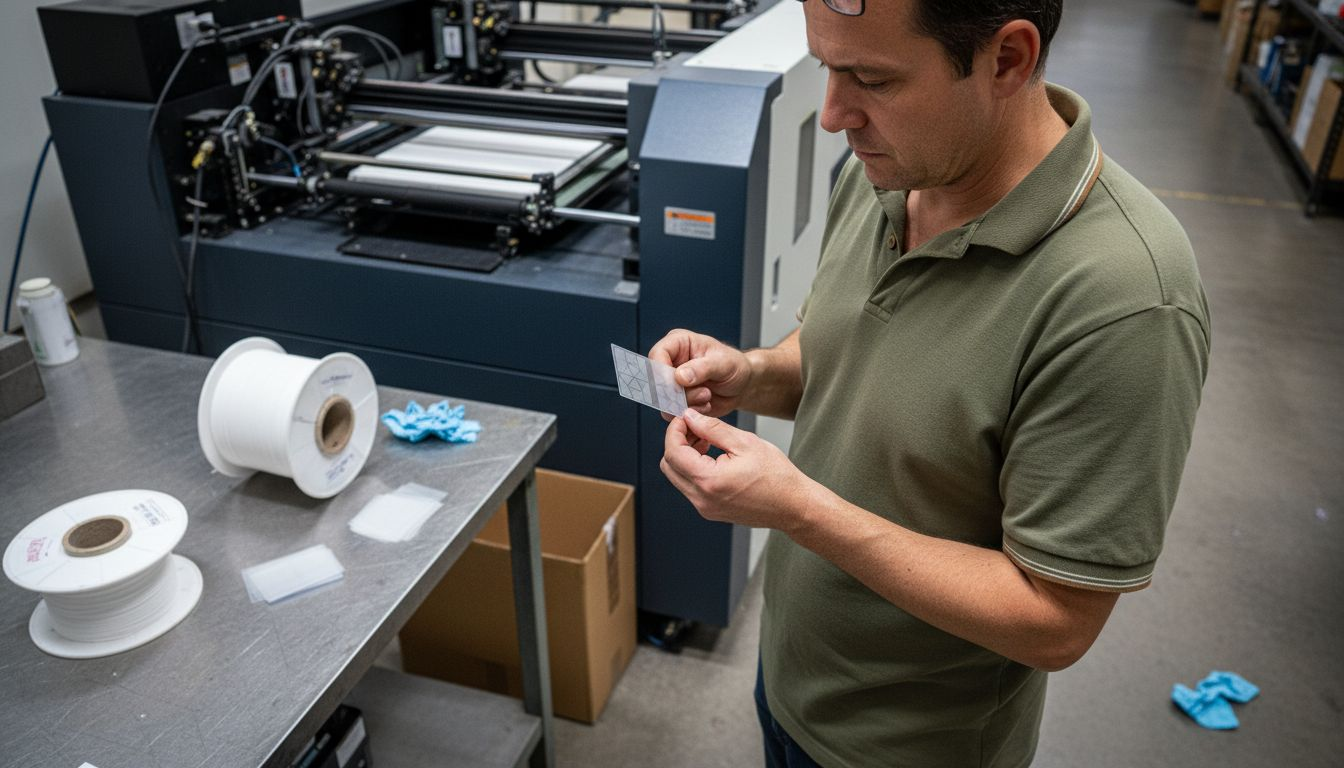
Properly framing the design challenge involves understanding the intricate balance between material properties and brand identity. Plastic business cards demand a nuanced approach that goes beyond traditional paper design. White ink printing becomes particularly challenging with transparent or translucent plastics, requiring specialized techniques to ensure crisp, legible text and graphics. Color management and opacity become critical considerations color bleeding and transparency can dramatically alter your intended design.
Luxury brand identity must be preserved through every design decision. Luxury brand design requires multi dimensional considerations that extend far beyond visual aesthetics. Consider how light interacts with your plastic card surface how textures communicate brand personality and how subtle design elements can create depth and intrigue. Layering techniques white ink underlays and strategic opacity variations can transform a simple plastic card into a sophisticated brand statement.
Pro tip: Work with a specialized plastic printing expert who understands the unique challenges of luxury brand design and can provide technical guidance on achieving your exact visual and tactile objectives.
Step 4: Leverage White Ink, Contrast, and Layering Effects
Creating visually stunning plastic business cards requires mastering advanced printing techniques that transform simple materials into sophisticated brand communication tools. This step focuses on strategic design approaches that elevate your card from ordinary to extraordinary.
Advanced printing techniques allow high resolution layering of inks and materials on plastic surfaces. White ink becomes a critical design element for luxury business cards particularly on transparent or translucent plastics. By strategically applying white ink as an underlay you can create depth dimension and visual intrigue. Consider how white ink can serve as a foundation layer that enhances subsequent color applications brightens intricate design elements and provides crisp contrast against varied plastic backgrounds.
Layering effects enhance visual depth, allowing designers to separate and highlight brand elements with precision. Think of your plastic business card as a three dimensional canvas where each layer tells a part of your brand story. Experiment with opacity variations subtle texture gradients and strategic white ink placements to create visual complexity. The goal is to design a card that changes appearance subtly as it catches different lighting angles revealing hidden details that intrigue and engage.
Pro tip: Request multiple test prints with different white ink layering techniques to understand how subtle design variations can dramatically transform your plastic business card’s visual impact.
Step 5: Verify Quality and Address Common Mistakes
Ensuring the exceptional quality of your luxury plastic business cards requires a meticulous approach to quality control and proactive identification of potential design and production challenges. This final verification step is critical to maintaining your brand’s reputation and delivering a premium product.
Quality control involves ongoing inspection of production processes to guarantee consistent product standards. For plastic business cards, this means rigorous examination of material integrity, print precision, color accuracy, and tactile experience. Common mistakes include uneven white ink application, inconsistent transparency, edge imperfections, and poor color transitions. Develop a comprehensive checklist that covers material thickness, color matching, ink adhesion, and overall card durability.
Quality control ensures customer expectations are met through systematic monitoring and testing. Examine each card under different lighting conditions to verify design consistency, check for potential color bleeding or ink migration, and assess how the card feels in hand. Pay special attention to areas where design elements might break down or where layering techniques could compromise structural integrity. Multiple rounds of prototyping and testing are essential to refine your final product.

Pro tip: Create a rigorous sample validation process that includes testing cards in real world conditions to identify potential wear and performance issues before final production.
Here is a summary of key quality checks to perform before finalizing your plastic business cards:
| Quality Factor | Why It Matters | Example Inspection Approach |
|---|---|---|
| Print Sharpness | Ensures brand clarity | Examine fine text and logos |
| Color Consistency | Maintains brand trust | Compare cards under various light |
| Material Uniformity | Prevents weak spots | Check thickness across cards |
| Edge Finish | Enhances feel & safety | Inspect for smooth, sealed edges |
Elevate Your Luxury Brand with Custom Plastic Business Cards
Crafting plastic business cards for luxury brands requires meticulous attention to material selection, advanced printing techniques, and quality control. If you are seeking to make a strong brand statement with a modern, sophisticated card that embodies your unique vision and purpose, exploring the right plastic materials and finishes is essential. From transparent elegance to striking white finishes, every tactile and visual detail shapes how your brand is perceived.
Discover exclusive options at Plastic Business Cards – BcardsCreation where expert design guidance meets premium material consultation. Whether you prefer the refined appeal of White Plastic Business Cards – BcardsCreation or the crisp clarity of Clear Plastic Business Cards – BcardsCreation, our small-batch, fully custom approach ensures unmatched quality and personalization. Visit https://bcardscreation.com today to transform your business card into an extraordinary luxury brand asset. Take action now to create a card that truly reflects your brand’s leadership and sophistication.
Frequently Asked Questions
How can I define a brand vision for my luxury plastic business cards?
Defining a brand vision involves articulating the deeper impact your brand aims to have. Start by asking what unique value you bring to your customers and document a clear statement that reflects your mission and values.
What plastic materials should I consider for high-quality business cards?
Select materials like polycarbonate or PET for durability and visual appeal. Test multiple samples to see how different thicknesses and finishes align with your luxury brand image and target audience expectations.
What design challenges should I be aware of when creating plastic business cards?
Designing for plastic requires understanding material properties and their impact on print quality. Address challenges like color management and white ink printing by working closely with a printing expert to ensure your designs translate well.
How can I use layering effects and white ink in my business card design?
Utilize white ink strategically as a foundation layer to create depth and dimension in your design. Experiment with opacity and texture variations to enhance the visual complexity of your cards and elevate the overall brand presentation.
What quality checks should I perform before finalizing my plastic business cards?
Perform inspections for print sharpness, color consistency, and material uniformity to ensure premium quality. Create a checklist and test cards under various lighting conditions to catch any imperfections before production.
Recommended
- Diamond Business Cards | Frosted Plastic | Custom shape card – BcardsCreation
- Raised Foil Business Cards | Thick Double-layered Art Paper – BcardsCreation
- SHIMMER Business Card | Silver Gold Holographic Foil Stamped – BcardsCreation
- Letterpress Business Card with full color print and real foil Rose Gol – BcardsCreation


