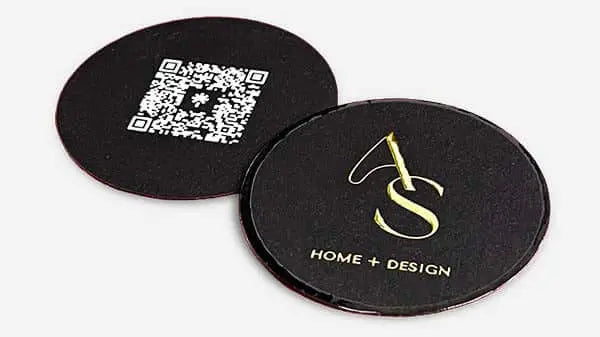


Luxury Business Card Design Process for Distinct Brands
A striking business card can transform the way premium beauty brands are remembered at every American industry event. Over 85 percent of luxury professionals say tactile quality directly influences their perception of a brand’s credibility. For American owners and executives, a bespoke business card is more than a contact tool—it is a first impression that quietly conveys sophistication and strategic intent. Discover how tailored design decisions reinforce your brand identity while inspiring real confidence during important networking moments.
Table of Contents
- Step 1: Initiate Consultative Brand Discovery
- Step 2: Select Advanced Materials and Substrates
- Step 3: Craft Unique Card Layouts With Expert Guidance
- Step 4: Define Refined Finishing Techniques
- Step 5: Verify Quality and Strategic Branding Impact
Quick Summary
| Key Point | Explanation |
|---|---|
| 1. Conduct In-Depth Brand Discovery | Engage stakeholders to reveal core values and strategic goals, ensuring an authentic brand narrative develops. |
| 2. Choose Premium Materials Carefully | Select advanced materials that convey luxury and quality, balancing aesthetics with functionality for business cards. |
| 3. Design Unique Card Layouts | Utilize expert designers to craft layouts that communicate brand identity through thoughtful visual hierarchy and negative space. |
| 4. Implement Advanced Finishing Techniques | Apply finishing methods like embossing or foil stamping to enhance visual appeal and make cards memorable. |
| 5. Verify Quality and Brand Impact | Systematically assess the card’s effectiveness in communicating your brand, utilizing feedback from potential clients for validation. |
Step 1: Initiate consultative brand discovery
Brand discovery represents the critical first phase where you transform abstract business objectives into a tangible visual strategy. This process goes beyond simple aesthetic choices it requires deep understanding of your brand’s core identity, market positioning, and strategic goals.
To begin effectively, you will need to conduct an immersive consultation that explores brand management insights. This involves gathering comprehensive information through structured conversations with key stakeholders. Start by scheduling dedicated sessions with your leadership team, understanding their vision, core values, target audience perceptions, and long term business objectives. During these conversations, ask probing questions that reveal not just surface level preferences but underlying strategic intentions.
Your initial consultation should map out the brand’s unique narrative the story that will eventually manifest through design elements. This means exploring your brand’s history, competitive landscape, customer expectations, and aspirational positioning. Pay close attention to nuanced details that communicate your brand’s distinctive character beyond basic visual attributes. Research indicates that successful brands emerge from deep consumer insights and authentic positioning.
Pro tip: Prepare a structured discovery questionnaire in advance to ensure comprehensive and consistent information gathering across stakeholder interviews.
Step 2: Select advanced materials and substrates
Selecting the perfect material is more than a design choice it is a strategic statement about your brand’s quality and commitment to exceptional presentation. This step transforms your business card from a simple communication tool into a sophisticated brand experience.
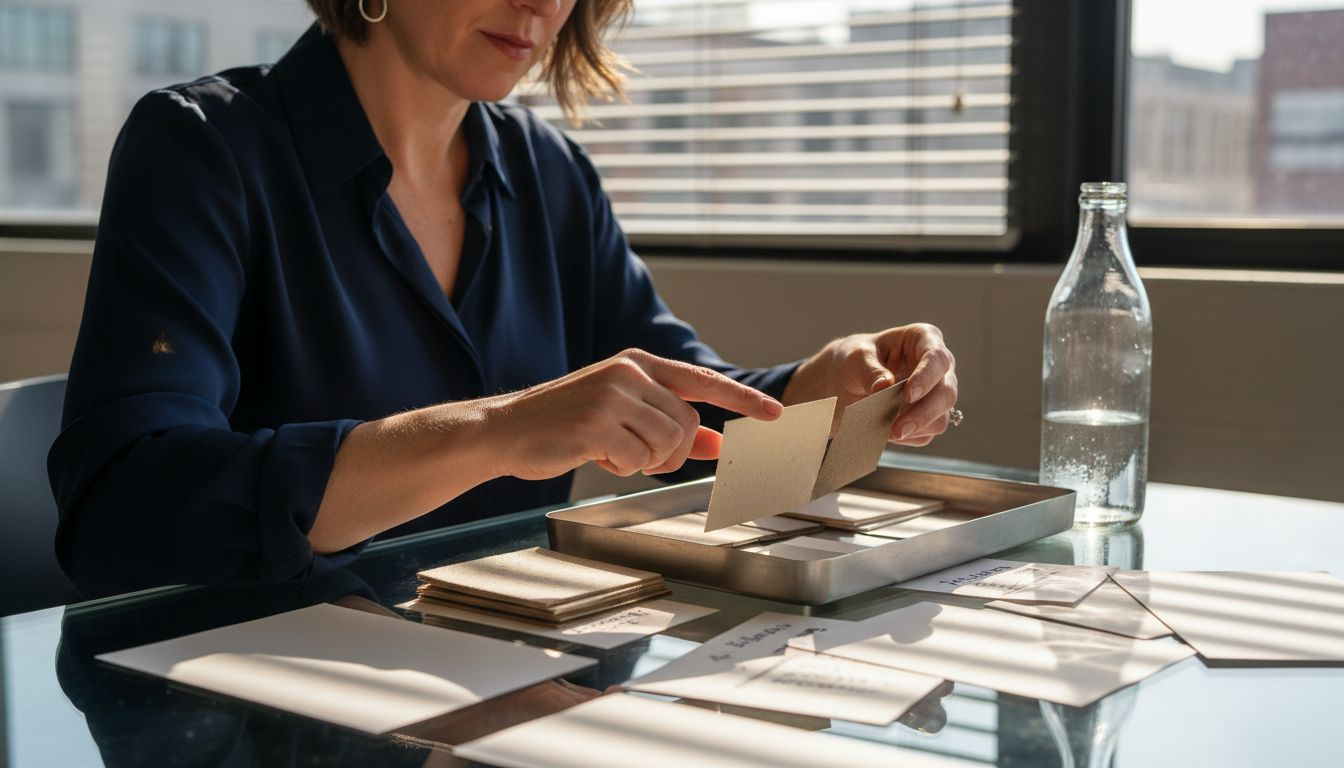
Advanced material selection requires deep understanding of innovative material technologies. Your substrate should communicate luxury through tactile and visual qualities that align with your brand identity. Consider exploring specialty options like textured cotton papers, metallic foils, translucent plastics, or composite materials that offer unique sensory experiences. Each material carries its own narrative weight professional metal substrates suggest precision and strength while soft cotton papers might communicate elegance and tradition.
Understanding material science becomes crucial in this selection process. Materials science research reveals that nanotechnology and composite developments now allow for extraordinary substrate characteristics. Look beyond traditional paper stock and examine materials that provide enhanced durability, unique textures, and sustainable manufacturing processes. Your selection should balance aesthetic appeal with functional performance ensuring the business card survives multiple handling scenarios while maintaining its premium appearance.
Pro tip: Request physical material samples from your designer to experience texture and visual characteristics before making a final selection.
See how different business card materials compare on performance and perception:
| Material Type | Sensory Experience | Durability | Brand Message Conveyed |
|---|---|---|---|
| Textured Cotton | Soft, classic touch | Moderate | Tradition, elegance |
| Metallic Substrate | Cool, reflective surface | Very High | Precision, innovation |
| Translucent Plastic | Smooth, unique look | High | Modern, creative |
| Composite Paper | Distinct, layered texture | High | Sustainability, luxury |
Step 3: Craft unique card layouts with expert guidance
Crafting a truly exceptional business card layout requires more than technical design skills it demands a strategic approach that transforms visual elements into a powerful brand narrative. Your goal is to create a layout that speaks volumes about your brand before a single word is read.
The design process begins with comprehensive design exploration techniques. Expert designers utilize a methodical approach that goes beyond aesthetic preferences. They analyze your brand’s core identity examining typography, negative space, color psychology, and visual hierarchy to create a layout that communicates your professional essence. This involves extensive sketching and multiple iterations where seemingly minor adjustments can dramatically shift the card’s emotional impact and perceived value.
Navigating the design process requires embracing an iterative design methodology). This means exploring multiple conceptual directions before converging on the most compelling layout. Your design expert will guide you through divergent thinking generating numerous layout concepts and then systematically narrowing these options. They will balance creative expression with functional constraints ensuring your business card looks extraordinary while remaining practical for real world networking scenarios.
Pro tip: Request a series of layout mockups that demonstrate different conceptual approaches to fully understand your design possibilities.
Step 4: Define refined finishing techniques
Refined finishing techniques transform an ordinary business card into an extraordinary brand statement. This critical stage elevates your card from mere contact information to a tangible representation of your professional identity and aesthetic sophistication.
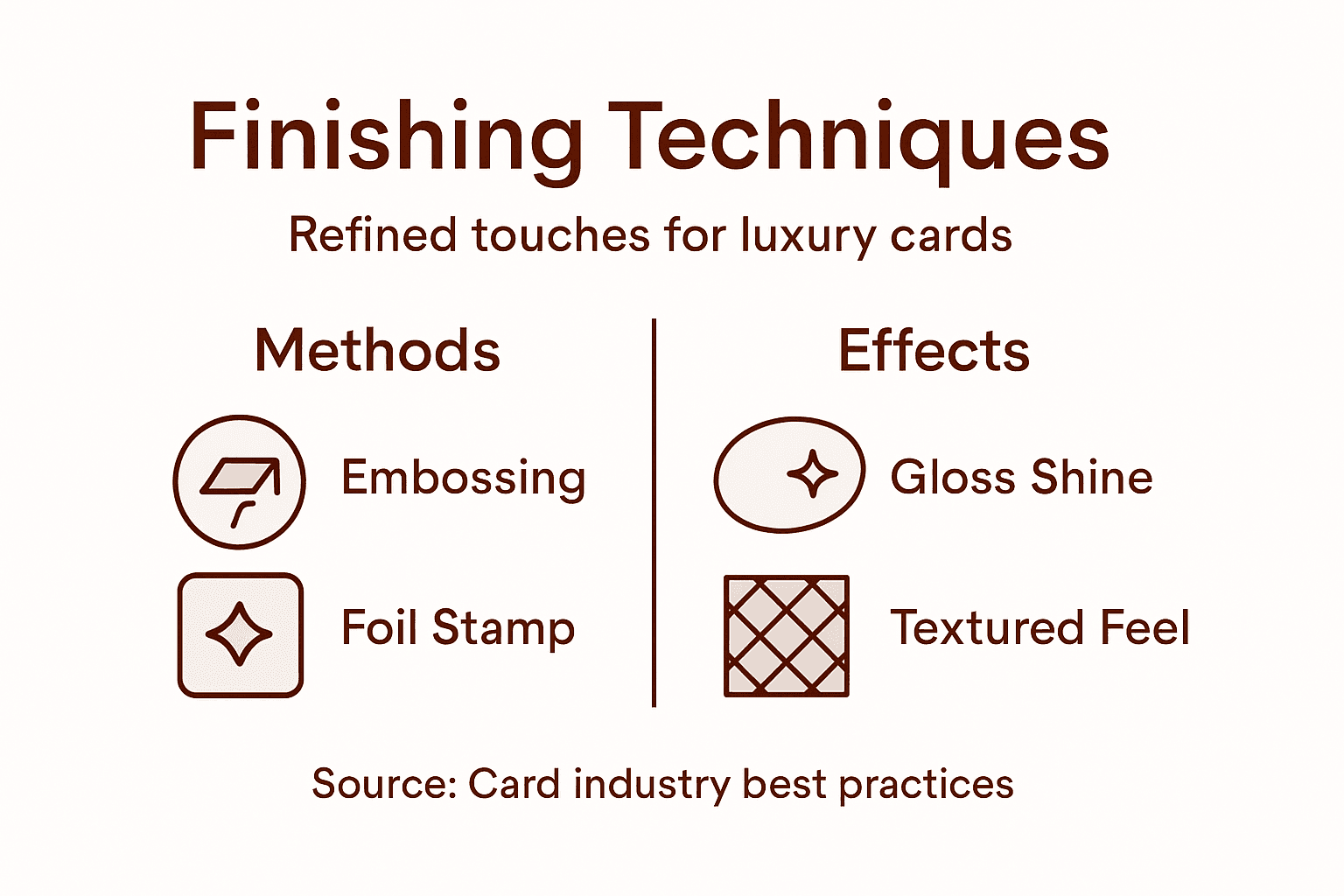
Exploring luxury product finishing methods reveals a world of intricate techniques that go far beyond standard printing. Metal plating can introduce an elegant metallic sheen that catches light dramatically. Embossing creates subtle three dimensional textures that invite touch and communicate precision. Foil stamping allows strategic placement of reflective elements that draw the eye and create visual intrigue. Each technique serves not just as a decorative element but as a strategic communication tool that speaks to your brand’s commitment to excellence.
Precision in finishing requires understanding advanced surface preparation techniques. Professional finishers utilize specialized processes that ensure flawless edges smooth surfaces and impeccable detail execution. This might involve microscopic surface treatments edge polishing or specialized coating applications that enhance both durability and aesthetic appeal. The goal is not just visual perfection but creating a sensory experience that communicates quality through every subtle interaction with your business card.
Pro tip: Request physical samples demonstrating different finishing techniques to understand their subtle yet profound impact on perception.
Step 5: Verify quality and strategic branding impact
Verifying your business card’s quality transcends simple visual inspection it requires a holistic assessment of how effectively your design communicates your brand’s strategic narrative. This final evaluation determines whether your card truly represents your professional identity and creates the desired first impression.
Careful verification and validation procedures involve systematic examination across multiple dimensions. You will assess technical specifications like material integrity print precision edge smoothness and durability. Beyond physical attributes you must evaluate how comprehensively the design communicates your brand personality. This means analyzing typography color selection negative space and finishing techniques to ensure they align perfectly with your brand positioning and communicate your unique professional essence.
Understanding brand equity measurement becomes critical in this assessment. Professional brand strategists recommend creating multiple test scenarios where potential clients or networking contacts interact with your card. Observe their initial reactions tactile responses and emotional engagement. Does the card generate curiosity inspire confidence or create a memorable sensory experience? These nuanced responses provide deeper insights into how effectively your business card functions as a strategic branding tool beyond its basic informational purpose.
Pro tip: Conduct blind comparative tests with alternative design iterations to objectively measure your business card’s perceptual impact.
Here’s a summary highlighting how each business card design step strengthens your brand identity:
| Design Step | Key Action | Branding Impact |
|---|---|---|
| Brand Discovery | Uncover core values and objectives | Ensures authenticity and alignment |
| Material Selection | Choose advanced, tactile substrates | Communicates quality and luxury |
| Layout Creation | Develop distinct visual hierarchy | Sets brand apart visually |
| Finishing Techniques | Apply advanced surface treatments | Enhances perceived professionalism |
| Quality Verification | Test effectiveness and reception | Validates strategic brand influence |
Elevate Your Brand With Luxury Business Cards That Speak Volumes
Transforming your business card into a powerful branding tool means facing challenges like selecting the right materials, crafting unique layouts, and applying refined finishing techniques that truly represent your brand’s essence. If you want to overcome these hurdles and create a card that reflects both authenticity and sophistication, expert guidance is essential. At BcardsCreation, we specialize in turning your brand’s strategic vision into tangible luxury business cards by combining advanced materials, such as those found in our Textured Paper Business Cards collection, with meticulous design processes.
Don’t settle for ordinary when your business card can be a statement of excellence that leaves a lasting impression. Discover how small-batch, fully custom business cards from BcardsCreation can help you communicate quality, creativity, and professionalism with every detail. Explore our range of Business Cards to start crafting a distinct visual identity today.
Frequently Asked Questions
What is the first step in the Luxury Business Card Design Process?
The first step is to initiate a consultative brand discovery. Schedule immersive consultations with key stakeholders to understand your brand’s core identity, values, and long-term objectives.
How do I select the right materials for my business card?
Choosing materials involves exploring advanced substrates that align with your brand identity. Consider tactile options like textured cotton, metallic foils, or composite materials to effectively communicate quality and luxury.
What techniques should I explore for finishing my business card?
Investigate refined finishing techniques such as embossing, foil stamping, or metal plating. Each technique enhances the tactile and visual appeal of your card, making a sophisticated impression on recipients.
How can I ensure my business card effectively represents my brand?
Verify your card’s quality by conducting thorough assessments of its material integrity, design elements, and emotional impact. Engage potential clients or contacts to gather feedback on their initial reactions to your card.
What should I ask during stakeholder interviews in the discovery phase?
Focus on probing questions that reveal the brand’s narrative, target audience perceptions, and strategic intentions. Prepare a structured questionnaire in advance to ensure consistent and comprehensive information gathering across all interviews.
How long does the Luxury Business Card Design Process typically take?
The entire design process can take anywhere from a few weeks to a couple of months, depending on factors like stakeholder availability and iteration complexity. Aim to complete each stage, including discovery and prototyping, efficiently to meet your desired timeframe.
Recommended
- Raised Foil Business Cards | Thick Double-layered Art Paper – BcardsCreation
- Diamond Business Cards | Frosted Plastic | Custom shape card – BcardsCreation
- Thick WHITE VELVET Multilayer Business cards Blind Debossing – BcardsCreation
- Letterpress Business Card with full color print and real foil Rose Gol – BcardsCreation
- Custom Signs Today | West Palm Beach Sign Services
- Top Italian Leather Gifts – Expert Comparison 2025 – San Rocco Italia
- Understanding Why Luxury Phone Cases Matter for You – StudioShake


