

Luxury Business Card Workflow: From First Brief to Final Proof
Standing out in the crowded American luxury market demands more than a striking logo or expensive paper. Every detail matters when your business card becomes a direct reflection of your brand’s intent and values. For luxury brand founders and executives, translating a brand’s essence into a custom business card means thoughtful choices at every stage, from strategic brand positioning to material refinement and expert design development that communicates exclusivity, quality, and distinction.
Table of Contents
- Step 1: Clarify Client Objectives And Brand Intent
- Step 2: Select Materials And Evaluate Refinement Options
- Step 3: Develop Custom Design With Expert Guidance
- Step 4: Review Checkpoints And Collect Actionable Feedback
- Step 5: Finalize Proof And Ensure Production Control
Quick Summary
| Key Point | Explanation |
|---|---|
| 1. Clarify Brand Intent | Engage in deep conversations to uncover your brand’s core values and audience, transforming them into actionable design elements. |
| 2. Select Appropriate Materials | Choose materials that reflect your brand’s values and storytelling, such as texture and sustainability, to enhance perception. |
| 3. Collaborate on Design | Work iteratively with a designer to translate your brand narrative into visual language through refined typography and color choices. |
| 4. Implement Structured Feedback | Use systematic feedback techniques to ensure design concepts align with your brand identity and resonate emotionally with your audience. |
| 5. Verify Production Quality | Conduct meticulous reviews of proofs, ensuring that every design aspect meets exact specifications before production starts. |
Step 1: Clarify client objectives and brand intent
In the world of luxury business cards, translating a brand’s essence into a tangible design requires deep understanding beyond surface-level aesthetics. The initial consultation is where strategic communication transforms abstract brand positioning into a concrete visual narrative.
Effective brand intent clarification involves a structured yet conversational approach. Developing a positioning statement helps articulate key brand characteristics that will inform design decisions. During this phase, designers must uncover critical insights through targeted questions:
- What core values define your organization?
- Who represents your target audience?
- What distinguishes your brand from competitors?
- What emotional response do you want business cards to evoke?
These questions reveal nuanced details that transform standard business cards into strategic brand ambassadors. Designers should listen actively, probing beneath surface-level responses to understand the underlying brand psychology and positioning.
Documenting these conversations provides a clear roadmap for design development. Each insight becomes a potential design element - from color selection to material choices that subtly communicate brand personality.
Professional brand positioning transforms business cards from mere contact tools into powerful communication instruments.
Pro tip: Always record or take detailed notes during initial client conversations to capture the subtle brand narratives that might otherwise be overlooked.
Step 2: Select materials and evaluate refinement options
Selecting the right materials transforms a standard business card into a powerful brand communication tool. This critical stage goes beyond aesthetic choices, representing a strategic decision that communicates your brand’s values, quality, and positioning.
Understanding material selection requires comprehensive evaluation. Exploring material assessment frameworks provides insights into choosing substrates that balance visual impact, tactile experience, and brand narrative. Designers must consider multiple dimensions:
- Texture and surface quality
- Environmental sustainability
- Durability and longevity
- Cost relative to perceived value
- Alignment with brand identity
Luxury business card materials range from traditional cotton paper stocks to innovative alternatives like translucent plastics, metal composites, and sustainable plant-based substrates. Luxury brand management emphasizes that material choice directly influences brand perception and communicates organizational sophistication.
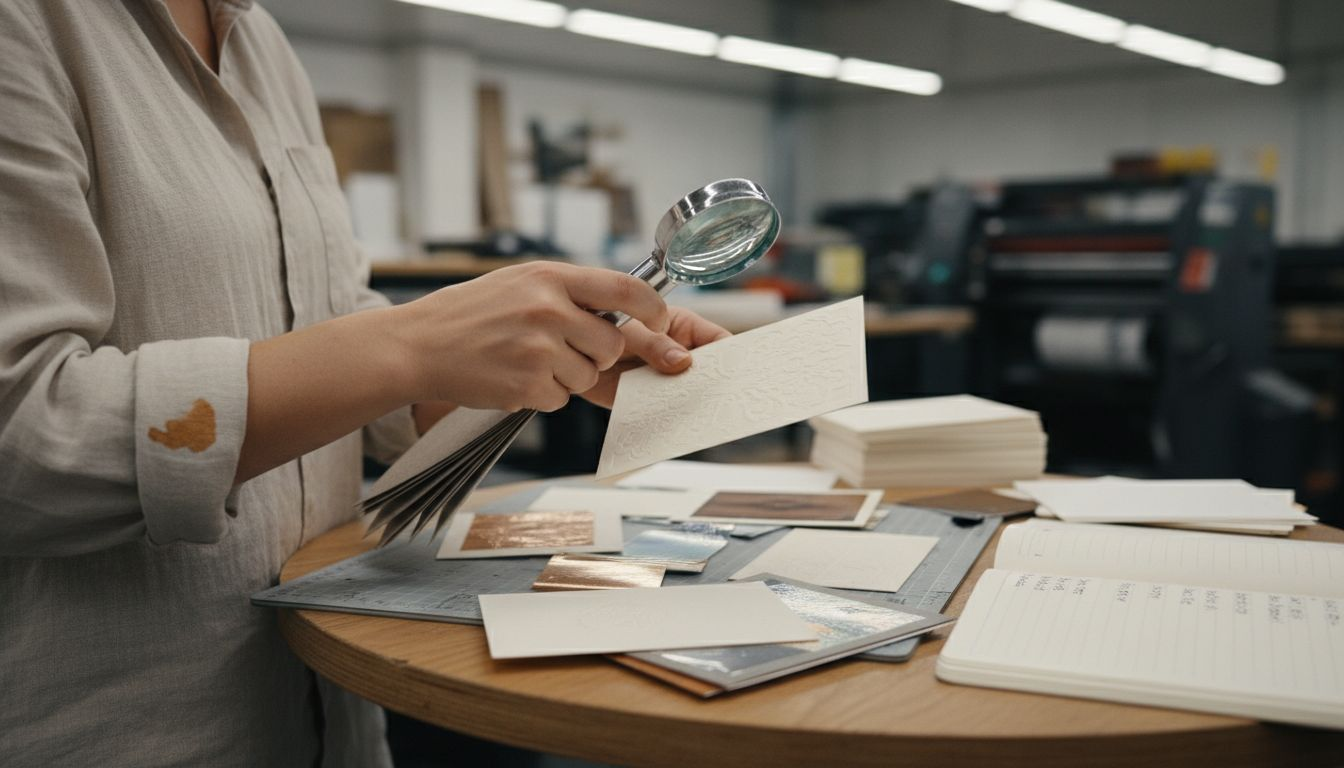
Refinement options further elevate the card’s sensory experience. Techniques like foil stamping, embossing, and specialty coatings transform a simple card into a memorable brand touchpoint. Each enhancement should be purposeful, telling a nuanced story about your brand’s attention to detail.
Here’s a summary of material and refinement options for luxury business cards:
| Material Type | Key Benefit | Typical Brand Impression |
|---|---|---|
| Cotton Paper | Elegant tactile quality | Traditional, refined |
| Metal Composite | Extreme durability | Innovative, premium |
| Plant-Based Substrate | Eco-friendly statement | Sustainable, responsible |
| Translucent Plastic | Unique visual effect | Modern, cutting-edge |
Refinements can further enhance perception:
| Refinement Technique | Sensory Impact | Brand Message Conveyed |
|---|---|---|
| Foil Stamping | Metallic luster | Prestige, exclusivity |
| Embossing | Tactile dimension | Attention to detail |
| Specialty Coating | Surface protection | Quality assurance |
Material selection is not just about appearance - it’s a strategic communication strategy.
Pro tip: Always request physical material samples and test them under different lighting conditions to truly understand their visual and tactile characteristics.
Step 3: Develop custom design with expert guidance
Custom business card design represents a nuanced dance between brand storytelling and visual sophistication. Transforming conceptual brand values into a tangible design requires collaborative expertise and strategic creative direction.
Luxury design practices emphasize an iterative approach where designers work closely with clients to distill brand essence into graphic language. This process involves multiple critical considerations:
- Typography selection reflecting brand personality
- Color palette that communicates brand emotion
- Spatial composition demonstrating brand confidence
- Visual hierarchy communicating key brand messages
- Subtle design elements suggesting brand sophistication
Professional designers leverage deep understanding of design principles and emerging luxury market trends to create business cards that transcend mere contact information. Each design element becomes a strategic communication tool, carefully calibrated to represent your brand’s unique narrative.
The design development journey involves multiple refined iterations. Designers will present initial concepts, gather feedback, and progressively refine the design. This collaborative process ensures the final product perfectly captures your brand’s vision while maintaining technical excellence.
Expert design guidance transforms business cards from simple communication tools into powerful brand ambassadors.
Pro tip: Always request a comprehensive design brief that captures not just your visual preferences, but the deeper emotional and strategic goals behind your brand identity.
Step 4: Review checkpoints and collect actionable feedback
The feedback stage transforms initial design concepts into refined, precision-crafted business cards. Systematic review processes create opportunities for strategic refinement, ensuring every design element communicates your brand’s unique narrative.
Structured feedback techniques are crucial for capturing meaningful insights. Professional design workflows typically involve multiple evaluation dimensions:
- Alignment with original brand brief
- Visual communication effectiveness
- Material and finish appropriateness
- Technical design precision
- Emotional resonance with target audience
Design feedback strategies emphasize a cyclical approach where insights are gathered, analyzed, and systematically integrated. This methodical process ensures that each design iteration moves closer to the perfect representation of your brand’s identity.
The review process is collaborative and nuanced. Designers will present initial concepts, facilitate structured feedback sessions, and guide you through progressive refinements. This approach transforms potential design challenges into opportunities for creative excellence.
Actionable feedback is the bridge between good design and exceptional brand representation.
Pro tip: Always frame your feedback as specific observations about design elements rather than general impressions, which helps designers make precise adjustments.
Step 5: Finalize proof and ensure production control
The final proof represents the critical transition point where design becomes tangible reality. Meticulous production verification transforms conceptual designs into precision-crafted business cards that embody your brand’s highest standards.
Prepress quality control involves comprehensive technical and visual assessments that guarantee every design element meets exacting specifications. Professional production workflows typically include:
- High-resolution color accuracy checks
- Material consistency validation
- Dimensional precision measurements
- Edge and finish quality inspection
- Print registration alignment verification
Print production best practices emphasize the importance of contract proofs as formal agreements between designer and client. These final proofs serve as definitive references, ensuring that the finished product perfectly matches the intended design vision.
The review process is methodical and strategic. Design teams will present final proofs, walk you through technical specifications, and confirm every minute detail before initiating the production run. This collaborative approach eliminates potential errors and ensures your business cards represent your brand with absolute precision.
The review and proofing process involves these essential checkpoints:
| Checkpoint | Main Purpose | Who Is Involved |
|---|---|---|
| Brand Brief Alignment | Maintain strategic intent | Client, Designer |
| Visual & Technical Review | Validate colors, precision | Design Team |
| Physical Proof Assessment | Check final tactile quality | Client, Production |
| Production Approval | Authorize manufacturing | Client |
A meticulously verified proof is the last line of defense between concept and execution.
Pro tip: Request multiple proof formats, including digital and physical samples, to comprehensively evaluate color, texture, and overall brand representation.
Elevate Your Brand with Expert Luxury Business Card Craftsmanship
Creating a luxury business card is much more than just design and print. As highlighted in the article, challenges such as clarifying brand intent, choosing the perfect materials, and ensuring meticulous proofing are critical to crafting a card that truly represents your brand’s story and sophistication. At BcardsCreation, we understand these key pain points — from the need for refined finishing techniques to the importance of strategic material selection that conveys exclusivity and attention to detail.
Discover our collection of Letterpress Business Cards – BcardsCreation and Textured Paper Business Cards – BcardsCreation designed to embody luxury and personalization. With expert design guidance and controlled production, we transform your brand’s vision into tangible impressions that speak volumes.
Unlock the potential to make every connection count with a custom business card crafted for impact.
Explore how a fully customized, small-batch business card can elevate your brand presence now. Visit Business Cards – BcardsCreation and start your journey toward a powerful brand statement today.
Frequently Asked Questions
What is the first step in the luxury business card workflow?
The first step involves clarifying client objectives and brand intent. Initiate your project with a structured consultation to uncover core values, target audience, and distinguishing brand attributes. This sets the foundation for meaningful design decisions.
How should I select materials for luxury business cards?
Selecting the right materials is crucial for conveying your brand identity. Evaluate factors such as texture, durability, and environmental impact to choose materials that align with your brand’s image and message.
What key elements should be considered in the custom design phase?
In the custom design phase, focus on typography, color palette, and spatial composition. Collaborate closely with designers to ensure these elements reflect your brand’s personality and communicate key messages effectively.
How do I ensure that feedback is constructive during design reviews?
To gather constructive feedback, frame your comments as specific observations about design elements. This clarity helps designers make precise adjustments, moving towards a refinement that best represents your brand.
What steps are involved in finalizing the proof before production?
Finalizing the proof involves a rigorous review of visual and technical specifications. Conduct thorough checks for color accuracy and material quality before approving for production to ensure your cards meet the highest standards.
How can I track the progress of my luxury business card project?
You can track progress through structured review sessions and regular updates. Establish clear communication checkpoints to stay informed about design iterations and any adjustments needed throughout the workflow.
Recommended
- Top 8 Unique Business Card Solutions for 2026 – BcardsCreation
- Raised Foil Business Cards | Thick Double-layered Art Paper – BcardsCreation
- Letterpress Business Card with full color print and real foil Rose Gol – BcardsCreation
- Thick WHITE VELVET Multilayer Business cards Blind Debossing – BcardsCreation
- Choosing Eco Friendly Wallets: A Step-by-Step Guide – The Cork Store


