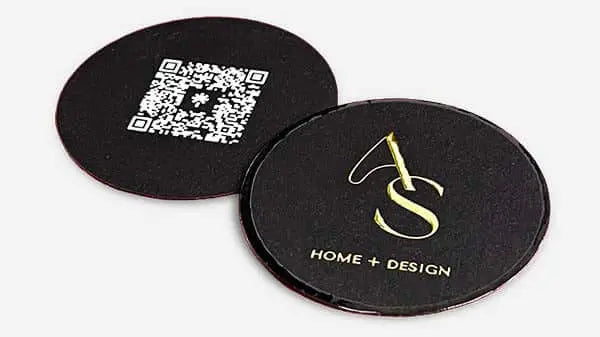


7 Essentials for Luxury Business Cards in 2025: Materials, Finishes, and Design Directions
Handing someone your business card can feel like a routine exchange, but it is often your first and only chance to make a lasting impression. In crowded professional circles, having a generic card can mean being quickly forgotten or overlooked. If you want your brand identity to stand out, the materials, textures, and design choices behind your business card play a bigger role than you might think.
This list will show you how intentional decisions around materials, textures, transparency, and more can help your business card communicate excellence and strengthen your brand image. You’ll uncover proven strategies that sophisticated brands use to set themselves apart, as well as tips for creating tactile and visual experiences that leave a mature, memorable impact.
Get ready to discover actionable ideas and expert techniques that can guide you toward your own distinctive, professional business card design.
Table of Contents
- 1. Intentional Material Selection for Brand Positioning
- 2. Mature Textures: Elevating Tactile Impressions
- 3. Transparency and Layering: Creative Yet Discreet
- 4. Reduction and Restraint in Card Design Choices
- 5. Personalized Color Systems Beyond Standard Palettes
- 6. Distinctive Custom Shapes: Purposeful Uniqueness
- 7. Transitioning from Fading Trends to Timeless Rules
Quick Summary
| Takeaway | Explanation |
|---|---|
| 1. Choose materials strategically | Select materials that enhance your brand positioning, reflecting quality and values for impactful communication. |
| 2. Focus on tactile textures | Use textures that convey professionalism and attention to detail, enhancing first impressions during interactions. |
| 3. Embrace minimalistic design principles | Simplify your design by prioritizing essential information and effective use of white space for clarity. |
| 4. Utilize color strategically | Develop personalized color systems to evoke specific emotions and reinforce your brand’s identity consistently. |
| 5. Consider distinctive shapes | Design unique business card shapes that reflect your brand’s personality and foster memorable interactions. |
1. Intentional Material Selection for Brand Positioning
Your business card is more than paper. It is a strategic communication tool that speaks volumes about your brand before a single word is exchanged. Intentional material selection transforms a simple business card from a basic contact record into a powerful brand positioning instrument.
Material choice communicates deeper narratives about your professional identity and organizational values. Luxury brands understand that material quality signals competence and differentiates them in crowded markets. Consider how the texture, weight, and composition of your business card can instantly communicate sophisticated positioning.
Key considerations for strategic material selection include:
- Alignment with brand aesthetic
- Tactile experience for recipients
- Durability and perceived value
- Environmental sustainability credentials
- Innovative material properties
Sustainable luxury brands are increasingly using materials that communicate ethical standards beyond traditional performance metrics. A recycled cotton business card or a card made from innovative biomaterials can signal commitment to environmental responsibility while maintaining premium positioning.
Your material choice is a silent ambassador of your brand’s values and professional standards.
Some advanced material strategies include translucent plastics for tech brands, textured papers for creative professionals, or minimalist cotton stock for consultants. Each material tells a nuanced story about your professional identity.
Pro tip: Request material samples and test how different textures and weights feel in your hands to understand their subtle communication potential.
2. Mature Textures: Elevating Tactile Impressions
Touch speaks volumes before words ever emerge. In the world of premium business communication subtle textures create profound first impressions that transcend visual design.
Professionals understand that textural sophistication matters deeply in brand representation. Your business card’s tactile quality communicates nuanced messages about professionalism quality and attention to detail.
Key considerations for mature texture selection include:
- Subtle variations in surface complexity
- Understated sensory engagement
- Material depth and dimensional quality
- Contextual appropriateness for your industry
- Refined tactile narrative
The goal is not overwhelming complexity but strategic textural communication. A lawyer might choose smooth cotton stock with minimal grain while a creative professional could select papers with more pronounced organic textures.
Texture is a silent language of professionalism that communicates before visual design is even processed.
Advanced texture strategies involve understanding how different materials interact with human touch. Sophisticated design platforms offer insights into creating nuanced sensory experiences through material selection.
Textures range from micro-embossed surfaces that whisper elegance to slightly raised printing techniques that invite fingertip exploration. Each approach tells a different professional story.
Pro tip: Request multiple texture samples and have colleagues blindfold-test them to understand the unconscious impressions different materials create.
3. Transparency and Layering: Creative Yet Discreet
Transparency in business card design is not about being see-through. It is about creating strategic visual communication that invites curiosity while maintaining professional elegance.
Layering techniques transform business cards from simple contact records into sophisticated brand narratives. The art lies in revealing just enough while preserving an air of refined mystery.
Key principles of transparent design include:
- Subtle depth perception
- Controlled information hierarchy
- Minimal visual clutter
- Strategic information reveal
- Balanced negative space
Professionals can leverage transparency through multiple approaches. Translucent plastics can suggest technological innovation. Vellum overlays can create intricate visual depth that hints at complexity without overwhelming the viewer.
Transparency is not about showing everything. It is about showing exactly what matters.
Digital layering strategies offer insights into creating nuanced visual experiences. Consider how each transparent element contributes to your brand story subtle details that invite closer examination.
Some advanced transparency techniques involve partial frosting selective revealing of contact information or using gradient translucency to create visual intrigue.
Pro tip: Request prototype samples with different transparency levels and test how colleagues and potential clients interact with and perceive your design.
4. Reduction and Restraint in Card Design Choices
Sophistication is not about complexity. It is about making intentional design decisions that communicate professionalism through carefully considered minimalism.
Quiet luxury design principles emphasize that true elegance emerges from restraint. Your business card should whisper your brand story rather than shouting it.
Key principles of reduction include:
- Eliminating unnecessary visual noise
- Focusing on essential information
- Creating breathing room in design
- Prioritizing clarity over decoration
- Embracing white space strategically
Design research strategies consistently demonstrate that simplicity amplifies message impact. Professional brands understand that less communicates more powerfully.
Reduction is not subtraction. It is strategic concentration of visual energy.
Consider how each design element earns its place. A single typography choice. Minimal color palette. Precise information hierarchy. These become deliberate statements about your professional approach.
Advanced reduction techniques involve understanding negative space as an active design element not just background. Muted tones. Clean lines. Precise typography.
Pro tip: Remove one design element during your final review. Assess whether your card becomes stronger or weaker with its absence.
5. Personalized Color Systems Beyond Standard Palettes
Color is a silent language of brand communication. Professional color strategies transform business cards from mere contact records into nuanced brand experiences.
Advanced color management systems enable brands to transcend generic palette limitations. Your business card color becomes a precise extension of your professional identity.
Key principles of personalized color design include:
- Psychological color mapping
- Brand emotion translation
- Subtle tonal sophistication
- Precise color consistency
- Emotional brand resonance
Custom color palette development goes beyond selecting attractive hues. Strategic color choices communicate subtext. A muted sage might suggest environmental consciousness. A deep charcoal could signal corporate gravitas.
Color is not decoration. Color is strategic communication.
Professional color systems require understanding how specific wavelengths interact with human perception. Consider undertones. Examine how colors shift under different lighting. Recognize that perception varies across contexts.
Advanced practitioners develop unique color profiles that remain consistent across digital and physical mediums. Pantone references. Custom color formulations. Precise digital specifications.
Pro tip: Work with a color strategist to develop a proprietary color system that feels distinctly like your brand.
6. Distinctive Custom Shapes: Purposeful Uniqueness
Your business card shape is more than a physical boundary. It is a strategic communication platform that speaks before words are exchanged.
Purposeful innovation demands that every design element serve an intentional narrative. Custom shapes transform business cards from standardized rectangles into memorable brand experiences.
Key principles of distinctive shape design include:
- Reflecting brand personality
- Creating tactile memorability
- Challenging visual expectations
- Communicating brand values
- Generating conversation potential
Uniqueness bias research demonstrates that deliberate differentiation captures attention. A geometric card might signal technological precision. An organic curved card could suggest creative flexibility.
Distinctive shapes are not about novelty. They are about meaningful brand expression.
Advanced shape strategies consider ergonomics functional design and subtle brand metaphors. An architecture firm might design a card shaped like a building blueprint. A sustainable brand could use recycled materials in an unconventional hexagonal form.
Consider how your card’s physical form can communicate what words cannot. Precision. Innovation. Creativity. Sustainability.
Pro tip: Prototype multiple shape concepts and test how they feel when handed to potential clients.
7. Transitioning from Fading Trends to Timeless Rules
Trends are temporary. Timeless design principles are eternal. Your business card should transcend momentary aesthetic waves and communicate enduring professional value.
Global design research consistently demonstrates that lasting design emerges from fundamental principles rather than fleeting visual fashions. Professional brands understand that sophistication outlasts trend cycles.
Key principles of timeless design include:
- Functional clarity
- Material integrity
- Purposeful simplicity
- Aesthetic restraint
- Strategic communication
Dieter Rams’ design philosophy provides a critical framework for understanding enduring design. His principles suggest that true innovation serves human needs beyond visual novelty.
Timeless design speaks a universal language that transcends temporary visual languages.
Professional designers recognize that business cards are communication tools first aesthetic objects second. A timeless card communicates brand essence through considered materials precise typography and intentional negative space.
Advanced practitioners develop design systems that remain relevant across decades not months. Minimal color palettes. Classic typography. Materials that age gracefully.
Pro tip: Evaluate your business card design by removing all color and contemporary visual effects. Does it still communicate effectively?
Below is a comprehensive table summarizing the key principles and strategies for effective business card design as discussed in the article.
| Category | Key Points | Insights |
|---|---|---|
| Material Selection | Align material choice with brand identity; Ensure durability and sustainability. | Material conveys brand values and professionalism. |
| Texture Application | Employ subtle textures for enhanced tactile impressions. | Texture influences perceptions of sophistication. |
| Transparency & Layering | Use strategic design to provide visual depth and intrigue. | Balances elegance with functional communication. |
| Minimalistic Design | Prioritize clarity, reduce visual noise. | Simplicity amplifies core brand messages. |
| Personalized Colors | Develop custom color palettes for precise emotional resonance. | Unique colors communicate brand identity effectively. |
| Unique Shapes | Use distinct shapes that reflect brand personality. | Shapes enhance memorability and provoke interest. |
| Timeless Design Principles | Focus on functionality, material integrity, and simplicity. | Ensures design remains relevant over time. |
Elevate Your Brand with Luxury Business Cards Designed for 2025
The article highlights the crucial role of intentional material selection, sophisticated textures, and timeless design principles in crafting luxury business cards that truly represent your professional identity. If you want your business card to serve as a strategic branding tool rather than just a contact piece, understanding these essentials is key. Challenges such as choosing materials that communicate competence and sustainability, incorporating mature tactile experiences, and embracing reduction without losing impact are exactly what set top-tier brands apart.
Discover how BcardsCreation can help you overcome these challenges with our fully custom, small-batch solutions. Whether you desire the tactile elegance of Textured Paper Business Cards, the innovative appeal of Plastic Business Cards, or the refined finish of Velvet Business Cards, we specialize in bringing your brand’s essence to life through expert material consultation and unique design guidance.
Begin your journey toward a timeless and sophisticated business card that transforms first impressions into lasting connections. Visit BcardsCreation business cards collection now to explore premium options crafted to match the luxury design directions of 2025. Make your brand unforgettable—act today.
Frequently Asked Questions
What materials should I consider for luxury business cards in 2025?
Selecting materials such as textured papers, sustainable options, or innovative biomaterials can enhance the quality of your luxury business card. Aim to choose a material that aligns with your brand’s identity and values, ensuring it feels premium to the touch.
How do I choose the right texture for my business card?
Opt for subtle variations in texture that elevate the tactile experience of your card. For instance, a smooth finish might suit a lawyer, while a textured paper can enhance creativity for design professionals.
What design principles create a timeless luxury business card?
Focus on functional clarity and aesthetic restraint when designing your card. Prioritize essential information while using white space effectively to create a clean and elegant appearance that withstands changing trends.
How can color choices make my business card stand out?
Implement a personalized color system that reflects your brand’s personality and evokes the desired emotions. For example, a muted green can suggest environmental responsibility, while a deep blue can convey professionalism.
What role do unique shapes play in luxury business card design?
Custom shapes can create memorable first impressions and reinforce your brand identity. Consider a unique design that reflects your profession—like a geometric shape for technology or an organic style for creative industries.
How can I ensure my business card’s design communicates effectively?
Review your business card by removing any non-essential elements to see if it still conveys your message clearly. Streamline your design to focus on the most impactful components, enhancing its effectiveness.
Recommended
- Top 8 Unique Business Card Solutions for 2026 – BcardsCreation
- Raised Foil Business Cards | Thick Double-layered Art Paper – BcardsCreation
- Letterpress Business Card with full color print and real foil Rose Gol – BcardsCreation
- Fine Paper Double layered Business Card with Neon and Purple Foils, Th – BcardsCreation
- 7 Expert Tips for Effective Business Cards in 2024


