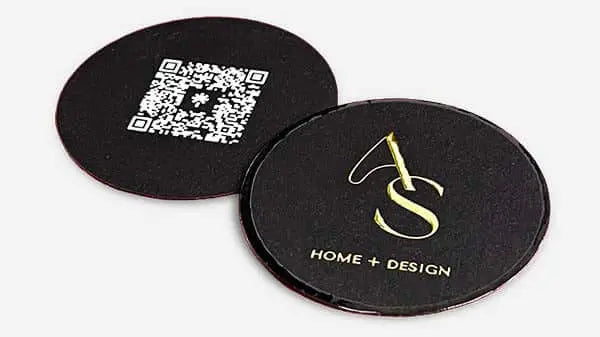


Luxury Business Cards: Shaping Perception Instantly
Every luxury beauty executive knows that a simple exchange of business cards at a New York or Los Angeles event can define a brand’s status in seconds. In this high-stakes environment, a card is more than contact details—it is a brand signaling tool strategically designed to influence instant perceptions of prestige and professionalism. Explore how specific choices in material, design, and sensory experience transform business cards into powerful ambassadors, driving recognition and competitive differentiation in the crowded American luxury market.
Table of Contents
- Defining Luxury Business Cards And Brand Perception
- First-Contact Psychology And Instant Judgments
- Understanding Sensory Cues: Weight, Texture, Restraint
- Micro-Design Decisions And Brand Engineering
- Common Missteps That Undermine Brand Authority
Key Takeaways
| Point | Details |
|---|---|
| Luxury Business Cards Communicate Professional Identity | Every element of a luxury business card sends instant signals about sophistication and prestige, influencing first impressions significantly. |
| Design Choices Impact Brand Perception | Micro-design elements like paper quality and typography convey organizational values and professionalism, affecting client trust. |
| First Impressions are Formed Instantly | Human brains quickly analyze visual and tactile features, leading to fast judgments of credibility and competence. |
| Avoid Common Design Missteps | Overcrowded information and poor quality materials can undermine brand authority and lead to negative client reactions. |
Defining Luxury Business Cards and Brand Perception
Luxury business cards are more than mere contact information exchange tools - they are sophisticated brand communication instruments engineered to deliver instantaneous psychological signals about professional identity and organizational prestige. Multidimensional luxury value perceptions reveal that these artifacts communicate far beyond their physical presence, functioning as strategic brand ambassadors.
At their core, luxury business cards operate through a complex sensory and cognitive evaluation process. Professionals and potential clients unconsciously assess multiple dimensions within milliseconds of first contact:
- Material Quality: Communicates investment and attention to detail
- Design Precision: Signals organizational sophistication
- Tactile Experience: Creates memorable sensory impressions
- Visual Contrast: Triggers immediate perceptual judgments
The psychological mechanism underlying business card perception involves what researchers describe as an intricate interplay between functional, social, and emotional value dimensions. Brand signaling occurs through micro-design decisions that transform a simple printed object into a nuanced communication platform.
Functional Design Elements like paper weight, finish, and typography serve as coded language expressing organizational identity. The card becomes a three-dimensional brand manifesto, where every microscopic detail communicates strategic intentionality. Luxury brand perception research confirms that consumers develop complex perceptual frameworks based on these subtle environmental cues.
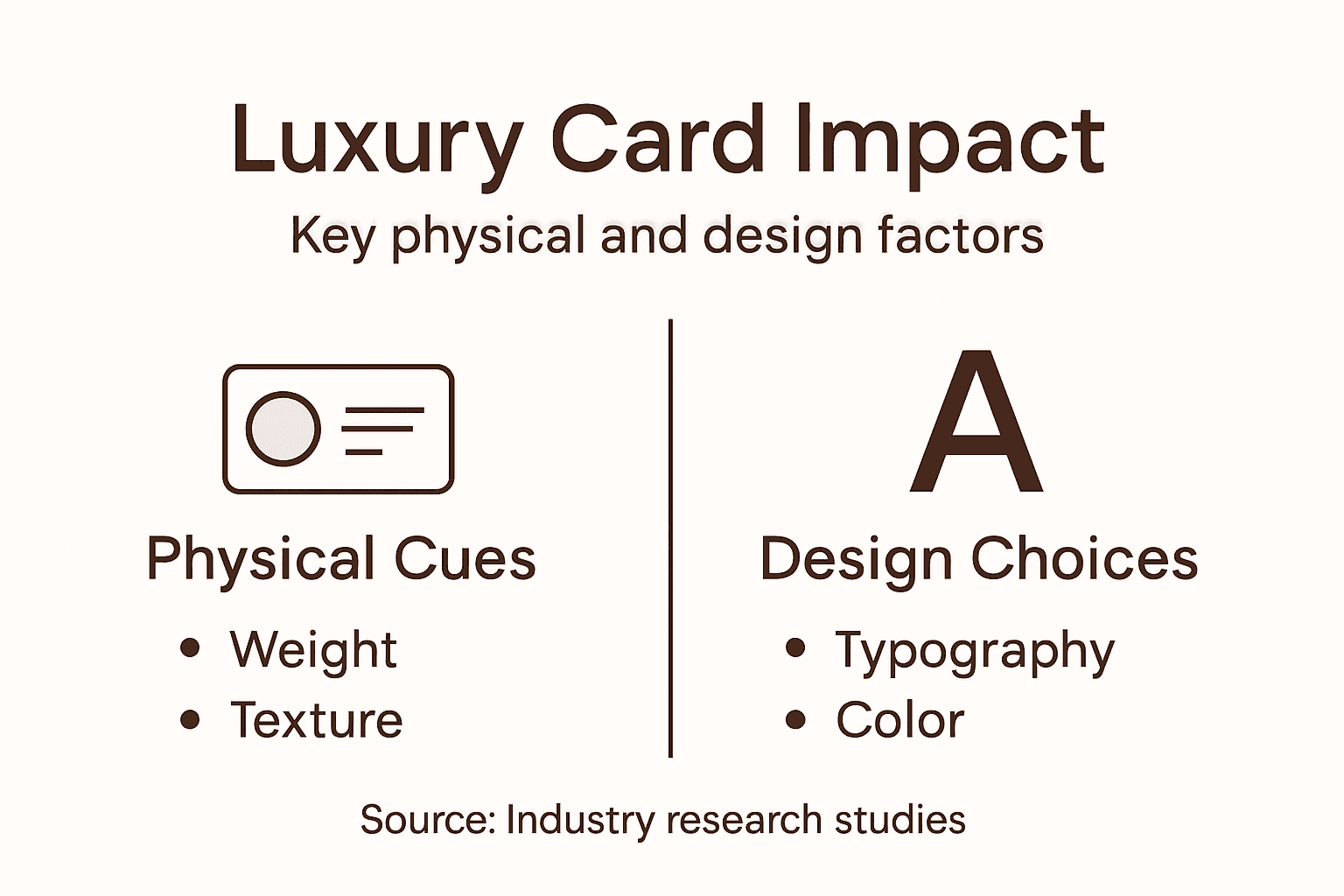
Pro Tip: Design your business card as a strategic brand asset, not just a contact medium - every detail communicates your professional narrative.
The following table summarizes how key luxury business card features impact brand perception:
| Card Feature | Brand Message Communicated | Psychological Effect |
|---|---|---|
| Heavy Paper Stock | Organizational investment | Implies high credibility |
| Unique Texture | Attention to detail | Stimulates memorability |
| Refined Typography | Sophistication | Signals expertise |
| Subtle Color Usage | Emotional intelligence | Conveys calm authority |
First-Contact Psychology and Instant Judgments
Human perception operates with extraordinary speed, particularly when evaluating professional credibility. Color psychology and design elements reveal that the brain processes visual information about a business card within milliseconds, forming nuanced judgments about competence, sophistication, and organizational status before rational analysis can begin.
These instantaneous perceptual mechanisms engage multiple cognitive domains simultaneously:
-
Visual Scanning: Immediate assessment of design symmetry and balance
-
Tactile Engagement: Neurological response to physical card texture
-
Color Processing: Unconscious emotional and psychological associations
-
Typography Analysis: Subtle evaluation of font selection and spacing
Professional credibility emerges through micro-signals embedded in design choices. Each minute detail - from paper weight to edge finishing - communicates sophisticated layers of intentionality. The brain does not merely observe these elements; it interprets them as complex narratives about professional identity and organizational culture.

Neurologically, first impressions function as rapid pattern recognition algorithms. Potential clients and professional contacts unconsciously cross-reference visual cues against internalized mental schemas of success, expertise, and trustworthiness. A meticulously designed business card triggers these cognitive shortcuts, transforming a simple piece of paper into a powerful communication instrument that transcends traditional information exchange.
Pro Tip: Design your business card as a strategic psychological instrument, understanding that every visual and tactile element communicates a sophisticated professional narrative.
Understanding Sensory Cues: Weight, Texture, Restraint
Sensory package design reveals that physical attributes communicate far more than mere aesthetic preferences. Luxury business cards function as sophisticated sensory instruments, where weight, texture, and material composition become critical communication channels that transmit nuanced professional narratives.
The sensory dimensions of a business card operate through several key interaction points:
- Tangible Weight: Signals substantial investment and professional gravitas
- Surface Texture: Communicates refined attention to detail
- Material Integrity: Represents organizational sophistication
- Dimensional Precision: Demonstrates technical competence
Research demonstrates that physical sensory attributes trigger complex psychological responses. Sensory marketing studies confirm that consumers unconsciously decode material choices as indicators of brand positioning, creating instantaneous perceptual judgments about professional credibility.
The principle of sensory restraint emerges as a critical design strategy. Exceptional business cards do not overwhelm; they whisper. Subtle material selections - a slightly heavier cotton stock, a barely perceptible embossing, a restrained color palette - communicate more powerfully than ostentatious design. These micro-signals suggest confidence, expertise, and an understanding that true luxury resides in nuanced, thoughtful expression.
Pro Tip: Select business card materials that communicate through understated elegance, allowing sophisticated design choices to speak more eloquently than grandiose statements.
Micro-Design Decisions and Brand Engineering
Luxury brand strategies reveal that exceptional brand communication happens through microscopic design decisions. Business cards represent a precision-engineered platform where every millimeter communicates organizational DNA, transforming a simple information artifact into a sophisticated brand messenger.
The strategic micro-design ecosystem encompasses multiple intricate components:
- Typography Selection: Communicates intellectual positioning
- White Space Management: Signals confidence and restraint
- Edge Precision: Demonstrates technical sophistication
- Color Gradient Subtleties: Conveys emotional intelligence
- Dimensional Proportions: Reflects organizational philosophy
Luxury brand customization research demonstrates that strategic limitation creates deeper perceived value. Professional brands do not overwhelm; they curate. Each design choice becomes a deliberate signal, transforming seemingly minor details into powerful communication instruments.
Brand engineering operates through intentional constraint. The most powerful business cards communicate through what they do not say, through subtle design decisions that invite curiosity and respect. These micro-signals function as a sophisticated language, speaking directly to the sophisticated viewer’s unconscious understanding of professional excellence.
Pro Tip: Treat your business card’s design as a precise mathematical equation where every element must balance and communicate with elegant efficiency.
Common Missteps That Undermine Brand Authority
Marketing mistakes reveal that brand erosion happens through subtle, seemingly inconsequential choices. Business cards represent a critical touchpoint where professionals can accidentally dismantle their carefully constructed professional narrative through careless design decisions.
The most destructive missteps in business card design include:
- Overcrowded Information: Suggesting disorganization
- Generic Typography: Indicating lack of intentionality
- Poor Quality Paper: Signaling resource constraints
- Inconsistent Branding: Demonstrating organizational fragmentation
- Unclear Contact Details: Projecting unprofessionalism
Brand crisis management research underscores how seemingly minor design choices can trigger profound psychological responses. A misaligned font, an awkward color combination, or inconsistent spacing can unconsciously communicate organizational dysfunction, undermining years of carefully cultivated professional reputation.
Professional brand authority requires ruthless precision. Each design element must be strategically considered, understanding that potential clients and partners will decode these micro-signals instantaneously. The most powerful business cards do not merely provide contact information - they tell a sophisticated story about organizational competence, attention to detail, and professional philosophy.
Pro Tip: Treat your business card as a comprehensive brand communication instrument, where every millimeter speaks volumes about your professional identity.
Here is a comparison of common business card design errors and their effects on brand authority:
| Design Error | Perceived Organizational Weakness | Potential Client Reaction |
|---|---|---|
| Overcrowded Content | Disorganization | Loses confidence quickly |
| Poor Paper Quality | Budget limitations | Questions professionalism |
| Inconsistent Branding | Lack of unity | Doubts reliability |
| Unclear Contact Info | Carelessness | Frustration and loss of trust |
Elevate Your Brand with Luxury Business Cards That Speak Volumes
Luxury business cards are more than just contact details. They are powerful sensory tools that shape instant perceptions through weight, texture, and refined design choices. If you want your business card to communicate sophistication and professional excellence rather than just information, consider custom options crafted with strategic intention. These micro-design decisions turn every card into a compelling brand ambassador.
Discover the elegance of Textured Paper Business Cards – BcardsCreation where subtle tactile cues create memorable impressions. For unique shapes that signal creativity and precision, explore our Custom Shaped Business Cards – BcardsCreation.
Take control of your first impression by investing in a business card designed as a strategic brand asset. Visit BcardsCreation today to work with expert designers who will guide you through selecting advanced materials and finishes. Don’t let your brand story be undermined by generic cards. Act now and transform your business card into a powerful communication instrument that commands respect and attention.
Frequently Asked Questions
What are luxury business cards?
Luxury business cards are sophisticated tools that communicate professional identity and brand prestige through their design, material quality, and sensory attributes.
How do luxury business cards impact brand perception?
Luxury business cards influence brand perception by using design elements such as weight, texture, and typography to convey organizational sophistication and credibility within milliseconds of first contact.
What design elements should I consider for a luxury business card?
Key design elements for a luxury business card include heavy paper stock, unique texture, refined typography, subtle color usage, and dimensional precision, all of which communicate intentionality and professionalism.
What common mistakes should I avoid in luxury business card design?
Common mistakes include overcrowding information, using generic typography, opting for poor quality paper, showing inconsistent branding, and having unclear contact details, all of which can undermine brand authority.
Recommended
- Top 8 Unique Business Card Solutions for 2026 – BcardsCreation
- Diamond Business Cards | Frosted Plastic | Custom shape card – BcardsCreation
- Raised Foil Business Cards | Thick Double-layered Art Paper – BcardsCreation
- SHIMMER Business Card | Silver Gold Holographic Foil Stamped – BcardsCreation
- Albumelu – Pune-ți amintirile pe hârtie | Albume Foto Premium
- Luksusowy ręcznik Mocha Intenso 50x100 cm z bawełny czesanej


