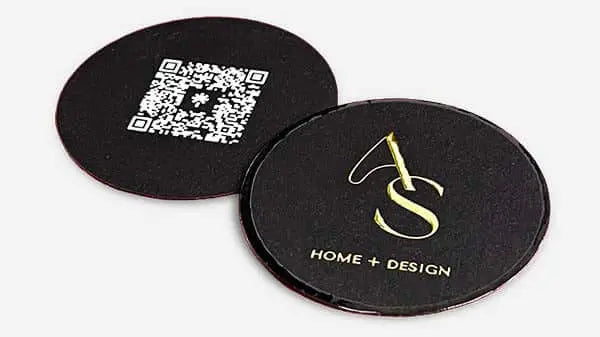


What Makes a Business Card Memorable for Luxury Brands
Standing out at a New York networking event means more than a beautiful logo or lavish packaging. For luxury beauty and lifestyle brands, a memorable business card experience depends on the fusion of tactile sensation, visual appeal, and strategic design choices. Integrating distinctive design elements with emotional engagement, as highlighted in neuroscience research, is key to lasting recall. This article offers expert guidance to help brand owners create custom business cards that strengthen their identity and leave a lasting impression.
Table of Contents
- Defining A Memorable Business Card Experience
- Key Material And Design Choices For Impact
- Role Of Customization In Brand Positioning
- Common Mistakes That Undermine Business Cards
- How Premium Cards Strengthen Brand Identity
Key Takeaways
| Point | Details |
|---|---|
| Memorable Design Enhances Impact | A distinct business card design can create a lasting impression, blending tactile sensations and visual appeal to reflect brand values. |
| Material Quality Communicates Value | Using premium materials differentiates luxury brands from standard offerings, signaling sophistication and commitment to quality. |
| Customization Balances Personal Touch and Brand Integrity | Thoughtful customization reinforces brand identity while allowing for personal expression without compromising perceived luxury. |
| Avoid Common Mistakes to Ensure Credibility | Low-quality materials, cluttered designs, and inconsistent branding undermine credibility and can negatively affect client perceptions. |
Defining a Memorable Business Card Experience
A memorable business card goes far beyond listing contact information on cardstock. For luxury beauty and lifestyle brands, it’s about creating a moment of recognition that lingers after the initial handshake. The experience begins the instant someone holds your card, continues as they examine it, and extends into how they decide to keep it or share it later. This is where tactile sensation, visual distinctiveness, and strategic design choices converge to shape perception.
The foundation of memorability rests on understanding how people actually retain impressions. Research into memory formation reveals that distinctive design elements combined with strong emotional engagement create lasting recall. For a luxury brand, this means moving beyond standard printed matter. Think about the difference between receiving a flat cardstock card versus one with tangible depth, texture, or unexpected material choices. The moment someone feels the weight of thick paper, runs their finger across embossed lettering, or notices real foil accents catching light, the card shifts from informational object to brand expression. This happens subconsciously, but it registers. The recipient’s brain catalogs the experience as something worth remembering.
Consider how luxury beauty brands typically interact with clients: at intimate consultations, at networking events, or during product launches where first impressions matter intensely. Your business card becomes a physical extension of your brand’s values during these moments. If your brand emphasizes craftsmanship and attention to detail, a raised foil business card with thick, double-layered art paper reinforces that message without you speaking a word. The recipient holds evidence of quality. They feel the intentionality. Conversely, a thin, generic card contradicts any luxury positioning and suggests either budget constraints or indifference to brand presentation.
The memorability principle extends to balance between form and function. A business card that looks stunning but makes contact information difficult to read fails its core purpose. Similarly, one that lists every detail but lacks visual interest gets forgotten. For luxury brands specifically, clarity matters as much as aesthetics. Your name, title, and how to reach you must be immediately accessible, while the overall design creates impact through restraint, material selection, or unique finishing rather than visual clutter.
Pro tip: When designing your business card, identify one or two tactile or visual elements that align directly with your brand’s core values, then build the design around those anchors rather than attempting to showcase everything your brand does.
Key Material and Design Choices for Impact
Material selection is where luxury business cards separate themselves from standard printed goods. The weight of the cardstock you choose communicates something before a word is read. Lightweight paper feels temporary and disposable. Heavy stock feels substantial, intentional, chosen. For beauty and lifestyle brands, this distinction matters because your clients are accustomed to quality products and packaging. They notice when a business card feels cheap or flimsy. When you select heavyweight card stock or textured finishes, you are telling a story about your brand’s standards. The texture under fingertips becomes part of your brand promise. Soft-touch coatings, embossing, metallic foils, or specialty papers like cotton blends or fine art stocks transform a business card from information delivery into a tactile brand statement.
Design choices must work in concert with materials. A cluttered design printed on premium stock wastes the investment. Conversely, elegant restraint on quality materials amplifies impact. Visual design fundamentals like negative space, color, typography hierarchy, and line weight guide how viewers process your card. For luxury brands, minimalism paired with high-quality printing techniques creates authority. This means your logo appears clearly and with breathing room. Your name and title are easy to scan. Secondary information does not compete for attention. A single accent color or metallic element draws the eye without overwhelming. The goal is for someone to instantly understand who you are and what you represent without decoding a visual puzzle.
Color and typography demand particular attention. Luxury beauty brands often work within restrained palettes because subtlety reads as sophistication. Black text on cream paper. Deep jewel tones. Warm metallics. These choices evoke different feelings than bright, saturated colors. Typography selection carries weight too. A clean, contemporary sans-serif communicates modern luxury, while a refined serif suggests classic elegance. The pairing of typeface to material matters. A delicate script font needs adequate space and premium paper to feel intentional rather than squeezed. Your choices should reinforce your brand’s personality, not contradict it.
Special finishes deserve investment consideration. Real gold or silver foil stamping costs more than digital printing, but it delivers unmistakable luxury. A business card with raised foil elements or embossing creates depth and texture that photographs cannot capture. Clients holding that card experience what you cannot show in an email. Specialty varnishes, debossing, die-cutting into custom shapes, edge painting, or layering multiple stocks are all techniques that elevate perception. The question is not whether to use special finishes, but which ones align with your brand story and where they matter most on the card.
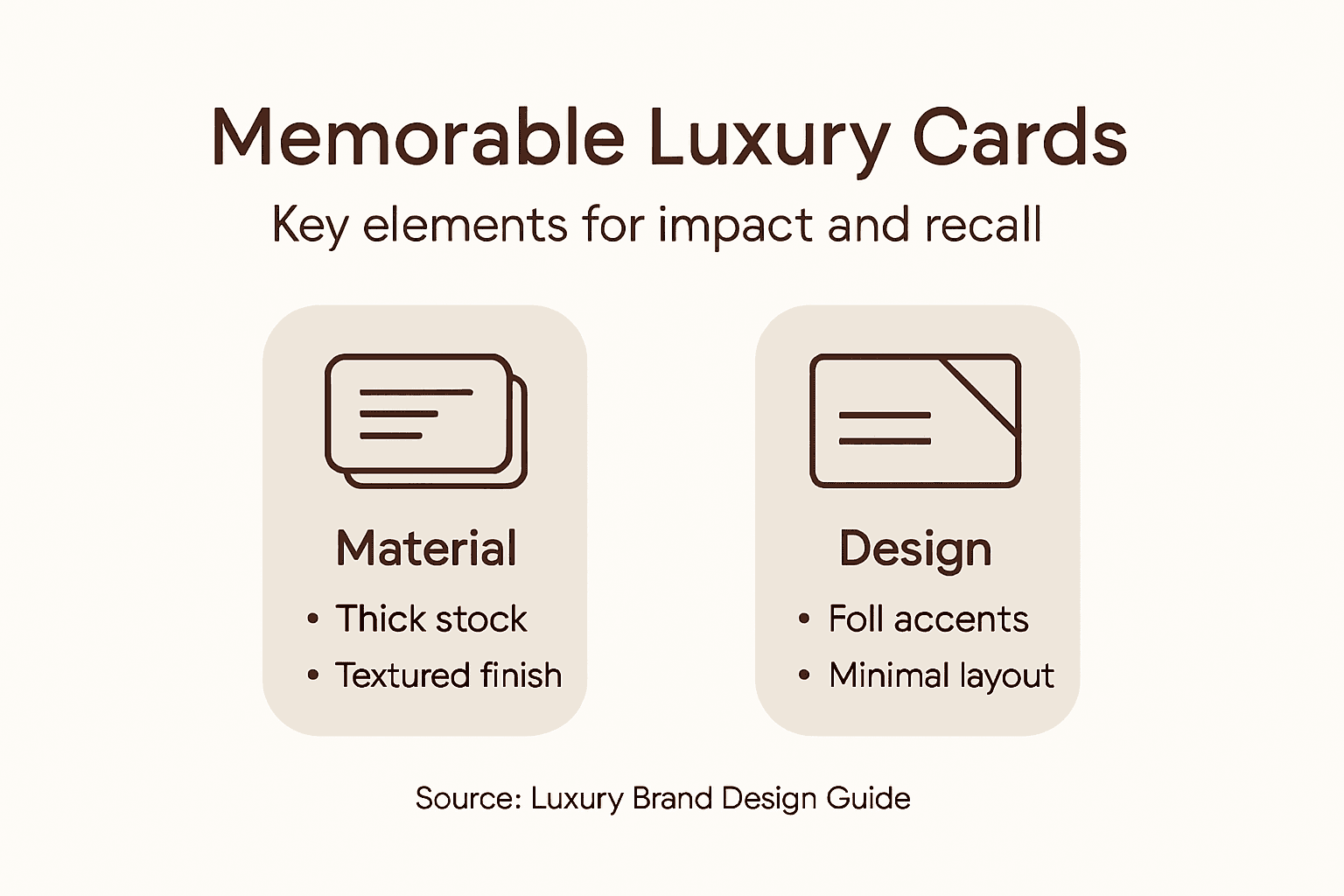
Here’s a concise comparison of premium business card materials and their impact on luxury branding:
| Material Type | Sensory Impact | Brand Message |
|---|---|---|
| Heavy Card Stock | Feels substantial | Signals quality |
| Textured Paper | Tactile uniqueness | Emphasizes craftsmanship |
| Soft-Touch Coating | Silky smoothness | Suggests modern elegance |
| Metallic Foil | Reflective accents | Conveys opulence |
| Cotton/Fine Art | Natural, soft texture | Implies exclusivity |
Pro tip: Choose one signature material or finishing technique that becomes synonymous with your brand, then use it consistently across all business card runs so clients begin to expect and recognize it.
Role of Customization in Brand Positioning
Customization in luxury business cards occupies a delicate space. You want your card to feel personal and distinctly yours, yet also convey that your brand maintains clear standards and vision. The tension between these two desires is where smart brand positioning happens. When you customize a business card thoughtfully, you are not asking a vendor to build something from scratch with no guardrails. Instead, you are making intentional selections within a framework designed to preserve brand integrity while allowing your unique fingerprint to show through. This approach signals that your brand knows exactly who it is and invites clients into that story rather than asking them to define it.
Luxury brand customization strategies work best when they balance exclusivity with personal expression. Too much open-ended customization can actually diminish perceived luxury because it suggests the brand lacks a strong point of view. Conversely, zero customization feels impersonal and mass-produced. For beauty and lifestyle brands, the sweet spot involves selecting from curated options: perhaps choosing between two premium paper stocks, deciding on a specific metallic foil color, or personalizing a design element that does not conflict with your core brand identity. You might offer custom edge painting in your signature color, or allow clients to select from three typography pairings that all feel authentically aligned with your aesthetic. This creates a sense of ownership without diluting brand prestige.
Customization also strengthens emotional connection. When someone receives a business card that feels like it was made specifically for you, the experience feels more valuable. Personalized elements deepen emotional connections and position brands as committed to quality and authenticity. For a luxury beauty brand, this might mean including your specific product line or specialty on the card, or incorporating a design element that reflects your individual creative approach within the larger brand framework. The client holds something that feels made for them, not mass-produced for everyone. They perceive higher value and remember the interaction longer.
The key is maintaining control over what gets customized. Offer choices that enhance rather than compromise your brand position. Consider which elements matter most to your brand story and which can flex based on personal preference. Your logo, core color palette, and foundational design should remain consistent. Secondary elements like accent colors, finishing techniques, or specific information hierarchy can shift. This approach positions you as a sophisticated brand with clear values while acknowledging that relationships matter and personalization strengthens them.
Pro tip: Develop three to five curated customization options that feel genuinely distinct, then present them as intentional choices rather than unlimited possibilities; this preserves brand authority while making clients feel they have meaningful input.
Common Mistakes That Undermine Business Cards
The most damaging mistake luxury beauty and lifestyle brands make is treating business cards as an afterthought. You would never compromise on packaging for your products, yet many brands hand out cards that contradict everything their packaging communicates about quality. Low-quality cardstock, smudged printing, or generic design undercuts your entire brand positioning. When someone holds a business card that feels cheap or looks hastily made, they immediately question whether your actual products receive the same lack of attention. This happens in seconds, subconsciously, but the damage is done. The card becomes a credibility liability rather than an asset.
Another critical error is overcrowding text or using poor formatting choices like small fonts, inconsistent typography, or excessive information. A business card with tiny text forces someone to squint. One with jumbled contact details or a cluttered layout feels disorganized and forgettable. Luxury brands convey clarity through restraint, not through packing every possible detail onto a small piece of cardstock. Your name, title, email, phone number, and website address should be immediately scannable. Secondary details like social media handles, physical address, or multiple specialties should be carefully considered. If something does not directly serve the relationship, it should not be there. Whitespace is not wasted space. It is breathing room that makes your information more powerful.
Brand inconsistency creates another serious problem. If your business cards do not align with your website aesthetic, your packaging design, or your social media presence, you are sending conflicting signals about who you are. Every person representing your brand should carry cards that feel authentically connected to your visual identity. Using outdated contact information, missing digital channels, or neglecting to refresh cards when your brand evolves damages credibility. Beauty and lifestyle brands especially need cards that feel current and deliberately crafted. A luxury skincare founder handing out a card with generic design and a five-year-old phone number is essentially telling the recipient the business is not being actively managed.
One additional mistake is failing to recognize that brand consistency across all materials strengthens credibility. If you are presenting yourself as a premium brand, every touchpoint should reflect that commitment. This means choosing not to print business cards on a budget, not distributing inconsistent versions, and not allowing your card to feel like it came from a different company than the one your clients experience otherwise. The business card is often a client’s first physical interaction with your brand. Make it count.
The following table summarizes frequent business card mistakes and their potential business impact:
| Mistake | Client Perception | Business Impact |
|---|---|---|
| Flimsy stock | Low investment in quality | Damaged credibility |
| Cluttered design | Disorganized branding | Difficult to recall or trust |
| Inconsistent styles | Confused brand identity | Weakens overall recognition |
| Outdated information | Lack of professionalism | Lost opportunities |
Pro tip: Before finalizing your business card design, compare it side by side with your packaging, website, and social media graphics; if the card looks disconnected from those materials, redesign until it feels like a natural extension of your complete brand.
How Premium Cards Strengthen Brand Identity
A premium business card is not a luxury item you offer your clients. It is a representation of your brand’s identity that you carry with you. When you hand someone a card made from superior materials with thoughtful design and refined finishes, you are making a statement about who you are and what you stand for. This is especially true for beauty and lifestyle brands where everything communicates value. The card becomes a physical manifestation of your brand promise. It tells a story without words. Someone holding a thick, textured card with real foil accents immediately understands something about your brand’s commitment to quality. That understanding happens before they even look at your name.
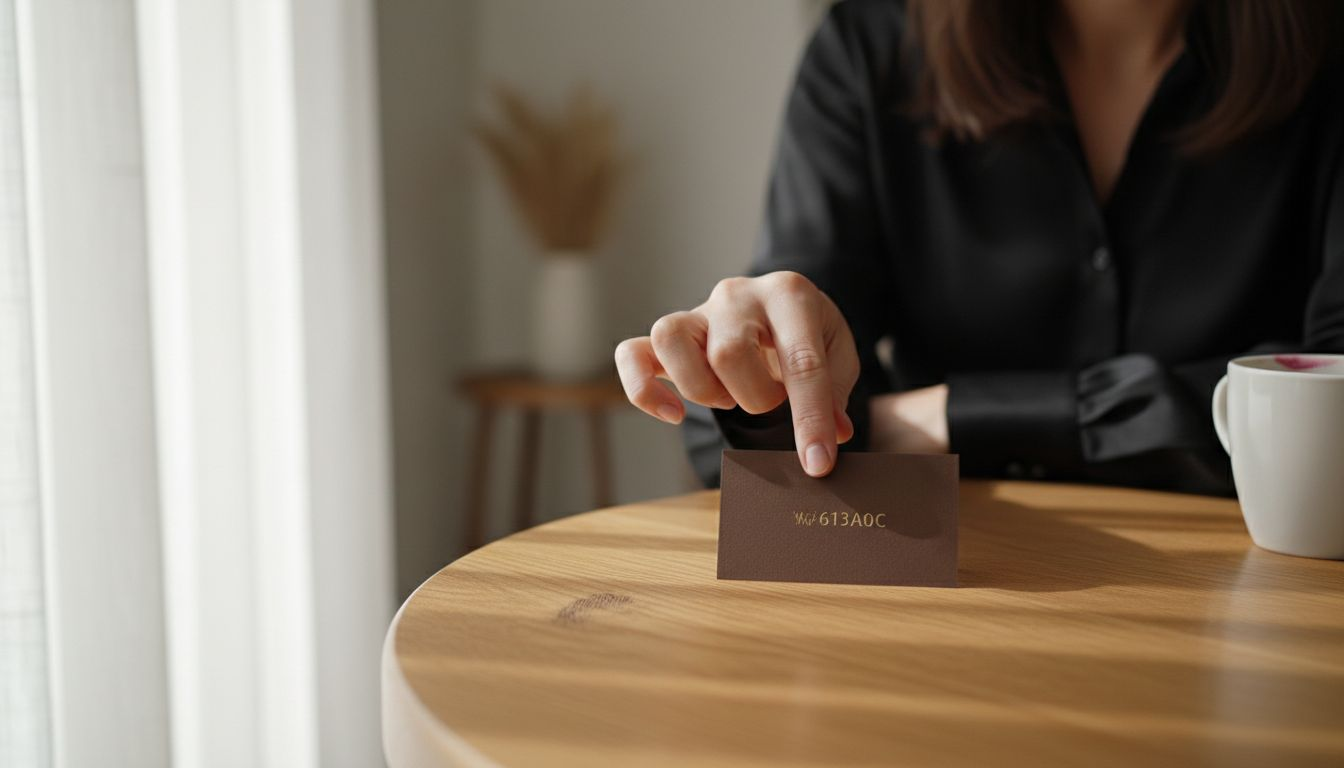
This psychological connection runs deeper than aesthetics. Tangible cues like card material quality and design sophistication signal brand prestige and social identity. When a client carries your business card in their wallet or keeps it displayed on their desk, they are associating themselves with your brand’s luxury positioning. The card becomes a badge of sorts, a token that reinforces their connection to something they perceive as exclusive and desirable. For a luxury beauty brand, this is powerful. A client who cherishes your business card because of its quality and design is more likely to value your products and services with the same appreciation. They have already accepted your brand’s positioning before they ever make a purchase.
Premium cards also support the broader narrative of manufactured scarcity and exclusivity that defines luxury marketing. Limited edition finishes, bespoke design elements, or the use of specialized materials on your cards reinforce the idea that your brand offers something rare and carefully crafted. Not everyone gets a card. Not every card looks the same. This selectivity strengthens brand identity because it positions you as intentional, discerning, and unwilling to compromise. Your business card becomes part of your brand’s heritage and storytelling. It is an artifact that reminds people why they were drawn to you in the first place.
Consider the cumulative effect across multiple touchpoints. Your clients receive your business card, feel its weight and texture, notice the design thoughtfulness, and place it somewhere they will see it again. Each time they handle it or look at it, they reinforce their association with your brand. That card is doing brand work constantly, without requiring any additional investment from you after production. It is a passive ambassador for your identity. The stronger and more premium that card is, the more consistently it communicates your brand’s values and positioning over time.
Pro tip: Choose one distinctive material or finishing technique that becomes inseparable from your brand identity, then use it consistently across all your business cards so clients begin to anticipate and recognize it as uniquely yours.
Elevate Your Luxury Brand with Unforgettable Business Cards
Creating a memorable business card for your luxury beauty or lifestyle brand means more than simply sharing contact details. It requires a tactile and visual experience that conveys quality, craftsmanship, and exclusivity at first touch. If you want to leave a lasting impression that your clients will cherish and remember, choosing the right materials and design elements is essential. BcardsCreation specializes in Textured Paper Business Cards crafted from premium stocks that feel substantial and embody your brand’s values.
Take control of your brand positioning by partnering with BcardsCreation. Our fully custom, small-batch business cards blend expert design guidance with advanced finishing techniques such as embossing and foil accents. These are not generic cards but carefully curated statements of luxury that your clients will notice and respect. Visit BcardsCreation now to explore options including Letterpress Business Cards and discover how a superior card can amplify your brand identity. Make your next connection unforgettable.
Frequently Asked Questions
What elements make a business card memorable for luxury brands?
Memorable business cards for luxury brands incorporate distinctive design elements, high-quality materials, unique textures, and thoughtful customization that reflect the brand’s values and create an emotional connection with recipients.
Why is material choice important for luxury business cards?
The choice of material communicates the brand’s quality and commitment to craftsmanship. Heavy cardstock, textured finishes, and luxury coatings like metallic foils enhance the tactile experience and set the tone for the brand’s overall image.
How can I customize my business card without compromising my brand identity?
To maintain brand integrity while customizing, select options from a curated set that aligns with your brand standards, such as specific colors, finishes, or minimal design elements. This allows for personal expression without diluting brand credibility.
What are common mistakes to avoid when designing luxury business cards?
Common mistakes include using low-quality materials, overcrowding the design with information, maintaining inconsistent styles, and failing to keep contact information current. These errors can undermine the perceived value and professionalism of the brand.
Recommended
- Raised Foil Business Cards | Thick Double-layered Art Paper – BcardsCreation
- Diamond Business Cards | Frosted Plastic | Custom shape card – BcardsCreation
- Acrylic Card Holder | Personalized Business Card Holder for Desk – BcardsCreation
- Fine Paper Double layered Business Card with Neon and Purple Foils, Th – BcardsCreation
- Importance of Bavarian Culture at Corporate Events


