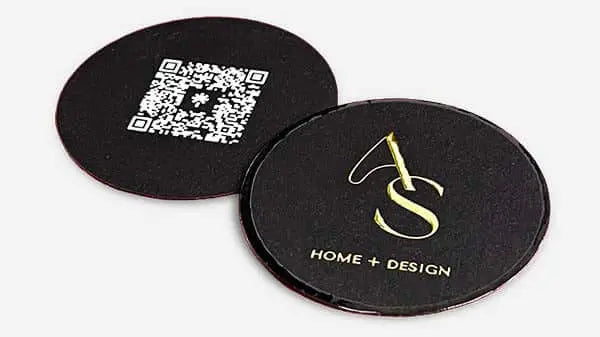


Why “Premium” Is About Decisions, Not Price
What truly sets a premium business card apart is not how much you spend but the intentional design choices that shape every detail. For creative professionals and small business owners, the difference lies in how each visual and material element expresses your brand’s unique voice. Effective premium branding relies on consistent design principles over simply paying more, ensuring every touchpoint delivers meaning and impact. Discover how thoughtful design, bespoke materials, and cohesive strategy craft cards that stand for something—and make your brand remembered.
Table of Contents
- Defining Premium In Design-Driven Branding
- Personalization Versus Mass Production Models
- Material Choices That Shape Perceived Value
- How Expert Guidance Elevates The Result
- Costs Versus Strategic Investment In Branding
Key Takeaways
| Point | Details |
|---|---|
| Intentional Design Matters | Premium branding focuses on intentional design choices that reflect brand identity, rather than just higher costs. |
| Personalization Over Mass Production | Personalized business cards enhance relevance and effectiveness, while mass production often leads to generic, ineffective branding. |
| Material Quality Influences Perception | The choice of material significantly impacts how a business card is perceived, with higher quality materials conveying professionalism. |
| View Costs as Strategic Investments | Consider business card expenses as strategic investments in branding, ensuring they contribute positively to brand perception and recognition. |
Defining Premium in Design-Driven Branding
When you hear “premium,” your mind might jump to price. Higher cost equals higher quality, right? Not exactly. Premium in design-driven branding has almost nothing to do with what you pay and everything to do with intention. It’s about whether every visual element, material choice, and interaction point reflects a deliberate strategy that reinforces who you are as a brand. Effective premium branding focuses on consistent design principles over merely price, creating strong brand identities that actually mean something to the people who encounter them.
Consider the difference between two business cards that both cost the manufacturer identical amounts to produce. One uses generic templates, a standard font, and an afterthought layout. The other reflects months of strategic thinking about what the brand stands for, the audience it serves, and what that relationship looks like when expressed physically. Both might be made from the same paper stock. Both might use two colors. But one communicates intentionality, and the other communicates indifference. That intentionality is what people perceive as premium, regardless of the actual price tag.
This distinction matters because brand identity goes beyond price and product features, focusing instead on how design elements and brand communications build an integrated perception. When you make a design choice, you’re not just picking how something looks. You’re making a promise about your personality, your values, and the culture you’re building around your work. A premium business card reflects decisions about typography that match your voice, paper weight and finish that communicate your professionalism, and layout that makes it easy for someone to actually use and remember the card. These choices require thinking, not checking boxes.
The real test of premium-level design thinking is whether all the pieces work together. Your business card’s design should feel like it belongs to your website, your email signature, and the way you present yourself in meetings. It should reflect the same quality standards visible in your studio or office. If someone holds your card and then visits your portfolio, they shouldn’t feel like they’re encountering two different brands. That coherence, that alignment across touchpoints, is what creates the perception of premium quality. It’s not about spending more money. It’s about spending your resources strategically to say exactly what you mean to say.
Pro tip: Before making any design decision on your business cards, ask yourself one question: “Does this choice reflect a deliberate decision about my brand identity, or did I choose it because it seemed like a safe option?” Only decisions that pass this test belong on your card.
Personalization Versus Mass Production Models
The business card industry was built on mass production. Print thousands of identical cards, divide the cost per unit by that large number, and suddenly you can offer rock-bottom prices. This model works fine if your goal is to have something in your pocket when someone asks for contact information. But if your goal is to use that card as a strategic tool that reflects who you are and what you do, mass production actively works against you. The core difference comes down to control: mass production optimizes for volume and cost, while personalization optimizes for relevance and intention.
When you move away from mass production, you’re not just changing where you order your cards. You’re changing the entire relationship between your needs and the final product. Personalization combines customized design with individual decision making, replacing the one-size-fits-all approach with something built specifically for your situation. Mass production forces you into predetermined templates, standard sizes, fixed color options, and limited finishing techniques. You get fast, you get cheap, but you don’t get a card that actually says anything unique about your work. A personalized approach asks different questions: What materials best represent your brand? What paper finish communicates the right feeling when someone touches the card? How should your typography reflect your professional identity? These decisions can’t be answered by templates.
The practical differences matter in ways you’ll notice immediately. With mass production, your designer or the printer’s software makes most of the decisions for you. You choose from 50 colors instead of specifying the exact pantone you need. You accept the standard business card size because that’s what fits the press. You pick from pre-designed layouts because custom layout costs extra. With personalization, you’re actively directing the outcome at every stage. You work with designers who understand your brand and can articulate why a particular paper weight or finish makes sense. You can experiment with different sizes, orientations, or formats if they serve your positioning. You can use specialty materials like uncoated paper, silk finish, or even plastic if that aligns with your brand identity. Personalized approaches emphasize flexibility and tailoring to individual needs, which translates directly to how premium business cards function as branding tools.
Here’s what makes this distinction real: When you print 5,000 cards through mass production, you’re locked into those decisions for months. If your brand evolves, your messaging shifts, or you discover the paper finish isn’t quite right, you’ve already paid for thousands of cards that no longer represent you. With personalized small-batch production, you print what you need right now. You can iterate. You can test different materials before committing to a large run. You can adjust your design as your business develops. This flexibility costs more per card, but it costs less overall because you’re not stuck with inventory that no longer serves you. The premium model isn’t about spending more money on every card. It’s about spending money smarter, in smaller quantities, with far greater control over what you’re actually getting.
Here’s a comparison of mass production and personalized business card approaches:
| Aspect | Mass Production | Personalization |
|---|---|---|
| Design Control | Fixed templates, limited input | Full customization, strategic choices |
| Quantity | Large batches, inflexible | Small batches, highly adaptable |
| Material Selection | Standard, few options | Specialty, tailored options |
| Brand Relevance | Generic look, impersonal | Unique, brand-aligned |
| Cost Per Unit | Low | Higher |
| Long-Term Value | Often wasted or discarded | Increased retention, impact |
Pro tip: If you’re considering personalized cards, resist the urge to pack every possible feature or material into the first version. Start with one strategic decision that matters most to your brand identity, perfect that, and build from there.
Material Choices That Shape Perceived Value
When someone hands you a business card, the first thing that happens is tactile. Before they read a single word, they feel the paper. Their fingers register weight, texture, and finish. That immediate sensory experience shapes whether they perceive your card as premium or disposable. This is not psychology or marketing tricks. This is material science meeting human perception. The material you choose for your business card is doing work that design and typography alone cannot accomplish. It’s communicating a message before anyone even processes what the card says.
Consider what happens when you pick up a standard 80-pound coated card stock versus a heavier, uncoated option. The weight difference is immediate and unmissable. Your brain registers that difference as substance, as intentionality, as care. Minimalist versus maximalist design aesthetics significantly impact consumer perceptions of brand quality, with material and design choices affecting how people perceive naturalness and product value. But this goes deeper than aesthetics. Different materials have distinct properties that influence durability, appearance, and how the card ages in someone’s wallet. A soft-touch finish feels luxurious but can scuff with handling. A glossy finish reflects light and shows fingerprints. A matte or silk finish offers a middle ground that photographs well and feels professional. The material choice you make isn’t arbitrary. It’s a statement about what your brand values and how you want people to experience interaction with you.
Here’s where most business card decisions go wrong: people think premium means more. More colors, more effects, more texture. But premium often means the opposite. It means choosing one material and committing fully to what makes it special. A thick, natural white paper with black letterpress printing says something very different from a thin white card with full-color digital printing, even if both convey identical information. The first suggests restraint and confidence. The second suggests you’re trying to fill space. When you understand your materials deeply, you make smarter decisions about which effects actually serve your positioning. A specialty paper like linen or felt already has visual interest built in. Adding metallic foil or embossing to it creates competition rather than coherence. The best material decisions amplify what makes a specific material valuable rather than masking it.
Material choice also determines how long your card lasts in someone’s possession. A flimsy stock will wrinkle and tear. It signals that you didn’t invest in the relationship. A properly chosen material will stay intact in a wallet for months or years. It will be readable, unfaded, and still feel intentional weeks after someone received it. That persistence is powerful. Every time someone pulls out your card to give it to someone else, they’re reinforcing their own impression of your brand. The material quality determines whether that experience reinforces premium positioning or undermines it. When selecting materials, think about the context where your card will live. If you work in creative fields, you might choose an unexpected material like frosted plastic or custom shapes to differentiate. If you work in conservative industries, traditional stock with exceptional finish quality sends the right signal. The material should align with how your target audience expects to experience a premium brand in your field.

The following table summarizes key material choices and their business impact:
| Material Type | Perceived Quality | Durability | Branding Effect |
|---|---|---|---|
| Standard Coated | Basic, entry-level | Moderate | May signal low investment |
| Heavy Uncoated | Premium, substantial | High | Communicates care and professionalism |
| Soft-Touch Finish | Luxurious feel | Can scuff | Creates tactile differentiation |
| Matte/Silk | Professional, modern | Durable | Balances feel and visual clarity |
| Specialty (Plastic, Linen) | Unique, memorable | Varies | Strong brand differentiation |
Pro tip: Before committing to any material, request physical samples and test how they feel in your hand for at least a week. Notice which samples you reach for first, which ones feel premium to you, and which ones you’d be proud to hand someone important in your field.
How Expert Guidance Elevates the Result
There’s a fundamental difference between a business card you designed yourself using an online tool and a business card that was developed with expert guidance. The self-designed card might look acceptable. It checks boxes. But it rarely conveys the strategic thinking that separates premium work from adequate work. Expert guidance isn’t about someone telling you what to do. It’s about someone who understands design, materials, branding, and positioning asking the right questions to help you make better decisions. When you work with an expert, you’re not just getting a final product. You’re gaining access to a methodology, a perspective, and years of accumulated knowledge about what actually works.
The value of expert input becomes obvious when you understand what experts are actually doing. They’re not making arbitrary choices. They’re making informed decisions based on understanding how typography communicates, why certain paper finishes work better for specific industries, and how small details compound to create cohesive brand expression. Expert methodologies in rigorous design ensure high-quality results that enhance perceived value beyond pricing considerations. When an expert recommends a specific paper weight, they’re not just naming options. They’re considering how that weight will feel in a prospect’s hand, how it will age in a wallet, and whether it signals the professionalism your industry expects. They’re thinking about how your typography will align with your website design, your email signature, and the physical space where you conduct business. They’re asking whether every element on the card earns its place or whether removing it would actually strengthen the design.
Consider what happens without expert guidance. You start with a blank canvas and unlimited options. That abundance of choice actually makes the decision harder, not easier. Should you use color or black and white? Should the card be standard size or unusual dimensions? Should you include your photo? Your tagline? Your social media handles? Every question has a reasonable answer, which means no question has a clear answer. An expert helps you answer these questions by first understanding your positioning, your audience, and what impression you want to create. They filter options through those strategic considerations rather than aesthetic preferences. A designer working with premium business cards isn’t choosing layouts because they look pretty. They’re choosing layouts because they reinforce how you want to position yourself. They’re selecting materials because those materials align with your brand values, not because they’re trendy. This strategic thinking is the difference between a card that looks good and a card that works.
The practical impact extends far beyond the design process. When an expert is involved from the beginning, they can guide you toward materials and finishes that actually exist and actually work at scale. They know which paper stocks are reliable, which finishing techniques enhance versus cheapen appearance, and which combinations of materials and effects create coherence versus visual confusion. They can catch decisions that would look good in theory but fail in execution. They understand the production process deeply enough to know where quality is actually determined. A business card isn’t premium because the designer spent extra time on it. It’s premium because every decision, from material selection to the specific finish to the typography choices, works together to communicate something meaningful. Expert guidance and adherence to rigorous standards in design execution improve outcomes and drive premium positioning. Without that expertise, you’re making decisions in isolation, hoping they’ll somehow cohere into something that works. With expert guidance, each decision builds on the previous one toward a specific goal.
Here’s what’s often missed: expert guidance actually saves money over time. When you make uninformed decisions, you end up reprinting cards that don’t work, changing directions halfway through, or discovering too late that your choice of materials doesn’t align with how people actually perceive your brand. An expert helps you make decisions once, with confidence, knowing they’ll serve your positioning for years. You’re not paying for expertise because you can’t make decisions yourself. You’re investing in expertise because an expert can help you make decisions that actually work in the real world, where perception matters and first impressions compound over time.
Pro tip: When working with a designer or branding expert, start by articulating what you want people to think or feel when they experience your card, not what you want the card to look like. This clarity of intent will guide every subsequent decision and ensure the expert understands your strategic goals before they start designing.
Costs Versus Strategic Investment in Branding
There’s a crucial distinction between viewing business card expenses as a cost and viewing them as a strategic investment in your brand. A cost is something you minimize. An investment is something you allocate thoughtfully because you expect returns. The difference in mindset changes everything about how you make decisions, what you’re willing to spend, and what results you actually get. When you’re thinking about costs, you’re asking “How can I get this done for less?” When you’re thinking about investments, you’re asking “What will deliver the greatest impact on how my brand is perceived?” Those are fundamentally different questions that lead to fundamentally different outcomes.
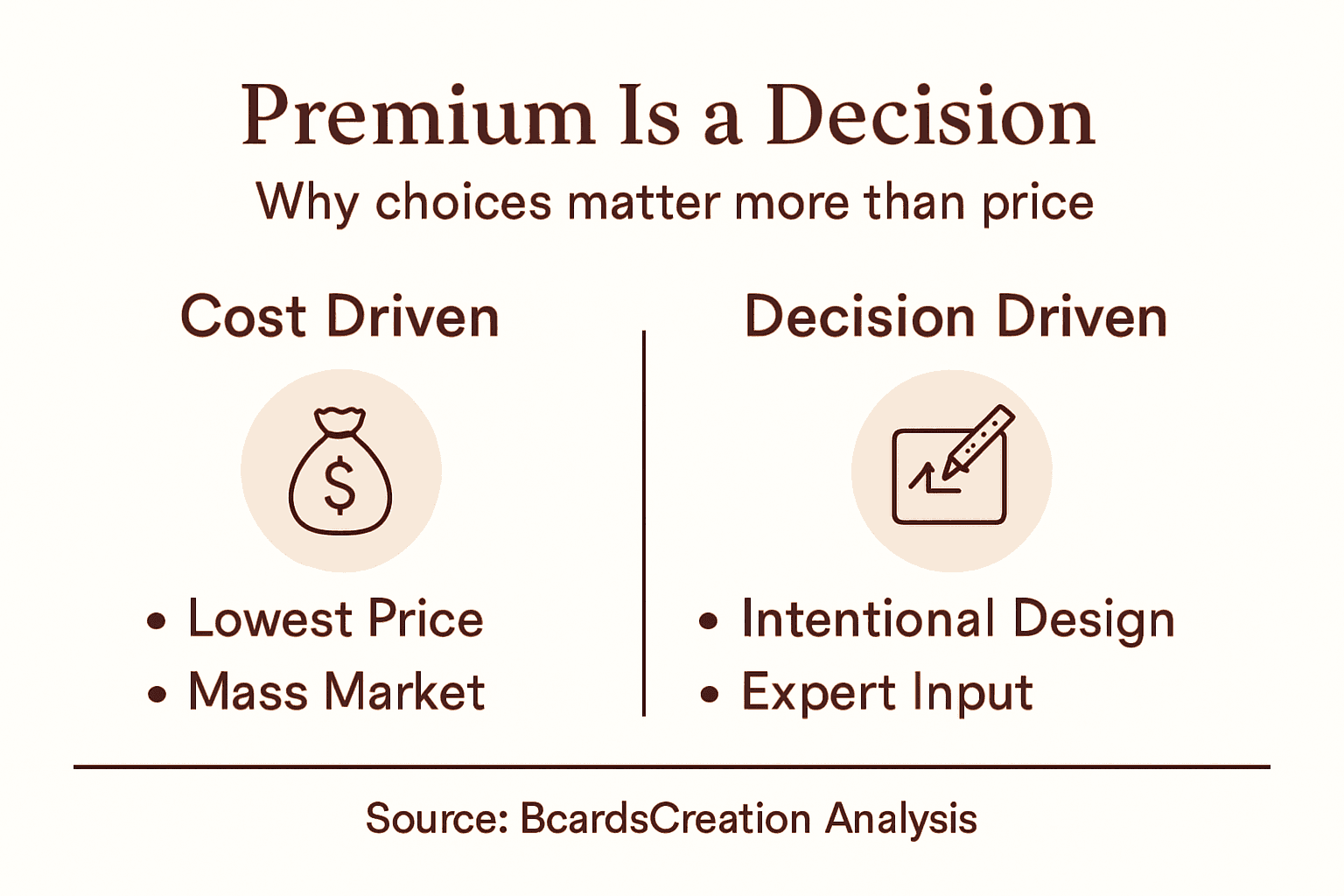
Most people approach business cards like they approach office supplies. You need them, so you get the cheapest viable option and move on. But business cards aren’t really office supplies. They’re brand tools that live in someone’s wallet or desk drawer for months or years. They’re mini representations of your business that people can hold, feel, and examine at leisure. Strategic investments in branding drive long-term competitive advantage and innovation rather than short-term cost minimization. When you view your business cards as a cost, you’re likely ordering in massive quantities to get per-unit pricing down. You’re using standard templates because custom design costs extra. You’re accepting material limitations because exploring specialty options takes time and money. You end up with cards that work, technically, but that don’t actually communicate anything strategic about your positioning. You’ve optimized for price without considering what the price actually bought you.
Here’s where the investment framing changes the calculus. If you order 500 premium cards with thoughtful design and quality materials, you might spend $800 total. That sounds expensive for business cards. But if you order 5,000 generic cards at mass-production pricing, you might spend $500 total. The premium option costs $1.60 per card. The generic option costs $0.10 per card. But which option actually works harder for your brand? Which one creates the impression you want to create? Which one are people more likely to actually use and keep? If a premium card sits in someone’s wallet for six months and comes up in conversation that leads to a project, what was the cost per outcome? If a generic card gets thrown away immediately, what was the cost per outcome? Managing brand investments with an investment mindset requires strategic allocation and value-creation focus rather than pure expense minimization. The premium investment delivers returns. The cost-cutting approach delivers regret.
The real issue with viewing branding as a cost is that costs are easy to justify cutting. When revenue is tight, the first thing to go is “that expensive designer” or “those premium cards.” But this is exactly backward. Premium branding is precisely what creates differentiation during competitive moments. If you cut your branding budget when business is slow, you’re weakening the very tool that could help you stand out when you need to. A business owner spending $2,000 on premium business cards might feel like they’re splurging. But a business owner who invests $2,000 in branding that clearly communicates their positioning is investing in a tool they’ll use for years. Those 500 premium cards last longer, create better impressions, and require fewer reprints than 5,000 generic cards that become obsolete or get discarded.
This investment perspective also changes how you think about the components. Instead of asking “What’s the cheapest way to get a business card?”, you ask “What business card actually communicates our positioning?” Maybe that’s a specialty material. Maybe that’s custom letterpress printing. Maybe that’s an unconventional size. The investment perspective allows you to say yes to decisions that serve your strategy, because you’re not just thinking about the immediate cost. You’re thinking about the compounding value of consistent, strategic brand communication over time. A business card designed with intention and produced with quality isn’t expensive. It’s efficient. It’s doing exactly what you need it to do, at exactly the quality level your brand requires, in exactly the quantity you’ll actually use before your positioning evolves.
Pro tip: Calculate the true cost of your current business card approach by tracking how many cards you actually give out in a year, then multiply that by your per-unit cost. Compare that to a premium option ordered in quantities you’d actually use. Often, the premium investment costs less total because you waste far fewer cards and get better results from each one you distribute.
Elevate Your Brand With Strategic, Premium Business Cards
Understanding that “premium” means intentional decisions—not just price—is the key to making your business card a true reflection of your brand. If you want to escape generic templates and mass-produced cards, you need a partner who treats every detail as a strategic choice. BcardsCreation specializes in fully custom, small-batch business cards designed with expert guidance, advanced materials, and finishes that communicate your professionalism and unique identity.
Discover how thoughtful design decisions can transform your card into a powerful branding tool. Visit BcardsCreation to explore our custom solutions and start crafting cards that align perfectly with your brand values and positioning. Don’t settle for cards that fade into the background—make a strategic investment in premium quality that works long after the first impression. Check out our premium business card services and see how expert guidance and material innovation can set you apart today.
Frequently Asked Questions
What does “premium” mean in the context of business cards?
“Premium” refers to the intentional design choices and materials used in creating business cards, rather than associated with a higher price. It emphasizes quality, relevance, and how the card represents the brand.
How can personalized business cards enhance my branding?
Personalized business cards allow for customized design and material choices that reflect your brand identity, creating a unique and memorable impression as opposed to generic, mass-produced options.
Why are material choices important for perceived value in business cards?
Material choices significantly impact the tactile experience and durability of business cards. High-quality materials convey professionalism and enhance the impression of the brand before anyone reads the information on the card.
How does expert guidance influence the design of premium business cards?
Expert guidance helps in making strategic decisions about design, materials, and typography, ensuring that every choice aligns with your brand values and enhances the overall effectiveness of the business card.
Recommended
- Clear Plastic Business Cards with White Foil – Transparent Elegance – BcardsCreation
- What Is Premium Business Card Design? – BcardsCreation
- Unique House Shaped Business Cards for Real Estate — Foil-Stamped Fros – BcardsCreation
- Frosted Transparent Business Cards – Matte Ice Finish, Full-Color Bril – BcardsCreation
- Understanding Hair Keratin Price: A Comprehensive Guide to Treatment Costs | MyHair


