

Professional Business Card Design: A Step-by-Step Framework
Luxury thrives on distinction, yet even the most visionary brands can be overlooked if their business cards fail to reflect their true identity. For American founders and creative professionals, every detail from paper texture to color choice signals a commitment to excellence. This guide reveals how a well-crafted business card becomes a silent ambassador, embodying your unique values, strategic intent, and the dedication to quality that defines your brand.
Table of Contents
- Step 1: Define Branding Objectives And Audience
- Step 2: Select Materials And Finishing Techniques
- Step 3: Craft Visual Identity And Layout
- Step 4: Refine Details For Uniqueness
- Step 5: Evaluate Design For Strategic Impact
Quick Summary
| Key Takeaway | Explanation |
|---|---|
| 1. Define branding objectives | Understand your core purpose and desired audience for effective communication. |
| 2. Choose quality materials | Select durable and visually appealing finishes to enhance brand perception. |
| 3. Craft a clear visual identity | Balance creativity and clarity to ensure your design communicates effectively. |
| 4. Refine design details | Incorporate unique elements that convey your brand’s personality and professionalism. |
| 5. Evaluate design impact | Assess how well your business card aligns with brand strategies and audience needs. |
Step 1: Define branding objectives and audience
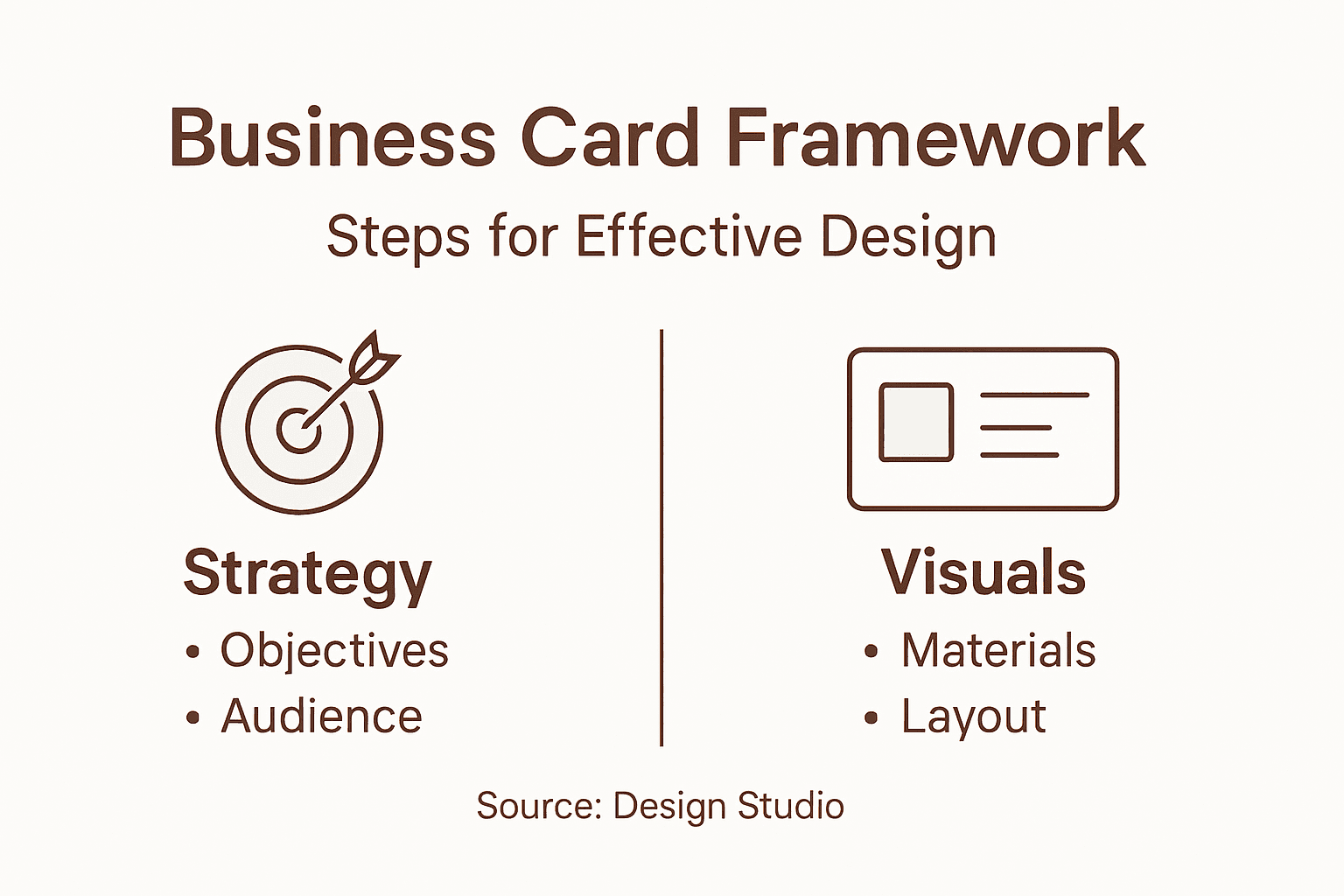
Designing a powerful business card starts with a strategic foundation: understanding who you are and who you want to communicate with. Your branding objectives transform a simple paper rectangle into a strategic communication tool that represents your professional identity.
To build this strategic framework, you’ll need to develop a clear picture of your brand’s core purpose and the specific audience you want to engage. Unique brand identity creation requires deep introspection about your professional goals and the emotional connection you want to establish.
Start by mapping out your strategic priorities through these focused considerations:
- Professional positioning: What makes your approach or expertise distinctive?
- Target audience context: Whose attention and trust are you seeking?
- Communication goals: What specific impression do you want to leave?
- Emotional resonance: What feelings should your card evoke?
Through detailed audience research, you’ll uncover insights that transform your business card from a contact medium into a nuanced brand ambassador. Audience insight goes beyond demographics to capture the underlying motivations and emotional landscape of your potential connections.
A business card is not just contact information - it’s a strategic brand touchpoint that communicates your professional narrative in seconds.
Pro tip: Conduct at least three interviews or informal conversations with professionals in your target audience to validate your brand positioning and understand their unspoken expectations.
Step 2: Select materials and finishing techniques
Choosing the right materials and finishing techniques transforms your business card from a basic information carrier into a sophisticated brand statement. Your selection reflects your professional standards and creates a memorable first impression.

Your material and finishing choices communicate volumes about your brand’s attention to detail and quality. Print finishing methods offer multiple ways to enhance durability, visual appeal, and tactile experience.
Consider these strategic material and finishing considerations:
- Paper weight: Communicates professional gravitas
- Texture: Reveals brand personality
- Surface treatments: Adds visual and tactile complexity
- Color options: Reinforces brand identity
Each finishing technique offers unique advantages in creating a distinctive professional impression. Decorative print processes like embossing, foil stamping, and lamination provide opportunities to elevate your card’s sensory and visual impact.
Your business card’s material and finish are silent ambassadors of your professional brand - choose wisely.
Some compelling finishing options include:
Here’s a comparison of popular business card finishing techniques and their professional brand impact:
| Technique | Visual Effect | Tactile Experience | Positioning Benefit |
|---|---|---|---|
| Matte Lamination | Subtle sophistication | Smooth, understated | Professional, versatile |
| Glossy UV Coating | High color vibrancy | Slick, polished surface | Bold, dynamic impression |
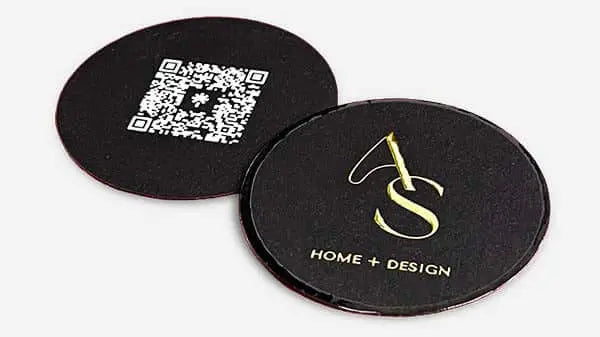
| Metallic Foil Stamping | Luxurious shine | Textured metallic detail | Premium, distinctive image |
| Soft-Touch Coating | Velvety, muted finish | Rich, inviting softness | Exclusive, high-touch appeal |
- Matte lamination for understated elegance
- Glossy UV coating for vibrant color pop
- Metallic foil stamping for luxury positioning
- Soft-touch coating for premium tactile experience
Pro tip: Request physical samples of different materials and finishes to evaluate how they feel and look under various lighting conditions before making a final selection.
Step 3: Craft visual identity and layout
Your business card’s visual identity is the silent storyteller of your professional brand. It communicates your essence before a single word is read, transforming a simple piece of paper into a powerful communication tool.
Visual identity design involves strategic choices that go far beyond aesthetic preferences. Each design element serves as a deliberate communication channel, conveying your professional personality through carefully selected visual components.
Consider these critical design elements:
- Color palette: Emotional and psychological trigger
- Typography: Personality and professionalism indicator
- Negative space: Sophistication and clarity signal
- Alignment: Precision and intentionality demonstration
Successful business card design requires a delicate balance between creativity and clarity. Your goal is to create a layout that integrates brand elements seamlessly while maintaining readability and visual impact.
Design is the silent ambassador of your brand - every pixel and millimeter tells a story.
Key layout principles to consider:
- Establish clear visual hierarchy
- Maintain consistent typography
- Create intentional white space
- Align elements with precision
Pro tip: Create three different design variations and review them under different lighting conditions and at different distances to ensure optimal visual effectiveness.
Step 4: Refine details for uniqueness
Transforming a standard business card into a memorable brand artifact requires strategic refinement of subtle design elements. Your goal is to create a nuanced visual experience that speaks volumes about your professional identity.
Specialized printmaking techniques offer sophisticated methods to distinguish your card from generic alternatives. Each design choice becomes an opportunity to communicate your brand’s distinctive personality and professional approach.
Consider these refinement strategies:
- Micro-typography: Precision in font selection and kerning
- Texture interactions: Unexpected material combinations
- Selective highlighting: Strategic visual emphasis
- Minimal graphic elements: Purposeful design accents
Advanced print finishing methods can elevate your card’s sensory and visual impact. Techniques like selective UV varnishing or combining embossing with foil stamping create layers of visual intrigue that invite closer examination.
Uniqueness is not about complexity, but about intentional, meaningful design choices.
Key refinement approaches:
- Experiment with unconventional materials
- Use unexpected color interactions
- Create subtle textural contrasts
- Integrate meaningful symbolic elements
Pro tip: Request prototype samples and evaluate them in multiple lighting conditions, observing how subtle design details emerge and interact.
Step 5: Evaluate design for strategic impact
Your business card design is more than a visual artifact - it’s a strategic communication tool that represents your professional brand’s core essence. The final evaluation determines whether your design truly resonates with your intended audience and supports your broader business objectives.
Strategic brand design requires a systematic approach to assessing how effectively your visual elements communicate your professional narrative. This goes beyond aesthetic preferences to understanding how each design choice contributes to your brand’s positioning and perception.
Key evaluation criteria include:
- Audience alignment: Does the design speak directly to your target demographic?
- Brand consistency: How well does the card reflect your broader brand identity?
- Communication clarity: Are key messages immediately understood?
- Emotional resonance: What feelings does the design evoke?
Brand strategy assessment involves more than subjective judgment. It requires a structured analysis of how design elements contribute to building brand equity and influencing customer perceptions.
A truly effective business card design transforms a simple piece of paper into a powerful brand ambassador.
Strategic evaluation steps:
This summary highlights key business card evaluation criteria and how they support strategic branding:
| Criterion | Why It Matters | Impact on Brand Perception |
|---|---|---|
| Audience Alignment | Ensures relevance | Attracts target professionals |
| Brand Consistency | Maintains identity | Builds trust and recognition |
| Communication Clarity | Message understood quickly | Strengthens key brand messages |
| Emotional Resonance | Creates a lasting impression | Fosters loyalty and connection |
- Gather objective feedback from target audience
- Compare against competitive landscape
- Test design across different contexts
- Measure emotional and professional impact
Pro tip: Create a small focus group of professionals in your target market and conduct a blind evaluation, collecting both quantitative ratings and qualitative insights about your design.
Elevate Your Professional Brand With Custom Business Cards
The challenge of crafting a professional business card that truly reflects your brand and resonates with your target audience requires more than just design knowledge. You need a strategic approach that considers materials, finishing techniques, and a layout that tells your unique story. At BcardsCreation, we understand these pain points and provide bespoke solutions that transform your card into a powerful strategic asset. Whether you want to explore innovative shapes with Custom Shaped Business Cards, embrace sophistication through our Colored Paper Business Cards, or stand out with durable, high-end Plastic Business Cards, we combine expert design consultation with premium materials.
Take control of your professional narrative now and partner with a studio that treats your business card as the silent ambassador of your brand. Discover how personalized craftsmanship and advanced finishing techniques can make your card unforgettable at BcardsCreation. Start your journey today and make your first impression count.
Frequently Asked Questions
What are the first steps in professional business card design?
Start by defining your branding objectives and identifying your target audience. Map out your professional positioning, communication goals, and desired emotional resonance to set a strong foundation for your business card design.
How can I select the right materials for my business card?
Choose materials that reflect your brand’s quality and professionalism, such as the appropriate paper weight and texture. Examining physical samples can help you decide on the best materials within a week or two to ensure they align with your brand identity.
What key design elements should I focus on when creating my business card?
Focus on critical design elements like color palette, typography, and negative space. Ensure these elements align with your brand’s identity to create a cohesive and memorable card that effectively communicates your professional narrative.
How can I refine my business card design to stand out?
Refine your design by incorporating unique touches such as micro-typography or unexpected material combinations. Aim to create subtle contrasts or integrate meaningful symbols to enhance your card’s uniqueness within a few iterations of your design.
What criteria should I use to evaluate the effectiveness of my business card design?
Evaluate your design based on audience alignment, brand consistency, communication clarity, and emotional resonance. Gather feedback from your target audience and consider making adjustments based on this input to ensure your card makes a powerful impact.
How can I gather feedback on my business card design?
Create a small focus group of professionals in your target market to conduct a blind evaluation of your design. Collect both quantitative ratings and qualitative insights to refine your card further, ideally within a couple of weeks.
Recommended
- Top 8 Unique Business Card Solutions for 2026 – BcardsCreation
- Diamond Business Cards | Frosted Plastic | Custom shape card – BcardsCreation
- Acrylic Card Holder | Personalized Business Card Holder for Desk – BcardsCreation
- Raised Foil Business Cards | Thick Double-layered Art Paper – BcardsCreation
- 7 Essential Steps for a High-Impact B2B Sales Checklist


