

Unique Business Card Ideas Guide for Strategic Branding
Most American professionals overlook that a business card does more than share contact details. In an era where first impressions can decide opportunities, defining your brand’s identity is essential for standing out. Studies reveal that over 70 percent of recipients judge credibility based on business card design alone. Discover practical strategies for shaping an authentic brand presence that leaves a memorable mark long before the conversation begins.
Table of Contents
- Step 1: Define Your Brand’s Core Identity
- Step 2: Evaluate Strategic Differentiation Vs. Gimmicks
- Step 3: Select Relevant Materials And Design Techniques
- Step 4: Customize Finishing Methods For Lasting Impact
- Step 5: Review And Refine For Authentic Brand Alignment
Quick Summary
| Key Point | Explanation |
|---|---|
| 1. Define your brand identity | Understand your unique value and principles to craft a meaningful brand statement. This serves as the foundation for your business card design. |
| 2. Differentiate with authenticity | Focus on genuine qualities that reflect your professional capabilities, avoiding gimmicks that lack lasting impact on your audience. |
| 3. Choose materials wisely | Select materials that align with your brand personality, ensuring they communicate your professional identity effectively and consistently. |
| 4. Customize finishing techniques | Implement finishing methods like embossing or foil stamping that enhance the tactile and visual appeal of your business card, creating a memorable experience. |
| 5. Regularly refine your design | Continuously assess your business card for alignment with your professional growth and current goals, making updates as necessary to stay relevant. |
Step 1: Define your brand’s core identity
Defining your brand’s core identity transforms a generic business card into a strategic communication tool. This critical step establishes the fundamental narrative and visual language that will represent your professional persona.
Start by conducting a comprehensive self assessment of your professional purpose. Ask yourself profound questions: What unique value do you bring to your industry? What core principles guide your work? What differentiates you from competitors? These questions help uncover your authentic professional essence beyond surface level descriptions.
Your brand identity emerges from the intersection of your professional skills, personal values, and market positioning. Consider creating a concise brand statement that captures your professional philosophy in 1-2 sentences. This statement becomes the philosophical foundation for every design choice on your business card.
Map out your brand’s personality traits just like you would character attributes. Are you innovative and bold? Precise and analytical? Warm and collaborative? These characteristics will directly influence color choices, typography, and overall design aesthetic of your business card.
Pro tip: Create a brand mood board before designing your card. Collect visual references that resonate with your professional identity to help designers translate your core essence into a tangible design language.
Step 2: Evaluate strategic differentiation vs. gimmicks
Separating genuine strategic differentiation from temporary gimmicks requires careful analysis and strategic thinking. Your business card should communicate authentic professional value rather than rely on superficial tricks that quickly lose impact.
Strategic brand differentiation means developing unique features that genuinely reflect your professional capabilities. Unlike gimmicks that attract momentary attention, true differentiation creates lasting impressions by highlighting your specific professional strengths and unique value proposition.
Start by critically evaluating potential design elements. Ask yourself whether each design choice communicates something meaningful about your professional identity or merely serves as a temporary visual trick. Authentic brand identity should reflect your organization’s core mission and values rather than depending on surface level novelty.
Consider the long-term perception you want to create. Effective differentiation means selecting design elements that consistently represent your professional narrative. A well-crafted business card becomes a strategic communication tool that speaks volumes about your expertise before you even say a word.
Pro tip: Conduct a blind review of your business card design with professional peers. Ask them what they perceive about your professional identity from the card alone to validate whether your differentiation strategy truly communicates your intended message.
Step 3: Select relevant materials and design techniques
Selecting the right materials and design techniques transforms your business card from a simple contact reference into a powerful brand communication tool. This step requires thoughtful consideration of how each design element represents your professional identity.
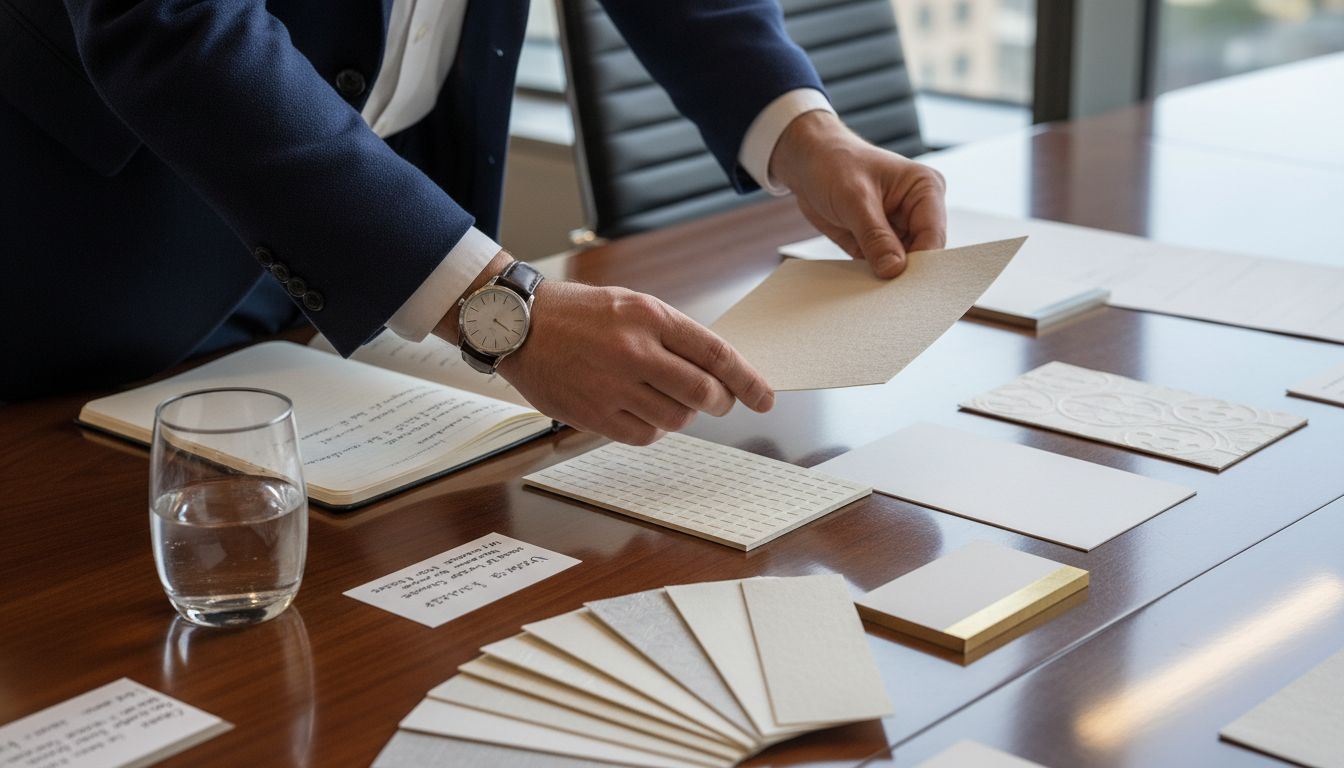
Design techniques that authentically connect should reflect your professional essence and communicate your unique value proposition. Consider materials not just for their aesthetic appeal but for how they align with your brand personality. A tech startup might choose sleek metal or translucent plastics, while a creative professional might select textured papers with unusual finishes.
Material selection must align with brand identity creating a consistent narrative across all professional touchpoints. Examine each potential material through the lens of your core brand attributes. Does heavyweight cotton paper communicate precision and reliability? Will a minimalist design on recycled stock suggest environmental consciousness?
Think beyond visual appeal and consider the sensory experience. The weight, texture, and subtle details of your business card communicate volumes about your professional approach. A card that feels substantial suggests reliability, while an innovative material choice can signal creativity and forward thinking.
Here’s how various business card materials reflect different brand identities:
| Material Type | Brand Impression | Ideal For |
|---|---|---|
| Heavyweight Cotton | Reliability, professionalism | Law firms, consultants |
| Textured Paper | Creativity, uniqueness | Designers, artists |
| Recycled Stock | Eco-conscious, modern | Environmental brands |
| Metal or Plastic | Innovation, tech-forward | Startups, tech firms |
Pro tip: Request material samples from multiple providers and conduct a blind review with professional colleagues. Their unbiased first impressions will reveal how effectively your material choices communicate your intended professional narrative.
Step 4: Customize finishing methods for lasting impact
Customizing finishing methods elevates your business card from a mere contact exchange to a memorable brand experience. This step transforms technical details into strategic communication that resonates with your professional identity.
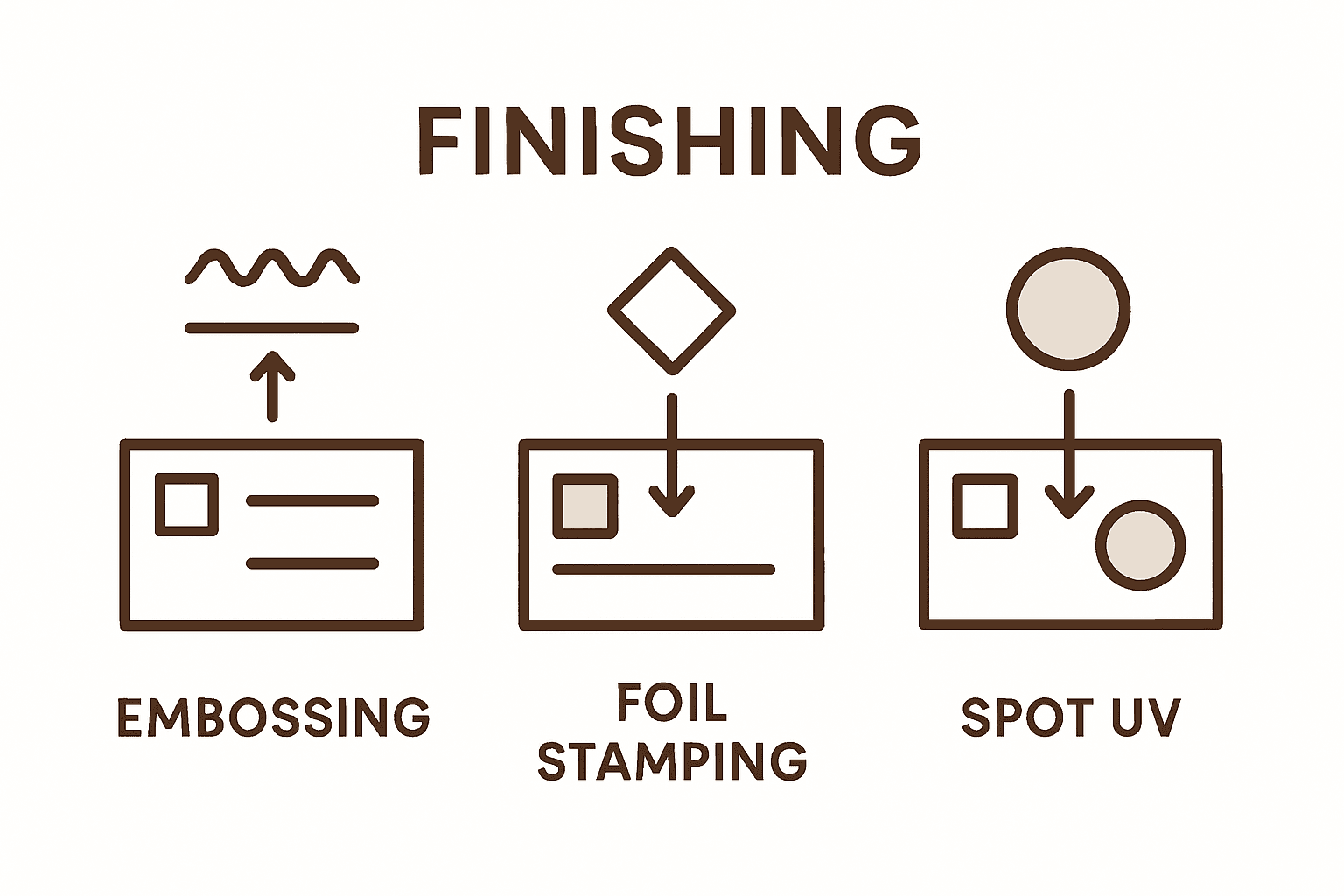
Finishing techniques that reflect brand quality communicate your commitment to excellence before a single word is read. Consider techniques like embossing for a subtle tactile dimension, spot UV coating to highlight specific design elements, or foil stamping to create visual depth and sophistication.
Customized tactile experiences can profoundly impact how recipients perceive your professional brand. A lawyer might choose crisp letterpress printing to suggest precision and tradition, while a digital creative could opt for laser cutting or translucent materials that suggest innovation and forward thinking.
Think holistically about how each finishing method interacts with your chosen materials. The goal is not just aesthetic appeal but creating a sensory narrative that reinforces your professional brand. Subtle details like edge coloring, textured overlays, or innovative die cuts can transform a standard business card into a conversation starter.
Below is a comparison of popular finishing techniques for business cards:
| Finishing Method | Unique Effect | Best Used To |
|---|---|---|
| Embossing | Tactile, raised elements | Emphasize logos or text |
| Foil Stamping | Elegant, metallic detail | Convey luxury or prestige |
| Spot UV Coating | Glossy, highlight areas | Draw focus to key info |
| Laser Cutting | Custom shapes, modern | Create standout designs |
| Edge Coloring | Subtle, color pops | Add creative accents |
Pro tip: Request physical samples of different finishing techniques and evaluate them under professional lighting. Observe how light and shadow interact with your design to reveal the most impactful presentation of your professional identity.
Step 5: Review and refine for authentic brand alignment
Reviewing and refining your business card design is a critical process of ensuring your professional identity remains authentic and strategically relevant. This final step transforms your initial concept into a precision instrument of professional communication.
Continuous brand identity assessment requires a systematic approach to evaluating how well your business card represents your evolving professional narrative. Critically examine each design element through the lens of your core brand attributes. Does the current design truly capture the essence of your professional identity? Do the materials, finishing techniques, and visual language communicate your unique value proposition?
Refinement as a strategic process goes beyond aesthetic adjustments. Consider how your business card functions as a communication tool across different professional contexts. Will it resonate equally in a creative workshop, corporate meeting, or networking event? Seek feedback from diverse professional contacts who can provide unbiased perspectives on your design’s effectiveness.
Think of your business card as a living document of your professional brand. Small, intentional refinements can significantly enhance its impact. Pay attention to subtle details like color psychology, typography legibility, and how the card feels when handed to a potential client or collaborator.
Pro tip: Conduct a quarterly review of your business card design. Schedule time to reassess its alignment with your current professional goals and be prepared to make strategic updates that reflect your professional growth.
Elevate Your Brand with Distinctive Business Cards That Speak Your Identity
Crafting a unique business card that truly reflects your strategic branding takes more than just clever design. It means selecting materials, shapes, and finishes that convey your authentic professional narrative and differentiate you from competitors. If you are aiming to move beyond gimmicks and create a lasting impression, explore how textured papers and customized shapes bring your brand personality to life with tangible impact.
Discover our Textured Paper Business Cards – BcardsCreation and Custom Shaped Business Cards – BcardsCreation. Each project is approached with expert design guidance and premium materials tailored to your brand’s core identity. Don’t settle for ordinary when you can make your business card a strategic asset today. Visit BcardsCreation to begin your journey toward a powerful, professional statement that lasts.
Frequently Asked Questions
How can I define my brand’s core identity for my business card?
To define your brand’s core identity, start by conducting a self-assessment to identify your unique value, guiding principles, and differentiators. Create a concise brand statement that reflects your professional philosophy, which will serve as a foundation for your business card design.
What should I consider when evaluating strategic differentiation for my business card design?
When evaluating strategic differentiation, focus on elements that genuinely reflect your professional strengths rather than superficial gimmicks. Analyze design choices to ensure they communicate meaningful aspects of your brand identity.
What materials should I select for my business card to align with my brand identity?
Choose materials that complement your brand’s narrative and personality. For instance, tech startups might opt for sleek metals, while creative professionals might prefer textured paper to reflect their unique approach.
How can I customize finishing methods for a more impactful business card?
Customize finishing methods like embossing or foil stamping to add a tactile and visual depth to your business card. These techniques create a memorable experience, enhancing how recipients perceive your brand.
What steps should I take to review and refine my business card design?
Conduct a systematic review of your business card design to ensure it aligns with your evolving professional narrative. Gather feedback from various professional contacts and be open to making intentional adjustments based on their perspectives.
Recommended
- Acrylic Card Holder | Personalized Business Card Holder for Desk – BcardsCreation
- Diamond Business Cards | Frosted Plastic | Custom shape card – BcardsCreation
- Fine Paper Double layered Business Card with Neon and Purple Foils, Th – BcardsCreation
- Letterpress Business Card with full color print and real foil Rose Gol – BcardsCreation


