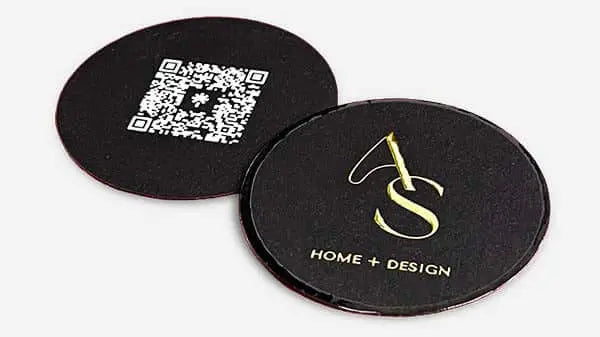


Why Unique Textures Elevate Business Cards
More than 80 percent of American luxury brand owners say their business cards are a direct reflection of brand identity. In competitive markets, creative professionals know a card is more than contact information. Texture creates an instant, memorable connection by turning a simple exchange into a powerful, sensory experience. Discover how unique textures set your brand apart through first impressions that clients remember and respect.
Table of Contents
- What Unique Textures on Cards Mean
- Tactile Memory and Human Perception
- Texture as Emotional and Branding Trigger
- When Texture Adds Value or Creates Issues
- Real Textures vs. Coating Imitations
Key Takeaways
| Point | Details |
|---|---|
| Importance of Texture | Unique textures on business cards enhance brand communication and create memorable first impressions. |
| Emotional Resonance | Tactile experiences engage multiple sensory pathways, establishing emotional connections without words. |
| Strategic Application | Thoughtful use of textures can boost brand perception, but poorly executed designs may compromise clarity and utility. |
| Authenticity Matters | Genuine textures convey authenticity, while coating imitations lack the emotional impact and tactile feedback of real materials. |
What Unique Textures on Cards Mean
Unique textures transform business cards from simple contact information carriers into powerful brand communication tools. Distinctive surface finishes communicate sophistication, creativity, and intentional design before a single word is read. These tactile experiences engage multiple sensory dimensions, creating memorable first impressions that extend far beyond visual aesthetics.
Textures work through complex psychological mechanisms of human perception. When someone touches a business card, their brain processes not just the physical sensation, but also unconscious emotional responses. A smooth, heavyweight paper might signal professionalism and reliability, while a soft matte finish could suggest approachability and creativity. Professional designers understand that texture becomes a silent language of brand personality.
The range of textural possibilities is extensive - from embossed metallic surfaces to soft velvet laminations, from raised spot UV elements to intricate letterpress impressions. Each texture tells a story. A technology startup might choose a sleek, minimalist metallic finish suggesting innovation, while a craft artisan could select a heavyweight cotton paper with visible fiber texture communicating authenticity and handmade quality.
Professional Tip: Always test your textured business card designs with potential clients to ensure the tactile experience matches your intended brand message.
Tactile Memory and Human Perception
Tactile memory operates as a sophisticated neurological process that transforms physical interactions into lasting impressions. Psychological research demonstrates that human beings retain information more effectively when multiple sensory channels are engaged. When someone touches a business card, their brain creates a multidimensional memory that goes beyond simple visual recognition, embedding the tactile experience into deeper cognitive storage.
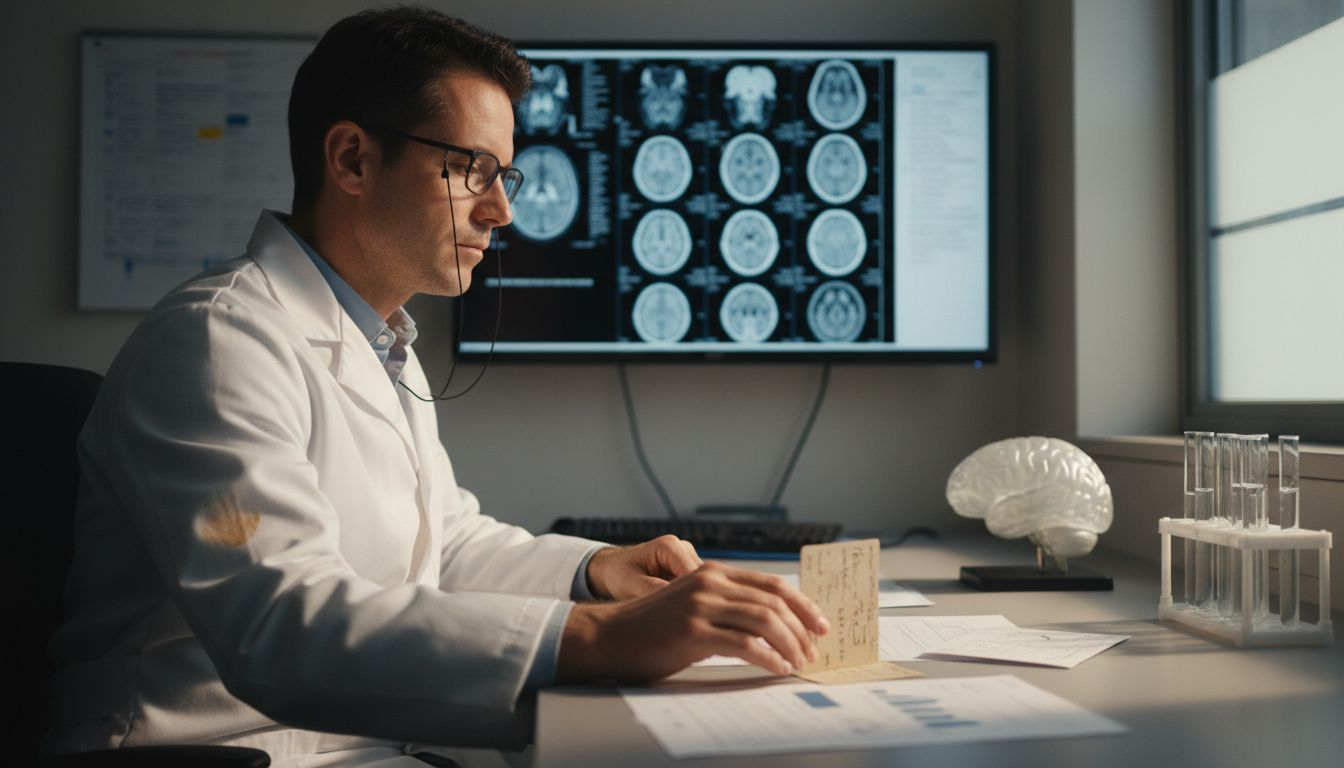
The human brain processes texture through complex neural pathways that connect physical sensation with emotional and cognitive responses. A smooth, heavyweight paper might trigger associations of professionalism and reliability, while a soft, textured surface could evoke feelings of creativity and approachability. These subtle sensory cues communicate brand personality without a single spoken word, making texture a powerful non-verbal communication tool.
Neuroscientific studies reveal that tactile experiences activate multiple brain regions simultaneously. The somatosensory cortex processes physical touch, while the limbic system generates emotional responses. This means that a well-designed business card can create an immediate, visceral connection that transcends traditional marketing approaches. Professionals who understand this neurological mechanism can strategically design cards that resonate on both intellectual and emotional levels.
Professional Tip: Experiment with different paper textures during design iterations to understand how subtle changes in tactile experience can dramatically shift perceived brand personality.
Texture as Emotional and Branding Trigger
Emotional branding strategies reveal that texture functions as a powerful non-verbal communication channel for businesses. A business card’s physical sensation becomes an immediate emotional signal, communicating brand personality before any words are read. The microscopic details of paper weight, surface finish, and material composition speak volumes about a company’s identity, professionalism, and core values.
Different textures trigger specific emotional responses that are deeply rooted in human psychological associations. A smooth, heavyweight cotton paper might evoke feelings of reliability and established tradition, while a soft, matte finish could suggest creativity and approachability. Metallic or embossed finishes often communicate luxury and precision, making them ideal for high-end professional services or technology firms seeking to project innovation and sophistication.
Brands can strategically leverage texture as a nuanced emotional language. A craft artisan might choose a textured, uncoated paper that feels handmade and authentic, while a global consulting firm might select a sleek, perfectly smooth surface that suggests efficiency and global reach. These tactile choices create unconscious emotional connections that traditional visual branding alone cannot achieve, transforming a simple business card into a multisensory brand experience.
The following table summarizes how business card textures influence brand perception:
| Texture Type | Common Brand Signal | Best Suited For |
|---|---|---|
| Smooth Heavyweight | Professionalism, reliability | Financial, legal, consulting |
| Soft Matte | Creativity, approachability | Startups, design studios |
| Embossed/Metallic | Luxury, innovation, precision | Tech firms, luxury brands |
| Textured/Recycled | Authenticity, eco-consciousness | Artisans, green businesses |
Professional Tip: Conduct tactile testing with your target audience to understand how different textures subconsciously influence their perception of your brand’s personality and professionalism.
When Texture Adds Value or Creates Issues
Business card material considerations reveal a complex landscape of design choices where texture becomes both an asset and a potential challenge. Thoughtful application of texture can transform an ordinary business card into a memorable brand experience, while poorly executed textures might compromise the card’s fundamental purpose of clear communication and durability.
Some textures dramatically enhance brand perception by creating sensory depth. A technology firm might use a sleek, metallic finish to suggest innovation, while a sustainable design agency could choose a recycled paper with visible fiber texture that communicates environmental consciousness. However, designers must balance aesthetic appeal with practical considerations. Highly textured surfaces can interfere with printing clarity, making text difficult to read or causing ink to pool inconsistently during production.
The strategic implementation of texture requires careful evaluation of several critical factors. Production costs increase with complex textures, and some intricate finishes may reduce card durability or make cards more susceptible to wear and tear. Professional designers must consider the card’s practical usage environment - a texture that works beautifully in a design studio might quickly deteriorate in a client’s wallet or during frequent handling. The key is finding a balanced approach that communicates brand personality without sacrificing the card’s fundamental utility.
Professional Tip: Always request physical sample prototypes to test how different textures perform under real-world handling conditions before finalizing your business card design.
Real Textures vs. Coating Imitations
Authentic textures represent a sophisticated approach to business card design that goes beyond surface-level visual imitations. While coating technologies can simulate texture, they often lack the genuine sensory depth and emotional resonance of real material variations. Genuine tactile experiences communicate authenticity in ways that printed simulations simply cannot replicate.
Real textures emerge from the inherent properties of physical materials - the subtle fiber variations in cotton paper, the microscopic irregularities of handmade stock, or the organic variations of natural materials. Coating imitations, by contrast, are essentially graphic representations of texture, printed to create an illusion of depth. These printed textures might look convincing from a distance but fail to provide the nuanced sensory feedback that genuine textured materials offer when touched.
The critical distinction lies in sensory authenticity. Authentic textures engage multiple neural pathways, creating a multidimensional brand interaction. Coatings function more as visual tricks, providing a flat representation of texture that lacks dimensionality. Professional designers understand that true texture is about substance, not just appearance - it’s a communication medium that speaks through touch, conveying brand narrative through material choice rather than graphic simulation.
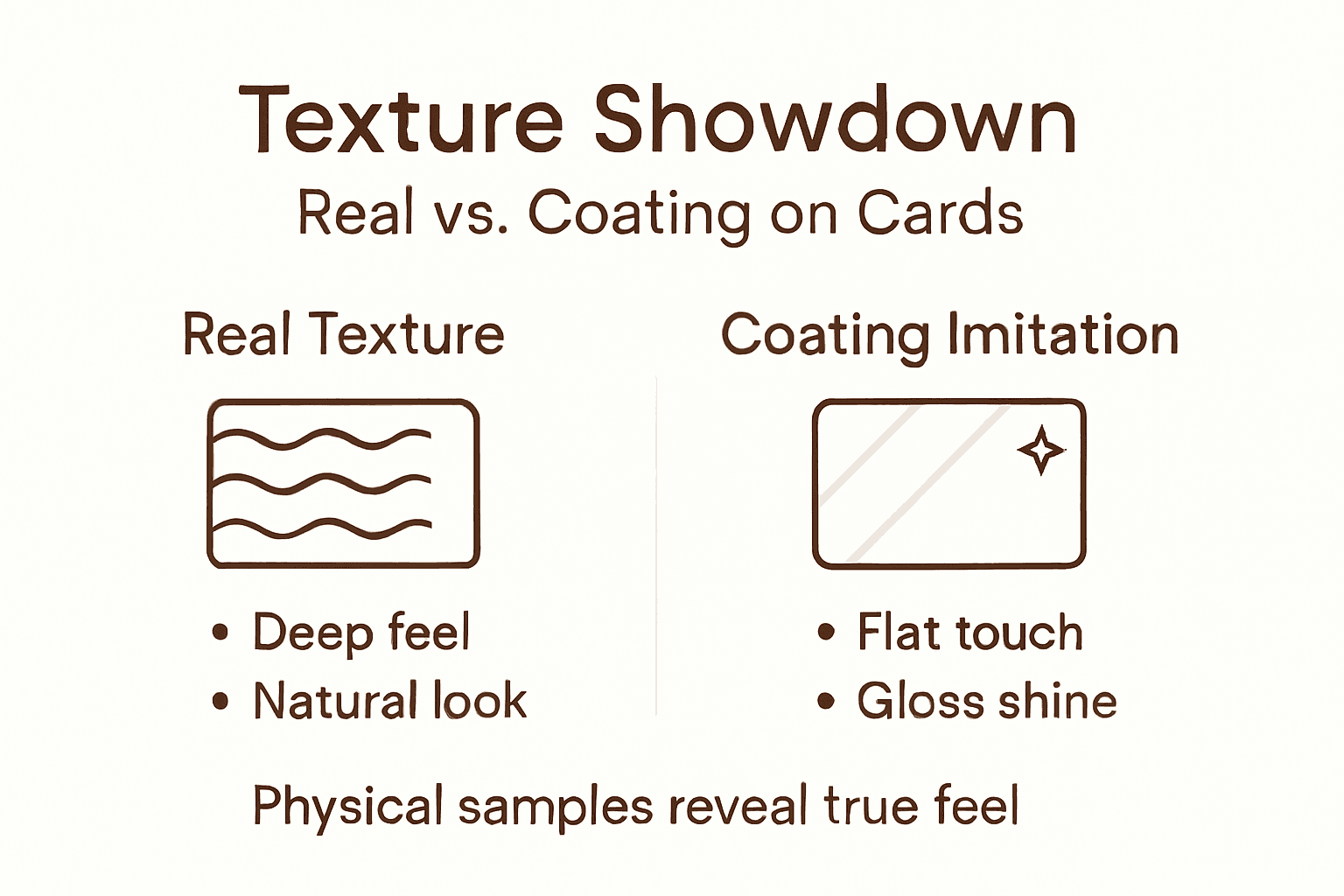
Here’s a comparison of real textures versus coating imitations for business cards:
| Aspect | Real Textures | Coating Imitations |
|---|---|---|
| Sensory Depth | Multidimensional, tactile feel | Primarily visual, flat touch |
| Brand Authenticity | Conveys genuine material quality | Can appear artificial or generic |
| Emotional Impact | Strong, lasting impressions | Less memorable, surface-level |
| Durability | Dependent on material, can vary | Typically similar to standard cards |
| Production Complexity | Greater, may require specialty materials | Less complex, often standard printing |
Professional Tip: Request physical samples to compare real textured materials against coating imitations, evaluating how each communicates your brand’s authentic personality.
Elevate Your Brand with Unique Textured Business Cards
The article highlights how unique textures create powerful emotional triggers and lasting impressions by engaging tactile memory and conveying brand personality before words are even read. If you want to overcome the challenge of making your business card a true extension of your brand rather than a plain contact tool, embracing authentic textures is essential. At BcardsCreation, we specialize in fully custom, small-batch cards that leverage advanced materials and expert finishing techniques to capture that multidimensional sensory experience.
Discover the difference that real texture can make with our Textured Paper Business Cards and Velvet Business Cards.
Take the next step in strategic brand positioning today. Visit BcardsCreation for personalized design guidance and materials consultation that ensure your business cards deliver an unforgettable tactile story. Don’t settle for generic cards when you can create something truly exceptional that emotionally connects and stands out instantly.
Frequently Asked Questions
What are the benefits of using textured business cards?
Textured business cards enhance brand communication by engaging multiple senses, creating memorable first impressions and conveying brand personality even before any words are read.
How does texture influence the perception of a brand?
Texture communicates emotions and brand values; for example, a smooth finish often signals professionalism, while a rough or textured finish can evoke feelings of authenticity and creativity.
What types of textures are commonly used on business cards?
Common textures include smooth heavyweight finishes for professionalism, soft matte finishes for approachability, embossed or metallic finishes for luxury, and textured or recycled materials for authenticity and eco-consciousness.
Why are authentic textures more effective than coating imitations on business cards?
Authentic textures provide genuine sensory experiences that create lasting impressions, while coating imitations may appear convincing visually but lack the tactile depth and emotional impact of real material variations.
Recommended
- Diamond Business Cards | Frosted Plastic | Custom shape card – BcardsCreation
- Letterpress Business Card with full color print and real foil Rose Gol – BcardsCreation
- Fine Paper Double layered Business Card with Neon and Purple Foils, Th – BcardsCreation
- Raised Foil Business Cards | Thick Double-layered Art Paper – BcardsCreation


