

Why Choose Custom Business Cards: Control, Process, and Impact
Over ninety percent of American professionals still distribute standard business cards at meetings and events, yet most struggle to stand out in a crowded marketplace. The familiar rectangle often blends into wallets and desk drawers, offering little opportunity for brand distinction or memorable first impressions. As competition intensifies, exploring where traditional cards fall short versus what custom solutions make possible can help American businesses elevate their professional image and leave a lasting mark.
Table of Contents
- Standard Business Cards And Their Limits
- Where Standard Cards Fall Short In Practice
- What Customization Changes: Materials And Process
- Small-Batch Cards: Intent And Production Control
- When Custom Business Cards Add Value
- When Customization Is Not The Right Fit
Key Takeaways
| Point | Details |
|---|---|
| Limitations of Standard Cards | Standard business cards lack brand differentiation and creative expression, making them insufficient for unique professional identities. |
| Value of Customization | Customized business cards allow for tailored design and premium materials that enhance brand presence and storytelling. |
| Efficiency of Small-Batch Production | Small-batch production offers control and adaptability, enabling professionals to create cards that reflect evolving identities without excess waste. |
| Important Contextual Considerations | Evaluate industry needs and communication strategies, as custom cards may not be suitable for all fields or professionals experiencing frequent changes. |
Standard Business Cards and Their Limits
Standard business cards represent a generic, mass-produced approach to professional representation that serves basic communication needs. These typically come in a uniform rectangular shape, standard paper weight, and limited design options produced through high-volume printing processes. While functional, they create minimal brand differentiation and offer little strategic positioning for professional identity.
Traditional card production relies on predefined templates and standardized materials that restrict creative expression. Most off-the-shelf business cards utilize common cardstock between 14-16pt weight, with basic printing techniques like digital or offset printing. This approach prioritizes cost efficiency over nuanced branding, resulting in cards that blend seamlessly into professional backgrounds without making meaningful visual impact. Cards with specialty finishing techniques demonstrate how material selection can transform professional communication.
The fundamental limitation of standard business cards emerges from their one-size-fits-all manufacturing model. They assume all professionals require identical presentation, ignoring individual brand narratives, industry contexts, and strategic communication goals. Creative professionals, entrepreneurs, and specialized service providers often find standard cards inadequate for representing their unique professional identities. The rigid design constraints prevent communicating nuanced brand personalities or differentiating visual strategies.
Pro Tip: Strategic Materials Selection: Carefully evaluate your professional context and target audience when selecting business card materials. Your card represents more than contact information—it communicates your professional brand’s sophistication and attention to detail.
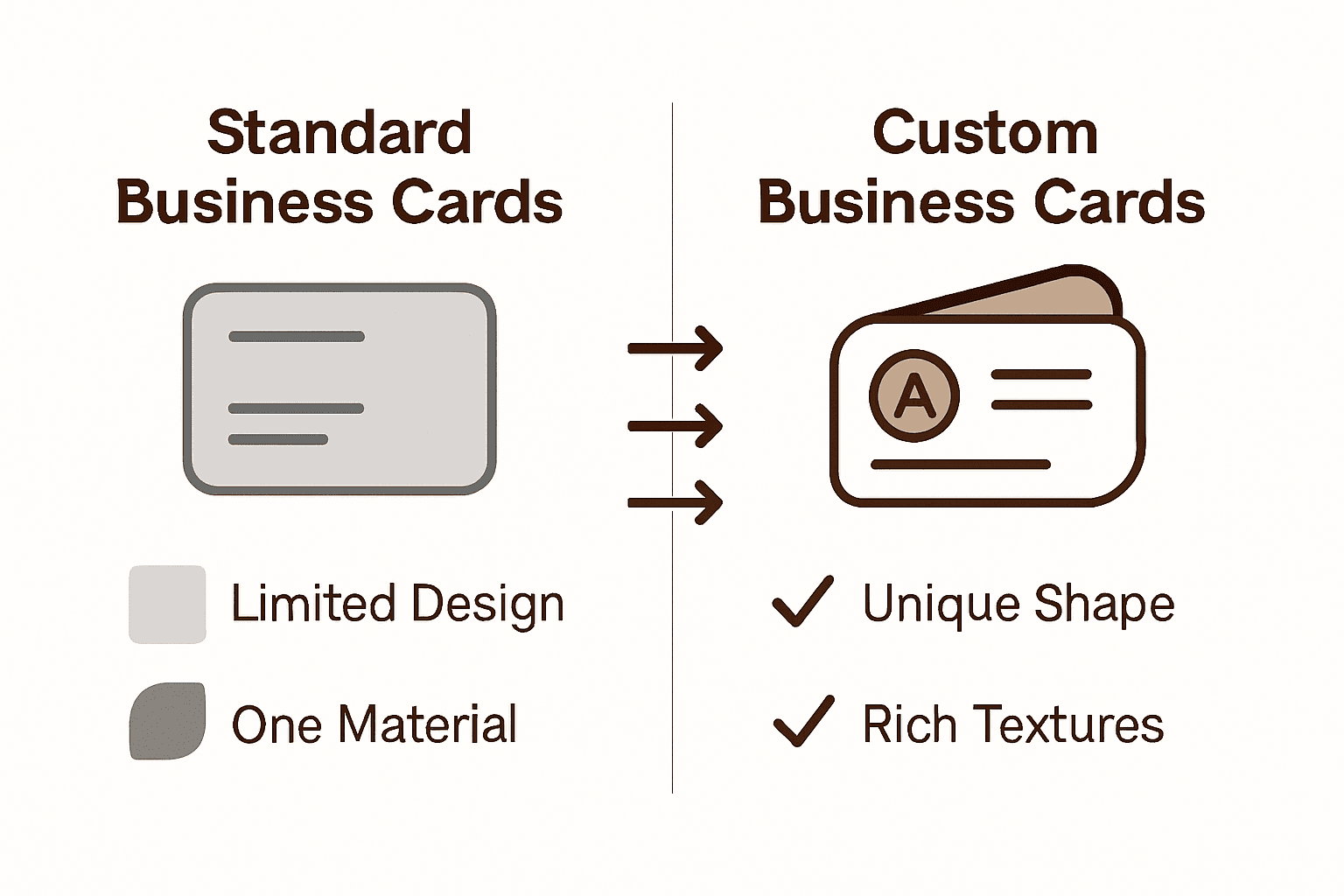
Here is a side-by-side comparison of standard versus custom business cards:
| Aspect | Standard Business Cards | Custom Business Cards |
|---|---|---|
| Design Flexibility | Limited to templates | Fully tailored per brand |
| Material Options | Basic paper stock | Diverse, premium materials |
| Brand Impact | Minimal differentiation | Strong, memorable presence |
| Cost Efficiency | Low per unit cost | Higher investment per card |
| Adaptability | Hard to update info | Can support modular designs |
| Production Volume | Suited for high quantities | Ideal for small batches |
Where Standard Cards Fall Short in Practice
Standard business cards encounter significant practical limitations that undermine their effectiveness as professional communication tools. Paper business cards often provide insufficient information due to strict spatial constraints, creating challenges for professionals seeking comprehensive representation. The physical format restricts the amount of context and details professionals can share, forcing complex identities into a tiny rectangular space.
Design and print quality represent another critical weakness in standard business card production. Common issues include poor contrast, unreadable fonts, and low-quality paper materials that diminish professional credibility. These technical shortcomings transform what should be a precision communication instrument into a generic, forgettable artifact. Professionals in creative industries, technology sectors, and specialized service domains find standard cards particularly inadequate for expressing nuanced brand identities.
Moreover, standard business cards create ongoing maintenance challenges. Contact information changes frequently in dynamic professional environments—phone numbers shift, email addresses get updated, job titles evolve. Each modification necessitates complete card reprinting, generating waste and additional expenses. Digital professionals and entrepreneurs operating in rapidly changing ecosystems find this static representation increasingly problematic, highlighting the fundamental rigidity of traditional print-based networking tools.
Pro Tip: Dynamic Information Management: Design your professional communication strategy to accommodate frequent changes, considering digital supplementation or modular card designs that allow easier updates without complete reproduction.
What Customization Changes: Materials and Process
Customization fundamentally transforms business card production from a standardized manufacturing process to a strategic design conversation. Custom business cards offer a sophisticated array of material options, including specialized papers like gloss art, matte art, and black core variations that communicate nuanced brand personalities through tactile and visual experiences. These material choices move beyond generic cardstock, allowing professionals to craft a sensory representation of their brand identity.
The production process for custom business cards differs dramatically from mass-produced alternatives. Unlike standard printing which prioritizes efficiency and uniformity, custom card creation involves collaborative design exploration, material consultation, and precision crafting. Each card becomes a deliberate communication instrument, with considerations extending beyond basic contact information to include subtle design elements that reflect professional context, industry positioning, and brand narrative.
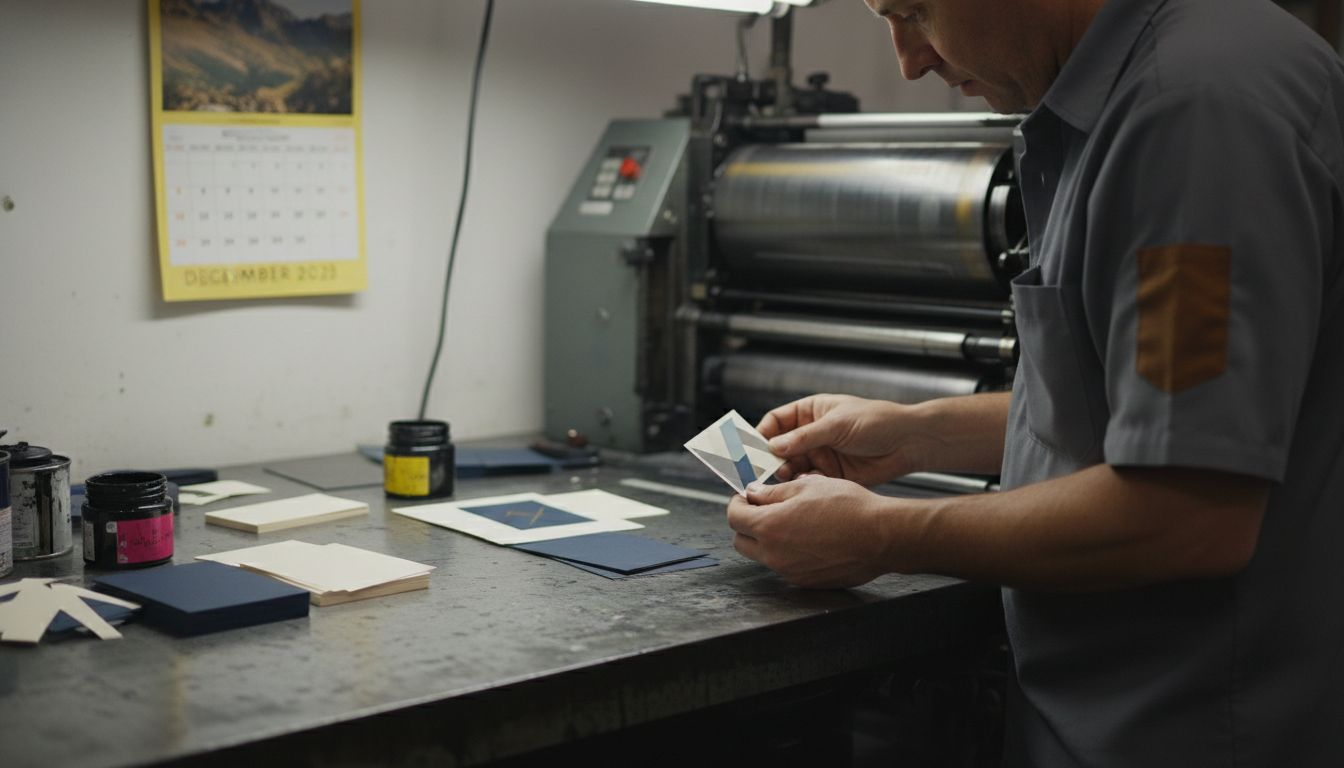
Sustainable material choices like 14pt natural cardstock made with post-consumer recycled materials demonstrate how customization enables deeper brand values communication. Professionals can now select materials that not only look exceptional but also reflect organizational commitments to environmental responsibility. This approach transforms business cards from passive communication tools into active brand ambassadors, capable of conveying complex organizational philosophies through intentional material selection.
Pro Tip: Material Storytelling: Choose business card materials that subtly communicate your professional ethos, considering how texture, weight, and composition can silently communicate your brand’s sophistication and values.
Small-Batch Cards: Intent and Production Control
Small-batch production represents a strategic approach to business card creation that prioritizes precision, intentionality, and individual brand expression. Print on demand technology enables the production of business cards in small quantities, allowing professionals to create highly targeted communication tools without the traditional waste and inventory constraints of mass printing. This approach transforms business cards from generic commodities into carefully crafted brand extensions.
Production control in small-batch card creation goes beyond simple printing mechanics. Unlike standardized processes that prioritize volume, small-batch production involves meticulous design consultation, material selection, and precise execution. Each card becomes a deliberate communication artifact, with every design element carefully considered to reflect the professional’s unique brand narrative and strategic positioning.
Specialized printing processes now offer controlled production and quick turnaround times for customized business cards, bridging the gap between personalization and efficiency. This approach allows professionals to experiment with design concepts, test different material combinations, and iterate their visual communication strategy without committing to large print runs. The result is a more dynamic, responsive approach to professional branding that adapts to evolving business identities and market positioning.
Pro Tip: Strategic Small-Batch Thinking: Treat your business cards as a living brand asset, not a static document. Regularly review and update your design to ensure it accurately represents your current professional identity and strategic objectives.
When Custom Business Cards Add Value
Custom business cards transcend mere contact information exchange, becoming strategic communication tools that differentiate professionals in competitive markets. Investing in high-quality materials and thoughtful design can significantly enhance a company’s professional image by creating memorable first impressions that communicate sophistication, attention to detail, and brand intentionality. These carefully crafted artifacts speak volumes before a single word is spoken.
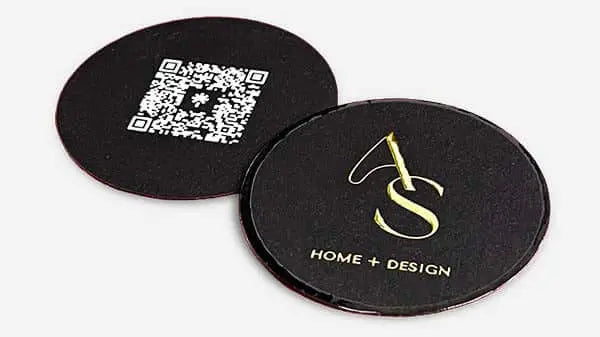
Value emerges most prominently in industries where visual communication and brand positioning are critical. Creative professionals, design-driven companies, luxury service providers, and innovative startups benefit dramatically from custom business cards that break conventional design constraints. Custom card shapes like diamond-cut or unique material selections allow professionals to transform a simple networking tool into a tangible representation of their brand’s unique aesthetic and strategic positioning.
Beyond aesthetic considerations, custom business cards provide nuanced communication opportunities that standard cards cannot achieve. They allow professionals to encode complex brand narratives through material choices, finishing techniques, and design elements. A technology startup might choose minimalist, metallic-edged cards to communicate innovation, while a sustainable fashion brand could select recycled materials to reinforce environmental commitments. Each design decision becomes a silent yet powerful brand storytelling mechanism.
Pro Tip: Strategic Design Alignment: Approach your business card as a microcosm of your professional brand, carefully considering how every design element—from material to typography—communicates your unique value proposition.
When Customization Is Not the Right Fit
Custom business cards are not a universal solution for every professional scenario. In rapidly changing industries, traditional paper business cards may become outdated quickly, creating potential challenges for professionals who invest heavily in specialized card designs. Certain business contexts demand more dynamic, adaptable communication strategies that cannot be effectively addressed through physical card production.
Overly complex designs or low-quality material choices can detract from the intended professional image, making customization counterproductive. Professionals in highly regulated industries like healthcare, government, or financial services often require standardized communication tools that prioritize clarity and compliance over creative expression. These sectors typically demand uniform information presentation, where individual design variations might be perceived as unprofessional or distracting.
Customization becomes less valuable in scenarios with frequent professional transitions, such as startup environments, consulting roles, or rapidly evolving technical fields. Professionals experiencing frequent job changes, title modifications, or contact information updates will find custom-produced cards economically inefficient. Digital networking platforms, professional social networks, and virtual contact exchange methods often provide more flexible and cost-effective alternatives for maintaining professional connections in dynamic professional landscapes.
Pro Tip: Contextual Communication Strategy: Evaluate your professional environment, industry norms, and communication needs before investing in custom business cards. Understand that sometimes, simplicity and adaptability outweigh design complexity.
This table summarizes when choosing custom business cards makes the most strategic sense:
| Professional Scenario | Custom Cards Advantage | Standard Cards Limitation |
|---|---|---|
| Creative Industries | Showcases unique style | Fails to reflect creativity |
| Luxury Services | Elevates perceived value | Feels generic or cheap |
| Rapid Industry Changes | May be costly to update | Easier but less distinctive |
| Regulated Sectors | Can be risky, less ideal | Ensures compliance and clarity |
Elevate Your Brand with Custom Business Cards That Speak Volumes
If you have struggled with the limitations of standard business cards as highlighted in the article, it is time to take full control over your card’s design, materials, and impact. At BcardsCreation, we understand how critical it is for professionals to communicate their unique brand narratives clearly and powerfully. Our studio specializes in small-batch, fully custom business cards crafted with premium materials and refined finishing techniques that truly set you apart.
Explore our range of Custom Shaped Business Cards – BcardsCreation and Colored Paper Business Cards – BcardsCreation designed to transform your professional image into a memorable brand experience.
Do not let generic templates hold back your strategic branding. Visit BcardsCreation now to start your bespoke business card project with expert design guidance. Make a lasting impression today by choosing business cards that reflect your professional identity with precision and style.
Frequently Asked Questions
What are the key benefits of choosing custom business cards over standard ones?
Custom business cards offer enhanced design flexibility, unique material options, and stronger brand differentiation, allowing professionals to create memorable first impressions that reflect their unique brand identities.
How does the production process of custom business cards differ from standard cards?
The production process for custom business cards involves careful design consultation and material selection, prioritizing quality and individuality, whereas standard cards are mass-produced with a focus on uniformity and efficiency.
When are custom business cards particularly valuable?
Custom business cards are especially valuable in creative industries, luxury services, and any environment where brand identity and visual communication are critical, as they can effectively convey complex brand narratives and aesthetics.
What challenges can arise from using custom business cards?
Custom business cards can become impractical in rapidly changing industries or highly regulated sectors, where frequent updates or standardized communication are necessary, making standard cards a more suitable option in those scenarios.
Recommended
- Diamond Business Cards | Frosted Plastic | Custom shape card – BcardsCreation
- Fine Paper Double layered Business Card with Neon and Purple Foils, Th – BcardsCreation
- Raised Foil Business Cards | Thick Double-layered Art Paper – BcardsCreation
- Letterpress Business Card with full color print and real foil Rose Gol – BcardsCreation
- Large Format vs Small Format Printing: London 2025 Guide - PromoSigns.co.uk


