

Luxury Printing Technique List for Designers and Brands
TL;DR:
- Luxury printing techniques add tactile depth and visual richness to premium materials, primarily through methods like hot foil stamping, embossing, and soft-touch lamination. Selecting the appropriate process depends on the brand’s positioning, substrate, and desired effect, often combining multiple techniques for layered impact. Starting with the substrate and following a logical finishing sequence ensures high-quality, cohesive results that reflect brand values and elevate perceived value.
A luxury printing technique list is a defined set of specialized printing and finishing methods used to create premium, tactile, and visually rich materials that communicate brand quality before a word is read. Methods like hot foil stamping, 3D embossed varnish, letterpress, engraving, and soft-touch lamination each deliver a distinct sensory experience that standard offset or digital printing cannot replicate. For designers and brand strategists, knowing which technique fits which brief is the difference between a material that gets kept and one that gets discarded. Tools like Konica Minolta’s JETvarnish 3D Web 400 have expanded what is possible even on short runs, making high-end print options more accessible without sacrificing quality.
1. The luxury printing technique list: what it covers and why it matters
The term “luxury printing technique list” is an informal, descriptive phrase. The recognized industry vocabulary covers specialty finishing, embellishment printing, and premium print production. Both framings describe the same category: processes that add tactile depth, metallic brilliance, or surface contrast to printed materials through mechanical, chemical, or digital means. These methods are used across cosmetics packaging, spirits labels, premium business cards, wedding stationery, and boutique retail materials. The goal in every case is the same. The finished piece must communicate value through touch and sight, not just content.
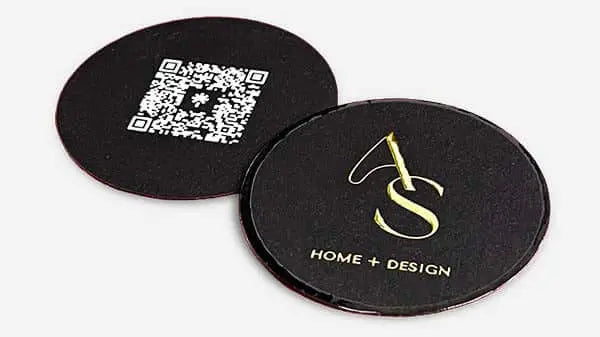
What separates this category from standard printing is the combination of substrate selection, finishing sequence, and production precision. A single business card may pass through four separate processes: offset lithography for the base color, soft-touch lamination for the surface, hot foil stamping for the metallic logo, and spot UV varnish for selective gloss. Each step requires its own setup, registration, and quality check. That layered production logic is what defines artisanal print methods at the high end.
2. Hot foil stamping
Hot foil stamping is the most recognized technique in premium print production. A heated metal die presses a thin metallic or pigmented foil film onto the substrate, transferring the foil through heat and pressure. The result is a sharp, reflective impression with a depth and clarity that no ink-based process matches.
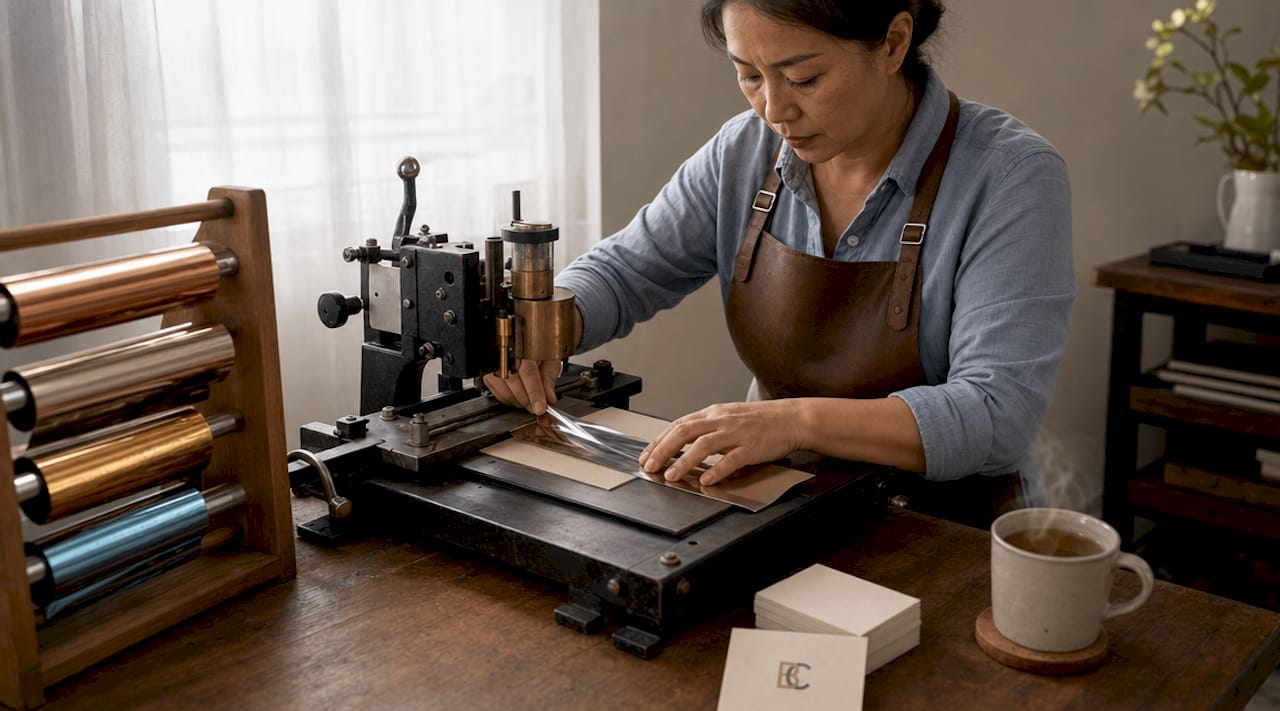
The technical parameters are precise. Operating temperature runs 120–160°C, dwell time sits between 0.4 and 0.8 seconds, and registration tolerance is held to ±0.1 mm for premium output. These numbers matter because even a small deviation in temperature or pressure produces foil that lifts, cracks, or bleeds at the edges.
Foil families include:
- Metallic foils (gold, silver, rose gold, bronze) for classic luxury
- Pigmented foils for solid color accents without metallic sheen
- Holographic foils for prismatic, light-reactive effects
- Matte foils for understated, tactile contrast against gloss surfaces
Substrate pairing is critical. Foil bonds reliably on coated art paper with laminate but may flake on recycled or uncoated stocks without primers or proofing. Cosmetics, spirits, and gifting brands use hot foil stamping most heavily because the metallic intensity reads as premium at retail shelf distance.
Hot foil does have limits. It struggles with photographic gradients, very small text, and large continuous metallic fields due to heat distribution constraints. For those applications, cold foil or digital foil is a better fit.
Pro Tip: Prepare die lines at 0.25 pt minimum stroke weight and avoid reversed-out type below 8 pt. Thin strokes and small counters are the most common failure points in foil stamping artwork.
3. 3D embossed varnish and digital embellishment
3D embossed varnish printing builds physical texture directly onto a printed sheet by stacking UV-cured clear ink in multiple passes. Each layer is cured before the next is applied, creating a raised relief that you can feel with a fingertip. The effect ranges from subtle satin texture to pronounced sculptural depth, depending on layer count and design geometry.
The technology requires tight engineering control. High-drop waveform control and picoliter droplet modulation are critical to avoiding defects like orange peel texture, where uneven curing creates a bumpy, unintended surface. Print head distance can extend up to 20 mm for deeper relief, but that increases the risk of registration drift across a sheet.
The commercial case for 3D texture is clear. Phone cases with 3D high-gloss textures sell for $25 compared to $10 for flat prints, a 150% price increase driven entirely by perceived tactile value. The same logic applies to business cards, packaging inserts, and branded collateral.
Digital embellishment platforms like Konica Minolta’s JETvarnish 3D Web 400 deliver single-pass spot UV varnishing and hot foil stamping in a fully digital process with AI-controlled registration. This eliminates physical die tooling, which cuts setup costs and lead times significantly for short to medium runs.
Digital embellishment systems are becoming the preferred choice for short to medium runs because they remove the die tooling cost that makes traditional foiling prohibitive at low quantities.
Pro Tip: Design 3D varnish elements at 100% opacity in a separate spot color channel. Gradients in the varnish layer produce inconsistent relief height and are a common cause of texture defects.
4. Letterpress, engraving, and traditional embossing
Letterpress printing uses a raised inked surface pressed directly into the paper, leaving a debossed impression in the substrate. Engraving works in reverse: ink is transferred from recessed lines etched into a metal plate, producing raised ink on the printed surface. Both processes are defined by their tactile output as much as their visual result.
These are the oldest techniques in the luxury printing technique list, and they remain prized precisely because of that history. The production process is slow and labor-intensive. Letterpress and traditional hot foil stamping require up to 23 business days compared to 5 days for digital methods. That timeline reflects real craft time, not inefficiency.
Traditional embossing and debossing use male and female die sets to raise or recess areas of the substrate without ink. Blind embossing, where no ink or foil is added, is a signature of restrained, high-end design. The impression speaks entirely through shadow and light. You can explore the full range of tactile embossing options across raised print, embossing, and debossing for a detailed breakdown of each variant.
Limitations worth knowing:
- Small text below 6 pt loses legibility under heavy impression
- Photographic images and fine halftones do not reproduce well in letterpress
- Engraving setup costs are high, making it cost-effective only at moderate quantities
- Paper weight below 300 gsm may tear or warp under deep emboss pressure
These techniques work best on business cards, stationery, invitations, and packaging where the tactile experience is the primary communication goal.
5. Soft-touch lamination and coating finishes
Soft-touch lamination is a matte film applied to the printed surface that creates a velvety, suede-like texture when touched. It is the defining finish of what the industry now calls “quiet luxury” branding. Blind embossing and soft-touch finishes encourage physical interaction and influence boutique packaging purchase decisions by triggering a tactile response before the consumer consciously evaluates the product.
The contrast between soft-touch lamination and a spot gloss UV varnish applied on top is one of the most effective combinations in premium print production. The matte base absorbs light while the gloss varnish reflects it, creating a visual depth that reads as expensive without any metallic element.
Key coating and lamination options:
- Soft-touch lamination: matte, velvety film; ideal base for foil and spot UV layering
- Gloss lamination: high-shine film; increases color saturation and durability
- Aqueous coating: water-based, applied inline; protective but less tactile than film lamination
- UV coating: cured under ultraviolet light; available in gloss, matte, or satin
- Spot UV: selective gloss applied to specific design elements over a matte base
| Finish | Tactile quality | Best paired with | Typical use |
|---|---|---|---|
| Soft-touch lamination | Velvety, matte | Hot foil, spot UV | Business cards, packaging |
| Gloss lamination | Smooth, reflective | Full-color imagery | Catalogs, retail packaging |
| Spot UV | Contrast gloss | Matte lamination | Logos, icons, text accents |
| Aqueous coating | Slight sheen | Standard offset | Brochures, mailers |
Substrate choice interacts directly with lamination results. Uncoated papers absorb lamination adhesive unevenly, which can produce a mottled surface. Coated stocks and specialty papers like Invercote or Conqueror provide a stable, consistent base for film lamination.
6. Comparison of key luxury printing techniques
Selecting the right technique requires matching the method to the project’s budget, timeline, quantity, and brand positioning. The table below compares the core options across the dimensions that matter most to designers and strategists.
| Technique | Setup cost | Per-piece cost | Registration tolerance | Best for |
|---|---|---|---|---|
| Hot foil stamping | High (die tooling) | Medium | ±0.1 mm | Cosmetics, spirits, business cards |
| Cold foil | Medium (plate-based) | Low to medium | ±0.3 mm | Packaging, labels, short runs |
| Digital foil | Low (no tooling) | High | ±0.5 mm | Variable data, personalization |
| 3D embossed varnish | Low to medium | Medium | ±0.2 mm | Tactile packaging, premium cards |
| Letterpress | High (die/plate) | High | ±0.2 mm | Stationery, invitations, cards |
| Soft-touch lamination | Low | Low | N/A | Any premium printed piece |
Hot foil stamping is unmatched for metallic intensity but requires precise die tooling. Cold foil offers faster turnaround with softer edges. Digital foil carries the highest per-piece cost but suits variable personalized data where no two pieces are identical. For a deeper look at how these methods apply to executive card production, the luxury business card printing guide covers substrate and finish decisions in detail.
Mixing techniques produces the strongest results. A business card with soft-touch lamination as the base, hot foil stamping on the logo, and spot UV on the typography uses three separate processes that each reinforce the others. The total effect is greater than any single technique alone.
Pro Tip: When combining foil and spot UV on the same piece, apply foil first, then laminate, then spot UV. Applying spot UV before foil causes adhesion failure at the foil edges.
Key takeaways
The most effective luxury print materials combine at least two techniques from this list, pairing a surface finish with an embellishment process to create layered tactile and visual impact.
| Point | Details |
|---|---|
| Hot foil stamping precision | Requires 120–160°C, ±0.1 mm registration, and coated substrates for reliable results. |
| 3D varnish adds measurable value | Tactile texture can increase perceived product value by 150% over flat print. |
| Technique sequencing matters | Apply foil before lamination before spot UV to prevent adhesion failures. |
| Quiet luxury favors soft-touch | Soft-touch lamination with blind embossing drives consumer engagement without metallics. |
| Digital embellishment suits short runs | Platforms like JETvarnish 3D Web 400 eliminate die costs for quantities under 1,000. |
Why technique selection is a brand decision, not just a print decision
I have reviewed hundreds of print briefs where the technique was chosen based on what looked impressive in a sample kit rather than what served the brand’s positioning. That approach produces beautiful samples and mediocre results in context. The technique has to match the brand’s register.
A financial services firm that wants to communicate stability and restraint does not need holographic foil. It needs a heavy uncoated stock, blind debossing on the logo, and soft-touch lamination. The card communicates authority through what it withholds. A cosmetics brand launching a limited edition collection, on the other hand, needs hot foil stamping in rose gold, spot UV on the product name, and a gloss laminate base. The technique list is the same. The selection logic is entirely different.
What I find most useful is to start with the substrate, not the finish. The paper or card stock determines which techniques are even viable. A 700 gsm duplex board handles deep embossing without warping. A 350 gsm coated silk takes foil cleanly. Once the substrate is fixed, the finishing sequence follows logically. Designers who start with the finish and work backward to the substrate consistently run into adhesion, registration, and production problems.
The trend toward quiet luxury is real and worth taking seriously. Clients who previously asked for maximum metallic coverage are now requesting restraint. A single foil element on an otherwise unadorned card reads as more confident than a card covered in effects. That shift reflects a broader change in how premium brands want to be perceived. Less decoration, more material quality. The high-quality card printing guide covers this substrate-first thinking in practical terms.
— Kostiantyn
Explore premium custom printing at Bcardscreation
Bcardscreation produces fully custom, small-batch business cards using the techniques covered in this article. Every project is developed individually, with material consultation and design guidance built into the process.
If you are specifying real foil business cards for a client or exploring soft-touch lamination with spot UV for your own brand, Bcardscreation works through each finish decision with you before production begins. For projects that call for a distinctive substrate, the custom business card design service covers plastic, specialty paper, and multi-finish options. No templates. No automated editors. Just controlled production built around your brief.
FAQ
What is hot foil stamping used for?
Hot foil stamping is used to apply metallic or pigmented foil accents to business cards, packaging, and stationery. It delivers the sharpest metallic edges of any foiling method, with registration held to ±0.1 mm.
How long do luxury printing techniques take to produce?
Production timelines vary by method. Digital and metallic prints take approximately 5 business days, while letterpress and traditional foil stamping require up to 23 business days due to die preparation and hand-finishing.
What is soft-touch lamination?
Soft-touch lamination is a matte film finish that creates a velvety surface texture. It is widely used in premium packaging and business cards as a base for foil stamping and spot UV embellishment.
When should I use digital foil instead of hot foil?
Digital foil suits variable data projects where each piece carries unique information, such as personalized invitations or numbered editions. It carries a higher per-piece cost but requires no die tooling.
Can luxury print techniques be combined on one piece?
Yes, and combining techniques produces the strongest results. The correct sequence is foil first, then lamination, then spot UV. Reversing this order causes adhesion failure at the foil edges.


