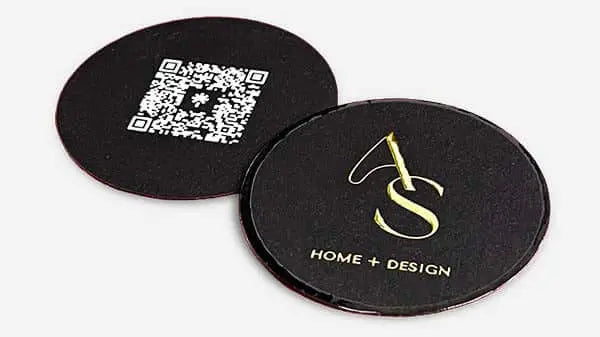


Why translucent business cards elevate your brand in 2026
Most professionals assume standard paper cards meet their networking needs. Yet translucent business cards enable creative design possibilities beyond paper, transforming how clients perceive your brand. These innovative cards combine durability with visual intrigue, creating memorable first impressions that paper simply cannot match. This guide reveals why translucent cards stand out and how they strengthen your professional image in competitive markets.
Table of Contents
- What Makes Translucent Business Cards Different?
- The Branding And Marketing Advantages Of Translucent Business Cards
- Comparing Translucent Business Cards With Traditional And Other Specialty Cards
- How To Incorporate Translucent Business Cards Into Your Branding Strategy
- Elevate Your Brand With Custom Translucent Business Cards
- FAQ
Key takeaways
| Point | Details |
|---|---|
| Enhanced visibility | Translucent cards boost brand recognition through unique visual appeal and modern aesthetics |
| Creative possibilities | Light interplay and layering effects create designs impossible with traditional paper |
| Professional durability | Premium plastic materials convey quality while resisting water damage and wear |
| Brand alignment | Extensive customization options ensure cards reflect your specific identity and values |
| Lasting impressions | Distinctive appearance and tactile feel make recipients remember and retain your card |
What makes translucent business cards different?
Translucent business cards use PVC or frosted plastic materials instead of traditional paper stock. These materials allow light to pass through partially, creating a distinctive appearance that shifts depending on viewing angle and background. The translucent quality enables designers to layer graphics, text, and effects in ways impossible with opaque paper.
The tactile experience differs dramatically from paper cards. When someone receives your translucent card, they immediately notice the smooth, cool plastic finish. This premium feel signals quality before they read a single word. Unlike paper cards that bend, tear, or absorb moisture, plastic cards maintain their pristine appearance through daily wallet wear. Water resistance means coffee spills or rain won’t destroy your contact information.
Design implications extend beyond aesthetics. Because the card back shows through the front, designers must consider how elements interact across both sides. White ink printing becomes essential for vibrant colors and readable text on translucent surfaces. Without white ink underlays, colors appear washed out against light backgrounds. This technical requirement actually becomes a creative advantage, allowing strategic use of transparency to reveal or conceal specific design elements.
The frosted finish option provides an elegant middle ground between fully clear and opaque cards. Frosting creates a soft, diffused appearance that feels sophisticated without being overly flashy. This subtlety works particularly well for professional services, consulting firms, and creative agencies seeking understated distinction.
Pro Tip: Test your design against various backgrounds before finalizing. What looks striking against a dark surface might disappear against light clothing or desk surfaces.
The branding and marketing advantages of translucent business cards
Translucency immediately signals innovation to recipients. When someone receives a translucent card at a networking event, they recognize you’ve invested thought and resources into your brand presentation. This perception transfers to assumptions about your work quality and attention to detail. Translucent cards are perceived as higher quality and boost brand memorability, creating positive associations that influence business decisions.

Durability reinforces premium positioning. Traditional paper cards deteriorate quickly, sending an unintended message about disposability. Plastic cards that survive months in wallets and pockets demonstrate lasting value. Recipients keep these cards longer because they maintain visual appeal and structural integrity. Extended retention means more opportunities for your contact information to generate future business.
Standout design captures attention in crowded networking environments. After collecting dozens of standard paper cards at conferences, people remember the one translucent card that felt different. This memorability advantage compounds over time as recipients repeatedly encounter your unique card when searching through their contacts. The visual distinctiveness creates mental anchors that improve recall of your name, company, and conversation.
Modern consumers appreciate businesses that embrace contemporary materials and design thinking. Translucent cards position your brand as forward looking rather than traditional. This perception particularly resonates with younger clients and creative industries where innovation signals competence. The cards become conversation starters, prompting questions about materials and design choices that extend your networking interaction.
“Business cards using specialty materials like translucent plastic see 40% higher retention rates compared to standard paper cards, directly impacting lead conversion and client recall.”
Top marketing benefits include:
- Immediate differentiation from competitors using standard paper cards at the same events
- Extended lifespan resulting in longer exposure periods for your brand messaging
- Premium perception that justifies higher pricing and attracts quality conscious clients
- Social sharing as recipients photograph and post unique cards on professional networks
- Brand consistency when translucent cards match other modern elements in your visual identity
Comparing translucent business cards with traditional and other specialty cards
Understanding how translucent cards stack up against alternatives helps you make informed decisions aligned with brand goals and budget realities. Each card type offers distinct advantages depending on your industry, target audience, and positioning strategy.
| Feature | Translucent Cards | Traditional Paper | Specialty Cards | | — | — | — | | Material | PVC or frosted plastic | Coated cardstock | Foil, embossed paper, metal | | Durability | Excellent, water resistant | Poor, tears and stains easily | Varies by technique | | Cost per card | $2 to $5 | $0.10 to $0.50 | $1 to $10+ | | Design versatility | High with layering effects | Moderate, limited to print | High but technique specific | | Visual impact | Very high, unique appearance | Low to moderate | High for premium finishes | | Environmental footprint | Plastic based, durable | Recyclable but disposable | Depends on materials used | | Tactile experience | Smooth, cool, premium feel | Standard paper texture | Varied, often textured |
Different card materials affect durability, cost, and design potential, requiring careful consideration of your specific needs. Translucent cards occupy a middle price range, more expensive than paper but often less costly than metal or complex specialty finishes. The investment delivers superior longevity compared to paper, effectively reducing cost per impression over the card’s useful life.
Key selection considerations include:
- Budget constraints and whether higher upfront costs align with expected return on investment
- Brand positioning and whether premium materials reinforce or contradict your market positioning
- Industry norms and whether standing out requires matching or deliberately breaking conventions
- Practical durability needs based on how and where recipients will store and use cards
- Environmental values and how material choices reflect your sustainability commitments
- Design complexity requirements and whether your brand benefits from translucent layering effects
Environmental considerations deserve attention when choosing plastic cards. While translucent cards last longer and reduce replacement frequency, they use petroleum based materials. Some brands offset this through recycling programs or by positioning durability as waste reduction. Others choose paper cards with sustainable sourcing to align with explicit environmental messaging. Your decision should reflect authentic brand values rather than superficial greenwashing.
Pro Tip: Order small test batches of different card types before committing to large quantities. Physical samples reveal quality differences that digital mockups cannot capture.
How to incorporate translucent business cards into your branding strategy
Selecting the right finish establishes your card’s personality. Clear translucent cards create bold, modern statements suitable for tech companies, design agencies, and innovative startups. Frosted finishes offer sophisticated subtlety that works well for consulting firms, legal practices, and established professional services. Neon translucent options inject energy and creativity, perfect for entertainment, events, and youth oriented brands.
White ink application requires strategic thinking. Use white ink underlays to make critical information like your name and contact details stand out clearly. Consider leaving secondary elements without white backing, allowing them to interact with the translucent material for visual interest. This selective opacity creates depth and hierarchy that guides the eye to priority information.
Layering effects leverage translucency’s unique properties. Place bold graphics on one side that subtly show through to create dimensional effects on the other. Use geometric patterns or brand symbols as watermarks that appear differently depending on lighting conditions. These techniques transform static cards into dynamic brand experiences that reveal new details upon closer inspection.
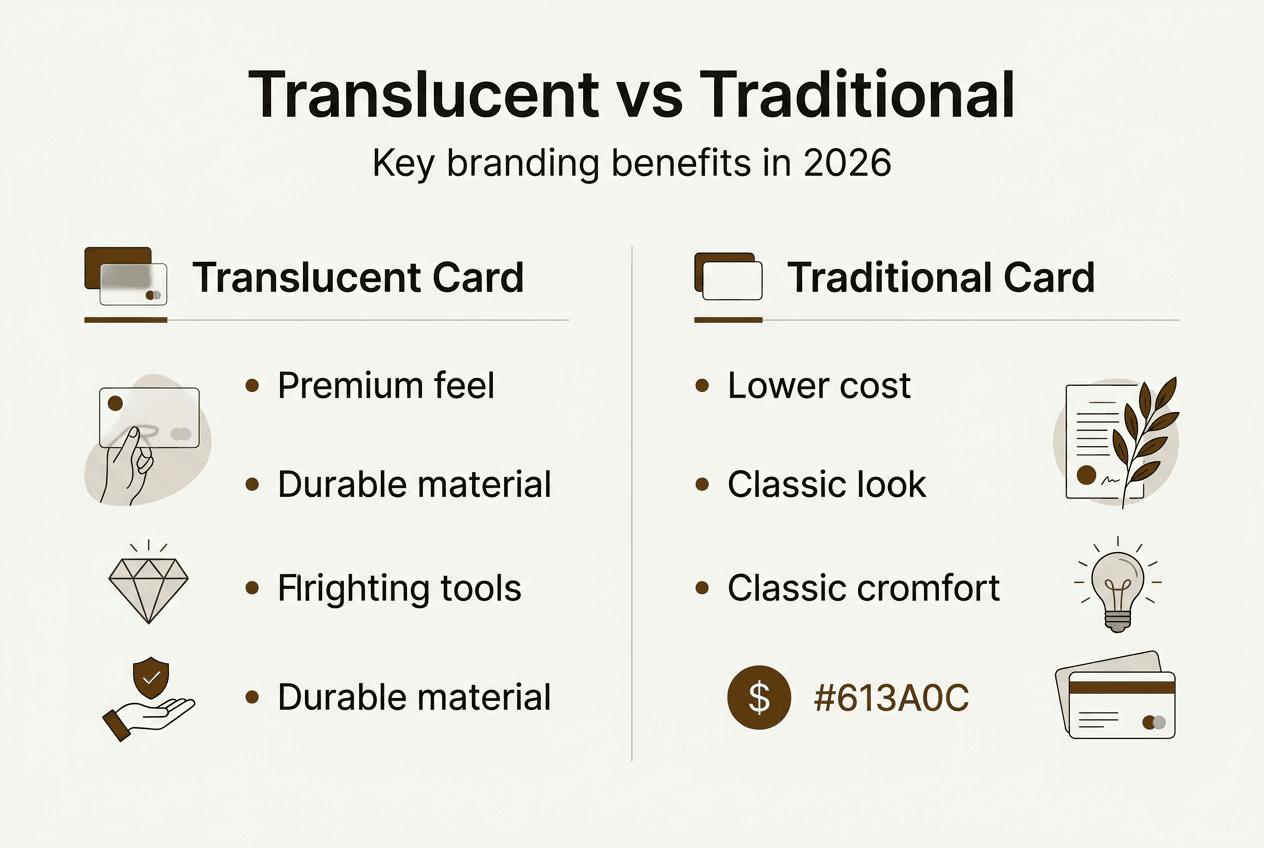
Font and color choices demand extra attention on translucent materials. Sans serif fonts with medium to bold weights ensure readability across varying backgrounds. Avoid thin, delicate typefaces that disappear against light surfaces. High contrast color combinations work best, with dark text on light sections or vice versa. Test color visibility by holding mockups against multiple background colors.
Customization options allow aligning translucent cards closely with brand identity through careful selection of finishes, colors, and effects. Integration with other brand collateral creates cohesive experiences. If your website uses specific color gradients or geometric patterns, incorporate these elements into your card design. Consistency across touchpoints reinforces brand recognition and professionalism.
Top design tips for translucent cards:
- Embrace negative space to let translucency shine rather than overcrowding with information
- Use white ink strategically to create contrast and ensure critical details remain readable
- Test against backgrounds to verify design works in real world lighting and surface conditions
- Consider card orientation and whether vertical or horizontal layout better showcases your design
- Include QR codes that leverage the modern aesthetic while providing digital connection points
- Align with brand guidelines to ensure cards feel like natural extensions of existing visual identity
Pro Tip: Partner with designers experienced in translucent card production. Material specific expertise prevents costly mistakes and unlocks creative possibilities you might not envision alone.
Elevate your brand with custom translucent business cards
BcardsCreation specializes in crafting translucent business cards that transform first impressions into lasting business relationships. Our design team understands the technical requirements and creative possibilities unique to translucent materials. We guide you through finish selection, white ink application, and layering strategies that make your brand unforgettable.
Every project receives individual attention without templates or automated tools. We combine material expertise with design consultation to create cards that authentically represent your brand positioning. Whether you need frosted sophistication or bold clear statements, our custom business card design service delivers premium results. Explore our clear business cards collection or browse the complete business cards collection to discover how translucent materials can elevate your professional image.
FAQ
What are translucent business cards made of?
Translucent business cards typically use PVC or frosted plastic materials that allow partial light transmission while maintaining structural integrity. These materials provide the durability and water resistance that paper cards lack. The translucent quality creates unique visual effects as light interacts with layered design elements. Different plastic formulations offer varying degrees of transparency, from lightly frosted to nearly clear finishes.
Are translucent business cards more expensive than traditional cards?
Yes, translucent cards generally cost more due to specialized materials and printing processes including white ink application. Prices typically range from $2 to $5 per card compared to $0.10 to $0.50 for standard paper cards. However, superior durability means translucent cards last months or years rather than weeks, reducing replacement frequency. The investment often justifies itself through enhanced brand perception and longer retention by recipients.
Can I print full color designs on translucent business cards?
Full color printing works excellently on translucent cards when combined with white ink underlays for vibrancy and readability. The white ink creates an opaque base that prevents colors from appearing washed out against light backgrounds. Advanced printing techniques enable gradients, photographs, and complex graphics on translucent materials. You can even add translucent business cards with QR code integration for seamless digital connections. Variable data printing allows personalization while maintaining the premium translucent aesthetic.
Are translucent business cards eco friendly?
Translucent cards present mixed environmental considerations requiring honest evaluation against your sustainability priorities. Their exceptional durability reduces waste by eliminating frequent replacements that paper cards require. Recipients keep these cards longer, reducing overall consumption over time. However, the plastic base material comes from petroleum sources and requires specialized recycling. Some businesses offset this through recycling programs or by emphasizing durability as waste reduction. Your decision should align with authentic brand values rather than marketing convenience.


