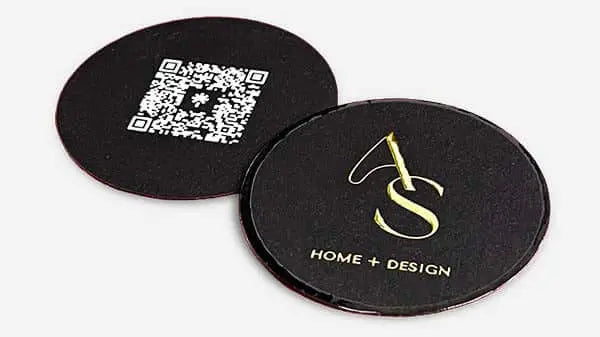


Clear business cards: one or double-sided printing?
Clear business cards demand smarter sidedness decisions than standard paper options. Their transparent nature creates unique design challenges where visual layers overlap, potentially confusing your carefully crafted brand message. Understanding when to print on one side versus two sides determines whether your card becomes a memorable luxury statement or a cluttered visual puzzle.
Table of Contents
- One-Sided Business Cards: Simplicity, Focus, And Luxury Appeal
- Double-Sided Business Cards: Expanding Space For Visual Storytelling And Impact
- Common Misconceptions And Design Pitfalls To Avoid
- Material And Printing Technique Considerations For Clear Cards
- Cost, Budget, And Environmental Implications
- Practical Recommendations For Designers And Creatives
- Conclusion: Making Strategic Business Card Decisions For Luxury And Beauty Professionals
- Explore High-End Clear Business Card Options
- FAQ
Key takeaways
| Point | Details | |-------|---------|| | One-sided printing preserves clarity | Transparent cards show both sides simultaneously, making single-sided designs cleaner and more readable. | | Double-sided requires strategic design | Two-sided printing works only with solid backgrounds or partial fills that visually separate layers. | | Minimalist approach suits luxury brands | One-sided cards deliver the floating visual effect that makes clear cards distinctive in beauty and design sectors. | | Cost efficiency favors single-sided | One-sided printing reduces production complexity and costs by 10-20% while maintaining professional impact. | | Design cohesion is critical | Poor planning on double-sided transparent cards creates visual confusion instead of enhanced branding value. |
One-sided business cards: simplicity, focus, and luxury appeal
One-sided clear business cards offer instant readability and minimalist aesthetic that aligns perfectly with luxury and high-end brand positioning. The transparent nature of these cards creates a floating visual effect where your design appears to hover against any background. This works best when information stays on a single side.
The back of a one-sided clear card remains blank, allowing you to maintain absolute design clarity. Your logo, text, and graphics display without competing with mirrored images from the reverse side. This approach prevents the visual overlap that occurs when transparent materials show front and back simultaneously.
Cost savings represent another practical advantage. Single-sided printing typically reduces production expenses by 10-20% compared to double-sided options. You avoid the complexity of printing registration, white ink backing layers, and alignment precision required for transparent materials.
Pro Tip: Leave the back blank for handwritten appointment reminders or personalized notes to clients. This transforms your clear business card luxury brand tool into an interactive communication piece that strengthens personal connections.
Key benefits of one-sided clear business cards include:
- Clean visual presentation without layered distraction
- Immediate information readability from any viewing angle
- Lower production costs and faster turnaround times
- Space for personalized handwritten messages
- Enhanced perceived exclusivity through restraint
The blank reverse side offers unexpected versatility. Beauty professionals use it to jot down product recommendations during consultations. Designers sketch quick concepts during client meetings. This functional simplicity often delivers more client engagement than crowded double-sided layouts.
Double-sided business cards: expanding space for visual storytelling and impact
Double-sided clear business cards provide higher perceived value and memorability among recipients, but only when designed with transparent materials in mind. The key challenge involves managing how both sides appear when viewed through the card simultaneously.

Successful double-sided transparent cards require solid background areas or strategic opaque sections. These visual barriers prevent front and back designs from overlapping confusingly. Without this separation, your carefully planned layout becomes a jumbled mess of mirrored text and competing graphics.
White ink backing serves as the foundation for readable double-sided clear cards. This opaque layer blocks the reverse side from showing through, maintaining design integrity. However, it adds production complexity and increases costs by 10-20% compared to single-sided options.
The expanded design space allows you to separate contact information from branding elements effectively. Your front might showcase a striking logo with minimal text, while the back provides complete contact details, social media handles, and appointment information. This separation works only when proper backing prevents visual interference.
Double-sided clear cards demand exceptional design cohesion between front and back. Each side must work independently while contributing to a unified brand story that justifies the added production complexity and investment.
Design considerations for double-sided transparent cards:
- White ink backing required for text legibility on both sides
- Precise printing alignment to prevent visual misregistration
- Cohesive color schemes that work when layers overlap
- Strategic use of solid backgrounds to separate information zones
- Higher production costs offset by increased information capacity
The perceived value boost matters for brands competing in luxury markets. Recipients often retain double-sided cards longer, particularly when design execution justifies the complexity. However, poor implementation destroys this advantage faster than a blank reverse ever could.
You gain storytelling space but sacrifice the floating transparency effect that makes clear cards special. Weigh whether your brand benefits more from visual simplicity or expanded content capacity. Many luxury beauty brands find that stand out with business cards approaches favor restraint over information density.
Common misconceptions and design pitfalls to avoid
Many designers assume double-sided cards automatically deliver superior results. This belief ignores the unique properties of transparent materials where both sides remain visible simultaneously. The assumption leads to cluttered designs that undermine professionalism instead of enhancing it.
One-sided clear cards are not outdated or less sophisticated. They represent a strategic choice that maximizes the transparent material’s distinctive qualities. Luxury brands understand that restraint often communicates more effectively than cramming maximum information onto every available surface.
The transparency factor creates design challenges absent from paper cards. Text printed on the back becomes reversed when viewed through the front. Graphics overlap in unpredictable ways. More information creates clutter if not designed cohesively, undermining brand impact regardless of how much you spent on production.
Design dissonance between front and back destroys perceived quality faster than any cost savings justify. When sides compete visually rather than complementing each other, recipients notice the disconnect. This damages your brand perception more than a thoughtfully executed one-sided design ever would.
Pro Tip: Test your double-sided clear card design by printing both sides on separate transparencies and overlaying them. This reveals exactly how your final card will appear when light passes through both layers simultaneously.
Common mistakes that reduce clear card effectiveness:
- Printing text on both sides without opaque backing separators
- Assuming more information automatically increases card value
- Ignoring how transparent layers create visual confusion
- Failing to account for mirrored text visibility from either side
- Choosing double-sided printing without strategic design justification
The white ink backer requirement surprises many first-time clear card buyers. Without this opaque foundation, your double-sided design becomes an illegible jumble of overlapping elements. Production costs increase significantly, yet many brands discover the visual impact doesn’t justify the investment.
Environmental considerations also factor into sidedness choices. Double-sided printing requires additional ink layers and more complex production processes. While clear cards themselves use clear business card benefits including durability that reduces replacement frequency, production efficiency still matters for sustainability-minded luxury brands.
Material and printing technique considerations for clear cards
Clear business cards require white ink backers for double-sided printing to maintain legibility and visual quality. This opaque layer prevents front and back designs from interfering with each other when viewed through transparent material. The backing adds both complexity and cost to production.
Printing alignment precision becomes critical for double-sided transparent cards. Even slight misregistration shows dramatically on clear materials where both sides remain visible. Paper cards hide minor alignment issues, but transparent substrates expose every production imperfection.
Material thickness affects how noticeably front and back designs interfere with each other. Thicker clear cards (20pt or higher) provide slightly more visual separation between sides. However, this doesn’t eliminate the need for strategic design that accounts for transparency.
The printing process for clear cards differs fundamentally from paper-based options:
- UV printing directly onto plastic substrates
- White ink foundation layer applied first on double-sided designs
- Color layers built up sequentially for opacity and vibrancy
- Curing processes that bond ink permanently to plastic
- Quality control checks for alignment and layer adhesion
| Printing aspect | One-sided | Double-sided |
|---|---|---|
| White ink layers | Optional | Required on both sides |
| Alignment complexity | Low | High |
| Production time | 3-5 days | 5-7 days |
| Cost premium | Baseline | +10-20% |
| Design flexibility | Maximum transparency | Limited by backing |
Finish options influence both durability and aesthetic appeal. Matte finishes reduce glare and provide sophisticated texture. Glossy finishes maximize transparency and create vibrant color depth. Your choice should align with brand positioning and how recipients will handle cards in typical business situations.
The business card design process must account for these technical realities from initial concept. Designing for transparent materials requires different thinking than paper-based cards. Color choices, typography, and layout all need adjustment for how light interacts with clear substrates.
Production capabilities vary significantly among print providers. Not all shops can handle the precision required for quality double-sided clear cards. Verify your printer’s experience with transparent materials before committing to complex double-sided designs.
Cost, budget, and environmental implications
Double-sided printing increases costs by approximately 10-20% compared to one-sided clear cards, primarily due to white ink backing requirements and alignment precision. This cost difference matters more for small-batch luxury productions where per-unit expenses already run higher than commodity business cards.
The return on investment calculation extends beyond simple printing costs. Double-sided cards might justify their premium if your design genuinely requires expanded information capacity. However, many luxury brands discover that simplified one-sided layouts deliver stronger brand recall and client retention.
| Cost factor | One-sided | Double-sided |
|---|---|---|
| Base printing | $150-250/100 cards | $175-300/100 cards |
| White ink backing | Not required | Required both sides |
| Design complexity | Lower | Higher |
| Production time | Standard | Extended |
| Revision costs | Lower | Higher |
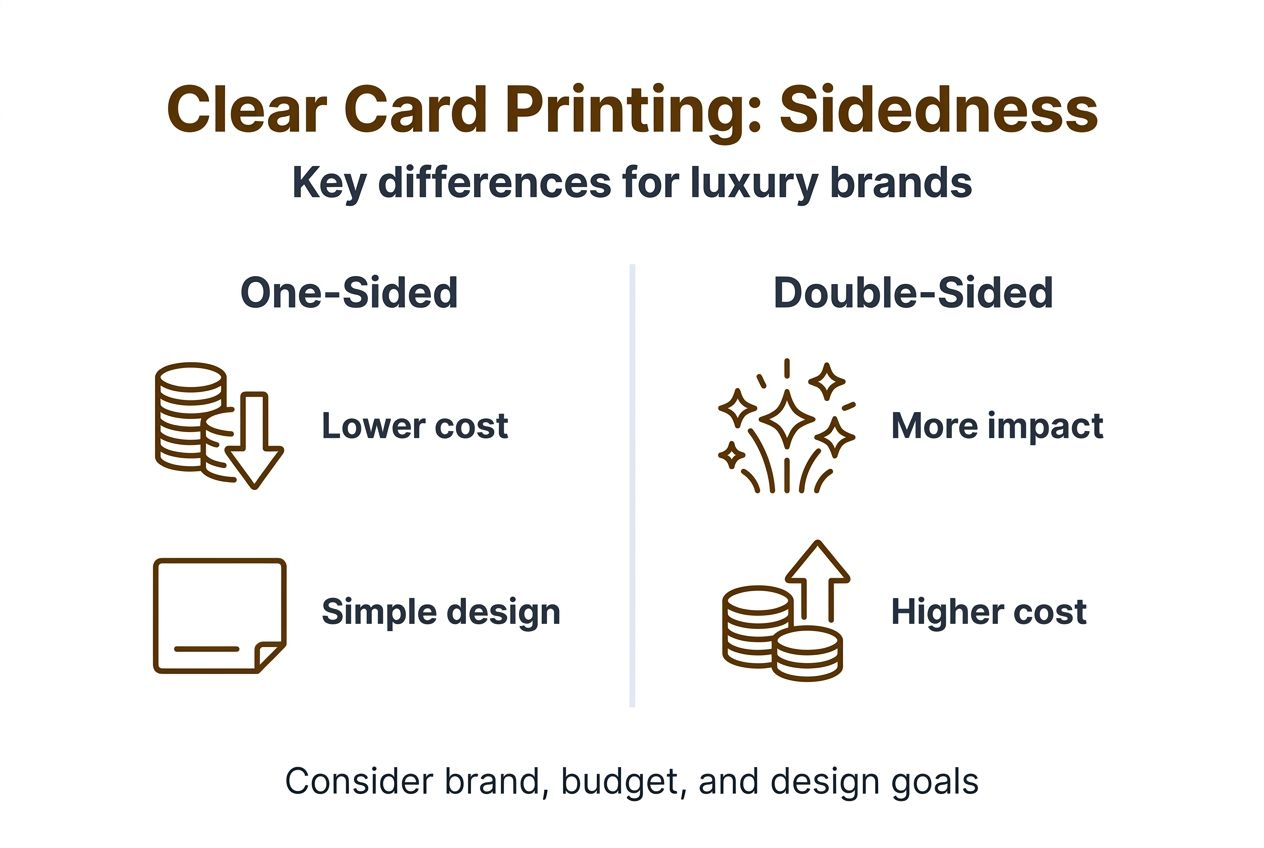
Environmental considerations increasingly influence luxury brand decisions. Clear plastic cards already offer durability advantages that reduce replacement frequency compared to paper options. Single-sided printing further reduces material and energy consumption during production.
Budget-conscious approaches to clear cards:
- Start with one-sided designs to test market response
- Reserve double-sided complexity for proven high-value client segments
- Use blank reverse sides for handwritten personalization
- Invest savings into premium finishing or specialty materials
- Prioritize design quality over information density
Long-term ROI factors include client retention rates and brand perception shifts. A beautifully executed one-sided clear card often generates more conversions than a cluttered double-sided version that tries to communicate everything simultaneously. Your business card budget considerations should reflect this quality-over-quantity principle.
Sustainability credentials matter for luxury beauty and design brands. While clear plastic cards require different recycling processes than paper, their longevity means fewer replacements over time. Single-sided production reduces ink usage and simplifies manufacturing, lowering overall environmental impact.
The cost-benefit analysis depends heavily on your specific brand positioning. Emerging luxury brands often benefit from investing saved production costs into superior materials or finishing techniques rather than double-sided printing. Established brands with complex service offerings might justify the expanded information space.
Practical recommendations for designers and creatives
Start by auditing exactly what information your business card must communicate. Essential details include name, title, contact method, and brand identifier. Everything beyond these core elements should justify its presence through measurable client value rather than tradition.
Your brand aesthetic determines whether one-sided or double-sided printing serves you better. Minimalist luxury brands built on restraint and exclusivity naturally align with single-sided clarity. Brands emphasizing comprehensive service offerings or complex value propositions might require double-sided space.
Budget realities should inform your decision without dictating it. A superbly executed one-sided clear card delivers more brand value than a mediocre double-sided version that stretches your resources. Invest where design excellence and material quality create memorable impressions.
Pro Tip: Create mockups by printing your design on clear acetate sheets before committing to production. Hold them against different backgrounds to see how transparency affects readability and visual impact in real-world conditions.
Strategic sidedness selection process:
- List all information elements you want to include on your card
- Rank each element by actual client value versus traditional expectation
- Design a one-sided layout with only essential high-value elements
- Assess whether remaining information justifies double-sided complexity
- Test both options with target audience members before final production
Maintain design cohesion especially when choosing double-sided printing. Your front and back must tell a unified brand story rather than competing for attention. Color schemes, typography, and visual hierarchy should flow seamlessly even when sides serve different functional purposes.
Leverage one-sided cards for enhanced personalization. The blank reverse becomes valuable real estate during client interactions. Beauty consultants can note product recommendations. Designers can sketch concepts. This interactive element often generates more engagement than static printed information.
Consider your typical networking environments. Events with varied lighting conditions favor simple one-sided designs that remain readable regardless of how recipients hold the card. Complex double-sided layouts can frustrate people trying to find specific information quickly.
Your clear plastic business card insights research should include examining how competitors in your luxury segment approach sidedness. Notice patterns among the most memorable and professionally perceived cards. Often, restraint wins over information density.
The business card design process benefits from professional consultation when working with transparent materials. Experienced designers understand how light, backgrounds, and viewing angles affect clear card perception in ways that differ dramatically from paper-based designs.
Conclusion: making strategic business card decisions for luxury and beauty professionals
Sidedness decisions for clear business cards require understanding how transparent materials behave differently than paper. One-sided printing maximizes the floating visual effect that makes clear cards distinctive while avoiding the confusion of overlapping layers. Double-sided options work only with strategic design that separates sides visually through opaque backing. Your choice should align with brand identity, budget realities, and the actual information value you need to communicate rather than assumptions about what business cards should include.
Explore high-end clear business card options
Transforming sidedness strategy into stunning reality requires production partners who understand transparent materials intimately. BcardsCreation specializes in premium clear business cards engineered for luxury and beauty professionals who view cards as strategic brand investments.
Our custom business card design service guides you through sidedness decisions based on your specific brand positioning and audience expectations. We handle technical complexities like white ink backing, printing alignment, and material selection so your cards deliver maximum impact. Advanced creative business cards printing techniques including specialty finishes and unique treatments ensure your transparent cards stand out in ways that justify their premium positioning. Every project receives personalized consultation that transforms design theory into tangible brand assets.
FAQ
Are one-sided clear business cards outdated for luxury brands?
One-sided clear business cards remain a stylish, effective choice for minimalist luxury brands in 2026. They provide clean visual presentation and preserve the floating transparency effect that makes clear cards distinctive. The blank reverse offers space for personalized handwritten notes that enhance client connections in ways double-sided printing cannot match.
How does double-sided printing affect clear card readability and cost?
Double-sided clear cards need white ink backing on both sides to maintain legibility and prevent visual overlap. This adds printing complexity and increases production costs by approximately 10-20% compared to one-sided options. Precise alignment becomes critical because transparent materials expose even minor registration errors that paper cards would hide.
When should I choose one-sided versus double-sided clear business cards?
Choose one-sided printing for minimalist brands with focused messaging and budget sensitivity. Select double-sided when you genuinely need expanded information capacity and can invest in proper white ink backing. Consider whether your brand benefits more from the distinctive floating transparency effect of single-sided cards or the information density of strategically designed double-sided layouts.
Do double-sided clear business cards guarantee better client engagement?
Double-sided cards have potential for higher engagement only when designed cohesively with proper transparent material considerations. Poor design execution or visual clutter reduces impact regardless of how many sides you print. Engagement depends primarily on brand message clarity and design quality rather than simply maximizing printed surface area.
Recommended
- Foiled Thick Business Cards | Heavy Cardstock cardboard paper | Real F – BcardsCreation
- Clear Business Cards: Impact on Luxury Branding – BcardsCreation
- Thick WHITE VELVET Multilayer Business cards Blind Debossing – BcardsCreation
- Frosted Plastic Business Cards | Full Color Plastic Cards – BcardsCreation


