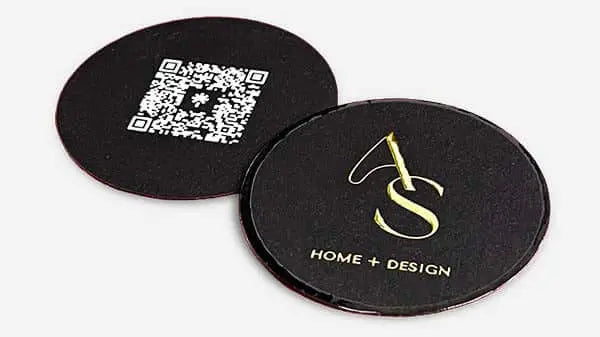


Frosted plastic cards: Elevate your brand with premium style
TL;DR:
- Frosted plastic cards, made from translucent or tinted stock with a matte finish, provide a modern, premium feel that stands out subtly. Their manufacturing involves careful material selection and printing techniques to ensure color accuracy and durability, making them ideal for branding professionals seeking understated sophistication. Choosing frosted over clear or standard cards enhances brand perception through tactile and visual differentiation, especially for industries valuing discretion and elegance.
Not all plastic business cards look the same. Many professionals assume plastic cards are either fully clear or glossy white, but frosted plastic cards offer something completely different. A frosted plastic card is a custom card made from translucent or white-tinted plastic stock that has a matte, diffused finish resembling frosted glass. The result is a card that feels refined, looks modern, and stands out from every standard card in the stack. This article covers what frosted plastic cards are, how they’re made, how they compare to other options, and why they work for serious networkers and brand-conscious professionals.
Table of Contents
- What is a frosted plastic card?
- How frosted plastic cards are made
- Frosted vs. clear vs. standard plastic: Which is right for you?
- Business impact: Why choose frosted cards for networking and brand image?
- Why the best card isn’t always the most obvious
- Level up your brand with custom frosted plastic cards
- Frequently asked questions
Key Takeaways
| Point | Details |
|---|---|
| Defining frosted plastic cards | They feature a matte, translucent finish that creates a modern, premium look. |
| How cards are produced | Production combines material choice and finishing techniques for durability and visual appeal. |
| Branding advantages | Frosted cards stand out in business networking with unique texture and high-end feel. |
| Comparison with other cards | Frosted, clear, and standard plastic each suit different brand personalities and uses. |
| Supplier selection tip | Ask vendors about their frosted finish process to ensure your design prints as intended. |
What is a frosted plastic card?
With that misconception addressed, let’s clarify what actually sets frosted plastic cards apart and why they’re worth considering.
A frosted plastic card is not simply a plastic card with a rough surface. According to card finish technical details, it is a custom plastic card made from translucent or white-tinted plastic stock that carries a matte, diffused appearance similar to frosted glass. The key word here is diffused. Light passes through the material but scatters, creating a soft, even glow rather than a sharp, see-through look.
A frosted card does not compete with your design. It frames it. The matte surface gives printed elements room to breathe while adding a quiet sense of premium quality.
Here is what defines a frosted plastic card from a materials standpoint:
- Translucency: The card allows some light through, but not fully. This sits between a clear card and an opaque white card.
- Matte surface: The frosted finish reduces glare and fingerprints compared to glossy plastic.
- Smooth tactile feel: The surface feels sleek and intentional, not rough or textured.
- Modern visual style: The diffused appearance reads as contemporary and upscale in most business contexts.
- Neutral base: The frosted material acts as a neutral background that lets your ink, foil, or UV print pop.
You can explore the full frosted plastic card collection to see how these characteristics translate into finished products. One popular format is the matte ice finish card, which delivers exactly this diffused, soft look in full-color printing.
What makes frosted plastic cards particularly useful for business professionals is the combination of subtlety and impact. They are not flashy. They do not scream for attention. But they are immediately noticeable when placed in someone’s hand. That contrast, understated but clearly premium, is exactly what makes them effective for branding.

How frosted plastic cards are made
Now that you know what a frosted plastic card is, it’s crucial to understand how they’re actually made and what choices matter most if you want to get it right.
The production of frosted plastic cards follows a structured workflow. According to plastic card technology, the common production steps include designing artwork, printing, laminating or applying an overlay for protection, and then cutting or punching into standard card sizes.
Here is how that process works in practice:
- Design and artwork preparation. Your design is prepared in a print-ready format, typically with bleed areas accounted for. Colors are adjusted for how they will appear on a translucent or frosted substrate rather than white paper.
- Material selection. You choose your plastic stock: clear frosted, white-frosted, or a tinted translucent base. This choice fundamentally affects how colors print.
- Printing. Ink is applied using offset, digital, or silkscreen printing. Silkscreen printed frosted cards are particularly popular because silkscreen deposits a thicker, more opaque layer of ink, which shows up cleanly against the translucent base.
- Frosted overlay or finish application. As noted in finish options, frosting can be achieved as a surface finish or overlay applied to the plastic. This is not always a spray coating. It may be built into the laminate layer or the material itself.
- Cutting and punching. Cards are die-cut or punched to standard dimensions, typically 3.5 x 2 inches for North American formats, or CR80 (credit card size).
Pro Tip: Always ask your supplier whether the frosted effect comes from the base material or from a surface overlay. This affects how your colors reproduce. A material-level frost gives more consistent results than a spray finish applied after printing.
Here is a quick look at how material and finish choices affect the final card:
| Choice | Effect on color | Effect on texture | Best for |
|---|---|---|---|
| Clear frosted base | Colors appear lighter, more transparent | Smooth, matte | Minimalist or monochrome designs |
| White frosted base | Colors appear closer to standard print | Soft matte, opaque | Full-color designs with strong contrast |
| Silkscreen print | Thick, opaque ink deposit | No change to card texture | Simple logos, text-heavy designs |
| Frosted laminate overlay | Adds matte protection over print | Slight softness | Designs printed on glossy substrate |
| UV spot coating | Selective gloss over frosted base | Contrast of matte and gloss | Premium accent designs |
Understanding these choices before you order saves you from surprises at delivery. The production method shapes everything from how vivid your brand colors appear to how long the card holds up under daily handling.
Frosted vs. clear vs. standard plastic: Which is right for you?
Understanding production is just the start. Choosing the right card type is where your branding really takes shape.
Many professionals arrive at this decision unsure of what separates these three options in practice. Here is a direct comparison:
| Feature | Frosted plastic | Clear plastic | Standard plastic (opaque) |
|---|---|---|---|
| Translucency | Partial (diffused) | Full | None |
| Surface finish | Matte | Glossy | Glossy or matte |
| Tactile impression | Smooth, refined | Slick, modern | Standard to premium |
| Color accuracy | Varies by base | High on opaque areas | High |
| Fingerprint visibility | Low | High | Low |
| Best brand personality | Understated luxury | Bold, transparent | Classic, versatile |
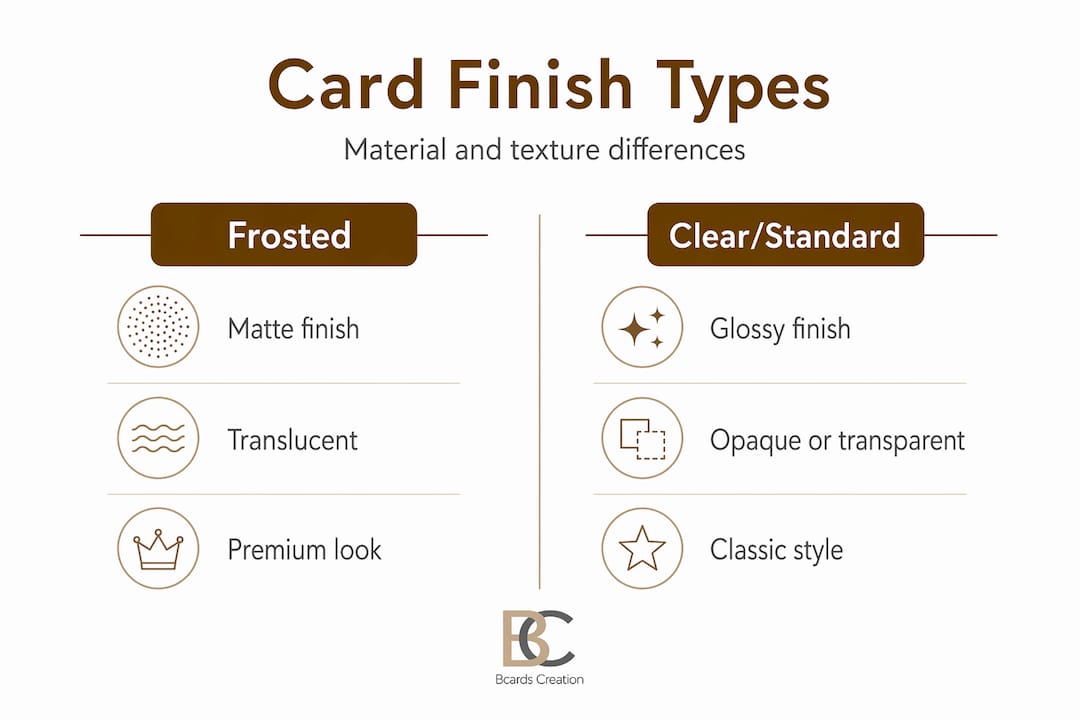
When reviewing frosted vs. clear finishes, the key distinction is translucency versus full transparency. Clear cards let you see through them completely. Frosted cards diffuse that transparency into a softer, more elegant effect.
Here is how each type suits different business personas:
- Frosted cards work best for professionals who want a premium feel without the high-gloss look. Think creative consultants, architects, luxury real estate agents, and private wealth managers.
- Clear plastic cards (see transparent plastic cards) suit brands that want to appear bold, transparent, and modern. Tech founders and designers often favor them.
- Standard plastic cards are the most versatile. They work across industries but don’t carry the same specialty impact as frosted or clear options.
You can read more about the clear card branding benefits and translucent card advantages to compare these options in more detail before making a final decision.
Pro Tip: When requesting samples from a supplier, ask specifically about how the frosted effect is achieved, as a material-level frost behaves very differently from a surface overlay when printing dark colors or metallics. This one question tells you a lot about a supplier’s technical knowledge.
A key nuance worth noting: card finish method matters. Frosted can be delivered as a finish on certain plastic constructions, meaning it may be a material choice or a post-production step. Confirm this with your supplier before placing an order. It directly affects color prediction and print consistency.
Business impact: Why choose frosted cards for networking and brand image?
Choosing a frosted card is more than a style preference. It’s a strategic decision for how you present your business.
The first thing someone notices when you hand them a card is how it feels. Paper cards are expected. A frosted plastic card surprises. It signals that you made a deliberate choice. That tactile moment creates a memory, and memory is the whole point of a business card.
Here is why frosted plastic cards deliver measurable impact for networking and brand image:
- Immediate differentiation. When your card sits on a desk next to ten others, a frosted surface stands out. The diffused light effect and matte feel register as different before the recipient reads a single word.
- Premium brand association. As noted in premium finish details, frosted plastic cards reflect a modern, premium image due to their unique look and tactile experience. This positions your brand in the higher-value tier of your industry.
- Durability that protects your investment. Plastic cards resist water, bending, and edge wear. A card you hand out at a conference in January could still be sitting on a prospect’s desk in December, looking exactly the same.
- Design versatility. Frosted cards support a wide range of finishing options. Custom full-color frosted cards allow you to use vibrant imagery. Foil stamped frosted cards add real gold, silver, or holographic foil for maximum visual impact.
- White ink capability. On clear frosted bases, white ink becomes a powerful design tool. It creates contrast that standard printing on white paper simply cannot achieve.
- Long-lasting information. Ink adheres well to properly prepared plastic stock. Your contact details stay sharp and legible far longer than on paper cards exposed to handling and humidity.
Important data point to consider: Research consistently shows that people form judgments about a brand’s quality within seconds of a physical interaction. A card that feels different triggers more active engagement with the information on it. That is the core business case for investing in frosted plastic.
Frosted cards also work particularly well in industries where visual identity and material choices signal competence. Architects, interior designers, photographers, luxury hospitality professionals, and financial advisors all benefit from the quiet confidence a frosted card communicates. It does not try too hard. It simply looks like it belongs at a higher level.
Why the best card isn’t always the most obvious
Having covered the practical and visual impact, it’s worth stepping back and asking what really makes a business card valuable.
Here is something we’ve observed consistently: the professionals who get the most value from a frosted card are not always the ones who chose it for aesthetic reasons alone. They chose it because it aligned with how they wanted to be perceived before they said a word. That is a different starting point, and it produces better results.
A common mistake is assuming that a unique material automatically creates memorability. It does not. A frosted card with a cluttered, unfocused design still fails. The finish elevates a strong brand. It cannot replace one.
The smarter approach is to ask a few questions before deciding on your card material:
- What is the context where this card will be handed over?
- Who will receive it, and what do they value?
- Does a frosted surface reinforce or conflict with your brand’s visual identity?
A consultant who brands around minimalism and precision benefits enormously from a frosted matte card. A brash, colorful consumer brand might actually be better served by a glossy clear card or a vibrant opaque option.
We have seen businesses choose frosted cards specifically to match a client audience that values discretion and refinement. Law firms, wealth managers, and medical specialists often find that a frosted card signals seriousness without ostentation. That specificity of purpose is what makes the choice effective. You can explore strategic card branding to see how finish decisions connect to broader brand positioning.
The uncomfortable truth about premium cards is that premium materials create an expectation. If your design, message, and follow-up do not match the quality of the card, the card itself becomes a liability. So choose frosted when it represents your brand accurately, not just when it looks impressive in a mockup.
Level up your brand with custom frosted plastic cards
Ready to put your insights into action? Here’s how you can create your own standout frosted plastic cards.
At BcardsCreation, every frosted plastic card project starts with a conversation, not a template. You get direct design guidance, material consultation, and a production process built around your brand specifically.
Whether you need custom card design built from scratch, creative business cards with foiling and specialty finishes, or high quality clear cards as an alternative, BcardsCreation handles each order individually. Small batches, premium materials, and controlled production mean you get exactly what your brand needs, not a generic result. Visit the site to start your order and see what a properly designed frosted card can do for your professional image.
Frequently asked questions
Are frosted plastic cards more durable than paper cards?
Yes, frosted plastic cards are significantly more durable and resistant to wear, moisture, and bending compared to paper cards. The robust construction of plastic card production, including lamination and overlay protection, ensures a long-lasting result.
Can you print full color on frosted plastic cards?
Absolutely. Modern printing techniques allow for vibrant, full-color designs on frosted plastic card materials. Production methods include art preparation and print techniques specifically suited for full-color frosted card output.
What is the difference between a frosted card and a clear plastic card?
A frosted card has a matte, diffused, and translucent finish, while a clear card is fully transparent and glossy. According to finish comparison details, frosted and clear finishes differ meaningfully in translucency, gloss level, and tactile feel.
What should I look for in a supplier when ordering frosted plastic cards?
Ensure your supplier explains their frosted effect method and offers proofs so you can preview how your brand’s colors and finishes will appear. You should confirm how the vendor achieves the frosted effect, whether through material translucency or a surface overlay, to accurately predict how colors will print.


