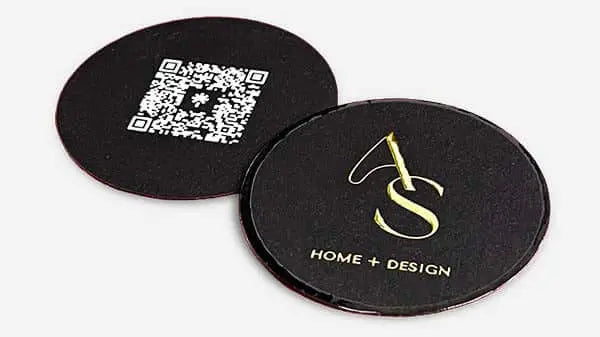


How to Brief a Designer for Business Cards (Even If You’re Not a Designer)
Standing out in the luxury beauty world starts the moment you hand over your business card. For American small business owners and brand leaders, a premium card is more than contact info—it is a tactile signal of your promise, values, and style. Getting this right means going beyond decoration. Expertly briefing a designer requires clarity about your brand essence and audience, so your business card becomes a true extension of what you offer. Understanding your brand purpose and visual direction is the first step to bringing your luxury vision to life.
Table of Contents
- Step 1: Reflect On Your Brand Purpose And Audience
- Step 2: Map Out Your Desired Look And Feel
- Step 3: Define Practical Needs And Budget Boundaries
- Step 4: Articulate Success Criteria And Feedback Preferences
Quick Summary
| Key Point | Explanation |
|---|---|
| 1. Understand Your Brand Purpose | Clarify what your business stands for and the specific audience you wish to attract for your card design. |
| 2. Define Your Visual Aesthetic | Create a visual direction by gathering inspiration that reflects your brand’s emotional response and tone. |
| 3. Set Clear Budget and Needs | Determine the quantity, materials, and budget for your business cards to align expectations with your designer. |
| 4. Establish Success Criteria | Define what a successful card looks like in terms of feel, impression, and communication for focused feedback. |
Step 1: Reflect on Your Brand Purpose and Audience
Before you sit down with a designer, you need clarity on what your business actually stands for and who you’re trying to reach. This isn’t about having all the answers—it’s about understanding your thinking so you can communicate it clearly.
Start by asking yourself what problem your business solves. In the luxury beauty and lifestyle space, this might mean you offer sustainable skincare, personalized wellness coaching, or high-end styling services. Your business card should hint at this purpose, not shout it.
Next, get specific about who uses your service. Are you reaching established professionals who value exclusivity? Younger entrepreneurs building their first impression? People who prioritize sustainability? Each audience has different expectations for what a premium business card should feel like and convey.
Consider what your brand voice communicates about your values. A luxury beauty brand that emphasizes minimalism will have very different card expectations than one that celebrates color and boldness. Your designer needs to understand this alignment.
Here’s what to document:
- Your core offering (what makes you different, not what everyone in your industry does)
- Your primary audience (age range, professional level, values)
- The impression you want people to have after meeting you
- One or two words that capture your brand feeling (refined, approachable, innovative, bold)
- Where people typically receive your card (networking events, client meetings, retail settings)
Your brand purpose isn’t about being clever—it’s about being honest. A designer builds better work when they understand what you actually believe in.
Don’t overthink this. You’re not writing a mission statement. You’re clarifying your own thinking so the designer can make informed decisions about color, material, layout, and tone.
Your business card is a physical extension of your brand, and that starts with you knowing what your brand actually means.
Pro tip: Write down your answers to these questions before your design meeting—not to hand to the designer, but to clarify your own thinking so you can speak about your brand with confidence and consistency.
Step 2: Map Out Your Desired Look and Feel
Now that you understand your brand purpose, it’s time to translate that into visual terms. This step bridges what your brand means and how it actually looks when someone holds your card.
Start by gathering inspiration without worrying about business cards specifically. Look at luxury brands in your space and adjacent industries. If you work in high-end wellness, study how premium skincare companies present themselves. If you’re in beauty, examine how luxury cosmetics brands use color and texture. This isn’t about copying—it’s about understanding what resonates with your audience.

Think about the emotional response you want people to have. Should your card feel warm and approachable? Cool and sophisticated? Energetic and bold? Grounded and trustworthy? Visual design combines elements like color, texture, and space to create that emotional experience, so naming the feeling matters.
Consider these dimensions of your desired look and feel:
- Color palette (what colors appear when you imagine your brand?)
- Texture and material sensibility (smooth and refined, or tactile and organic?)
- Typography personality (modern and minimal, classic and elegant, bold and contemporary?)
- Visual complexity (clean and sparse, or rich with detail?)
- Overall aesthetic (luxury minimalism, bohemian elegance, contemporary edge, timeless sophistication?)
Your desired look and feel should feel like a natural extension of what you already told the designer about your purpose. If there’s a disconnect, you haven’t nailed it yet.
Pull together 5-10 reference images that capture the aesthetic direction you’re drawn to. These might be color palettes, typography examples, textures, photography styles, or even other business cards that feel adjacent to your vision. Don’t overthink this step—gather things that make you say “yes, this feels right.”
Share these references with your designer. They reveal what you respond to emotionally in ways words often cannot. A designer can then extract the principles behind those images and apply them to your specific project.
Pro tip: Create a simple Pinterest board or shared folder with your reference images before your design meeting. Let your designer see the visual patterns you’re naturally drawn to, which often reveals your true aesthetic preferences more clearly than any description.
Step 3: Define Practical Needs and Budget Boundaries
Before your designer starts sketching, you need clarity on what you actually need and what you’re willing to invest. This isn’t about limiting creativity—it’s about setting boundaries that help your designer make smart decisions.
Start with the basics. How many cards do you need printed initially? Are you ordering 500 or 5,000? Will you need reprints in six months, or are you building long-term stock? Your order quantity influences what production methods and materials make financial sense.
Next, think about material choices. Do you want standard cardstock, or are you considering specialty options like plastic, textured paper, or metal finishes? Each material carries different costs and creates a different tactile experience. Defining budget boundaries helps set realistic expectations and ensures efficient resource allocation for what’s actually achievable.
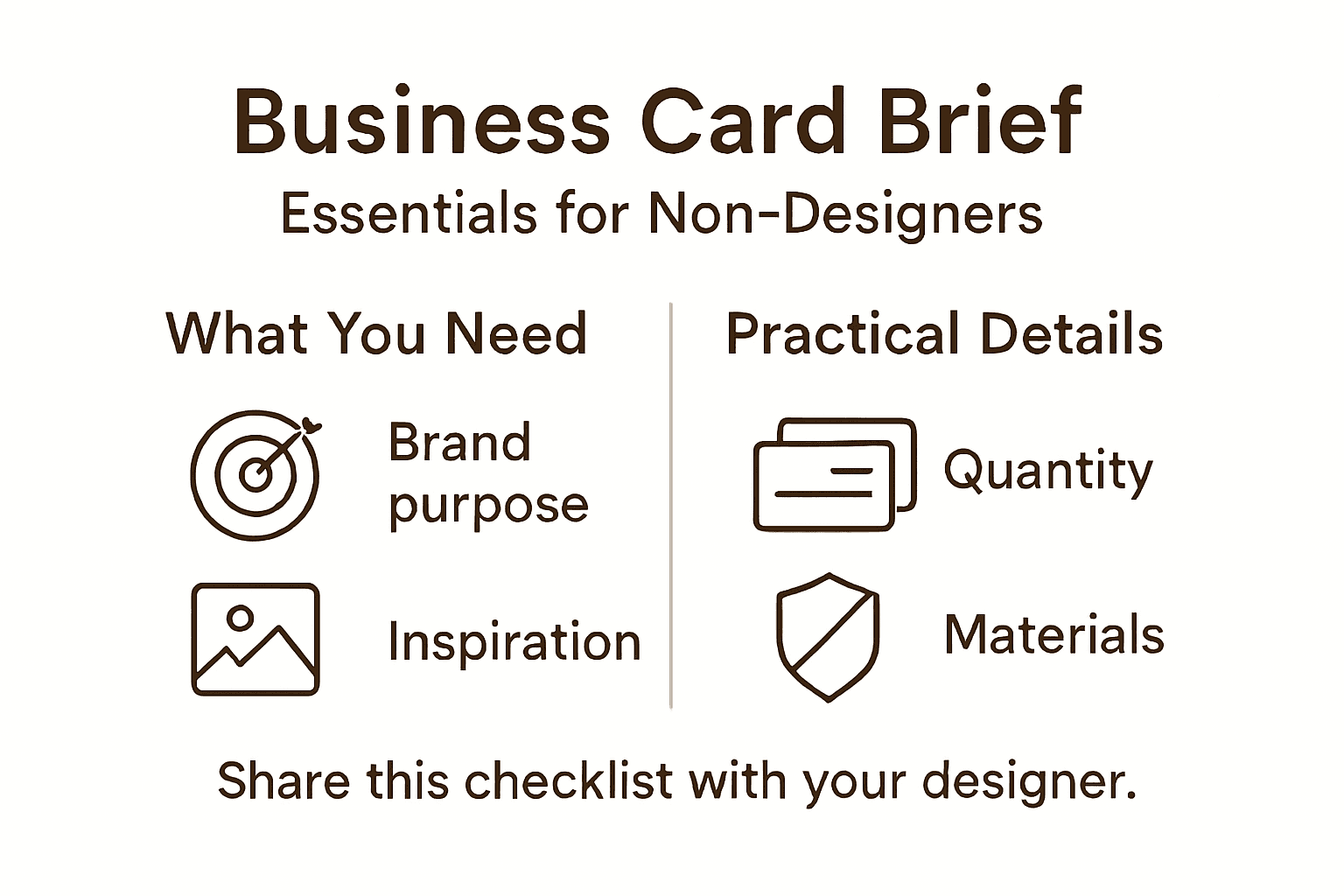
Here’s how different business card materials compare for luxury brands:
| Material Type | Tactile Impression | Cost Level | Durability |
|---|---|---|---|
| Classic Cardstock | Smooth and substantial | Moderate | Moderate |
| Textured Paper | Organic, memorable touch | High | Moderate |
| Plastic | Sleek and modern | High | Very high |
| Metal | Ultra-premium, heavy | Very high | Excellent |
| Recycled Cardstock | Eco-conscious, matte feel | Moderate | Good |
Here’s what to map out clearly:
- Total budget for design and production
- Quantity needed for initial print run
- Timeline for when you need cards in hand
- Must-have features (embossing, foil stamping, custom dies, unusual sizes)
- Nice-to-have features (if budget allows)
- Reprinting frequency and projected volumes
A realistic budget conversation with your designer prevents disappointment later. Better to know constraints upfront than fall in love with a design that exceeds your spending.
Your budget isn’t just about printing costs. Design time, material experimentation, proofing rounds, and specialty finishes all factor in. Be honest about what you can spend—a premium business card reflects investment, and your designer needs to know the actual scope.
Constraints often lead to better design, not worse. A limited budget forces prioritization. Should your investment go toward exceptional material or an intricate finishing technique? Your designer can advise once they understand your boundaries.
Pro tip: Share your budget range as a single number, not a range. Instead of saying “between $1,000 and $2,500,” pick a realistic total and let your designer allocate it across design, materials, and production.
Step 4: Articulate Success Criteria and Feedback Preferences
You need to know what “done” looks like before your designer presents their first concepts. Success criteria give you a shared language for evaluating work and providing constructive feedback.
Think about what would make you genuinely happy with the final card. Is it how the card feels in someone’s hand? How it looks under different lighting? Whether people actually remember you after receiving it? Design criteria are specific, agreed-upon attributes that define successful outcomes for a project.
Success criteria should include both tangible and intangible measures. A tangible measure might be “the card fits in standard business card holders.” An intangible measure might be “when someone opens my email and sees the card photo, they instantly know it’s from a luxury brand.”
Here’s what to define:
- How should the card feel physically (weight, texture, flexibility)?
- What should happen when someone first receives it (surprise, recognition, intrigue)?
- How should it photograph or scan (if digital sharing matters)?
- What should the card communicate about your business in 3 seconds or less?
- Which design elements are non-negotiable, and which are flexible?
Clear success criteria prevent the endless revision cycle. Both you and your designer know when something is working.
Also clarify how you want to give feedback. Do you prefer to see multiple direction options at once, or refine one direction progressively? Do you want written feedback or a conversation? Testing with representative approaches helps gather feedback that maximizes learning and refines designs effectively.
The table below summarizes approaches for providing effective design feedback:
| Feedback Style | Benefits | Drawbacks |
|---|---|---|
| Multiple Concepts | Broader perspective | May slow decisions |
| Progressive Edits | Focuses and refines direction | Risk of tunnel vision |
| Written Comments | Clear documentation for review | May lack emotional nuance |
| Verbal Discussion | Allows nuance and elaboration | Can lead to misremembering |
Be specific about what constructive feedback looks like for you. Avoid vague reactions like “I’m not feeling it.” Instead, reference your criteria: “This color palette doesn’t feel premium enough based on our reference images” or “The card feels too busy compared to the minimalist aesthetic we discussed.”
Pro tip: Write down your top three success criteria and rank them by importance. Share these with your designer at the start. This focus prevents scope creep and keeps both of you aligned throughout the revision process.
Elevate Your Business Card Design Brief into Stunning Reality
Struggling to clearly communicate your luxury brand’s vision to a designer? The challenge of briefing your business card project can feel overwhelming when you are not a designer yourself. You want your cards to reflect your brand purpose, capture your audience’s attention, and balance budget with premium materials precisely as outlined in the article. At BcardsCreation we specialize in turning those strategic insights into beautiful, custom-crafted business cards that make a lasting impression.
Explore our full collection of Business Cards – BcardsCreation to discover how we integrate your brand’s core identity into every detail, from elegant textures and typography to eco-conscious materials. For a touch of tactile sophistication, check out our Embossed & Debossed Business Cards – BcardsCreation expertly crafted to bring depth and dimension. Ready to stand out with unique shapes that match your brand personality? Visit Custom Shaped Business Cards – BcardsCreation.
Don’t leave your business card to chance. Act now to collaborate with a premium studio that respects your vision and budget. Bring confidence and clarity to your next design brief by visiting https://bcardscreation.com/collections/business-cards today.
Frequently Asked Questions
How do I define my brand purpose before briefing a designer for business cards?
Defining your brand purpose involves understanding what problem your business solves and who your audience is. Write down your core offering, primary audience, and the impression you want to create. This clarity will help guide your designer effectively.
What information should I gather before meeting with a designer for my business card?
Before your meeting, compile your brand purpose, desired look and feel, quantity needed, and budget constraints. Having this information ready will enable your designer to create a more tailored and effective design from the outset.
How can I articulate success criteria for my business card design?
Articulate success criteria by deciding what attributes will determine the design’s effectiveness. Clearly outline factors like tactile feel, emotional response, and visual recognition. Document your top three criteria to keep both you and your designer aligned throughout the process.
What kind of materials should I consider for luxury business cards?
Consider various materials such as classic cardstock, textured paper, plastic, or metal finishes. Each material offers a different tactile experience and cost level; decide based on your brand image and budget. For example, if you want a premium feel, you might choose metal or textured paper.
How do I gather inspiration for the look and feel of my business card?
To gather inspiration, look at luxury brands in your industry and adjacent niches. Create a collection of 5-10 reference images that resonate with you, focusing on aspects like color palettes and typography. This will help convey your desired aesthetic to your designer clearly.
How should I provide feedback to my designer during the business card design process?
Provide feedback by being specific about what works and what doesn’t in relation to your success criteria. Decide whether you prefer multiple initial concepts, or progressive edits and communicate this to your designer. Keeping feedback constructive will streamline the design revisions and enhance collaboration.
Recommended
- How to Design Business Cards That Elevate Your Brand Identity – BcardsCreation
- Role of Design in Business Cards: Elevating Luxury Brands – BcardsCreation
- Professional Business Card Design: A Step-by-Step Framework – BcardsCreation
- 7 Things Not to Put on a Business Card (And What to Do Instead) – BcardsCreation


