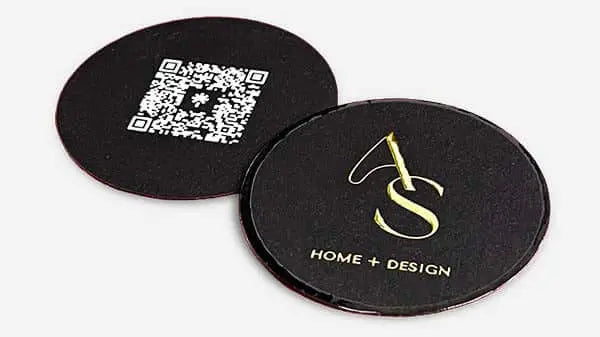


Premium business card materials boost brand impact
Most professionals assume any business card will do the job, but that’s a costly mistake. The material you choose directly shapes how clients and partners perceive your brand within seconds of holding your card. Premium materials create lasting impressions that standard paper simply cannot match, transforming a simple exchange into a memorable brand experience. This article explores how high-quality materials elevate your professional image, improve networking outcomes, and position your brand as a leader in your industry.
Table of Contents
- How Premium Materials Improve Brand Perception
- Comparing Popular Premium Business Card Materials
- Enhancing Networking Effectiveness Through Premium Cards
- Practical Considerations When Choosing Premium Business Card Materials
- Explore Premium Business Cards To Elevate Your Brand
- FAQ
Key takeaways
| Point | Details |
|---|---|
| Premium materials enhance tactile appeal | Superior textures and weights create immediate positive impressions that standard cards cannot deliver. |
| Durability signals professionalism | Cards that resist wear demonstrate attention to detail and commitment to quality in every business interaction. |
| Unique finishes improve memorability | Specialty textures and visual effects make your card stand out in crowded wallets and networking events. |
| Quality cards support networking success | Recipients are more likely to keep and reference premium cards, leading to stronger business relationships. |
How premium materials improve brand perception
The moment someone touches your business card, they form immediate judgments about your brand. Premium materials like thick cardstocks and specialty finishes create superior tactile sensations that communicate quality before a single word is read. Weight matters significantly because heavier cards feel substantial and trustworthy in the hand, while flimsy stock suggests corner-cutting and lack of investment in your brand.
Visual appeal extends beyond design elements to include the physical properties of your chosen material. Glossy finishes catch light differently than matte surfaces, creating dynamic visual interest that draws the eye. Textured papers add depth and sophistication that flat surfaces cannot replicate. These sensory details work together to position your brand as premium, established, and worthy of serious consideration.
Special finishes like foil stamping or embossing add an exclusive feel that separates you from competitors using standard printing. When someone runs their finger over raised lettering or metallic accents, they experience your brand as three-dimensional and crafted with care. This tactile engagement creates stronger memory formation than visual information alone, making your card more likely to be remembered days or weeks after the initial exchange.
Choosing materials that align with your brand identity strengthens message consistency across all touchpoints. A law firm might select heavyweight cotton stock to convey tradition and stability, while a creative agency could opt for clear plastic cards to demonstrate innovation and forward thinking. The material becomes an extension of your brand story, reinforcing your positioning without requiring additional explanation.
Pro Tip: Match your card material to the environments where you network most frequently. Outdoor events demand durable plastic cards that resist moisture, while boardroom meetings call for elegant textured papers that feel refined.
Consider these material benefits for brand perception:
- Thick cardstock (32pt or higher) conveys stability and permanence
- Textured finishes add sophistication and invite touch
- Metallic elements suggest premium positioning and exclusivity
- Unique substrates like wood or metal create unforgettable impressions
- Specialty coatings protect cards while enhancing visual appeal
Comparing popular premium business card materials
Cotton paper offers a soft, elegant texture that immediately distinguishes it from standard cardstock. The natural fibers create a subtle tactile quality that feels refined without being ostentatious, making it ideal for professionals in finance, law, or consulting where understated quality matters. Cotton stock accepts ink beautifully, producing crisp text and rich colors that enhance readability and visual impact.

Textured linen provides a sophisticated feel perfect for luxury brands seeking to communicate heritage and craftsmanship. The crosshatch pattern adds visual interest while the raised texture invites recipients to explore the card with their fingers. This material works exceptionally well for boutique businesses, high-end retailers, and service providers where personal touch and attention to detail define the brand experience.
Plastic cards deliver exceptional durability and a distinctly modern aesthetic that appeals to tech companies, fitness professionals, and anyone whose brand emphasizes innovation. These cards resist water, tearing, and general wear far better than paper alternatives, ensuring your contact information remains pristine through months of wallet storage. The rigid feel and smooth surface create a premium impression while offering practical benefits that busy professionals appreciate.
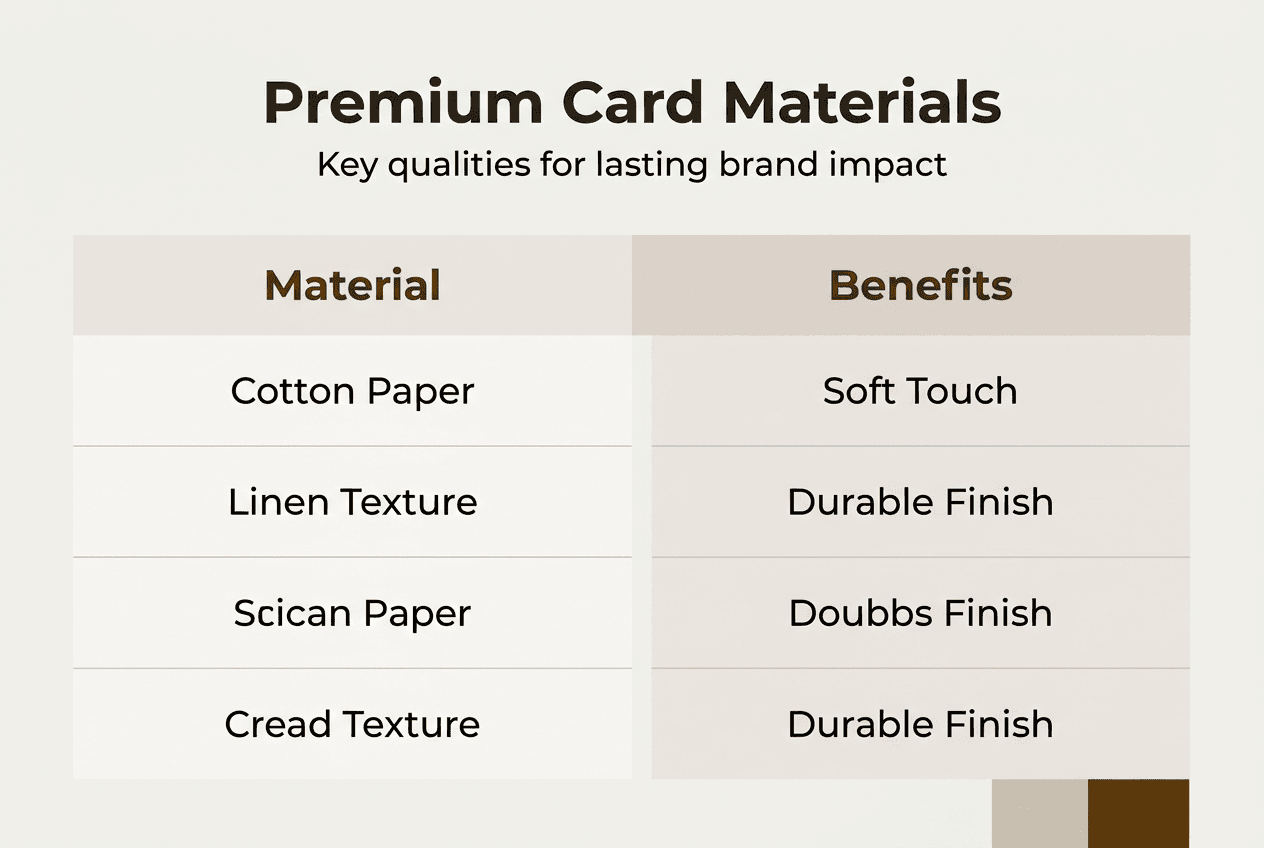
Clear cards leverage transparency to create visual intrigue that stops people mid-conversation. The see-through effect allows for creative layering of design elements and creates a futuristic impression that positions your brand as cutting-edge. These cards work best for creative professionals, designers, and anyone whose brand identity centers on innovation and breaking conventions.
| Material | Best For | Key Benefit | Durability |
|---|---|---|---|
| Cotton paper | Professional services | Refined tactile quality | Moderate |
| Textured linen | Luxury brands | Sophisticated appearance | Moderate |
| Plastic cards | Modern businesses | Exceptional longevity | Very high |
| Clear cards | Creative fields | Unique visual impact | High |
| Thick cardstock | All industries | Substantial feel | High |
Selecting the right material depends on your specific brand positioning and target audience expectations. Conservative industries typically respond better to traditional materials like cotton or heavyweight cardstock, while creative fields offer more flexibility for experimental choices. Consider where your cards will be used and stored, as some materials perform better in specific conditions than others.
Pro Tip: Order sample packs of different materials before committing to a full print run. Physical evaluation reveals qualities that photos and descriptions cannot capture.
Enhancing networking effectiveness through premium cards
Premium materials directly impact networking success by making your card more likely to be retained and referenced. When someone receives dozens of cards at an event, memorable designs and quality materials determine which ones survive the post-event sorting process. Standard paper cards often get discarded or lost, while premium options earn a place in permanent storage because they feel too valuable to throw away.
The tactile appeal of high-quality materials encourages recipients to handle your card multiple times, reinforcing your brand with each interaction. This repeated physical engagement creates stronger neural pathways associated with your name and business, improving recall when opportunities arise. People remember how things made them feel, and a card that feels substantial and well-crafted generates positive associations that transfer to your professional capabilities.
Unique materials naturally spark conversations at networking events, giving you additional opportunities to discuss your work and build relationships. When someone comments on your card’s texture or finish, you gain an opening to explain your attention to detail and commitment to quality in all aspects of your business. These organic conversations feel more authentic than rehearsed elevator pitches and create stronger connections that lead to meaningful business relationships.
Your card reflects your professionalism and attention to detail in ways that extend beyond the immediate exchange. Recipients often show interesting cards to colleagues or save them as examples of quality work, multiplying your reach beyond the initial contact. This secondary exposure can generate referrals and opportunities that standard cards never produce because they lack the visual and tactile interest that prompts sharing.
A business card is not just contact information. It’s a physical representation of your brand values and professional standards that continues working long after the initial meeting ends.
Consider these networking advantages of premium cards:
- Higher retention rates mean more follow-up opportunities
- Quality materials signal that you value relationships and details
- Unique textures create conversation starters at events
- Durable cards maintain professional appearance through extended use
- Premium feel encourages recipients to prioritize your contact
Pro Tip: Align your card material with your target audience’s expectations and preferences. Research what competitors use and choose materials that differentiate you while remaining appropriate for your industry.
Practical considerations when choosing premium business card materials
Budgeting for premium materials requires understanding that higher upfront costs deliver better long-term value through improved response rates and stronger brand positioning. While standard cards might cost pennies each, premium options ranging from two to ten dollars per card represent strategic investments in relationship building. Calculate the potential return from even one additional client relationship to justify the material upgrade, recognizing that quality cards support brand impact in ways that cheap alternatives cannot match.
Brand message consistency demands that your card material aligns with your overall positioning and marketing materials. A discount service provider using ultra-premium cards creates confusion about value proposition, while a luxury brand on thin stock undermines its premium positioning. Review your website, packaging, and other touchpoints to ensure your card material reinforces rather than contradicts your established brand identity.
Evaluating durability needs based on your industry and usage patterns helps determine which materials offer the best practical value. Sales professionals who distribute hundreds of cards monthly might prioritize cost-effective durability over exotic materials, while consultants making fewer but more strategic connections could justify investment in standout options. Consider how long cards typically remain in circulation and choose materials that maintain professional appearance throughout their useful life.
Selecting compatible printing finishes and techniques ensures your chosen material delivers the intended visual and tactile effects. Some specialty papers work better with letterpress printing, while plastic cards require different processes than paper stock. Foil stamping, embossing, and edge painting each interact differently with various substrates, so understanding these relationships prevents disappointing results and wasted investment.
Follow this decision-making process for optimal material selection:
- Define your brand positioning and target audience expectations clearly
- Research materials commonly used in your industry and by competitors
- Identify opportunities to differentiate through strategic material choices
- Request physical samples of top material candidates for evaluation
- Test how different printing techniques interact with chosen materials
- Calculate total costs including printing, finishing, and shipping
- Order a small test batch before committing to large quantities
- Gather feedback from trusted colleagues and target audience members
| Decision Factor | Questions to Ask | Impact on Choice |
|---|---|---|
| Budget | What’s the cost per meaningful connection? | Determines material tier |
| Brand alignment | Does material reinforce positioning? | Ensures message consistency |
| Durability needs | How long must cards remain pristine? | Guides substrate selection |
| Printing compatibility | Which techniques enhance the design? | Affects material options |
| Distribution volume | How many cards do you need annually? | Influences cost calculations |
Pro Tip: Consider ordering multiple material options for different networking contexts. Use ultra-premium cards for high-value prospects while keeping durable plastic cards for high-volume events.
Explore premium business cards to elevate your brand
Now that you understand how premium materials transform business cards from simple contact tools into powerful brand assets, it’s time to explore options that match your specific vision. Custom business card design services help you select materials and finishes that authentically represent your brand while creating memorable impressions that drive business results.
Whether you’re drawn to creative printing and foiling techniques that add visual drama or prefer the modern durability of plastic business cards, professional guidance ensures your investment delivers maximum impact. Premium materials combined with expert design create cards that recipients value enough to keep, reference, and share with others who might benefit from your services.
FAQ
What materials are considered premium for business cards?
Premium materials include cotton paper, textured linen, thick cardstocks of 32pt or higher, plastic cards, clear transparent cards, and specialty substrates like wood or metal. These materials stand out for superior durability, distinctive tactile qualities, and elevated aesthetic appeal that standard paper cannot match. The defining characteristic is that premium materials create memorable sensory experiences that reinforce brand quality and professionalism.
How do premium materials impact networking success?
High-quality cards are significantly more memorable due to their distinctive tactile and visual properties that engage multiple senses. Recipients are far more likely to retain premium cards because they feel too valuable to discard, keeping your contact information accessible when opportunities arise. The superior feel and appearance also spark conversations at networking events, creating natural openings to discuss your work and build stronger professional relationships that lead to business growth.
Are premium business cards worth the extra cost?
Premium cards represent strategic investments that create strong first impressions and lasting connections with high-value prospects and partners. The enhanced brand perception and higher retention rates often yield better business opportunities and referrals that far exceed the incremental material costs. For professionals who view business cards as relationship-building tools rather than disposable commodities, the return on investment from premium materials typically justifies the expense through improved networking outcomes and perceived professionalism.
Can premium business cards be customized with unique finishes?
Yes, premium cards support extensive customization including foil stamping, embossing, debossing, edge painting, and specialty textures that create distinctive visual and tactile effects. These finishing techniques work particularly well with high-quality substrates, allowing you to layer multiple premium elements for maximum impact. Customization elevates distinctiveness while ensuring perfect alignment between your card’s physical properties and your overall brand identity, creating cohesive experiences across all customer touchpoints.
Recommended
- Luxury Business Card Materials Explained: Choosing Wisely – BcardsCreation
- Luxury Business Card Workflow for Brand Impact – BcardsCreation
- Luxury Business Cards: Defining Premium Impact – BcardsCreation
- Luxury Business Card Design Guide for Brand Impact – BcardsCreation
- Silver NFC Metal Card | Ψηφιακή Επαγγελματική Κάρτα TagTouch


