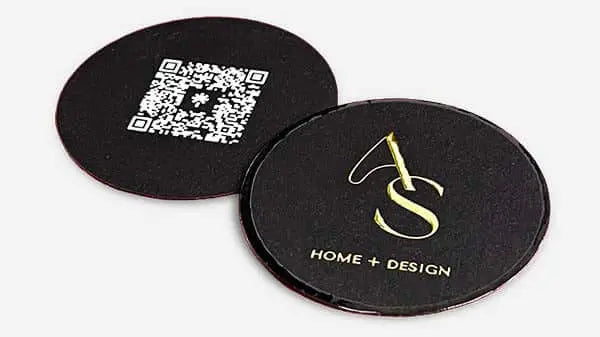


What are raised print business cards and why choose them
Many professionals mistake raised print for embossing, but they’re fundamentally different techniques. Raised print business cards use specialized UV ink to create a tactile, elevated effect that mimics the luxury feel of embossing at a fraction of the cost. For creative professionals and brand owners seeking premium networking tools without breaking the budget, raised print offers an ideal balance of visual impact, tactile engagement, and production efficiency. This guide walks you through everything you need to know about raised print cards, from the printing process and design considerations to ordering tips and cost factors.
Table of Contents
- Key takeaways
- What are raised print business cards?
- Benefits of raised print business cards for branding and networking
- Design considerations and customization options for raised print cards
- Ordering and production tips for raised print business cards
- Elevate your brand with custom raised print business cards
- FAQ
Key Takeaways
| Point | Details |
|---|---|
| Lower cost than embossing | Raised print provides a luxe look and tactile quality at a fraction of embossing cost. |
| No custom dies | The technique uses successive layers of UV ink to build height instead of metal dies, reducing setup time and tooling costs. |
| Ideal for large runs | Raised print is economical for medium to large runs, typically starting at 500 pieces. |
| Design drives impact | Design choices and production technique determine the height and texture of the raised elements, shaping branding. |
What are raised print business cards?
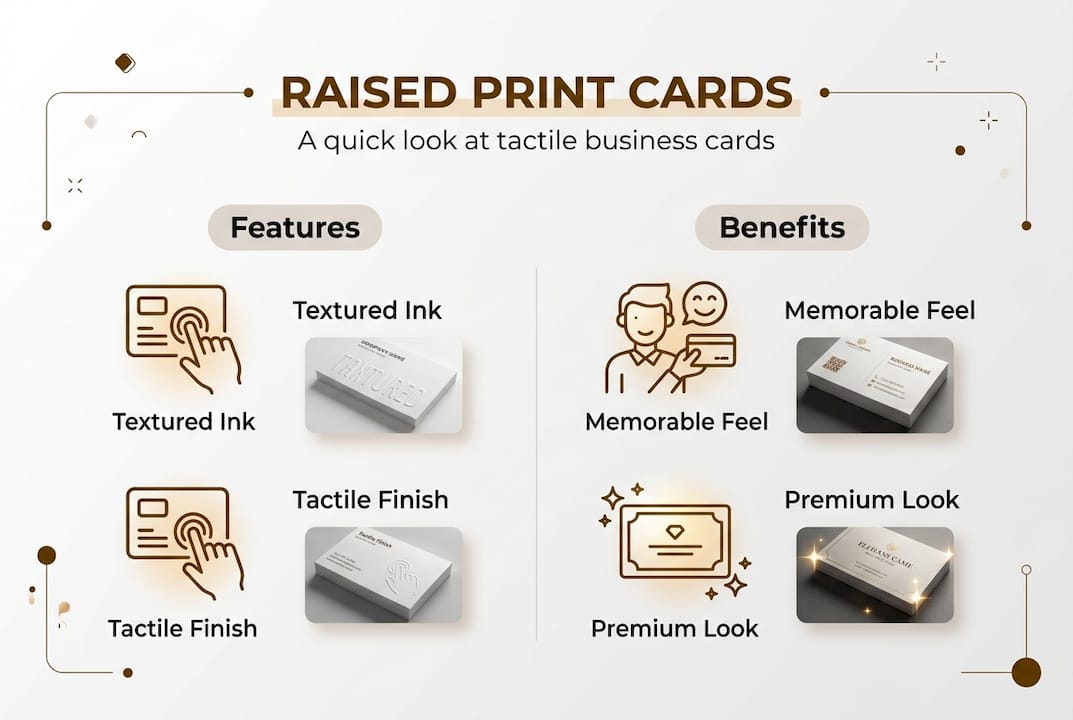
Raised print business cards feature a distinctive tactile finish created by applying multiple layers of thick UV ink to specific design elements. Unlike embossing, which uses metal dies to physically press paper into raised shapes, raised print builds texture through ink application alone. The process mimics the premium feel of engraving or embossing but is more cost-effective, faster, and suitable for high-volume production like business cards with minimum orders often starting at 500 units.
The printing process relies on UV-coating machines that cure specialized ink instantly under ultraviolet light. Printers apply successive layers of UV ink to build height and dimension, creating a raised surface that catches light and invites touch. This technique allows for precise detail while maintaining production efficiency that traditional embossing cannot match.
Raised print delivers several practical advantages for professionals:
- Production flexibility: No custom dies required, reducing setup costs and time
- Detail preservation: Captures fine lines and intricate patterns better than embossing
- Material compatibility: Works with various cardstock weights and premium business card materials
- Scalability: Economical for medium to large runs, typically starting at 500 pieces
- Quick turnaround: Faster production cycles compared to die-based techniques
The raised effect varies based on ink layers and application technique. Single-layer applications create subtle texture, while multiple passes build dramatic height. Some printers combine raised print with other finishes like foil stamping or spot UV coating to amplify visual complexity. The result is a business card that stands out both visually and physically, creating memorable first impressions during networking events and client meetings.
For brand owners evaluating premium card options, understanding this distinction matters. Raised print occupies a sweet spot between standard flat printing and expensive embossing, offering tactile sophistication without requiring the investment in custom tooling that embossing demands.
Benefits of raised print business cards for branding and networking
Raised print business cards create immediate tactile engagement that standard cards cannot match. When someone receives your card, the raised elements invite touch, creating a multisensory experience that reinforces memory formation. This physical interaction increases the likelihood your card stays in someone’s wallet rather than ending up in the recycling bin.
The visual impact extends beyond touch. Raised print catches ambient light differently than flat surfaces, creating subtle shadows and highlights that draw the eye to key brand elements like logos, names, or taglines. This dimensional quality signals attention to detail and premium positioning, qualities that resonate strongly with clients seeking high-value partnerships.
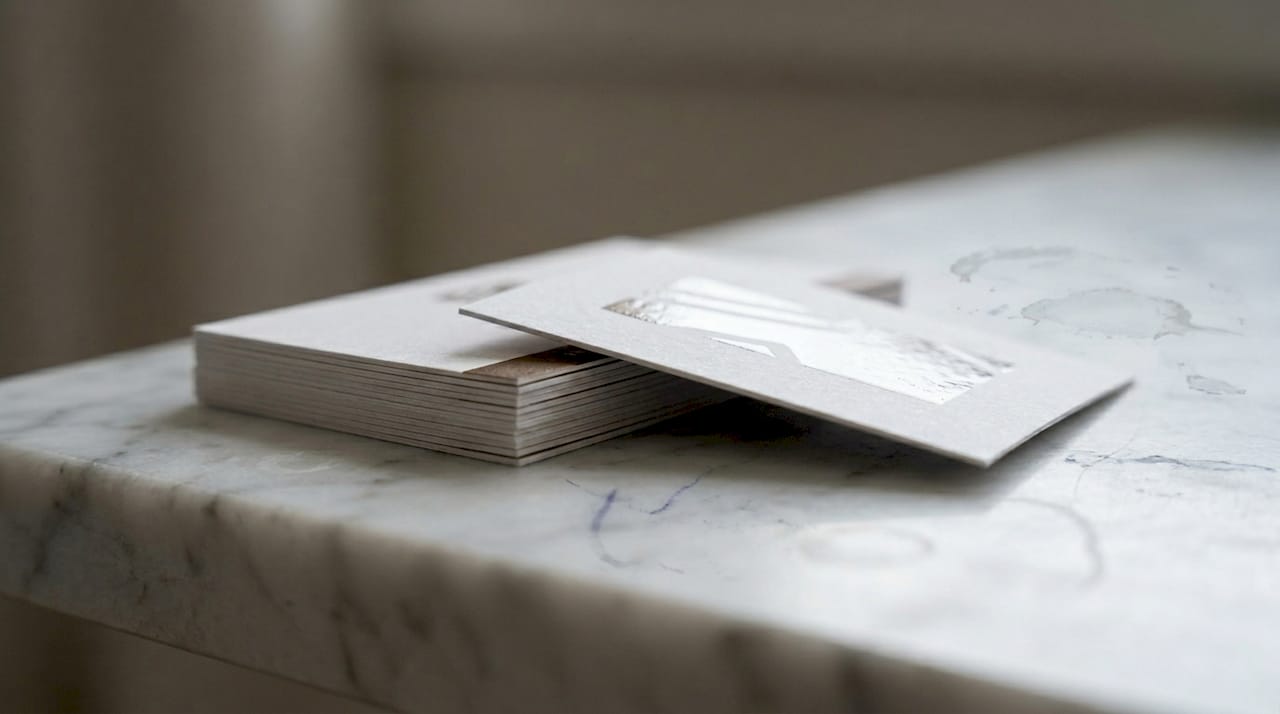
The process mimics the premium feel of engraving or embossing but is more cost-effective, faster, and suitable for high-volume production. This cost advantage becomes significant when scaling brand presence across teams or events. While embossing might cost prohibitively for a 1,000-card run, raised print maintains affordability while preserving the luxury aesthetic.
Key branding advantages include:
- Memorable differentiation: Stands out in stacks of standard business cards
- Perceived value elevation: Communicates professionalism and brand investment
- Versatile application: Suitable for diverse industries from creative studios to financial services
- Faster production cycles: Enables quick restocking for high-networking periods
- Design storytelling: Texture can emphasize specific brand elements strategically
Raised print also supports larger production volumes economically, making it practical for growing brands that need consistent card availability across multiple team members. The technique’s scalability means you can maintain premium quality without the per-unit costs spiraling as quantities increase.
Pro Tip: Apply raised print selectively to your logo or tagline rather than covering the entire card. This focused approach maximizes tactile impact while keeping costs manageable and ensuring the raised elements feel intentional rather than excessive.
For professionals exploring luxury business card design guide principles, raised print offers a gateway to premium positioning. It bridges the gap between commodity printing and bespoke finishing, delivering sophistication that aligns with strategic brand building. When combined with thoughtful material selection and complementary finishes, raised print becomes part of a comprehensive brand identity system that extends from digital presence to physical touchpoints. Explore additional inspiration through luxury business card ideas that showcase how texture and dimension enhance brand perception.
Design considerations and customization options for raised print cards
Successful raised print design starts with understanding how texture translates visually and physically. Bold, simple artwork showcases raised elements most effectively. Thin lines or intricate patterns may lose definition when built up with UV ink layers, while clean geometric shapes and substantial typography create striking tactile contrast.
Color selection influences the final effect significantly. Clear UV ink creates a glossy, dimensional finish that works beautifully on dark cardstock, while colored UV inks can match brand palettes precisely. Layering multiple ink colors builds depth, but requires careful planning to ensure each layer registers correctly during production.
Follow these design steps for optimal results:
- Identify focal elements: Choose which design components deserve tactile emphasis, typically logos, names, or key graphics
- Simplify artwork: Remove unnecessary detail that won’t translate well to raised texture
- Prepare separate layers: Create distinct file layers for raised areas to guide printer application
- Consider cardstock interaction: Test how raised ink appears on different paper colors and textures
- Plan complementary finishes: Decide if foil stamping, spot UV, or edge painting will enhance the overall design
Raised print pairs exceptionally well with other premium finishes. Combining raised UV with metallic foil creates dramatic contrast between matte texture and reflective shine. Spot UV coating over raised areas amplifies the glossy effect, while leaving surrounding areas matte. These layered techniques transform simple cards into sophisticated brand statements.
| Finish Type | Tactile Effect | Visual Impact | Cost Factor | Production Time |
|---|---|---|---|---|
| Raised Print | Moderate texture | Dimensional shadows | Medium | Fast |
| Embossing | Deep texture | Bold relief | High | Slower |
| Foil Stamping | Smooth metallic | High shine | Medium-High | Moderate |
| Spot UV | Slight texture | Glossy contrast | Low-Medium | Fast |
File preparation requires attention to technical specifications. Most printers prefer vector artwork in formats like Adobe Illustrator or PDF, with raised areas designated on separate layers. Raster images can work but may limit resolution quality. Consult your printer early about bleed requirements, safe zones, and minimum feature sizes for raised elements.
Pro Tip: Request a physical proof before approving full production. Raised print effects can look different in person than on screen, and testing actual tactile quality ensures the final cards meet your expectations.
Understanding the business card printing process helps designers create print-ready files that maximize production efficiency. The process mimics the premium feel of engraving or embossing but is more cost-effective, faster, and suitable for high-volume production. When you align design choices with production capabilities, you achieve better results without unnecessary revisions or delays. For comprehensive guidance on premium printing techniques, explore the luxury business card printing guide that covers material selection, finishing options, and quality control measures.
Ordering and production tips for raised print business cards
Planning your raised print order strategically ensures smooth production and optimal results. Minimum orders often start at 500 units for raised print business cards, balancing production setup costs with per-unit pricing. Ordering at this threshold or above typically unlocks better pricing tiers while providing sufficient inventory for extended networking periods.
Turnaround times for raised print generally fall within 5 to 10 business days after design approval, significantly faster than embossing which often requires 2 to 3 weeks for die creation and production. This speed advantage matters when you need cards quickly for upcoming events or when onboarding new team members who require immediate networking tools.
Cost factors to consider include:
- Order quantity: Higher volumes reduce per-card costs substantially
- Ink layers: Multiple UV ink applications increase both texture and price
- Design complexity: Intricate raised patterns require more precise application and setup time
- Cardstock selection: Premium papers add to base costs but enhance perceived value
- Additional finishes: Combining raised print with foil or edge painting increases total investment
Vendor selection critically impacts final quality. Choose printers with demonstrated experience in UV coating technology and raised print applications specifically. Request samples of previous raised print work to evaluate texture consistency, registration accuracy, and overall craftsmanship. A skilled printer will guide you through design optimization and suggest adjustments that improve both appearance and production efficiency.
Proof approval deserves careful attention. Review physical proofs under various lighting conditions to assess how shadows fall across raised elements. Run your fingers over the texture to confirm it meets tactile expectations. Check color accuracy against brand standards, and verify that all text remains legible despite the dimensional effect.
Pro Tip: Order a small test batch of 500 cards before committing to larger quantities, especially if this is your first raised print project. This approach lets you evaluate real-world durability and reception before scaling up inventory.
Timing your order around business cycles makes practical sense. Plan to reorder before completely depleting your current stock, accounting for production and shipping time. Maintaining a buffer inventory prevents awkward gaps when networking opportunities arise unexpectedly. Understanding the luxury business card workflow helps you coordinate design revisions, approval processes, and production scheduling efficiently, ensuring your cards arrive exactly when needed without rush fees or compromised quality.
Elevate your brand with custom raised print business cards
Ready to transform your networking presence with raised print business cards that command attention? BcardsCreation specializes in fully custom, design-driven business cards that combine premium materials with refined finishing techniques like raised print, foil stamping, and specialty coatings. Every project receives individual attention, expert material consultation, and controlled production to ensure your cards reflect your brand’s unique positioning.
Explore tailored custom business card design services that bring your vision to life through collaborative development and professional guidance. Discover creative business cards printing options that incorporate raised print with complementary finishes for maximum impact. Browse the complete business cards collection to see how premium materials and advanced techniques create networking tools that position your brand as a leader in your field.
FAQ
Are raised print business cards more durable than regular cards?
Raised print adds a protective UV-cured ink layer that generally enhances durability compared to standard flat printing. The cured UV coating resists scratching and moisture better than conventional inks. However, overall longevity depends equally on cardstock quality and any additional protective finishes like lamination or varnish. Premium cardstock combined with raised print creates cards that withstand frequent handling while maintaining their tactile appeal.
Can I use any design for raised print business cards?
Simple, bold designs work best for raised print because they highlight tactile texture effectively. Highly detailed artwork, fine gradients, or intricate patterns may not translate well to the raised medium, potentially losing definition or clarity. Consult with your printer during the design phase to optimize artwork for raised application. They can recommend adjustments that preserve your creative vision while ensuring technical feasibility and maximum impact.
What is the minimum order quantity for raised print cards?
Minimum orders often start at 500 units for raised print business cards. This quantity balances production setup costs with economical per-unit pricing, making raised print accessible for small to medium-sized brands. Some specialty printers may offer lower minimums at premium pricing, while larger orders typically unlock better cost tiers. Planning your order around realistic networking needs helps optimize both budget and inventory management.
How long does raised print production typically take?
Raised print production generally requires 5 to 10 business days after final design approval, significantly faster than embossing or engraving. This timeline includes file preparation, UV ink application, curing, and quality control. Rush services may be available for urgent needs, though they typically carry additional fees. Factoring in design revisions and shipping time, plan for approximately 2 to 3 weeks from initial concept to cards in hand for standard timelines.
Can raised print be combined with other premium finishes?
Raised print pairs exceptionally well with complementary finishes like foil stamping, spot UV coating, and edge painting. Combining techniques creates layered visual and tactile complexity that elevates brand perception. For example, metallic foil over raised UV creates striking contrast between reflective shine and dimensional texture. Discuss combination options with your printer early in the design process to ensure proper layering, registration, and cost management across multiple finishing techniques.
Recommended
- Best Business Card Printing Services — An Expert Guide to Choosing the – BcardsCreation
- Raised Print, Embossing, Debossing: Tactile Luxury Unveiled – BcardsCreation
- How to Design Business Cards That Elevate Your Brand Identity – BcardsCreation
- Luxury Business Card Printing Guide for Brands – BcardsCreation
- Γιατί να αντικαταστήσετε τις χάρτινες κάρτες με NFC Business Card – TagTouch


