

What is embossing: advanced guide for unique cards
Most designers think embossing is just a simple raised effect you add to business cards for a touch of elegance. But treating embossing as an afterthought misses its true potential as a sophisticated branding tool. When executed with precision, embossing transforms a standard business card into a tactile brand statement that communicates authority and attention to detail. Professional designers who master advanced embossing techniques create cards that stand apart in competitive industries where first impressions determine business outcomes. This guide breaks down embossing methods, technical considerations, and strategic applications to help you leverage this powerful finishing technique for maximum brand impact.
Table of Contents
- Key takeaways
- What is embossing and how does it work?
- Types of embossing techniques for business cards
- Embossing vs. debossing: choosing the right tactile technique
- Designing for embossing: expert tips and workflow considerations
- Enhance your brand with custom embossed business cards
- Frequently asked questions about embossing
Key Takeaways
| Point | Details |
|---|---|
| Embossing types vary | Embossing methods create a range of visual and tactile effects from subtle blind emboss to registered alignment with print. |
| Brand authority boost | When executed with precision, embossing transforms a standard business card into a tactile brand statement that communicates authority and attention to detail. |
| Die costs and timelines | Custom dies and setup drive costs and project timelines, making planning critical for advanced techniques. |
| Design collaboration essential | Design collaboration with die makers is essential for achieving advanced embossing techniques and reliable results. |
What is embossing and how does it work?
Embossing is a printing technique that creates raised effects on paper or cardstock by pressing material between male and female metal dies under high pressure, often with heat, to reshape paper fibers. This process permanently alters the substrate structure rather than simply applying surface decoration. The male die features the raised design element while the female die contains the corresponding recessed cavity. When pressed together with substantial force, these dies compress and stretch paper fibers into the desired three dimensional form.
The durability of embossed elements comes from this physical restructuring of the paper itself. Unlike printed ink that sits on the surface, embossed areas become integral to the card structure. Heat application during pressing softens paper fibers temporarily, allowing them to conform more completely to die shapes and retain the impression after cooling. This combination of mechanical pressure and thermal manipulation creates effects that withstand handling and maintain their dimensional quality over time.
Material selection dramatically impacts embossing results. Paper thickness determines how pronounced the raised effect can become, with thicker stocks supporting more dramatic depth. Coated papers require different pressure and heat settings than uncoated alternatives because surface treatments affect fiber flexibility. Cotton based papers often emboss beautifully due to longer fibers that stretch without tearing, while wood pulp papers may show stress marks if pushed beyond their structural limits.
The technology behind embossing blends traditional craftsmanship with engineering precision. Die makers must calculate exact tolerances, accounting for paper compression rates and spring back after pressure release. A design that looks perfect on screen requires translation into physical metal forms that compensate for material behavior. This is why raised print embossing and debossing demand expertise beyond standard printing, combining artistic vision with technical material science.
Key factors affecting embossing quality include:
- Die precision and depth tolerances measured in thousandths of an inch
- Paper grain direction relative to embossed shapes for optimal fiber stretch
- Pressure calibration specific to substrate thickness and composition
- Heat settings adjusted for coated versus uncoated paper surfaces
- Registration accuracy when combining embossing with printed elements
Types of embossing techniques for business cards
Blind embossing creates texture without any ink or foil, relying entirely on dimensional contrast and shadow play for visual impact. This subtle approach emphasizes sophistication and restraint, making it ideal for minimalist brands or luxury applications where understated elegance communicates confidence. The technique works particularly well on textured papers where light catches raised surfaces at different angles, creating dynamic visual interest through pure form.
Registered emboss aligns precisely with printed elements or foil stamping, combining color with dimension for reinforced visual hierarchy. This technique requires exceptional production accuracy because even slight misalignment becomes immediately obvious. When executed properly, registered embossing makes logos or text appear to lift off the card surface while maintaining crisp edges and perfect color registration. The combined effect delivers more impact than either technique alone.
Combination embossing with foil stamping applies metallic foil simultaneously with dimensional shaping, creating surfaces that catch light through both reflectivity and three dimensional form. This pairing produces the most dramatic luxury effect available in business card finishing. The foil adds brilliance while embossing provides substance, resulting in elements that command attention through multiple sensory channels. However, the technique demands precise die alignment and careful pressure control to avoid foil cracking or incomplete transfer.
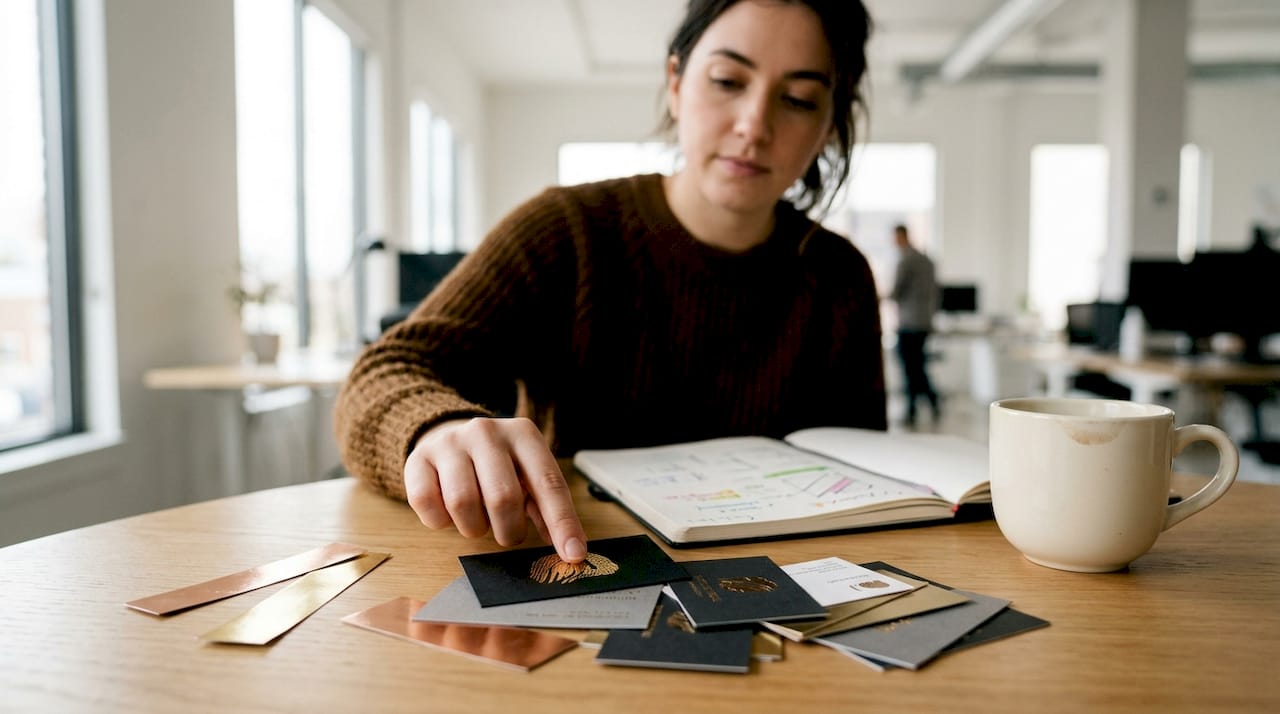
Multi level embossing employs varying depths within a single design to create sculptural effects with genuine three dimensional modeling. Rather than simple raised shapes, this approach builds layered topography with multiple elevation changes. Brass dies enable the fine detail control necessary for these complex forms. The cost scale reflects complexity, with blind embossing at the entry level, combination techniques in the mid range, and multi level sculptured embossing commanding premium pricing due to intensive die fabrication.
Glazing polishes embossed areas to a high sheen, creating contrast between matte paper and glossy raised elements. This finishing step enhances the perceived quality of embossed features by adding another layer of visual differentiation. The technique works especially well on uncoated papers where the texture contrast between polished and natural surfaces becomes most pronounced.
Digital embossing uses UV polymer buildup for short run flexibility without metal die investment. While this approach reduces setup costs and enables smaller quantities, it produces less dramatic depth and tactile impact than traditional metal die methods. Digital techniques suit prototyping or limited edition projects where traditional die costs cannot be justified.
Pro Tip: Start with blind or registered embossing for initial projects to understand how your chosen paper responds to pressure before investing in complex multi level dies that require perfect material performance.
| Embossing type | Visual effect | Typical cost | Best applications |
|---|---|---|---|
| Blind | Subtle texture, no color | $$ | Minimalist luxury brands |
| Registered | Aligned with print/foil | $$$ | Logo emphasis with color |
| Combination | Foil plus dimension | $$$$ | Maximum luxury impact |
| Multi level | Sculptural 3D depth | $$$$$ | Artistic brand statements |
| Glazing | Polished sheen contrast | $$$ | Enhanced sophistication |
| Digital | Lower relief, flexible | $ | Short runs, testing |
Designers must balance visual ambition against budget realities and production timelines. Custom die fabrication adds both cost and lead time, with complex multi level dies requiring weeks for proper tooling. Understanding these tradeoffs lets you recommend appropriate techniques that deliver maximum brand impact within project constraints. The key is matching embossing complexity to brand positioning, ensuring the chosen technique reinforces rather than contradicts the intended market perception.
Embossing vs. debossing: choosing the right tactile technique
Embossing raises design elements above the card surface while debossing presses them inward, creating recessed impressions. These opposite approaches produce distinctly different psychological effects. Embossing projects confidence and demands attention through physical prominence. The raised surface catches light, creates shadows, and literally stands out when touched. This makes embossing ideal for brands that want to communicate boldness, tradition, or premium positioning.
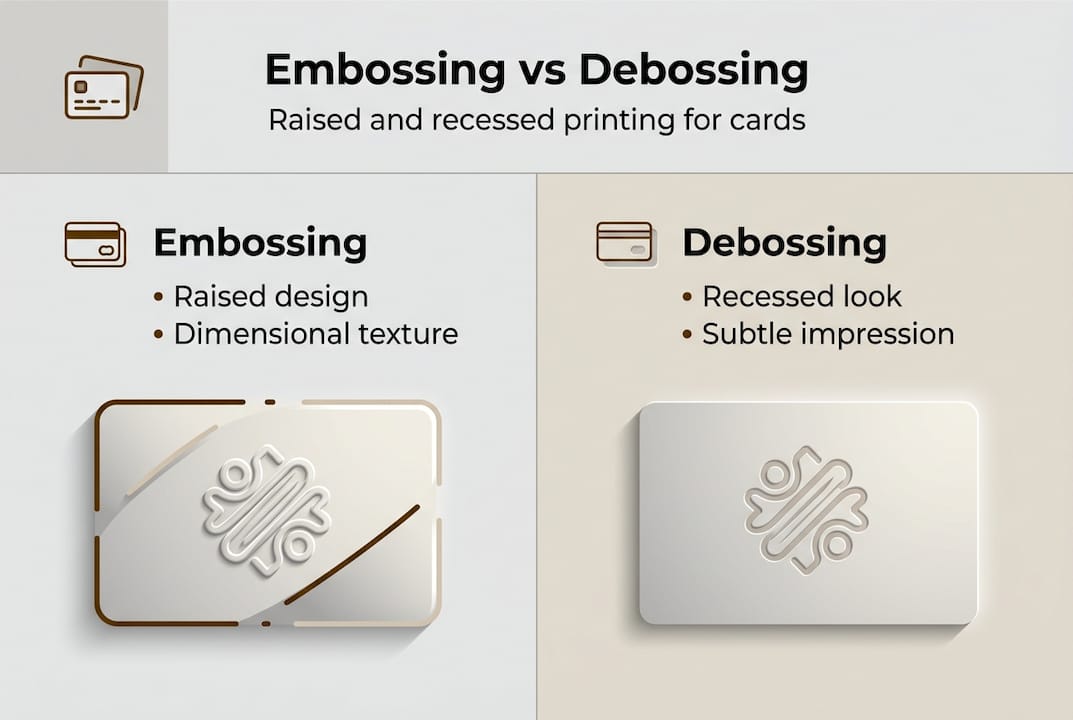
Debossing offers modern minimalist appeal with subtle sophistication. The recessed impression creates a more intimate interaction, rewarding closer inspection rather than announcing itself immediately. Debossed elements feel discovered rather than displayed, which aligns with contemporary design sensibilities that value restraint over ostentation. This technique particularly suits professional services, technology companies, and creative studios where understated confidence signals expertise.
Both techniques enhance brand recall through tactile engagement that printed cards cannot match. The physical interaction of running fingers across dimensional surfaces creates sensory memory that reinforces visual branding. Research consistently shows that multi sensory experiences improve information retention, making embossed or debossed cards more memorable than flat alternatives in networking situations where dozens of cards change hands.
Material considerations influence technique selection beyond aesthetic preferences. Debossing produces a flatter reverse side because the paper compresses inward rather than stretching outward. This makes debossing preferable for double sided cards where backside flatness matters for printing quality or visual presentation. Embossing creates a corresponding depression on the reverse that may interfere with printed elements unless carefully planned.
Strategic branding goals should drive your choice between techniques. Embossing communicates bold authority while debossing suggests refined modernity. Financial services often choose embossing to project stability and substance. Design agencies frequently select debossing to demonstrate contemporary sophistication. Neither approach is universally superior, the right choice depends entirely on brand positioning and target audience expectations.
Pro Tip: Request physical samples of both embossed and debossed effects on your selected paper stock before committing to production, as the same design can feel dramatically different depending on substrate texture and thickness.
Key decision factors include:
- Visual prominence requirements based on competitive context
- Brand personality alignment with bold versus subtle presentation
- Double sided printing needs and reverse side appearance
- Paper thickness and how it supports raised versus recessed features
- Budget considerations as both techniques carry similar cost structures
- Target audience sophistication and design literacy levels
Designing for embossing: expert tips and workflow considerations
Start every embossing project with bold, simplified vector shapes that translate cleanly into three dimensional form. Complex illustrations with fine details rarely emboss successfully because the physical process cannot reproduce intricate elements at small scales. The sculptured embossing process requires collaboration with die makers who function as sculptors, translating two dimensional artwork into functional metal tooling. This partnership works best when designers provide clear intent rather than trying to specify exact technical parameters they may not fully understand.
Avoid designs with thin lines, small text, or detailed patterns that exceed embossing resolution limits. A shape that looks crisp on screen may become muddy or illegible when pressed into paper if the details fall below minimum feature sizes. Generally, maintain line weights above 1 point and text sizes above 14 points for reliable embossing results. Serif fonts often emboss poorly because thin strokes and delicate details compress inconsistently.
Sequencing matters significantly when combining embossing with other finishing techniques like foil stamping. The order of operations affects registration accuracy and final appearance. Typically, foil stamping occurs before embossing so the dimensional shaping can capture foil within raised areas. However, specific material combinations may require reversed sequences. Discuss production order with your printer early in the design phase to avoid discovering sequencing conflicts after artwork approval.
Prepare separate artwork layers that clearly indicate embossed areas distinct from printed elements. Export these layers as vector files with proper naming conventions that prevent production confusion. Include detailed notes about intended depth, whether embossing should be blind or registered, and any special effects like glazing. The more precisely you communicate design intent, the more accurately the production team can execute your vision.
Plan for minimum order quantities driven by custom die fabrication costs. Metal dies represent fixed expenses that must be amortized across the production run. Smaller quantities result in higher per card costs, while larger runs achieve better economies of scale. Most printers set minimum orders between 250 and 500 cards for custom embossing to justify die investment. Understanding these thresholds helps you advise clients realistically about budget requirements.
Timing considerations extend beyond printing to include die creation lead times. Simple dies may require one week while complex multi level tooling can take three weeks or more. Factor this preparation time into project schedules, especially for time sensitive launches or events. Rushing die fabrication typically compromises quality, so build adequate buffer into timelines.
Pro Tip: Create a design workflow checklist that includes die maker consultation as a formal milestone before finalizing artwork, preventing costly revisions after tooling begins.
Essential workflow steps:
- Develop initial design concepts with embossing potential in mind from the start
- Consult with die maker to validate technical feasibility of proposed designs
- Simplify and optimize artwork based on manufacturing feedback
- Prepare separated vector layers with clear emboss area specifications
- Review and approve die proofs that show exact tooling dimensions
- Coordinate production sequencing for multi technique finishing
- Inspect initial production samples before approving full run
The luxury card design process demands this level of attention because embossing quality depends on precise execution at every stage. Cutting corners in planning or rushing through approvals inevitably shows in the final product. Successful embossed cards result from methodical collaboration between designer, die maker, and printer, with each party contributing specialized expertise toward a unified quality standard.
Enhance your brand with custom embossed business cards
Mastering embossing techniques means nothing without access to production partners who can execute your vision flawlessly. BcardsCreation specializes in custom business card design that leverages advanced finishing techniques including embossing, debossing, and combination effects. Every project receives individual attention from design consultation through material selection and production oversight, ensuring your cards achieve the precise brand impact you envision.
Integrate embossing with creative business cards printing and foiling to create truly distinctive brand touchpoints. The combination of dimensional shaping, metallic accents, and specialty papers produces cards that command attention in any professional context. Professional design assistance helps you navigate technical requirements and material options, translating brand strategy into tactile reality. Explore the full business cards collection to see how advanced printing techniques elevate business card design beyond commodity printing into strategic brand assets.
Frequently asked questions about embossing
What is embossing on business cards?
Embossing creates raised three dimensional effects on business cards by pressing paper between custom metal dies under heat and pressure. This process physically reshapes paper fibers rather than applying surface decoration, producing durable dimensional elements that enhance tactile brand experience. The technique ranges from simple blind embossing to complex multi level sculptured effects depending on design requirements and budget.
How does embossing differ from foil stamping?
Embossing creates dimensional depth through physical paper manipulation while foil stamping applies metallic or colored foil to surfaces without necessarily adding dimension. These techniques complement each other beautifully when combined, with embossing providing tactile substance and foil adding visual brilliance. Many premium embossed and debossed business cards use both techniques simultaneously for maximum luxury impact.
What are typical costs and minimum orders for embossed cards?
Custom embossing typically requires minimum orders of 250 to 500 cards due to fixed die fabrication costs. Per card pricing decreases with larger quantities as die costs are spread across more units. Simple blind embossing starts around mid range pricing while complex multi level embossing with foil combination reaches premium levels. Lead times include one to three weeks for die creation plus standard printing schedules.
Can any design be embossed successfully?
Not all designs translate well to embossing due to physical process limitations. Bold simplified shapes with adequate line weights emboss reliably while intricate details, thin lines, and small text often fail to reproduce clearly. Designers should avoid serif fonts below 14 points and maintain minimum feature sizes above 1 point. Consultation with die makers during design development prevents feasibility issues before production begins.
How does embossing impact brand perception?
Embossing significantly elevates perceived brand quality and professionalism through tactile engagement that flat printed cards cannot provide. The dimensional interaction creates sensory memory that improves brand recall in networking situations. Embossed cards communicate attention to detail and willingness to invest in quality presentation, positioning brands as premium or luxury offerings within their market categories.


