

What is a translucent business card: guide 2026
Most professionals still hand out flimsy paper rectangles that get tossed within hours. Translucent business cards change that dynamic completely. Made from specialized thermoplastics like PVC, these partially see-through cards create immediate visual impact while delivering superior durability and modern aesthetics. For creative professionals, luxury brands, and service providers, translucent cards transform a routine exchange into a memorable brand statement. This guide covers everything from material composition and printing techniques to design best practices and ideal use cases, helping you decide if translucent cards align with your brand positioning strategy.
Table of Contents
- Understanding Translucent Business Cards
- Design And Printing Techniques For Translucent Cards
- Durability And Practical Benefits Of Translucent Business Cards
- Who Should Use Translucent Business Cards And Why
- Discover Custom Translucent Business Cards At Bcardscreation
- What Is A Translucent Business Card FAQ
Key takeaways
| Point | Details |
|---|---|
| Material composition | Translucent cards use thermoplastics like PVC, creating partially see-through effects with frosted or clear finishes |
| Specialized printing | White ink layers and UV-cured inks deliver 30% better color fastness and scratch resistance on plastic surfaces |
| Extended lifespan | PVC cards last up to 5 years compared to 1-2 years for paper, maintaining brand presence longer |
| Brand differentiation | Unique tactile experience increases brand recall by 20% in competitive luxury and creative markets |
| Industry applications | Ideal for designers, architects, tech startups, hospitality, and premium retail professionals |
Understanding translucent business cards
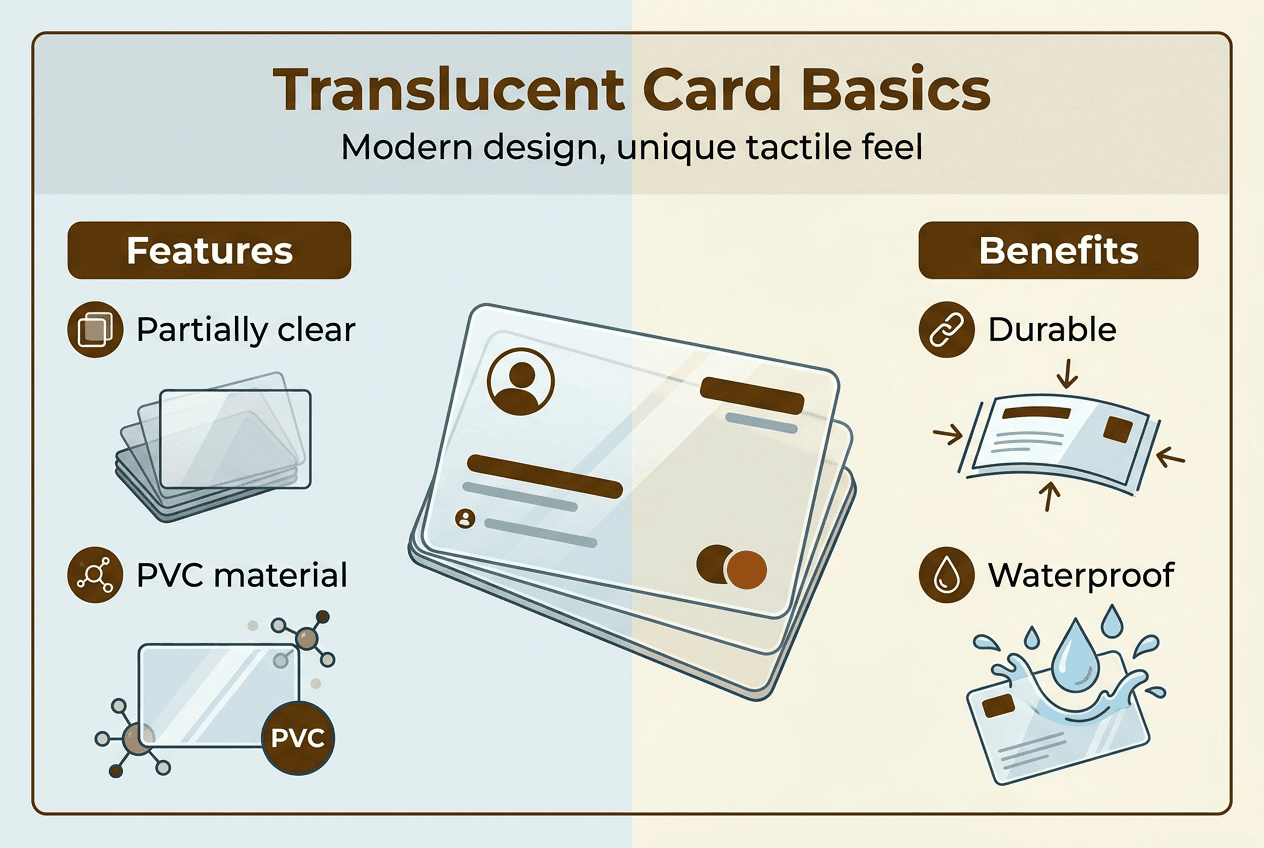
Translucent business cards are partially see-through cards typically made from thermoplastics like PVC, creating distinctive visual effects impossible with paper stock. Unlike fully transparent cards that offer complete clarity, translucent versions provide controlled opacity, allowing light to pass through while maintaining design elements and text legibility. The material choice matters significantly: thermoplastics constitute 92% of plastics used in professional card applications, offering versatility in finish options from frosted matte to semi-clear gloss.
The visual effects achievable with translucency include layered depth, shadow play, and color gradients that shift based on lighting conditions and background surfaces. When you hold a translucent card against different backgrounds, the design interacts dynamically with its environment, creating a memorable tactile and visual experience. This material property makes each card viewing unique, reinforcing brand recall through sensory engagement.
Key characteristics that distinguish translucent cards from traditional options include:
- Tactile weight and flexibility that signals premium quality through touch alone
- Resistance to moisture, tears, and everyday wear that paper cannot match
- Design versatility enabling embossing, spot UV, and metallic foiling on plastic surfaces
- Temperature stability maintaining card integrity in wallets, pockets, and varied climates
The plastic substrate allows designers to experiment with negative space differently than paper permits. Text and graphics can float against translucent backgrounds, creating sophisticated minimalist layouts or complex layered compositions. For professionals seeking to differentiate their brand identity, translucent business cards elevate brand positioning by signaling innovation and attention to material quality from the first handshake.
Design and printing techniques for translucent cards
Creating effective translucent business cards requires specialized printing approaches that differ fundamentally from paper-based methods. The most critical element is white ink application, which creates opacity and contrast on translucent surfaces where standard CMYK inks would appear washed out or invisible. White ink in the printing process is crucial for achieving desired opacity levels, functioning as a base layer that allows colored inks to display vibrantly.
UV-cured inks represent the industry standard for plastic card printing, offering significant advantages over conventional inks. These specialized formulations improve color fastness by 30% while enhancing scratch resistance, ensuring cards maintain their visual appeal through months of handling. The UV curing process bonds ink molecules directly to the plastic surface through photopolymerization, creating a durable finish that resists fading, smudging, and chemical exposure.
Artwork preparation for translucent cards demands precision to ensure optimal print results:
- Provide vector files in AI, PDF, or CDR formats with outlined fonts to prevent substitution issues
- Use CMYK color mode rather than RGB, as translucent materials display colors differently than screens
- Maintain 300 dpi resolution minimum for raster elements like photos or gradients
- Design with high contrast between text and backgrounds to ensure legibility against varied surfaces
- Account for bleed areas and safe zones, as translucent edges reveal more than opaque cards
Pro Tip: Test your design by printing a mockup on translucent paper and viewing it against different colored backgrounds. This reveals legibility issues before committing to full production, saving time and material costs.
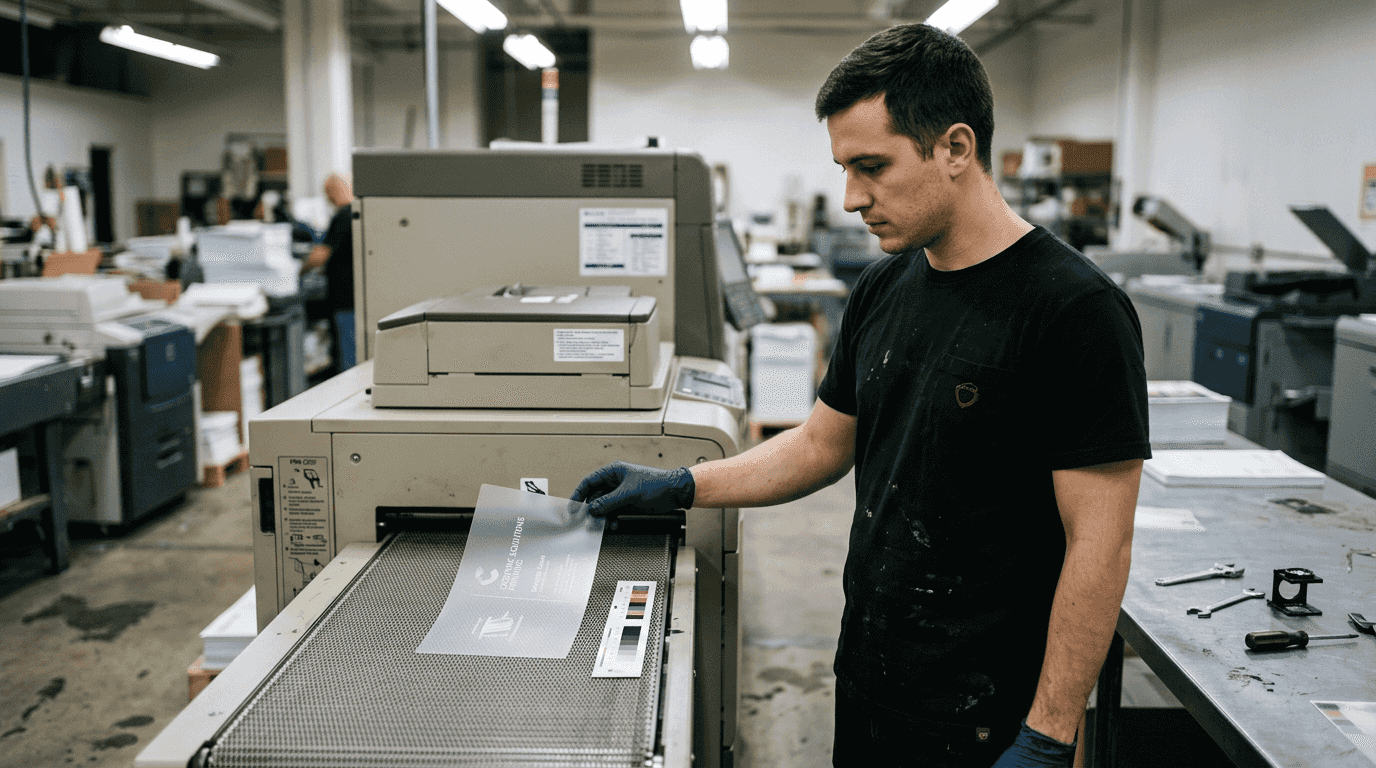
High-definition printing on translucent PVC requires specialized techniques to ensure optimal ink adhesion and color vibrancy, making professional production essential for quality results. Home printers and standard commercial presses cannot replicate the precision needed for plastic substrates, particularly when layering white ink bases beneath colored graphics. The investment in professional printing pays dividends through consistent color accuracy, sharp edge definition, and long-term durability that maintains brand standards.
Designers should consider material opacity variations when planning layouts. Fully frosted translucent cards offer more design flexibility than ultra-clear versions, as they provide better background for text while maintaining the distinctive translucent aesthetic. For transparent business cards in luxury applications, balancing transparency with information hierarchy becomes the central design challenge.
Durability and practical benefits of translucent business cards
The waterproof nature of PVC translucent cards provides practical advantages that paper alternatives cannot match. Spilled coffee, rain exposure, or accidental washing machine encounters that would destroy paper cards leave PVC versions completely unaffected. This resilience matters particularly for professionals working in hospitality, outdoor events, or any environment where moisture exposure occurs regularly. Your contact information remains intact and legible regardless of environmental conditions.
Lifespan comparisons reveal significant durability differences between materials:
| Card Type | Average Lifespan | Resistance to Wear | Moisture Tolerance | | — | — | — | | PVC Translucent | 5 years | Excellent | Waterproof | | Premium Paper | 1-2 years | Moderate | Poor | | Standard Paper | 6-12 months | Low | Very Poor |
PVC cards maintain integrity for up to 5 years with normal wear, compared to paper cards lasting only 1-2 years before showing visible deterioration. This extended lifespan means your brand representation stays fresh in recipient wallets far longer, maximizing the return on each card distributed. For professionals attending multiple networking events annually, durability translates directly to sustained brand presence without constant reprinting.
High-contact environments particularly benefit from translucent card durability. Tech startup founders at investor meetings, hospitality managers greeting guests, and premium retail consultants assisting clients all handle cards frequently throughout their workdays. The scratch-resistant UV-cured inks and rigid plastic construction maintain professional appearance through hundreds of exchanges, while paper cards show wear after just dozens of interactions.
Practical benefits extending beyond physical durability include:
- Consistent brand presentation regardless of storage conditions or handling frequency
- Reduced replacement costs due to extended usable life per card
- Enhanced perceived value signaling quality and attention to detail
- Improved information retention as recipients keep durable cards longer
Pro Tip: Select frosted finishes over ultra-clear options to add sophistication while improving fingerprint resistance. Frosted surfaces hide smudges and oils from handling better than glossy clear finishes, keeping cards looking fresh longer.
The premium tactile experience reinforces brand positioning with every touch. Recipients immediately recognize quality through the card’s weight, flexibility, and smooth finish, creating positive associations before reading any information. This sensory branding proves especially valuable for clear plastic business cards in luxury brand contexts, where material choice communicates as much as design elements.
Who should use translucent business cards and why
Translucent business cards deliver maximum impact for specific professional segments where brand differentiation and perceived quality drive client relationships. Luxury brands benefit immensely, as the premium material immediately signals exclusivity and attention to detail that aligns with high-end positioning. Designers and architects use translucent cards to demonstrate material innovation and aesthetic sensibility, turning the card itself into a portfolio piece that showcases their design philosophy.
Tech startups leverage translucent cards to project innovation and forward-thinking brand identity, differentiating themselves in crowded investor and talent markets. Hospitality professionals, from boutique hotel managers to event planners, use these cards to convey sophistication matching their service standards. Premium retail consultants in fashion, jewelry, and home goods find translucent cards reinforce the quality expectations their products demand.
Comparing translucent cards against traditional paper reveals distinct advantages:
| Factor | Translucent PVC | Traditional Paper |
|---|---|---|
| Visual Impact | High, memorable | Moderate, common |
| Durability | 5 years | 1-2 years |
| Brand Perception | Premium, innovative | Standard, expected |
| Cost per Card | Higher upfront | Lower upfront |
| Replacement Frequency | Rare | Frequent |
Top five reasons creative professionals choose translucent cards for brand differentiation:
- Immediate tactile distinction creates memorable first impressions that paper cannot replicate
- Extended lifespan means recipients retain contact information longer, increasing follow-up opportunities
- Material choice signals quality consciousness and attention to brand details
- Visual uniqueness helps cards avoid the trash bin fate of standard paper cards
- Design versatility allows creative expression impossible with conventional materials
The unique tactile and visual experience contributes to 20% higher brand recall compared to standard cards, making them strategic investments for professionals where relationship building drives business development. This recall advantage compounds over time, as recipients remember both the person and the distinctive card long after initial meetings.
PVC translucent business cards prove ideal for luxury brands, designers, architects, tech startups, hospitality, and premium retail professionals who view business cards as brand positioning tools rather than mere contact information carriers. For these segments, the card serves as a physical brand artifact that recipients evaluate consciously and subconsciously, forming opinions about professionalism, innovation, and quality standards.
Modern branding demands consistency across all touchpoints, from digital presence to physical materials. Translucent cards help creative professionals maintain cohesive brand narratives by extending their aesthetic sensibility into networking contexts. For guidance on integrating translucent cards into broader brand strategies, explore translucent business cards in modern branding approaches that align material choices with positioning objectives.
Discover custom translucent business cards at BcardsCreation
BcardsCreation specializes in fully custom translucent business card design, combining material expertise with personalized design services that ensure optimal printing results and brand impact. Unlike template-based services, every project receives individual attention from design consultation through material selection to final production. This approach guarantees your translucent cards reflect your unique brand identity rather than generic design patterns.
The studio offers extensive collections of clear business cards and plastic business cards with multiple finish options, from frosted matte to high-gloss clear. Expert designers guide you through opacity levels, white ink placement, and color choices that maximize legibility while achieving your aesthetic vision. For professionals seeking sophisticated card solutions, custom business card design services transform concepts into production-ready artwork optimized for translucent materials. Start your custom order today to create translucent business cards that elevate your professional presence.
What is a translucent business card FAQ
What differentiates translucent business cards from fully clear cards?
Translucent cards allow partial light transmission while maintaining opacity for text and graphics, creating frosted or semi-opaque effects. Fully clear cards offer complete transparency, requiring careful design to ensure legibility against varied backgrounds. Translucent versions provide more design flexibility while delivering the premium plastic aesthetic.
What design practices ensure translucent cards remain legible and appealing?
Use high contrast between text and backgrounds, incorporate white ink layers for opacity, and test designs against multiple background colors before printing. Avoid overly thin fonts or low-contrast color combinations that disappear on translucent surfaces. Maintain generous spacing around text elements to prevent visual crowding when cards overlay other materials.
How durable are translucent business cards and how should I care for them?
Translucent PVC cards resist water, tears, and normal wear for up to five years with proper handling. Clean them with soft cloth and mild soap if needed, avoiding abrasive materials that could scratch UV-cured inks. Store cards in protective holders or cases to prevent surface scratches from keys or coins during transport.
What are typical production turnaround times for translucent cards?
Custom translucent card production typically requires 7-10 business days after design approval, accounting for specialized printing setup and UV curing processes. Rush services may reduce timelines to 3-5 days with premium fees. Standard paper cards print faster, but translucent cards justify longer production through superior quality and durability.
Which professionals benefit most from using translucent business cards?
Creative professionals including designers, photographers, and architects gain immediate credibility through material choice that demonstrates aesthetic sensibility. Luxury brand representatives, boutique hospitality managers, and premium service providers use translucent cards to signal quality standards matching their offerings. Tech entrepreneurs leverage them to project innovation and differentiation in competitive markets. For deeper insights, review clear business card strategies for luxury brands to determine fit with your positioning.
Recommended
- Why translucent business cards elevate your brand in 2026 – BcardsCreation
- Translucent Business Cards: Modern Branding Impact – BcardsCreation
- Translucent business cards | Plastic business cards with qr code – BcardsCreation
- Translucent Frosted Business Cards | Variable Data Printing – BcardsCreation


