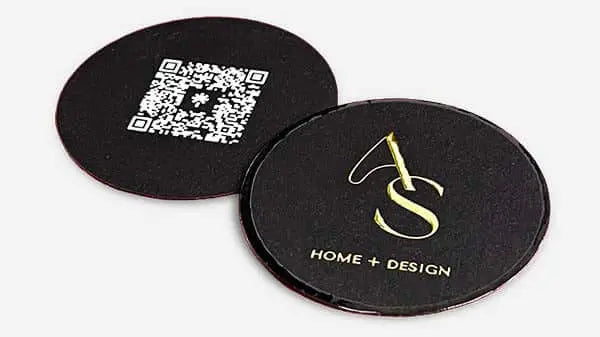


Examples of Innovative Cards for Creative Professionals
TL;DR:
- Innovative cards incorporate interactive, tactile, or digital elements that transform brief exchanges into lasting impressions. They utilize mechanisms like AR, pop-ups, holograms, and layered craft to reinforce brand identity and engage recipients meaningfully. Successful designs prioritize a clear function that serves storytelling or branding over mere decoration, ensuring the card is both memorable and purposeful.
Innovative cards are defined as any physical or digital card format that moves beyond static information delivery to create an interactive, tactile, or visually distinctive experience. The best examples of innovative cards share one trait: they turn a brief handoff moment into a lasting impression. From AR-enabled business cards built with KiviCube’s WebAR platform to holographic digital trading cards like DevCard 3D and mixed-media handmade pieces layered with texture and embellishment, the range of what a card can do has expanded significantly. For creative professionals and entrepreneurs, understanding these formats is a direct path to stronger branding and more memorable networking.
1. AR and QR-enhanced cards that add a digital layer
Augmented reality cards are the most measurable format in this list. The Delta SkyMiles AR card, designed by Aircards, generated 32,000 visits with an average dwell time of 2 minutes and 36 seconds. That figure matters because it means recipients were not just glancing at the card. They were spending time inside the brand experience.
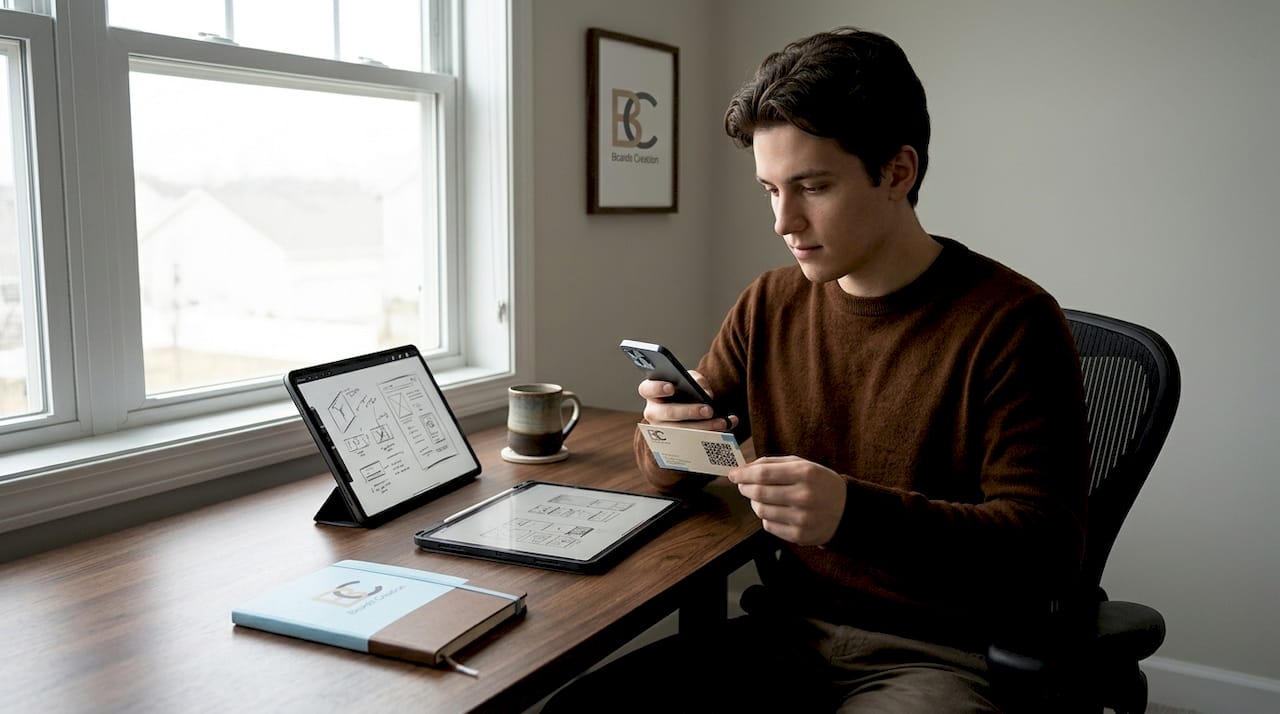
The mechanism is straightforward. A QR code on the physical card triggers a browser-based AR scene. No app download is required. KiviCube’s no-code WebAR platform lets you build AR cards directly in a browser, meaning any professional can create one without a development team. Embedding AR in the browser rather than an app increases accessibility at networking events, where asking someone to install software is a friction point most people skip.
What separates effective AR cards from gimmicky ones is narrative pacing. The Delta project worked because it sequenced immersive content thematically, moving through crew stories and 3D visuals rather than dropping a single static video. That structure kept recipients engaged longer.
Pro Tip: Design your AR sequence like a short film, not a brochure. Open with a visual hook, build to a brand statement, and close with a clear call to action. Three scenes at 30 seconds each outperform one two-minute loop.
- QR codes should link to mobile-optimized WebAR scenes, not PDF files or generic websites
- Use branded color palettes inside the AR environment to reinforce visual identity
- Track scan rates and dwell time to measure card performance over time
- Test the AR experience on both iOS and Android before printing the physical card
2. 3D holographic and interactive digital cards
DevCard 3D converts GitHub profiles into collectible holographic trading cards using pure CSS 3D transforms and gradient animations. The result looks like a physical foil card rotating under light, but it runs entirely in a browser. This approach is significant because it proves that holographic effects do not require specialized printing or heavy 3D rendering engines.
The technical construction relies on CSS perspective transforms, layered gradient overlays, and subtle animation timing. Five distinct holographic themes are available, each with a global leaderboard that ranks cards by GitHub activity. That leaderboard mechanic turns a static profile into a shareable, competitive object. For developers and tech founders, it functions as both a networking tool and a portfolio signal.
The broader lesson for creative professionals is that CSS3 and data integration can produce card experiences that feel premium without premium production costs. The same logic applies to digital business cards built on personal domains.
- Choose a holographic theme that matches your brand color palette
- Connect live data sources (GitHub, Dribbble, LinkedIn) to keep the card current
- Embed the card on your portfolio site as an interactive element
- Share the card URL directly in email signatures and social bios
- Use the animation sparingly so the foil effect reads as intentional, not distracting
3. Physical pop-up and sculptural card mechanisms
Pop-up cards are among the most tactile examples of creative card designs, and the double pop-up step card format is one of the most striking. Graphic 45 Papers published a detailed pop-up tutorial showing how precise scoring and folding measurements create a dimensional interior that rises when the card opens. The effect is immediate. Recipients do not need instructions. The card performs itself.
Physical interactive mechanisms require more planning than flat cards. Durability is the first concern. A pop-up that collapses after two openings damages the brand impression it was meant to create. Self-aligning hinges and secure closure mechanisms prevent misalignment and structural flop over time. This is not a detail to solve at the decoration stage. It needs to be built into the scoring pattern from the start.
Yana Smakula’s interactive graduation card demonstrates a cleaner approach to physical interactivity. The design uses a die-cut spine and magnet closure that controls how the card opens and keeps the interior aligned. Magnet closures solve a common problem in multi-panel cards: the tendency for panels to flop open or misalign after repeated handling.
Pro Tip: Score every fold line with a bone folder before cutting. A clean score line produces a crisp, professional fold. A pressed or torn fold line signals amateur construction regardless of how well the card is decorated.
| Mechanism | Best use case | Key design requirement |
|---|---|---|
| Double pop-up step | Holiday cards, product launches | Precise scoring measurements |
| Die-cut hinge | Graduation, milestone cards | Reinforced spine material |
| Magnet closure | Multi-panel business cards | Magnet placement aligned to center |
| Accordion fold | Brand lookbooks, portfolios | Consistent panel width |
- Use 80 lb cardstock minimum for pop-up structures to hold shape under tension
- Test the fold mechanism with an undecorated prototype before adding embellishments
- Magnet closures work best when the magnet is recessed into the card layer, not surface-mounted
4. Mixed-media and handcrafted card concepts
Mixed-media cards use layered materials to create a surface that is visually and physically distinct from any printed card. The Sum of their Stories mixed-media collage process assembles blank greeting cards with tissue paper, buttons, ribbons, glitter, and craft scraps, building up texture through sequential gluing rather than a single print pass. Each card is unique by definition. No two share the same material combination.
For artists and independent brands, this approach reinforces a handcrafted identity more directly than any printed finish can. The tactile variety signals time and intention. A recipient who runs their finger across a card layered with fabric and paper immediately understands that the card was made, not manufactured. That distinction carries brand weight.
The practical challenge is consistency at scale. Mixed-media cards work well for small batches: client gifts, event invitations, or limited-edition brand pieces. Attempting to produce them in quantities above 50 without a defined assembly process usually results in uneven quality.
| Material | Effect | Best pairing |
|---|---|---|
| Tissue paper | Translucent color layers | Watercolor backgrounds |
| Fabric ribbon | Tactile contrast | Kraft or linen cardstock |
| Buttons and beads | Dimensional focal points | Minimalist layouts |
| Glitter | Light-catching surface | Dark or matte base cards |
| Torn paper scraps | Organic texture | Collage-style compositions |
5. Collectible card decks as branding tools
Artist Christina Mrozik’s oracle deck, The Feelings of All Things, is built from 50 illustrated cards that each required 20 to 40 hours of illustration work. The deck functions as both a reflective tool and a collectible art object. That dual purpose is what makes the format relevant to creative professionals thinking about card-based branding.
A collectible card deck extends engagement far beyond a single handoff. Recipients return to the deck repeatedly, which means the brand or artist behind it earns repeated exposure without additional distribution cost. The format also signals depth. A 50-card deck communicates a level of creative investment that a single business card cannot.
For entrepreneurs, a smaller version of this concept is practical. A set of 10 to 12 illustrated brand cards, each featuring a different product, value, or story, can serve as a leave-behind at trade shows or a premium mailer for key clients. The set format encourages recipients to collect the full series, which drives repeat contact. Pairing strong illustration with a thematic concept, as Mrozik does, gives the deck a reason to exist beyond decoration.
The key design decision is whether the deck tells a linear story or functions as a standalone collection. Linear decks work well for brand narratives. Standalone collections work better for artists whose work does not follow a single thread. Both approaches benefit from consistent visual language across all cards in the set.
Key takeaways
The most effective examples of innovative cards combine a clear physical or digital mechanism with a defined brand narrative, making the card itself a communication tool rather than a contact record.
| Point | Details |
|---|---|
| AR cards drive measurable engagement | The Delta SkyMiles AR card averaged 2:36 dwell time, proving interactive cards hold attention. |
| Physical mechanisms need structural planning | Pop-up and magnet closure designs require precise scoring and reinforced hinges to stay durable. |
| Mixed-media works best in small batches | Handcrafted layered cards signal brand intention but require a defined process to maintain quality. |
| Collectible decks extend brand exposure | Multi-card sets earn repeated handling and signal creative depth beyond a single card format. |
| Digital holographic cards are accessible | CSS-based foil effects like DevCard 3D deliver premium visual impact without specialty printing costs. |
What I’ve learned about cards that actually get kept
Most cards get discarded within 48 hours. The ones that survive are the ones that do something. After working with creative professionals and brand-driven clients at Bcardscreation, the pattern is consistent: cards with a single clear interactive element, whether physical or digital, get kept. Cards that try to do everything get ignored.
The mistake I see most often is treating innovation as decoration. Adding foil to a poorly structured layout does not make the card memorable. Adding a QR code that links to a homepage does not make it interactive. The mechanism has to serve the message. The AR sequence should tell a story. The pop-up should reveal something. The holographic effect should reinforce the brand’s visual identity, not contradict it.
I also think the physical-digital split is a false choice. The best card designs use physical craft to earn the first impression and digital integration to extend the relationship. A beautifully printed card with a well-designed QR experience is more effective than either format alone. The card gets kept because it feels premium. The digital layer gets used because it delivers something worth seeing.
If you are building a card for a brand or a personal project, start with the mechanism. Decide what the card does before you decide what it looks like. That sequence produces better results every time.
— Kostiantyn
Custom card design at Bcardscreation
Bcardscreation builds custom business cards individually, without templates or automated editors. Every project starts with a material and design consultation, which means the card format you choose is matched to your brand’s actual positioning, not a default option from a product menu. For professionals who want foil finishes, transparent substrates, or specialty paper stocks, Bcardscreation’s luxury foil and creative cards are produced in small batches with controlled quality at each stage. If you have seen something in this article that fits your brand direction, the next step is a conversation about materials and format. Bcardscreation handles the rest.
FAQ
What makes a business card innovative?
An innovative business card adds an interactive, tactile, or digital element that goes beyond static contact information. Examples include AR-triggered experiences, holographic foil effects, pop-up mechanisms, and mixed-media layering.
How do AR business cards work?
AR business cards use a printed QR code to launch a browser-based augmented reality scene on the recipient’s phone. Platforms like KiviCube allow creation without coding, and no app download is required.
Are pop-up cards practical for professional use?
Yes, when built with durable materials and precise scoring. Pop-up cards work well for client gifts, product launches, and event invitations. Magnet closures and reinforced hinges keep the structure intact through repeated handling.
What is a collectible card deck used for in branding?
A collectible card deck is a set of illustrated or themed cards used as a premium leave-behind, mailer, or trade show piece. The format encourages recipients to collect the full series, which drives repeated brand exposure.
How do I make a unique card without a large budget?
Mixed-media collage cards using tissue paper, ribbons, and craft scraps produce distinctive results at low cost. For digital formats, CSS-based holographic effects like DevCard 3D deliver a premium look without specialty printing.
Recommended
- How innovation transforms business cards into brand builders – BcardsCreation
- Creative Card Material Ideas for Brands That Stand Out – BcardsCreation
- Why photographers need unique business cards for branding – BcardsCreation
- Top design elements for cards: make your brand unforgettable – BcardsCreation


