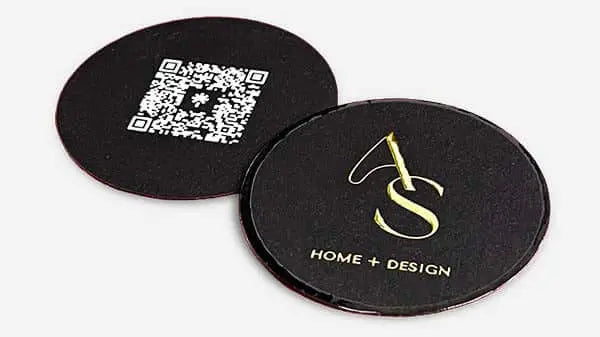


How innovation transforms business cards into brand builders
TL;DR:
- Business cards remain a powerful branding tool with higher recall than digital alternatives.
- Innovation through materials, finishes, and digital tech enhances their impact and memorability.
- Combining physical and digital features, like NFC and QR codes, maximizes engagement and brand perception.
Business cards are not a relic. They are evolving faster than most professionals realize. While digital tools dominate networking conversations, the physical card has quietly become a high-impact branding tool, especially when innovation drives its design, material, and function. Premium physical cards extend interaction and boost recall in ways a LinkedIn profile simply cannot replicate. This guide breaks down how material innovation, digital integration, and intentional design are making business cards more powerful than ever, and how you can use them to build a brand that people actually remember.
Table of Contents
- Why business cards still matter in 2026
- The new face of innovation: Materials, finishes, and tech
- Comparing physical, digital, and hybrid business cards
- Designing innovative business cards for maximum brand impact
- What most business cards get wrong, and how true innovation fixes it
- Bring innovation to your business cards today
- Frequently asked questions
Key Takeaways
| Point | Details |
|---|---|
| Innovation multiplies impact | Business card innovations elevate brand recall, engagement, and professionalism. |
| Digital and physical synergy | Hybrid cards with NFC and QR tech maximize follow-up and impress clients. |
| Material matters | Premium materials signal credibility and make first impressions stick. |
| Avoid common pitfalls | Always use QR as a backup to NFC and keep all links functional for maximum ROI. |
Why business cards still matter in 2026
The “paper is dead” argument gets repeated every year. It is also wrong every year. Physical business cards are not fighting for survival. They are doing something entirely different from digital channels, and that difference is exactly why they still work.
When you hand someone a card, you create a moment. There is eye contact, a physical exchange, and a tangible object that carries your brand into their hands. No email, no social media DM, and no digital follow-up replicates that. The advantages of unique business cards go far beyond aesthetics. They anchor a memory.
“A well-designed card is not just contact information. It is a physical signal of how seriously you take your business.”
Here is what the data actually shows. Premium physical business cards hold attention 4x longer and have 34% higher recall than digital alternatives. That gap matters when you are competing in a market where everyone has the same follow-up email and the same LinkedIn request.
Executives notice card quality. A card printed on heavy stock with a refined finish communicates confidence without saying a word. It signals that you invest in your brand, and by extension, in your clients.
Here is where most professionals lose the opportunity:
- Handing out a generic, flimsy card after a strong conversation
- Using a default template that looks identical to everyone else in the room
- Treating the card as an afterthought rather than part of the brand strategy
- Skipping back-side design and wasting valuable brand real estate
- Choosing quantity over quality when smaller, better runs perform harder
The right business card materials do the selling before you say a word. A financial advisor who hands over a heavy cotton-stock card with spot UV finish gets a different reaction than one who hands over a standard print-on-demand card. Both cards carry the same contact info. Only one builds trust on contact.
This is not nostalgia. It is strategy.
The new face of innovation: Materials, finishes, and tech
With cards now more important than ever, it is the innovations in their construction and function that make the difference. The range of options available today is far beyond what most professionals have explored.
On the materials side, luxury business card materials like thick duplex paper, metal, and soft-touch laminate give cards a physical presence that demands attention. These are not just paper. They are brand objects. A soft-touch card feels like a product sample. A metal card is genuinely surprising. Both create a reaction, and reaction equals memory.
Finishes extend the impact further. Spot UV coating highlights specific design elements with a glossy contrast against matte backgrounds. Foil stamping adds a reflective metallic detail that photographs well and feels premium. Edge painting turns the side of a card into a branding surface. These are details your competition is likely skipping.

On the technology side, digital business card printing now integrates seamlessly with NFC chips and QR codes. NFC (Near Field Communication) allows someone to tap your card with their phone and instantly access your website, portfolio, or contact details. No typing, no searching, just a tap. NFC and QR innovations boost card engagement by 38% and increase customer conversion rates, which makes the technology worth the investment for most service providers.
| Feature | Standard card | Innovative card |
|---|---|---|
| Material weight | 14 pt stock | 32 pt or duplex |
| Finish | Gloss or matte | Soft-touch, foil, spot UV |
| Tech layer | None | NFC chip or QR code |
| Back design | Often blank | Brand content or portfolio link |
| Recall impact | Baseline | Up to 34% higher |
Pro Tip: Always pair NFC with a printed QR code. Some older phones do not support NFC, and a QR code ensures every recipient can access your digital content regardless of their device.
The best approach combines physical and digital. A beautifully printed card with embedded NFC and a printed QR backup gives you tactile impact and digital follow-through in one object.
Comparing physical, digital, and hybrid business cards
Now that we have explored what innovation means for cards, let us directly compare your main options and help you choose the right fit.
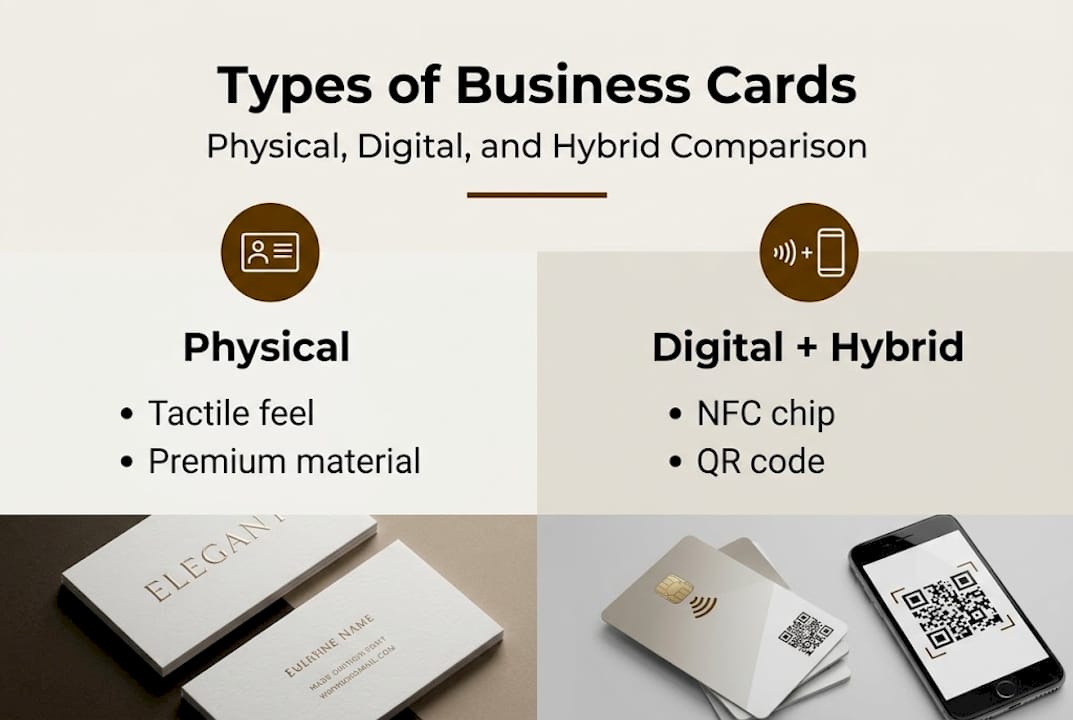
| Card type | Best for | Key strength | Key risk |
|---|---|---|---|
| Physical only | C-suite, luxury, B2B | Tactile brand impact | No digital follow-through |
| Digital/NFC only | Tech startups, volume events | Instant data transfer | Device compatibility gaps |
| Hybrid (physical + digital layer) | Most professional services | Brand impact + engagement | Requires link maintenance |
Digital cards see 38% higher engagement, but 90% of paper cards are discarded within a week. That statistic tells two stories. Digital layers drive action. But cards that do not stand out physically get thrown away before they can do anything. The answer is not to choose one over the other. The answer is to build a card that does both.
Pitfalls to watch for:
- NFC fails without QR fallback and dead links ruin ROI, so maintain all URLs actively
- Tech-heavy cards without strong physical design feel gimmicky rather than premium
- Digital-only cards can feel impersonal in high-touch, relationship-driven industries
Here are three steps for matching your card type to your business goals:
- Define your audience. If you work primarily with corporate clients or in luxury markets, a premium physical card with refined finishing should lead. If you connect with a high volume of contacts at events, a hybrid card with NFC and QR gives you digital follow-through at scale.
- Align with your brand identity. A business card design impact study confirms that card quality signals brand quality. Match your card’s production level to your positioning in the market.
- Plan for updates. If you add a QR or NFC layer, build it around a URL you control and can update. Your card’s physical design should stay evergreen. Your digital destination can evolve without reprinting.
The creative card design process starts by knowing what job the card needs to do, and then building every element around that job.
Designing innovative business cards for maximum brand impact
With a clear comparison in hand, here is how to apply design innovation for maximum brand impact.
The biggest mistake professionals make is treating design as decoration. Every element on your card, from font choice to finish type, sends a signal about your brand. 78% of executives associate heavy/textured stock with professionalism and a stronger brand impression. That means your material choice alone affects how people perceive your credibility before they read your name.
Here is a checklist of must-have innovative design features:
- Card weight: Go heavier than standard. 32 pt duplex or 100 lb uncoated stock communicates quality immediately.
- Finish type: Choose a finish that fits your brand. Soft-touch for understated luxury, foil for bold identity, spot UV for design-forward positioning.
- QR or NFC: Include at least one digital layer. Link it to a dedicated landing page or portfolio, not just your homepage.
- Back-side design: Use the back. Add a brand visual, a tagline, or a service summary. Blank backs are wasted space.
- Clear hierarchy: Name, title, and one primary contact method should be immediately readable. Do not overcrowd the layout.
Common mistakes to avoid:
- Using too many fonts or colors, which dilutes brand clarity
- Choosing a finish that conflicts with your print method (not all finishes work with all printing types)
- Ignoring safe zone and bleed settings, which leads to cut-off design elements
- Linking a QR code to a page that is not mobile-optimized
Explore unique business card design tips and the full business card design steps process to build your design around strategy, not guesswork.
Pro Tip: Always test your digital card on at least three different devices, including Android and iOS, before you approve a large print run. A QR code that does not scan or a link that loads incorrectly on mobile will cost you more than a reprint.
What most business cards get wrong, and how true innovation fixes it
Here is the uncomfortable truth: most business cards fail not because of bad design, but because of no intention behind the design. Professionals order a card because they feel they are supposed to have one. The result is a generic rectangle that communicates nothing distinctive about who they are or what they offer.
Having a card is not enough. A card that looks like every other card in the stack is an opportunity missed, not an opportunity created.
Real innovation is not about chasing trends. It is not about adding foil because foil looks impressive or embedding NFC because it sounds modern. It is about aligning every touchpoint, how the card looks, how it feels, and what it connects to, with the actual identity of your business. When those elements line up, the card starts conversations instead of ending up in a drawer.
The best cards we have seen do one thing consistently: they make the recipient curious. They prompt a question, invite interaction, or leave a strong enough impression that the person reaches back out. That is the job. Business card design success comes from building every element around that single outcome.
Build in redundancy. Include a QR code and a visible URL. Have a clear call to action on the back. Make sure the visual anchors your brand identity so the card and your website feel like the same business. That coherence is what turns a card into a brand tool.
Bring innovation to your business cards today
Ready to make your connections memorable? Here is how to put innovation into practice.
At BcardsCreation, every card is designed individually, with no templates and no automated editors. You get expert design guidance, material consultation, and fully controlled production from start to finish.
Explore custom business card design built around your brand identity, or go further with luxury creative business cards featuring foiling, specialty papers, and premium finishing. Not sure where to start? Browse all business card options and find the format that fits your goals. Your next great connection deserves a card that does the work.
Frequently asked questions
How does card material affect first impressions?
Heavier, textured materials make cards feel more professional and memorable, directly boosting brand recall. Executives consistently associate card stock weight with the credibility of the business behind it.
Is it worth adding NFC or QR codes to my business card?
NFC and QR cards produce 38% higher engagement and 16% more conversions, making them especially effective for tech-forward industries and high-volume networkers.
Are digital business cards better than physical ones?
Physical cards excel for memorability and brand impact, while digital cards offer convenience and analytics. Premium physical cards outperform digital for recall, but hybrid approaches give you both.
What key mistakes should I avoid with innovative cards?
Avoid relying on NFC alone. NFC fails without QR fallback and dead links ruin ROI, so always include a printed QR code and keep all linked pages active and up to date.


