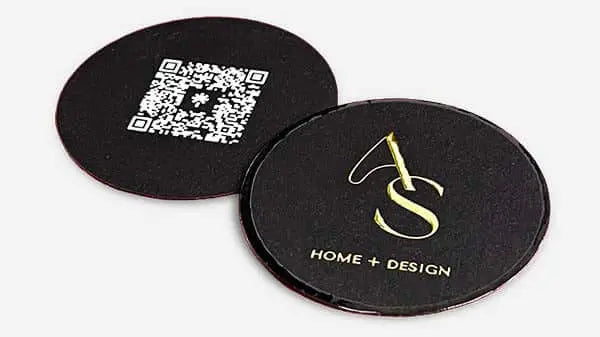


Top design elements for cards: make your brand unforgettable
TL;DR:
- Choosing a simple, sober design makes a business card more memorable and trustworthy.
- Striking the right balance of core elements, hierarchy, and restraint enhances first impressions.
Choosing the right business card design is harder than it looks. You have limited space, a crowded marketplace, and a few seconds to make a real impression. The elements you put on that small rectangle either signal professionalism and trust or get tossed in a drawer. Simple, sober designs humanize your service and are the most memorable, yet many professionals still default to complexity. This article breaks down the exact criteria, core elements, advanced features, and a step-by-step process to help you build a card that works.
Table of Contents
- Key criteria for effective card design
- Essential design elements every card should include
- Advanced features: Specialty finishes and creative materials
- Comparison of popular card design strategies
- How to choose the right design elements for your brand
- Our perspective: The overlooked power of restraint in business card design
- Ready to elevate your business cards? Discover custom solutions
- Frequently asked questions
Key Takeaways
| Point | Details |
|---|---|
| Keep it simple | Clear, sober designs create memorable and trustworthy impressions. |
| Choose essentials first | Prioritize must-have elements like logo, contact info, and legible fonts. |
| Validate with feedback | Test your design through target audience surveys and physical samples. |
| Special touches matter | Use premium materials and finishes strategically for unique branding. |
| Brand alignment is key | Every design choice should reinforce your unique brand identity. |
Key criteria for effective card design
Before picking fonts or finishes, you need a clear filter. Not every design choice is equal. Some elements boost recall and trust. Others add noise. Knowing why design is crucial for card success helps you cut through the options and focus on what actually moves the needle.
The four criteria that matter most:
- Memorability: Will the person remember your card 24 hours later?
- Likeability: Does the design feel warm, credible, and approachable?
- Trust: Does it reflect professionalism and signal reliability?
- Relevance: Does the design match your industry and audience expectations?
Every design element you consider should pass this filter. If a choice boosts all four, it belongs on your card. If it only satisfies one, think twice. Audience testing in design through surveys, heatmaps, or physical proofs gives you data rather than guesses.
Legibility is non-negotiable. Your card will be read in dim restaurants, bright conference halls, and everywhere in between. Small fonts, low contrast colors, or overly decorative typefaces create friction. Case studies on optimal card design consistently show that simple, sober layouts outperform flashy ones in memorability.

Use the professional business card framework to structure your design decisions before you commit to a layout. That systematic approach keeps your choices grounded in strategy, not guesswork.
Pro Tip: Print a low-resolution version of your design and look at it under three different light sources. If anything feels hard to read in one setting, revise it before going to final production.
Essential design elements every card should include
With the right criteria in mind, here are the foundational elements that every effective business card needs. Skip any of these and you risk confusion, lost opportunities, or a card that simply gets ignored.
The non-negotiables:
- Logo: Your visual anchor. It should be clean, high resolution, and reproduce well in both full color and black and white.
- Name and title: Full name, clear job title. No abbreviations that require guesswork.
- Contact information: Phone number, email, and website at minimum. Add social handles only if they are relevant and active.
- Brand colors: Consistent with your broader visual identity. One or two accent colors, not a rainbow.
- White space: Often overlooked, but critical. White space reduces cognitive load and makes every element easier to read.
Visual hierarchy matters as much as the elements themselves. The most important piece of information (usually your name or logo) should draw the eye first. Secondary information follows naturally. A cluttered layout forces the reader to work too hard, and most people will not bother.
“Simple, sober designs humanize service and are most memorable in card design case studies.”
Font choice is another critical lever. Stick to one or two typefaces. One for headings, one for body text. Serif fonts signal tradition and authority. Sans-serif fonts feel modern and clean. Mixing too many styles creates visual chaos that undermines your credibility.
Explore the full breakdown of must-have elements for standout branding to make sure nothing important gets left off. And if you want to push further, unique business card ideas can help you move beyond standard layouts without losing clarity.
Advanced features: Specialty finishes and creative materials
Once your foundational design is solid, you can evaluate whether specialty finishes will elevate your brand positioning. The keyword here is whether. Finishes only add value when they reinforce your message. Adding them to compensate for a weak design is a mistake.
Here are the main advanced options worth considering:
- Real foil stamping: Gold, silver, rose gold, or custom colors. Foil adds premium tactile value and visual pop. Best used for logos, names, or key accents rather than large blocks of text.
- Embossing and debossing: Raised or pressed textures that create a physical dimension. These finishes communicate luxury and attention to detail without adding color clutter.
- Spot UV coating: A glossy layer applied selectively over specific design elements. It creates contrast between matte and shiny surfaces, making key details pop under light.
- Transparent and clear stocks: Plastic or clear PVC cards are genuinely memorable. They stand out in any stack and create a “keep it” reaction in recipients.
- Eco-friendly materials: Recycled paper, bamboo, or seed paper stocks signal environmental values. For brands where sustainability is a core message, these materials reinforce the brand story without a single word.
Portfolio visuals credibility research shows that physical presentation quality strongly influences perceived expertise. The same logic applies to your business card. What someone feels and sees in the first few seconds creates a judgment that is hard to reverse.
Testing methodology with physical proofs under varied lighting helps professionals assess finish choices accurately before committing to a full print run. What looks sharp on screen can look flat or overwhelming in real life.
Pro Tip: Pick one specialty finish and do it well. A single foil accent on your logo consistently outperforms cards covered in multiple competing effects. Restraint makes each element more impactful.
Check out luxury card ideas for a curated look at how premium finishes can be applied with precision and purpose.
Comparison of popular card design strategies
Choosing between design approaches can feel abstract until you see the tradeoffs side by side. Here is a direct comparison of the three most common strategies so you can match a style to your actual business goals.
| Strategy | Memorability | Industry fit | Cost | Best for |
|---|---|---|---|---|
| Classic/traditional | Moderate | Finance, law, healthcare | Low to moderate | Established professionals, conservative industries |
| Minimalist | High | Tech, consulting, coaching | Low to moderate | Modern brands, personal branding |
| Specialty/creative | Very high | Design, hospitality, luxury | Moderate to high | Creative industries, premium positioning |
The case study data on optimal card design supports what the table shows. Simpler approaches tend to score higher on memorability and trust across industries. Creative approaches can outperform in the right context, but they carry more risk if the execution is off.
Classic designs use standard card stock, traditional fonts, and a predictable layout. They are reliable and professional, but they do not differentiate you in competitive markets.
Minimalist designs use negative space aggressively, limit color to one or two tones, and let quality materials do the talking. They feel confident without trying too hard. Many professionals underestimate how powerful a well-executed minimal card can be.
Specialty and creative designs use unique shapes, textures, finishes, or materials to create a physical experience. They work best when the card’s format directly connects to what you do. A photographer using a card with a translucent image. An architect using thick uncoated stock with clean geometry. The design tells the story before a word is read.
Explore impactful card features to see how different elements perform in real-world scenarios. For additional context on how presentation quality shapes first impressions, portfolio presentation tips offer a useful parallel framework.
How to choose the right design elements for your brand
You now have the criteria, the elements, the finishes, and the strategic comparison. Here is how to put it all together in a clear, actionable process.
- Define your three core brand values. Are you innovative, trustworthy, creative, efficient? Write them down. Every design choice that follows should serve at least one of these values.
- Profile your target recipient. Think about who will actually hold your card. Are they a CFO at a law firm? A creative director at a startup? A boutique hotel manager? Their industry norms and aesthetic preferences should shape your choices.
- Rank your design priorities. Use your brand values and audience profile to rank the following: clarity, visual impact, premium feel, and brand consistency. Your top priority shapes everything else.
- Build a short list of elements. Based on your ranking, select 3 to 5 design elements from the foundational list plus any one specialty finish if it fits. Do not try to include everything. Editing is a skill.
- Test before you print. Use audience surveys to validate which elements resonate with your actual business leads. Request physical proofs from your printer. Show them to trusted colleagues in your target industry. Collect real reactions before committing to a full run.
If you work in a creative field, card design tips for creatives offer targeted guidance for balancing self-expression with professionalism. And if you are unsure what information actually needs to appear on the card itself, details for brand impact walks through exactly what to include and what to leave out.
Portfolio templates offer another useful reference for understanding how structured visual layouts influence perceived credibility, a principle that transfers directly to card design.
Our perspective: The overlooked power of restraint in business card design
Here is something most design conversations skip: more options do not mean better results.
Technology now makes it easy to add foil, embossing, custom shapes, rounded corners, QR codes, double-sided printing, and spot UV all at once. The tools are available. The temptation is real. But adding more rarely makes a card more effective. It usually makes it harder to read, harder to remember, and harder to trust.
We see this pattern regularly. A professional invests in premium materials and packs every available feature onto a single card. The result looks busy. Recipients do not know where to look first. The card gets noticed briefly, then forgotten. The investment does not pay off.
The evidence points in a different direction. Sober, simple designs consistently outperform complex ones in memorability and likeability. This is not about being cheap or unambitious. It is about being strategic. A clean card with one standout finish, a precise logo, and clear contact information does more work than a card overloaded with competing effects.
Restraint signals confidence. It says you know exactly who you are and you do not need to prove it with excess. That is the message high-value clients respond to.
Our advice: start by removing elements, not adding them. Get your card down to its most essential form. Then, if a single specialty finish genuinely reinforces your brand message, add it. One well-chosen detail carries more weight than five average ones.
This is also why template-based approaches rarely produce the best outcomes. When every choice is made individually, with intention, the result feels coherent. Templates optimize for speed, not strategy.
Learn more about what not to put on cards to avoid the most common design mistakes that undermine an otherwise strong brand.
Ready to elevate your business cards? Discover custom solutions
If these design principles resonated with you, the next step is putting them into practice with materials and production that match your standards.
At BcardsCreation, every card is designed individually, without templates or automated editors. We work with you to select the right elements, finishes, and materials based on your specific brand and audience. Whether you need a custom business card design built from scratch, want to explore creative card printing with real foil and specialty finishes, or are considering clear business cards for maximum visual impact, we handle the full process from design consultation to controlled production. Small batches. High standards. Real differentiation.
Frequently asked questions
What is the most important design element on a business card?
A clean layout with your logo and essential contact information is most important. Simple, sober designs consistently score highest on memorability and trust across professional audiences.
How can I test if my card design works?
Use surveys and direct feedback from your target audience, and always review physical proofs under different lighting conditions. Audience survey tools can measure likeability, trust, and element preferences before you commit to a print run.
Should I use specialty finishes on my cards?
Specialty finishes can add significant perceived value, but only when they complement your brand’s core message. One well-chosen finish beats multiple competing effects every time.
How many design elements are too many for a card?
Anything beyond 3 to 5 core elements tends to create clutter and reduce recall. Focus on clarity first, then add one optional finish only if it serves a clear brand purpose.
What type of card design works best for creative industries?
Creative industries benefit most from distinctive materials and finishes that reflect their aesthetic, but readability and clarity still come first. The best creative cards are bold and easy to understand at a glance.
Recommended
- What makes a business card unique and unforgettable – BcardsCreation
- Design a unique business card that sets your brand apart – BcardsCreation
- What Makes a Business Card Truly Unique – BcardsCreation
- 10 Must-Have Business Card Elements for Standout Branding – BcardsCreation
- Custom Logo Stamps: Why They Matter for your Brand Identity – Stamp Design 4U


