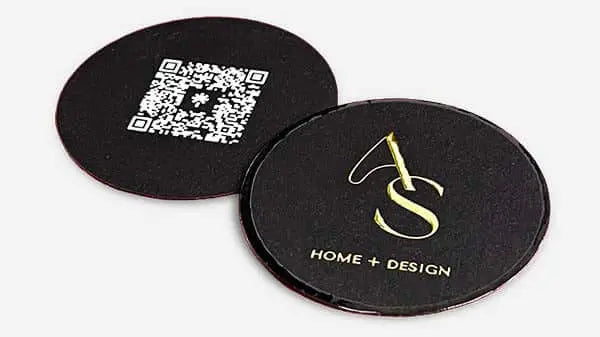


Elevate brand perception with luxury business cards
TL;DR:
- Physical luxury business cards significantly influence first impressions and brand perception.
- Material quality, attention to detail, and exclusivity cues differentiate luxury cards from standard ones.
- Consistent deployment and high production standards enhance brand recognition and long-term trust.
Many luxury brand owners assume a polished website and active social media presence are enough to signal prestige. They are not. When you hand someone a business card at a high-stakes meeting, that small piece of material communicates your brand’s standards in seconds. It signals whether you take quality seriously, whether you invest in details, and whether you belong in the same room as your most discerning clients. This guide breaks down exactly how luxury business cards shape perception, what separates a truly premium card from a standard one, and how to build a card strategy that works across your entire organization.
Table of Contents
- Why perception matters in the luxury space
- What makes a business card feel truly luxurious?
- How luxury business cards shape first impressions
- Strategically applying luxury cards for maximum brand impact
- Why digital-only brands still need a luxury card presence
- Start elevating your brand perception with bespoke cards
- Frequently asked questions
Key Takeaways
| Point | Details |
|---|---|
| First impressions matter | A luxury business card sets the tone for how others view your brand within seconds. |
| Material and design count | Premium materials and specialty finishes immediately convey sophistication and attention to detail. |
| Strategic use amplifies branding | Intentionally incorporating luxury cards into your routine can unlock new business and deepen relationships. |
| Physical cards outperform digital | Tactile cards deliver emotional impact that digital alternatives cannot match in high-end settings. |
Why perception matters in the luxury space
In luxury markets, perception is not a soft concept. It is the core driver of purchase decisions, referrals, and long-term loyalty. Clients at the high end of any market are not just buying a product or service. They are buying trust, exclusivity, and the feeling that they are working with someone who operates at their level.
Physical brand touchpoints carry disproportionate weight in this environment. A digital interaction can be replicated, automated, or forgotten. A well-crafted physical object stays. It sits on a desk, gets passed to a colleague, or gets tucked into a wallet for months. As noted in research on shaping perception instantly, perception shapes whether luxury brands are trusted and remembered.
The brand impact of luxury cards goes beyond aesthetics. It is about consistency. Every time someone receives your card, they form an impression of your entire operation.
“A business card is not just contact information. It is a physical sample of your brand’s standards.”
Here are the key perceptual triggers that matter most in luxury contexts:
- Material quality: Heavy stock, specialty papers, and refined finishes immediately signal investment and seriousness.
- Attention to detail: Precise die-cutting, consistent color, and clean typography show that your brand does not cut corners.
- Brand consistency: A card that matches your visual identity across every element reinforces trust and recognition.
- Exclusivity cues: Limited-run cards, unique finishes, or custom shapes signal that your brand is not mass-produced.
These triggers work fast. Research on consumer behavior consistently shows that tactile experiences activate emotional responses more quickly than visual ones alone. When someone holds a card with real weight and texture, their brain registers quality before they consciously process the design. That is the power of a well-executed luxury business card.
For brand owners and executives, this means every card you distribute is a micro-moment of brand positioning. It either reinforces your premium status or quietly undermines it.
What makes a business card feel truly luxurious?
Not every thick card qualifies as a luxury card. True luxury comes from the combination of material, finish, design, and intent. Each element needs to work together.
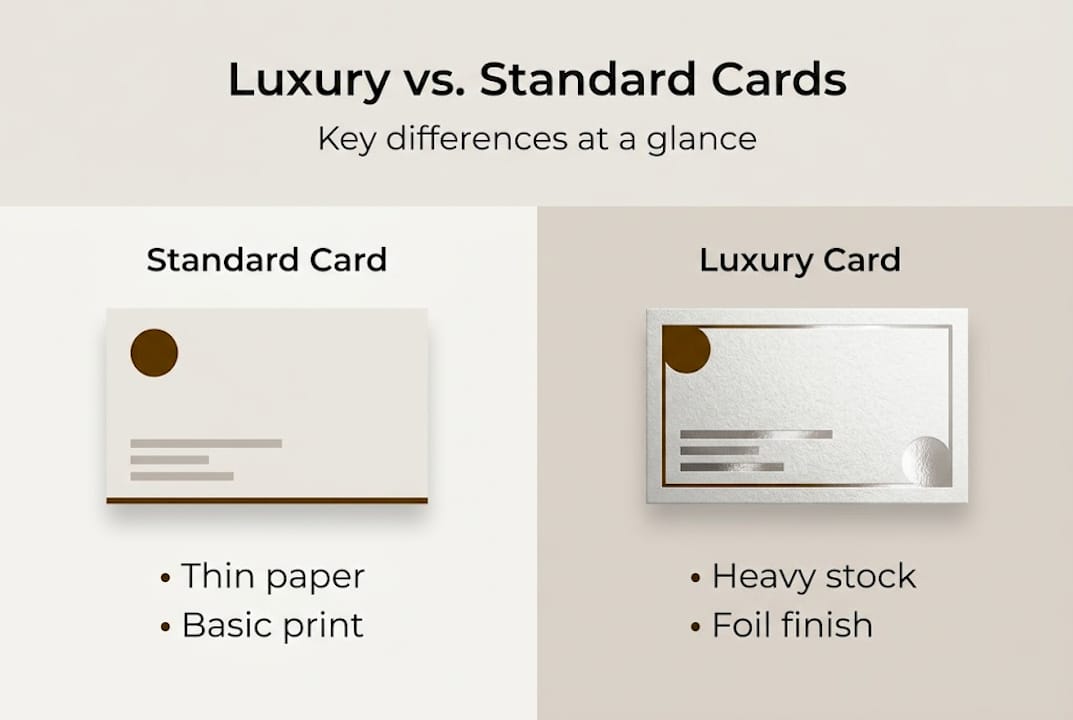
Here is a direct comparison of what separates standard cards from luxury ones:
| Feature | Standard card | Luxury card |
|---|---|---|
| Paper weight | 14 pt to 16 pt | 32 pt and above |
| Printing method | Digital offset | Letterpress, foil, or engraving |
| Finish | Matte or gloss coating | Soft touch, spot UV, or textured stock |
| First impression | Forgettable | Memorable and tactile |
| Design approach | Template-based | Fully custom |
As covered in the design guide for luxury cards, luxury cards use advanced printing and specialty finishes for measurable brand impact. The printing guide for luxury brands goes deeper on how each technique affects the final result.
Here is how to select materials and finishes that match your brand’s character:
- Define your brand’s core feeling. Is it bold and architectural, or refined and minimal? Your card should reflect that immediately.
- Choose your paper stock first. Weight and texture set the baseline experience. Start here before choosing finishes.
- Select one signature finish. Foil, embossing, or soft touch. One done well beats three done poorly.
- Align colors precisely. Use Pantone references, not just digital color codes, to ensure consistency across print runs.
- Review a physical proof. Digital mockups do not capture how a card actually feels. Always approve a physical sample before full production.
Pro Tip: Understated choices often outperform flashy ones. A single line of gold foil on a thick, uncoated stock reads as more exclusive than a card covered in metallic elements. Restraint is a luxury signal in itself.
How luxury business cards shape first impressions
First impressions form fast. Research consistently shows that people form judgments about professionalism and trustworthiness within the first few seconds of an interaction. A business card exchanged at that moment either reinforces or contradicts the impression you are building in person.

As detailed in the analysis of business cards brand signals, premium cards convey seriousness, quality, and exclusivity in ways that generic cards cannot.
Here is what the data shows when comparing card types in networking scenarios:
| Metric | Standard card | Luxury card |
|---|---|---|
| Recall after 1 week | Low | High |
| Perceived brand quality | Average | Premium |
| Likelihood of follow-up | Moderate | Significantly higher |
| Conversation starter | Rarely | Frequently |
Studies on executive networking suggest that 72% of people judge a company’s credibility based on the quality of its business card. That number is hard to ignore when you are building a luxury brand.
Luxury cards send specific signals the moment they are received:
- Attention to detail: A well-crafted card shows that your brand notices the small things, which implies you will notice them in client work too.
- Investment in relationships: A premium card communicates that you value the interaction enough to prepare for it properly.
- Exclusivity: A card that feels different from every other card in someone’s wallet makes you memorable by default.
- Consistency: When your card matches your brand’s visual language exactly, it builds confidence that your operation is organized and intentional.
For more on ways to stand out with cards in competitive environments, the strategies go well beyond design alone.
Strategically applying luxury cards for maximum brand impact
Having a great card is only part of the equation. How you deploy it matters just as much. A luxury card used inconsistently or distributed carelessly loses most of its impact.
Start with consistency across your team. Every executive and client-facing team member should carry a card that reflects the same visual standards. Mismatched cards from different print runs or different designers send a fragmented signal. As outlined in the resource on creating memorable cards, tailoring cards to brand elements directly boosts recognition and recall.
Here is a step-by-step approach to rolling out a luxury card program across your organization:
- Audit your current cards. Collect every version in circulation and assess them against your current brand standards.
- Define a single brand card template. Work with a designer to establish the core design, materials, and finishes that apply to all cards.
- Create tiered variations if needed. Some executives may warrant a more premium version for specific high-value interactions.
- Set a reorder schedule. Luxury cards should never run out. Build a reorder cycle into your operations calendar.
- Train your team on card etiquette. How a card is presented matters. A two-handed exchange or a brief pause to look at the card signals respect.
For a detailed look at the design process for luxury brands, the steps from concept to final production are worth reviewing before you start.
Pro Tip: Pair your card with a custom touch at key moments. A handwritten note, a personal invitation, or a small branded item alongside your card turns a simple exchange into a memorable brand experience. The card becomes the anchor for the entire interaction.
Why digital-only brands still need a luxury card presence
Here is a perspective most luxury executives are not acting on: going digital-only is not a sign of modernity. It is a missed opportunity.
Many brands believe that a strong Instagram presence or a beautifully designed website is enough to signal premium status. But digital assets are everywhere. Every competitor has them. A physical luxury card is something most digital-first brands skip entirely, which means it is now a differentiator.
At executive networking events, high-value client dinners, and luxury brand collaborations, the tactile exchange still defines the moment. A LinkedIn profile cannot replicate the feeling of holding a card with real weight and a finish that demands attention. Those who attract discerning clients consistently understand this.
The card gives you control over your narrative in a way that no algorithm can. You decide exactly what someone holds, feels, and keeps. That is a rare kind of brand control, and it is worth using.
Start elevating your brand perception with bespoke cards
The strategies in this article only work when the card itself is built to the right standard. A card that looks premium in a mockup but feels cheap in hand will do more damage than a plain white card. Production quality is not optional at this level.
At BcardsCreation, every card is developed individually, without templates or automated editors. You get expert design guidance, material consultation, and controlled production from start to finish. Browse the custom business card design options to see what is possible for your brand. If you want to explore specialty finishes and foiling, the creative luxury card options showcase the full range of what we produce. Your next card should do more than share your contact details. It should make a statement.
Frequently asked questions
What materials are best for luxury business cards?
Thick, premium paper stock and specialty finishes like foil or embossing create a true luxury feel. As covered in the luxury card design guide, high-quality materials and finishes are what separate luxury cards from standard ones.
Do luxury business cards actually influence first impressions?
Yes, luxury cards dramatically boost memorability and perceived brand value compared to standard designs. Research on shaping perception instantly confirms that perception shapes whether luxury brands are trusted and remembered.
How can I personalize luxury business cards for my brand?
Work with a designer to integrate your brand’s colors, logo, and signature finishes for maximum effect. Tailoring cards to brand elements directly boosts recognition according to research on creating memorable cards for luxury brands.
Are digital business cards as effective as physical luxury cards?
No, physical luxury cards offer a tactile, memorable experience that outshines digital alternatives in first impressions. As shown in the research on business cards as brand signals, physical cards are critical for luxury market perception.
Recommended
- Business Cards as Brand Signals: Elevate Luxury Identity – BcardsCreation
- Luxury Business Cards: Shaping Perception Instantly – BcardsCreation
- Luxury Business Card Design Process for Distinct Brands – BcardsCreation
- Creating Memorable Business Cards for Luxury Brands – BcardsCreation
- BVLGARI at BUCHERER - Martin Bissig


