

The Role of Contactless Business Cards in Modern Networking
TL;DR:
- Contactless business cards quickly transfer digital profiles to smartphones using NFC or QR codes. They reduce reprinting costs, improve branding consistency, and boost information retention through instant, live content updates.
A contactless business card is a physical or digital card embedded with NFC (Near Field Communication) technology or a QR code that transfers your full contact profile to any smartphone in under one second. The role of contactless business cards goes well beyond replacing paper. These tools function as live entry points to your brand, linking recipients directly to portfolios, booking pages, video introductions, and social profiles. The digital business card industry reached $217 million in 2026, with 37% of businesses already using some form of digital card. That adoption rate signals a real shift in how professionals think about first impressions and follow-up.
How do contactless business cards work to improve networking efficiency?
NFC and QR code technologies are the two core mechanisms behind contactless networking solutions. Each works differently, but both eliminate the friction that slows traditional card exchanges.
NFC (Near Field Communication) works through a chip embedded in the card. When a recipient holds their phone near the card, the chip activates and pushes a URL or contact file directly to the phone’s browser or contacts app. Contact transfers in under 1 second with no manual data entry required. That speed matters because it removes the most common failure point in traditional networking: the business card that gets pocketed and never entered into a phone.
QR codes offer a visual alternative. The recipient scans the code with their camera app, which opens a digital profile in their browser. No dedicated app is needed on either end.
Here is what makes both methods effective for professionals:
- No app required. Profiles open in native mobile browsers, which means zero friction for the recipient.
- No manual entry. Contact details land directly in the phone, reducing transcription errors to zero.
- NFC cards generate 50% higher retention compared to QR-only sharing. The physical tap creates a more memorable interaction.
- One card works across iPhone and Android without configuration changes.
- The digital profile behind the card updates in real time. Change your phone number or job title once, and every future tap reflects the update.
Pro Tip: Position the NFC chip toward the top third of the card when handing it over. Most phones read NFC through the upper back panel, so this placement reduces the need for recipients to reposition their device.
The practical result is faster, cleaner data exchange. Recipients do not lose your information in a stack of paper cards. You do not chase follow-ups from contacts who misread a digit.

What are the key benefits of contactless business cards over traditional paper cards?
The benefits of digital business cards become clearest when you compare them against the recurring costs and limitations of paper. Traditional cards require reprinting every time a detail changes. For a sales team of 50 or more, that cost compounds quickly. Contactless cards significantly reduce printing, design, and shipping costs at scale. One physical NFC card per person, paired with an updatable digital profile, replaces an ongoing print budget.
Sustainability and cost control
Paper card production generates waste at every stage: design revisions, print runs, outdated reprints, and discarded cards. Contactless cards reduce that cycle to a single production run per employee. The environmental benefit is real, and for brands that communicate sustainability as a value, it reinforces that message at the point of contact.
Dynamic content and brand consistency
A paper card holds a name, title, and phone number. A contactless card holds everything else. The card links to a digital profile that can include:
- Video introductions or product demos
- Portfolio galleries and case studies
- Calendar booking links (Calendly, Acuity Scheduling)
- LinkedIn, Instagram, or other relevant profiles
- Direct links to proposals or pricing pages
This is where the impact of NFC business cards on brand consistency becomes concrete. Every recipient sees the same branded experience regardless of when or where the card was shared.
Feature comparison: contactless vs. paper cards
| Feature | Contactless card | Paper card |
|---|---|---|
| Content capacity | Full digital profile with media | Name, title, contact details only |
| Update process | Instant, no reprint needed | Requires new print run |
| Recipient friction | Tap or scan, no app needed | Manual data entry required |
| Analytics | Tap tracking, CRM integration | No tracking available |
| Cost over time | One-time card cost, low ongoing | Recurring print and shipping costs |
| Environmental impact | Minimal waste | Paper and ink waste per run |
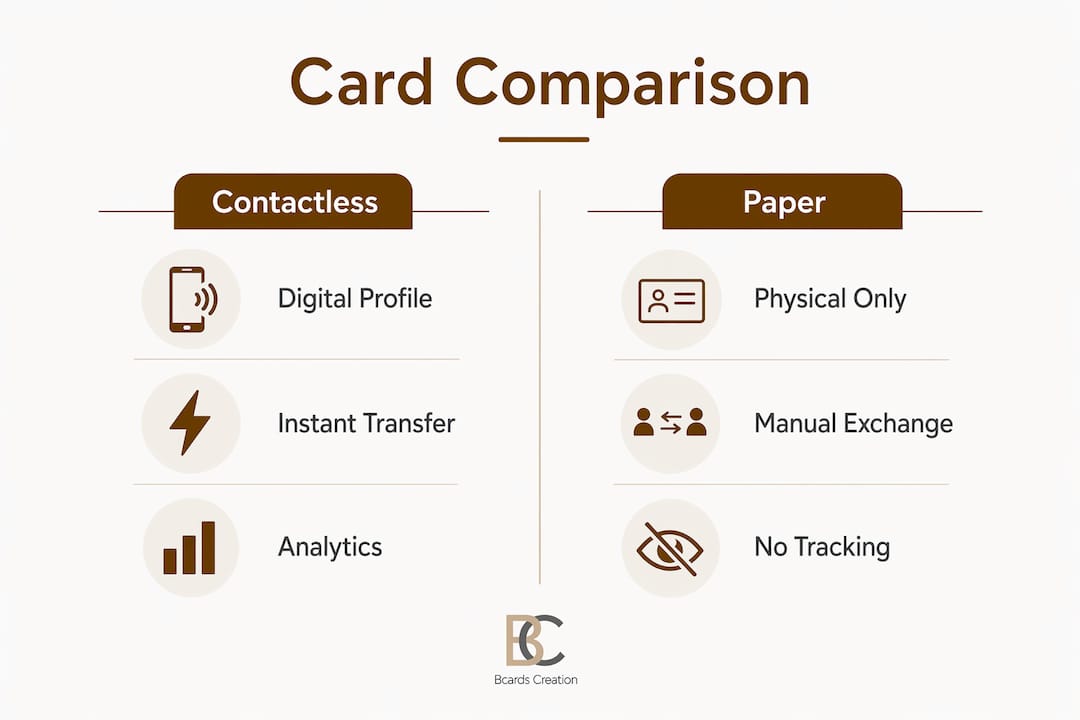
Analytics deserve specific attention. Platforms like TAPiTAG track how many times a card has been tapped, which links recipients clicked, and where interactions occurred. That data feeds directly into CRM tools, giving sales professionals a measurable view of their networking activity.
Why is the branding gateway function of contactless cards essential in client interactions?
Professionals should view contactless cards not as storage devices but as gateways to branded digital experiences that extend the first impression well beyond the handshake. The physical card creates the moment. The digital profile sustains it.
This matters because client memory is selective. Neuroscience research shows that the novelty of a digital handshake creates stronger memory encoding than a paper card exchange. The tap interaction is unexpected enough to register differently in the recipient’s mind. That distinctiveness is a branding advantage, not just a technology feature.
The branding function works on several levels:
- Visual consistency. The digital profile mirrors your brand colors, typography, and tone. The physical card and the digital destination feel like one coherent identity.
- Tonal consistency. The copy, imagery, and links on the profile reflect the same positioning as your website and marketing materials.
- Contextual relevance. You can configure different profiles for different contexts. A card used at a design conference links to your portfolio. The same card used at a sales event links to a case study and booking page.
- Transition from in-person to digital. The card does not end the conversation. It moves it online, where the client can explore at their own pace.
The hybrid approach combines a premium physical card with a dynamic digital profile. This is the most effective model for professionals who want both the tactile credibility of a well-made card and the flexibility of live digital content. The physical card signals quality and intentionality. The digital profile delivers depth. Together, they cover both the emotional and informational dimensions of a first impression. For a deeper look at how business cards support branding, the design and material choices behind the physical card carry as much weight as the technology embedded in it.
How can businesses and entrepreneurs implement contactless cards effectively?
Getting the most from contactless networking solutions requires more than ordering an NFC card. The setup, design, and follow-up process each affect the outcome.
-
Choose a quality physical card with an embedded NFC chip. The card itself is still a physical object that people hold and notice. Material, finish, and weight all communicate something about your brand before the tap happens. NFC chips can be reprogrammed to update URLs indefinitely, so a well-made card is a long-term asset, not a disposable item.
-
Build a focused digital profile. Include only what is relevant to your primary networking context. A cluttered profile with 12 links performs worse than a clean profile with three. Lead with your strongest content, whether that is a portfolio, a booking link, or a short video.
-
Use a team management platform for consistency. Platforms like TAPiTAG allow administrators to manage employee profiles centrally and push updates across the entire team without reprinting cards. This is the practical answer to brand consistency at scale.
-
Integrate with your CRM. Connect tap data to tools like HubSpot or Salesforce so that every new contact automatically enters your pipeline. This removes the manual step that causes most follow-up delays.
-
Accelerate follow-up. Contactless cards improve follow-up speed by placing your contact directly in the recipient’s recent activity. Send a short message within 24 hours referencing the event or conversation. The tap creates the opening. The follow-up closes it.
Pro Tip: Carry both a premium physical NFC card and a digital wallet version (Apple Wallet or Google Wallet). The physical card works in formal settings and in-person events. The digital version covers video calls, virtual conferences, and situations where you do not have a card on hand.
Key takeaways
Contactless business cards work best when the physical card quality, digital profile content, and follow-up process are treated as one connected system.
| Point | Details |
|---|---|
| NFC transfers data instantly | Contact details reach a recipient’s phone in under 1 second with no app or manual entry. |
| Retention is measurably higher | NFC interactions produce 50% higher retention than QR-only sharing methods. |
| Dynamic profiles replace static content | One card links to live portfolios, booking pages, and media that update without reprinting. |
| Hybrid approach delivers the most value | A premium physical card paired with a digital profile covers both tactile and informational needs. |
| Team management scales the benefit | Centralized platforms let businesses update all employee profiles instantly without new print runs. |
Why I think most professionals are still underusing this tool
I have watched the contactless card conversation focus almost entirely on the technology. NFC chip, QR code, tap speed. Those details matter, but they are not the point. The point is what happens after the tap.
Most professionals set up a digital profile, link their LinkedIn, and call it done. That is the equivalent of printing a paper card with only your name on it. The profile is the product. The card is just the trigger.
What I have seen work consistently is treating the digital profile as a second business card, one that gets the same design attention as the physical one. That means deliberate choices about which links appear, in what order, and what the recipient is supposed to do next. A booking link with no context converts poorly. A booking link preceded by a 30-second video introduction converts well.
The other thing worth saying directly: the physical card still matters. A thin, generic NFC card with a logo printed on it does not create the same impression as a well-made card with considered materials and a finish that reflects the brand. The design quality of the physical card shapes how the recipient perceives the digital profile before they even tap. If the card feels cheap, the profile inherits that perception.
The future of contactless networking is not about replacing the physical card. It is about making the physical and digital work together with the same level of intentionality you bring to any other client-facing material.
— Kostiantyn
Upgrade your networking with custom NFC-ready cards from Bcardscreation
Bcardscreation designs and produces premium custom business cards built for professionals who want both physical quality and digital capability. Every card is developed individually, with material consultation, expert design guidance, and controlled small-batch production. No templates. No automated editors. The result is a card that holds its own before the tap and delivers a branded experience after it.
If you are ready to pair a well-made physical card with your contactless setup, explore custom business card design options at Bcardscreation. For clients who want a more distinctive physical presence, the luxury foil and creative card range adds a finish that reinforces the premium signal your brand needs.
FAQ
What is the role of contactless business cards in networking?
Contactless business cards transfer your full digital profile to a recipient’s phone via NFC tap or QR scan in under one second. They replace static paper cards with live, updatable content including portfolios, booking links, and video introductions.
How do contactless cards work without an app?
NFC cards push a URL directly to the recipient’s native mobile browser when tapped. No app download is required on either device, which removes the most common barrier to adoption.
Are contactless business cards better than paper cards?
For professionals who network regularly, yes. NFC cards produce 50% higher retention than QR-only methods, eliminate reprinting costs, and allow instant profile updates. Paper cards remain useful as a tactile complement in a hybrid approach.
Can one NFC card be used for multiple purposes?
Yes. NFC chips can be reprogrammed to point to different URLs, and many platforms support multiple profile configurations on a single card. This lets you direct contacts to different content depending on the context of the meeting.
What makes a contactless card effective for branding?
The physical card quality sets the first impression, and the digital profile sustains it. A well-designed card with a focused, branded digital profile creates stronger memory encoding than a paper card exchange, according to neuroscience research on NFC interactions.


