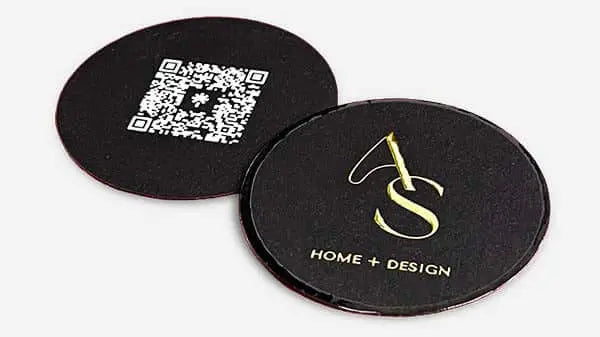


Why invest in business card design for lasting impact
In a world saturated with LinkedIn requests and digital contact exchanges, custom business cards with technology boost engagement by 38%. This isn’t nostalgia driving the trend. Physical cards create sensory experiences that digital alone cannot replicate, extending interaction time and embedding your brand into memory. Understanding why investing in business card design matters helps professionals leverage both tactile and digital channels for maximum networking impact.
Table of Contents
- The Evolving Role Of Business Cards In Modern Networking
- Why Premium Business Card Design Drives Stronger Brand Impressions
- Integrating Technology Into Business Cards For Enhanced Engagement
- Design Best Practices To Maximize Your Business Card’s Impact
- Elevate Your Brand With Custom Business Card Design From Bcardscreation
- Frequently Asked Questions
Key takeaways
| Point | Details | |-------|---------|| | Technology integration | Custom cards with NFC and QR codes drive 38% higher engagement than standard cards. | | Premium materials matter | Heavy textured cards signal professionalism to 78% of executives and boost recall by 34%. | | Extended interaction | Physical cards extend engagement from 2.3 seconds digital to 8.7 seconds tactile experience. | | Hybrid approach wins | Combining print and digital maximizes brand impact across all networking channels. | | Sensory memory advantage | Tangible cards activate multiple senses, creating stronger memory formation than screen interactions. |
The evolving role of business cards in modern networking
Networking in 2026 blends instant digital sharing with meaningful tactile experiences. Over 4 million digital cards were shared in 2023, signaling a shift from basic paper handouts. Yet physical cards remain valuable as tangible brand promises that engage sensory channels critical for memory formation.
Digital cards offer convenience, but they lack the physical presence that triggers deeper cognitive processing. When someone receives a well-designed card, they touch it, examine its weight, notice its texture. This multi-sensory engagement creates neural pathways stronger than viewing a contact on a screen.
Hybrid approaches now dominate professional networking strategies. Physical cards act as symbolic brand anchors while embedded technology enables immediate digital connection. This combination addresses the modern professional’s need for both instant access and memorable impression.
Consider these evolving dynamics:
- Digital cards provide frictionless contact exchange but disappear into crowded contact lists
- Physical cards create a pause moment where recipients process your brand visually and tactilely
- Hybrid cards combining premium materials with NFC or QR codes capture both advantages
- Advantages of unique business cards extend beyond simple contact sharing to strategic positioning
The key insight is that networking effectiveness isn’t about choosing physical or digital. It’s about understanding how each channel serves different cognitive and practical functions in building professional relationships.
Why premium business card design drives stronger brand impressions
First impressions form within milliseconds, and your card’s physical properties communicate before anyone reads a word. Premium cards generate 34% higher recall rates than digital-only networking approaches, and the reason lies in subconscious quality judgments.
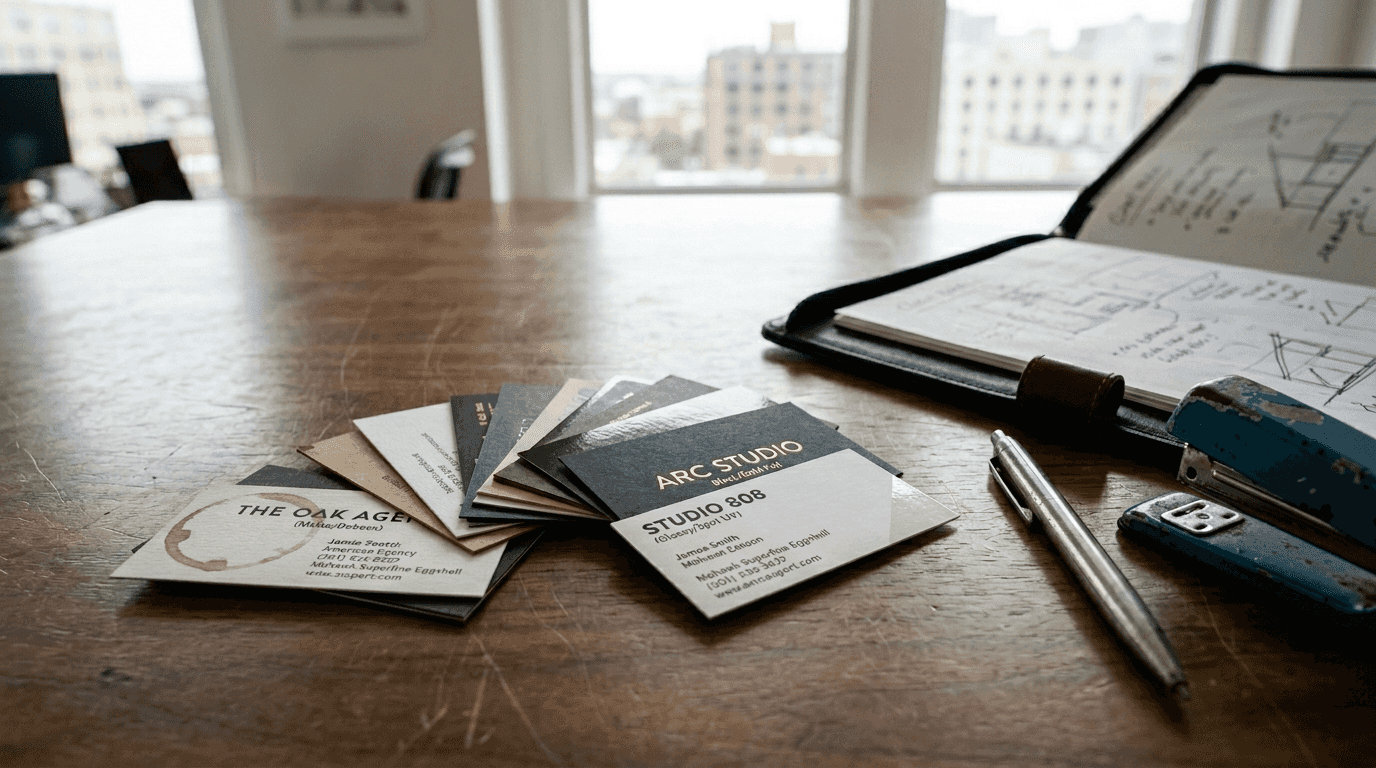
Heavy, textured cards signal professionalism to 78% of executives, who associate substantial cardstock with established brands and serious business intent. This perception forms instantly when someone feels the weight and texture of your card. Thin, flimsy stock suggests budget constraints or lack of attention to detail, while substantial materials convey investment in quality.
The impact extends beyond initial perception. Physical cards extend interaction time to 8.7 seconds compared to 2.3 seconds for digital exchanges. Those additional six seconds create opportunities for your brand elements, finishes, and design hierarchy to register consciously and subconsciously.
Premium features deliver specific benefits:
| Feature | Brand Impact | Business Benefit |
|---|---|---|
| 350-400gsm cardstock | Conveys substance and permanence | Recipients less likely to discard |
| Soft touch lamination | Creates tactile pleasure | Encourages repeated handling |
| Spot UV or foil accents | Adds visual depth and luxury | Elevates perceived brand value |
| Embossing or debossing | Provides dimensional interest | Engages touch and sight simultaneously |
| Edge painting | Signals attention to detail | Differentiates from standard cards |
These elements work together to position your brand strategically. When competing for attention among dozens of contacts made at an event, the card that feels different gets remembered. This recall advantage directly impacts follow-up success and relationship development.
Pro Tip: Test different cardstock weights by ordering small batches. The difference between 350gsm and 400gsm feels subtle in your hand but significant to recipients accustomed to standard 300gsm cards. Choose the weight that aligns with your brand positioning, whether that’s approachable substance or absolute luxury.
Investing in premium business cards and understanding luxury business cards perception helps you make informed decisions about where premium features deliver measurable returns versus unnecessary expense.
Integrating technology into business cards for enhanced engagement
Technology transforms business cards from static information carriers into dynamic engagement tools. Custom cards with NFC and dynamic QR codes achieve 38% higher engagement because they reduce friction in the connection process while maintaining the tactile brand experience.
NFC tags embedded in cards allow recipients to tap their phone and instantly access your digital profile, portfolio, or calendar link. This seamless transition from physical to digital respects both the memorable handoff moment and the recipient’s preference for digital information management. QR codes serve similar functions with broader device compatibility.
The key is strategic implementation. Technology should enhance rather than replace your card’s core function as a brand artifact. A beautifully designed card with embedded tech offers two engagement opportunities: the immediate sensory experience and the extended digital interaction.
Consider these implementation principles:
- Direct recipients to focused destinations like booking calendars or portfolio highlights, not generic homepages
- Use dynamic QR codes that let you update the destination URL without reprinting cards
- Position tech elements visually so they complement rather than dominate the design
- Test NFC read distance and QR code scan reliability before bulk production
- Track engagement metrics to understand which digital destinations drive actual conversations
Pro Tip: Link your NFC or QR code to a mobile-optimized landing page that captures the recipient’s contact information in exchange for valuable content. This transforms a one-way information exchange into a mutual connection opportunity while providing data on which networking contexts generate the most engaged contacts.
The most effective approach combines premium materials that command attention with technology that facilitates immediate action. Your card’s physical presence earns the initial engagement, while integrated tech enables the recipient to act on that interest without friction. Explore impactful business card features that combine traditional craftsmanship with modern connectivity.
Design best practices to maximize your business card’s impact
Effective card design follows a hierarchy that guides the eye and communicates your brand clearly. Poor design undermines even premium materials, while thoughtful layout elevates modest cardstock.
Follow this sequence for maximum impact:
- Establish clear visual hierarchy with name and title as primary focal points using larger, bolder typography
- Position contact info within safe margins at least 3mm from edges to ensure readability after cutting
- Use whitespace strategically to create breathing room and prevent visual clutter
- Align elements consistently, either flush left, centered, or using a grid system
- Limit color palette to 2-3 brand colors plus black or white for professional cohesion
- Test legibility by viewing your design at actual size on screen before printing
Choose substantial cardstock between 350-400gsm and select finishes like soft touch, spot UV, or foil that reinforce your quality positioning. These material choices complement design decisions by adding tactile and visual depth.
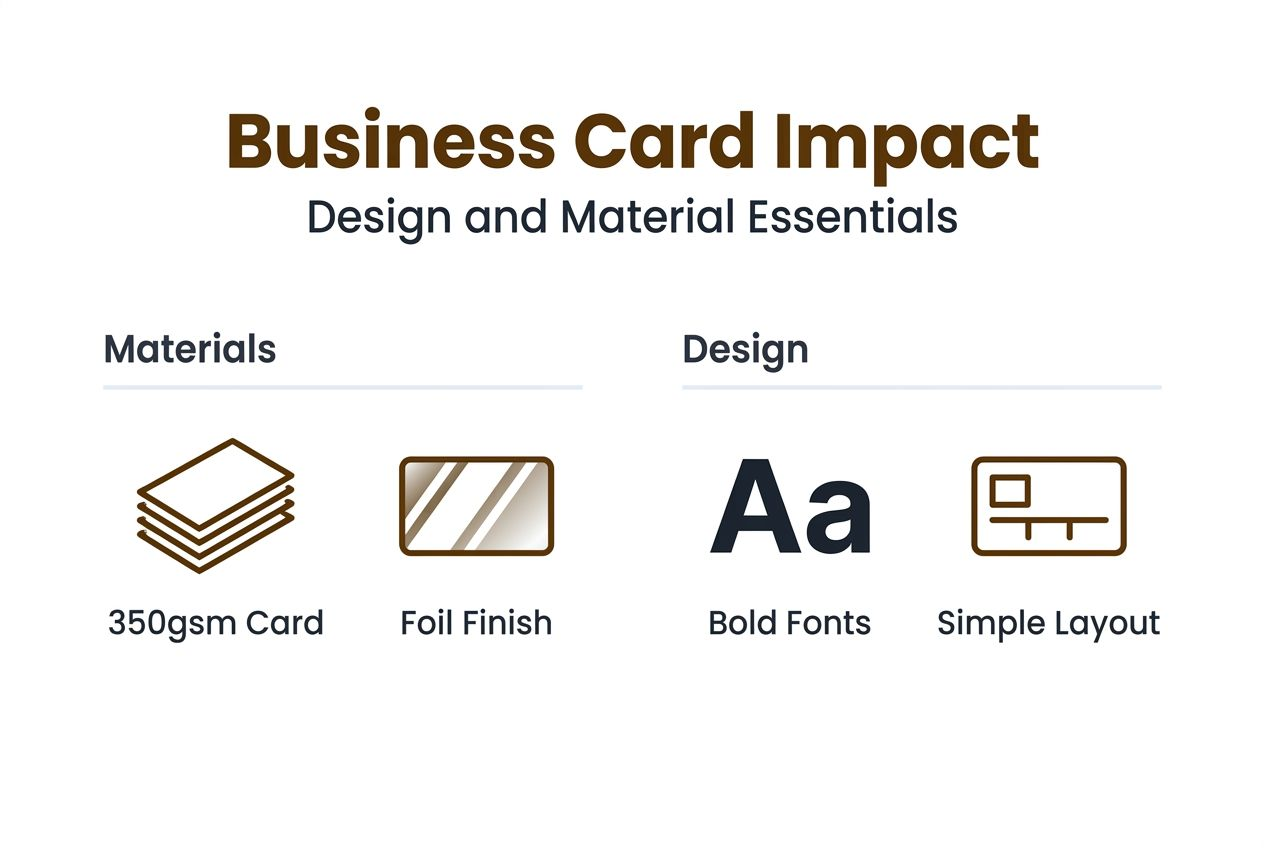
Critical design elements comparison:
| Element | Standard Approach | Premium Approach |
|---|---|---|
| Typography | Single font, 10-12pt body text | Font pairing, 8-10pt body with clear hierarchy |
| Color mode | RGB design causing color shifts | CMYK from start with Pantone for brand colors |
| Image resolution | 150-200 DPI causing pixelation | 300 DPI minimum for sharp reproduction |
| Logo format | PNG or JPG causing quality loss | Vector (AI, EPS, or PDF) for crisp scaling |
| Bleed setup | No bleed causing white edges | 3mm bleed ensuring full-edge printing |
Avoid cluttered designs, illegible fonts, and outdated information that undermine professional credibility. Common mistakes include trying to fit too much information, using decorative fonts for body text, and failing to update cards when roles or contact details change.
Pro Tip: Order a proof print before committing to your full batch. Colors, finishes, and text legibility often appear different in physical form than on screen. A small proof investment prevents expensive disappointment and lets you adjust details like color saturation or text weight for optimal printed results.
Learn more about premium business card design principles that translate brand strategy into tangible, memorable networking tools.
Elevate your brand with custom business card design from BcardsCreation
You now understand why premium design, quality materials, and strategic technology integration transform business cards from commodities into brand assets. The question is whether to tackle this yourself or partner with specialists who navigate material options, finishing techniques, and design nuances daily.
BcardsCreation develops fully custom, small-batch cards for professionals who view networking tools as brand investments. Every project combines expert design guidance, material consultation, and refined finishing without templates or automated editors. Explore custom business card design that reflects your unique positioning, creative business cards printing and foiling for standout finishes, or clear business cards that make bold visual statements.
Frequently asked questions
How does a high-quality business card benefit networking efforts?
High-quality cards extend interaction time and create stronger memory formation through tactile engagement. They signal professionalism and brand investment, making recipients more likely to retain and reference your card after initial meetings.
What are the advantages of integrating technology like NFC in cards?
NFC and QR codes reduce friction in digital connection while preserving the memorable physical exchange. They enable instant access to portfolios, calendars, or contact information and provide engagement metrics that help you understand which networking contexts generate the most interested connections.
How should business card design reflect a professional brand?
Design should follow clear visual hierarchy, use brand colors consistently, and align typography with your industry positioning. Conservative industries benefit from classic layouts with subtle premium touches, while creative fields can explore bold materials and unconventional formats that demonstrate design thinking.
What materials and finishes best create a premium impression?
Cardstock between 350-400gsm provides substantial feel that signals quality. Soft touch lamination, spot UV highlighting key elements, foil stamping for logos, and edge painting all contribute to premium perception. Choose finishes that align with your brand personality rather than applying every option available.
Are digital business cards effective without physical ones?
Digital cards offer convenience but lack the sensory engagement and symbolic value of physical cards. The most effective approach combines both, using physical cards for memorable first impressions and digital cards for quick follow-up sharing. Learn more about premium business cards branding strategies that leverage both channels.


