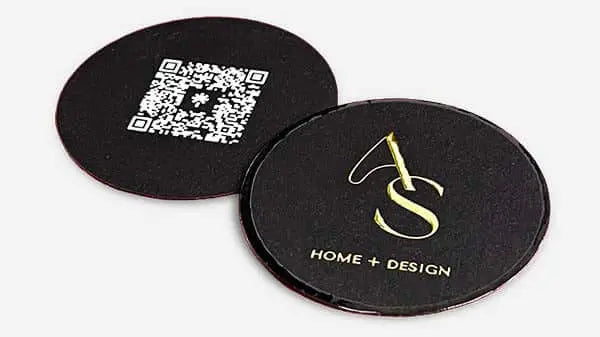


Networking cards that make small businesses stand out
TL;DR:
- Physical business cards remain valuable for trust, recall, and conversation, especially with digital features.
- Effective cards have clear branding, a specific call-to-action, and are designed for their distribution context.
- Combining high-quality materials, custom design, and a follow-up system maximizes networking ROI.
Most small business owners hand out cards at events and never hear back. The card gets pocketed, forgotten, or tossed. That’s not bad luck. That’s a design and strategy problem. Your networking card is often the first physical impression someone has of your business, and if it looks generic, it signals that your business might be too. This guide covers exactly what you need to plan, design, produce, and distribute networking cards that actually get kept, scanned, and acted on.
Table of Contents
- Why networking cards still matter in 2026
- What you need before designing networking cards
- Step-by-step: Creating premium custom networking cards
- Distributing your cards: Maximizing value and tracking ROI
- Common mistakes to avoid and how to troubleshoot
- The real key to memorable business cards most miss
- Bring your custom networking cards vision to life
- Frequently asked questions
Key Takeaways
| Point | Details |
|---|---|
| Use hybrid cards | Combining physical cards with digital features boosts your networking ROI. |
| Prioritize branding | A unique, premium card instantly elevates your business’s first impression. |
| Track your leads | QR codes and CRM integration let you see which cards actually drive results. |
| Design for accessibility | ADA-compliant cards ensure everyone can connect with your brand easily. |
| Follow up fast | A card is only as powerful as the follow-up you do after networking. |
Why networking cards still matter in 2026
Some business owners assume physical cards are outdated. They’re not. In-person events, trade shows, local meetups, and face-to-face sales meetings are all back in full swing. And the expectation around those interactions has changed. People now expect you to show up with something that reflects your brand clearly, quickly, and memorably.
Physical cards are still preferred by a significant portion of professionals, even as digital networking tools have expanded. The reason is simple. A card creates a tactile moment. You hand it over, someone holds it, looks at it, and forms an impression. That moment doesn’t happen with a phone number typed into a contact form.
What’s changed is how cards perform best. Hybrid digital-physical cards offer measurable ROI for post-pandemic networking, combining the trust of a physical touchpoint with the tracking power of digital tools. A well-made card with a QR code, NFC chip, or personalized landing page URL gives you both the human moment and the data to back it up.
Here’s why cards remain critical in 2026:
- Trust signal. A premium physical card implies investment in your brand, which signals reliability.
- Tangible recall. People remember what they touch. A card with texture, foil, or a unique shape stays in memory.
- Conversation starter. A card that looks different gives the other person something to comment on right away.
- Digital bridge. Hybrid business card design connects the physical card to your digital presence instantly.
- Accessibility. ADA-compliant design, with strong contrast and readable fonts, ensures your card works for everyone, including those with visual impairments.
Stat to know: Cards that combine physical quality with digital features consistently generate higher ROI than basic print-only alternatives.
The takeaway here is clear. Don’t choose between physical and digital. Use both together. Now that we’ve highlighted what makes cards matter, let’s get started with what you need and how to begin.
What you need before designing networking cards
Jumping straight into design is one of the most common mistakes. Before you pick colors or fonts, you need a few things locked down. Getting these right saves you from costly reprints and weak first impressions.
Your core branding assets. You need a finalized logo in vector format, your brand color palette (with hex codes or Pantone values), and your approved font set. If any of these are still in flux, resolve them before printing hundreds of cards.
A clear call-to-action. Every card should prompt one specific action. Scan this QR code. Visit this URL. Book a call. Text this number. Don’t load the card with five options. Pick one, and make it obvious.
Your distribution context. Are you handing these out at trade shows, leaving them at retail counters, passing them one-on-one at client meetings, or all three? Each context has different requirements. A counter card might need to be slightly larger or include a stand. A card for one-on-one meetings can be more personal and detailed.
Digital tracking setup. If you’re adding a QR code, decide in advance where it links and how you’ll track traffic. Google Analytics UTM parameters are a simple starting point. This turns your card into a measurable marketing asset.
ADA readability check. ADA-compliant readability is essential if your business is public-facing. That means minimum 10pt font size, strong contrast between text and background, and no critical information embedded only in a light watermark or decorative script.
Here’s a quick pre-design checklist:
| Item | Ready? | Notes |
|---|---|---|
| Final logo (vector file) | Yes / No | AI, EPS, or SVG format preferred |
| Brand colors with codes | Yes / No | Hex for digital, Pantone for print |
| Approved typography | Yes / No | Include fallback fonts |
| Single clear CTA defined | Yes / No | QR, URL, phone, or booking link |
| QR destination + tracking | Yes / No | UTM-tagged URL recommended |
| ADA contrast checked | Yes / No | Minimum 4.5:1 contrast ratio |
| Distribution context noted | Yes / No | Event, retail, one-on-one, etc. |
Pro Tip: Run your brand colors through a contrast checker before finalizing your card design. Many beautifully branded cards fail ADA contrast standards and are harder to read for a significant portion of the population.
Once you know how to design a unique business card that aligns with your brand strategy, the actual design phase becomes faster and more focused. Once your essentials are lined up, it’s time to move ahead to crafting your card.
Step-by-step: Creating premium custom networking cards
This is where most decisions happen. Work through these steps in order, and you’ll avoid the back-and-forth that delays most print projects.
Step 1: Choose your card stock and finish. Standard paper cards get treated as disposable. Upgrading your stock immediately changes how people handle and perceive your card. Options include:
- Matte laminate: Soft, non-reflective, upscale feel. Works well for minimal or photographic designs.
- Gloss laminate: Bright, crisp, high contrast. Good for color-heavy designs.
- Soft-touch coating: Velvet-like texture. One of the most memorable finishes available.
- Textured paper: Linen, felt, or cotton stocks add a handcrafted quality.
- Plastic or translucent cards: Bold, modern, and highly distinctive in any networking context.
Step 2: Work with a professional designer. Templates produce template results. A custom design built around your specific brand, target audience, and distribution context will always outperform something pulled from a generic library. If you’re working with a specialty studio, ask for material samples before committing to a finish. Quality digital printing for cards matters as much as the design itself.
Step 3: Add digital features. Innovative card features like NFC chips, QR codes, and CRM-ready tracking links are now accessible at almost any budget level. An NFC-enabled card allows someone to tap their phone to your card and land directly on your website, portfolio, or booking page. It’s one physical card doing the work of a digital introduction.

Step 4: Review a physical proof. Never approve a card for full production based on a screen preview. Colors shift between screen and print. Textures can only be evaluated in person. Request a physical proof before your full run goes to press.
Step 5: Partner with the right printer. Card design for lasting impact depends on the printer matching the designer’s vision. Look for specialty providers who offer custom finishes, spot UV, foil stamping, and die-cutting. Hybrid and foil-printed cards drive higher recall and brand engagement, making the premium cost worthwhile for businesses that rely on in-person networking.
| Finish type | Cost level | Best for | Recall impact |
|---|---|---|---|
| Standard matte/gloss | Low | Budget-conscious runs | Moderate |
| Soft-touch laminate | Medium | Professional services | High |
| Spot UV + matte | Medium-high | Design and creative brands | High |
| Foil stamping | High | Luxury, finance, real estate | Very high |
| NFC-enabled plastic | High | Tech-forward businesses | Very high |
Pro Tip: Order a small batch first, especially if you’re testing a new design or finish. A short run of 50 to 100 cards lets you evaluate real-world performance before committing to a larger quantity.
After you create your cards, make sure to maximize their impact and avoid common mistakes.
Distributing your cards: Maximizing value and tracking ROI
The best card in the world doesn’t help if it stays in your bag. Distribution is a strategy, not an afterthought. Here’s how to make every card count.
- Bring more than you think you need. Running out at an event is a missed opportunity. A safe rule is to bring twice what you estimate.
- Hand cards to the right people. Don’t mass-distribute. Give your card when there’s a genuine reason for follow-up.
- Make the exchange intentional. When you hand over your card, briefly explain what the QR code or link leads to. “Scan that to see our recent project gallery” is far more effective than a silent handoff.
- Use QR codes on cards that are tracked. Different events, different QR codes. That way you know exactly where your leads are coming from.
- Add contacts to your CRM the same day. Memory fades fast. Log new contacts within 24 hours of any event.
- Follow up within 48 hours. A quick email or LinkedIn message referencing your conversation converts far more than waiting a week.
“ROI can be measured with UTM-tracked QR codes and CRM follow-up.” The data tells you what’s working and where to invest in your next card run.
Translucent QR-enabled cards are especially effective in tech-adjacent industries and creative fields because the design itself starts a conversation. And investing in custom cards for networking pays off most when your distribution is intentional and your follow-up is fast.
With the steps complete, here’s what to expect and how to optimize further.
Common mistakes to avoid and how to troubleshoot
Even well-intentioned card projects go sideways. Knowing where problems usually appear helps you catch them early.
Poor readability. Small fonts, low contrast, and busy backgrounds are the top offenders. If someone squints to read your card, they won’t bother. Use at least 9pt font for body text, and make sure your most important information stands out clearly. Readable design and consistent follow-up drive higher response rates from cards, which means readability isn’t just a visual preference. It’s a conversion factor.
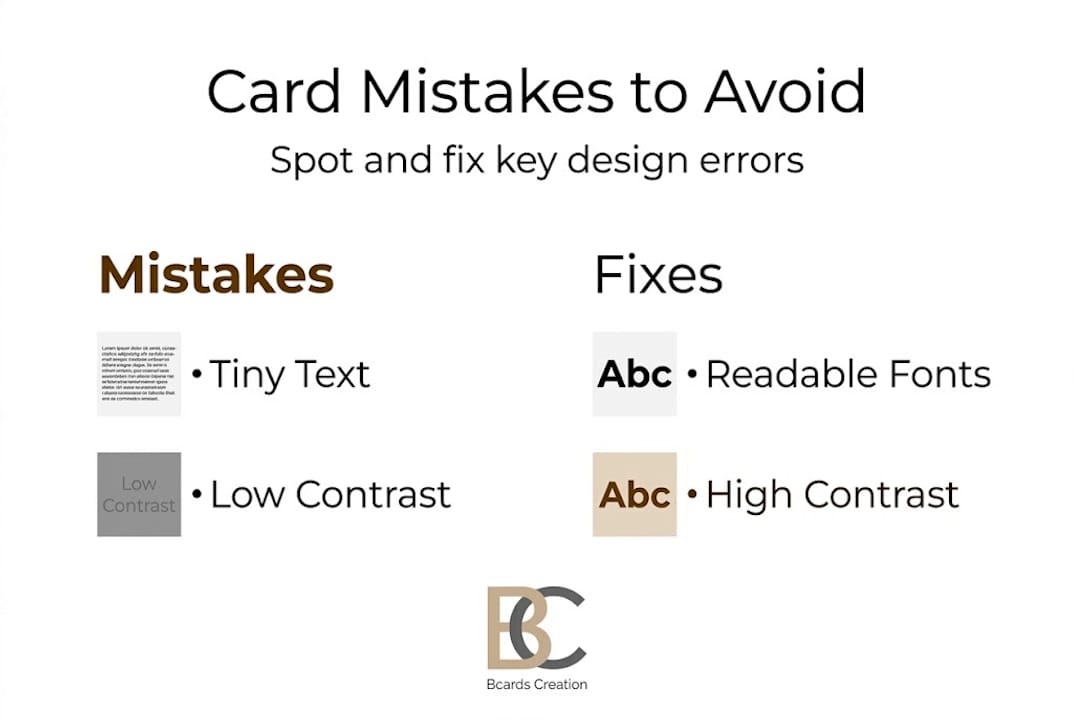
Generic design. If your card looks like it came from a mass-market template service, it signals that your brand isn’t invested in quality. Your card should be recognizable as yours, with design choices that match your brand identity, not a default style.
No follow-up system. Cards don’t build relationships on their own. If you’re handing out cards without a plan for following up, you’re leaving most of the value on the table. Build a simple follow-up routine before your next event.
No performance tracking. Without data, you can’t improve. Use unique QR codes by event or campaign, track landing page visits, and note which contacts came from card exchanges versus other channels. Check your custom business cards guide for more on setting up a repeatable process.
Here’s a quick list of issues and fixes:
- Fonts too small: Increase to minimum 9pt for secondary text, 12pt+ for name and title.
- Low contrast: Use a contrast checker. Aim for 4.5:1 or higher.
- No CTA: Add one clear action, scan, call, book, or visit.
- QR code not tracked: Rebuild with a UTM parameter or a short link service.
- No follow-up: Set a calendar reminder within 24 hours of each event to log new contacts.
Now, let’s step back and consider why most advice stops short and what’s truly required for small business owners.
The real key to memorable business cards most miss
Most business cards are designed to impress. They’re not designed to connect. That’s the gap that most advice misses entirely.
You can have spot UV, foil, a die-cut shape, and a soft-touch finish. The card can look stunning. But if the design doesn’t communicate what you do, who you serve, and what someone should do next, it gets filed away and forgotten. Looking premium and being memorable are two different things.
The cards that actually generate follow-ups share three things. First, they make it immediately obvious what the business does. No guessing required. Second, they carry a single, specific call-to-action that’s easy to act on. Third, they invite a conversation. A foil accent, a translucent material, or a bold design choice gives the recipient something to react to right away.
This is where next-gen and lasting card impact comes from. Hybrid cards that connect physical design to digital data aren’t just modern. They’re tools. They tell you who scanned, when, and what they did next. That turns a networking moment into measurable business intelligence.
The uncomfortable truth is this: most small businesses treat their cards as a checkbox. Something to have, not something to use strategically. The ones that stand out treat every card as a mini brand statement and a conversation starter. That mindset shift, combined with the right materials and a follow-up system, is what separates cards that get kept from cards that get tossed.
Bring your custom networking cards vision to life
Your networking card represents your brand in every room you’re not in. That’s worth investing in.
At BcardsCreation, every card is developed individually without templates or automated editors. You get expert design guidance, material consultation, and controlled production from start to finish. Whether you want foil stamping, soft-touch laminate, NFC-enabled plastic, or something entirely custom, we build it to match your brand precisely. Explore custom business card design options and see what’s possible. Or browse creative luxury business cards with premium finishes designed to make a real impression. Your next networking card should do more than share contact info. Let’s make it do its job.
Frequently asked questions
How can I measure the success of my networking cards?
Track results using unique QR codes linked to web analytics and CRM follow-up. Assign different QR codes to different events or campaigns to see exactly where leads originate.
Is it worth paying for premium card finishes or foils?
Yes. Foil-printed cards drive higher recall and stronger brand engagement, making the investment worthwhile for any business that relies on in-person networking.
Should my card be ADA-compliant?
Absolutely. ADA-compliant readability is essential for public-facing businesses to ensure everyone can read and use your card, including people with visual impairments.
What is a hybrid business card?
A hybrid card pairs a physical design with digital features like QR codes or NFC chips. Hybrid digital-physical cards offer measurable ROI and make it easy for contacts to connect with you instantly after meeting in person.
What’s the most common mistake with business cards?
Using unreadable designs and skipping post-networking follow-up. Readable design and consistent follow-up are the two factors most directly tied to response rates from card exchanges.


