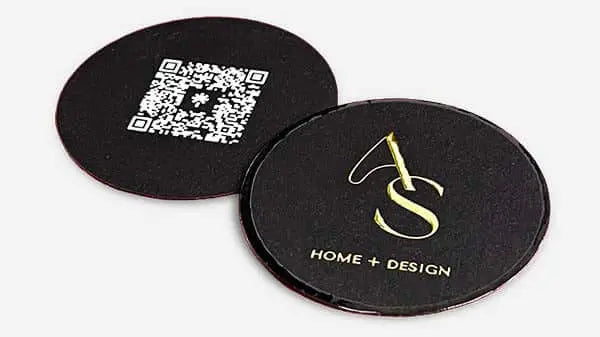


Business Card Distribution Strategy: Your 2026 Guide
TL;DR:
- A targeted business card distribution strategy involves deliberate placement, contextual relevance, and measurable follow-up to generate meaningful networking results. Professionals should use quality cards, prioritize specific contexts, and track engagement with dynamic QR codes, following up within 48 hours to turn exchanges into lasting relationships. Consistent, thoughtful distribution combined with personalized follow-up maximizes the ROI of business card networking efforts.
A business card distribution strategy is the deliberate plan for placing cards in the right hands, at the right moments, through the right channels to generate measurable networking results. Most professionals carry cards but distribute them reactively. The ones who see real returns treat distribution as a system: they identify target contexts, match card design to those contexts, track engagement through dynamic QR codes and tools like Bitly, and follow up within 48 hours. This guide covers every layer of that system, from channel selection and design optimization to tracking and follow-up, so your cards work as hard as the conversations that accompany them.
What is the most effective business card distribution strategy?
A business card distribution strategy works when it combines intentional placement, contextual relevance, and a measurable path to follow-up. Random distribution produces random results. Targeted distribution, where you match the card, the context, and the contact method, produces connections you can actually track.
The core principle is readiness combined with selectivity. Carrying cards always means you never miss a spontaneous opportunity at a coffee shop, airport lounge, or chance introduction. But readiness alone is not a strategy. You also need to know which contexts produce the highest-quality exchanges.
High-value distribution contexts include:
- Professional events and conferences where attendees share your industry or client profile
- Complementary business locations such as a law firm leaving cards at an accountant’s reception, or a photographer placing cards at a wedding venue
- Permission-based placements in waiting rooms, co-working spaces, and community boards where your audience spends time
- Direct handoffs during warm introductions where a mutual contact facilitates the exchange
The “give two cards” tactic is one of the most underused networking card distribution moves available. When you hand someone two cards, you explicitly invite them to pass one along. It turns a single exchange into a referral mechanism without any awkward ask.
You can start distributing cards the moment they are printed. There is no reason to wait for a major event. Neighborhood drops, local business partnerships, and everyday social interactions all count as valid distribution channels when your audience is present.
Pro Tip: Match the card you hand out to the context. A minimal, QR-code-forward card works well at tech events. A tactile, premium card with a foil finish makes a stronger impression at executive dinners or luxury brand meetings. Bcardscreation designs cards for specific distribution contexts, not just general use.

How to optimize business card design for distribution success
Card design directly affects whether a recipient keeps the card, scans it, or discards it. Cards with fewer contact elements and a focused digital path generate three times more follow-ups than cards cluttered with every available contact method. That single data point should reshape how you think about what belongs on the card.
The optimal contact set includes seven elements: name, title, company name, one phone number, email address, website or LinkedIn URL, and a QR code. That is the ceiling, not the floor. Every additional element competes for attention and reduces the likelihood that any single element gets used.
What to leave off:
- Fax numbers (unused by virtually all recipients under 50)
- Multiple phone numbers (forces a choice the recipient will avoid)
- Personal social media handles unless they are professionally relevant
- Motivational quotes or taglines that consume space without adding contact value
The 60-30-10 design rule applies directly here. Sixty percent of the card’s visual space should be white space or background, thirty percent should be your primary information hierarchy, and ten percent should be an accent color or brand element. This ratio keeps the card readable at a glance and memorable after the fact.
Tactile quality matters more than most professionals realize. A card printed on thick stock with a soft-touch matte finish or spot UV coating signals quality before the recipient reads a single word. The physical experience of holding the card shapes their perception of your brand.
| Design element | Recommended approach |
|---|---|
| Contact information | Name, title, company, one phone, email, website or LinkedIn, QR code |
| Visual hierarchy | 60% white space, 30% primary info, 10% accent |
| Finish and material | Thick stock, soft-touch matte, or specialty coating for tactile impact |
| QR code type | Dynamic QR code linked to a trackable landing page |
| Variants | Multiple versions per distribution context for A/B performance comparison |
Pro Tip: Link your QR code to a dedicated landing page, not your homepage. A landing page built for card recipients converts at a higher rate because it speaks directly to someone who just met you in person. Use Bitly or a similar tool to make the destination editable without reprinting.
How to implement tracking for your distribution efforts
Measurement separates a distribution strategy from a distribution habit. Dynamic QR codes provide editable redirect URLs and capture detailed scan analytics including location, device type, scan volume, and time of day. This data tells you which distribution channels are working and which are wasting cards.
The setup is straightforward. Create a unique QR code for each distribution context: one for the conference you attended in March, one for the cards you left at a partner business, one for the stack you handed out at a local chamber event. When you review scan data in Bitly or a comparable platform, you see exactly which context drove engagement.
This approach also enables multiple card variants matched to different channels. Two versions of your card, identical in design but carrying different QR codes, give you a direct performance comparison across distribution contexts. Over time, this data tells you where to concentrate your distribution effort and where to pull back.
Beyond QR codes, you can track distribution ROI through:
- Unique promo codes printed on cards for specific campaigns
- Dedicated phone numbers routed through a call tracking service
- Custom landing page URLs that only appear on physical cards
- CRM tagging when a new contact mentions receiving your card
The goal is to move from guessing to optimizing. Permission-based placements at 30 to 60 targeted locations per campaign, each paired with a unique QR code, give you enough data to identify patterns within a few weeks.
Pro Tip: Connect your QR code landing page to a CRM like HubSpot or Zoho. When someone scans and submits a form, the lead is captured automatically with the source tagged. You close the loop between physical distribution and digital pipeline.
What are the best practices for follow-up after card distribution?
Follow-up is where most distribution efforts fail. The card exchange creates an opening. What you do within the next 48 hours determines whether that opening becomes a relationship or a forgotten interaction.
Personalized follow-up within 24 to 48 hours preserves the warmth of the original conversation and significantly increases conversion potential. Generic messages, “Great to meet you, let’s connect,” do the opposite. They signal that you did not pay attention, which undermines the impression your card was meant to create.
A strong follow-up sequence looks like this:
- Reference the specific conversation. Mention something concrete from your exchange: the project they described, the city they were traveling to, the challenge they raised.
- Add value without an agenda. Share a relevant article, introduce a contact who could help them, or offer a direct answer to a question they asked.
- Choose the right channel. LinkedIn works well for professional introductions. Email is better for substantive follow-up. A brief phone call is appropriate when the conversation was warm and the context was high-stakes.
- Keep it short. Three to five sentences is enough. Longer messages create friction and reduce response rates.
- Follow up once more if there is no response. One additional message after five to seven days is professional. Anything beyond that shifts from persistence to pressure.
Follow-up framed as support rather than sales builds longer-lasting relationships. “How can I help you with what you described?” outperforms “Here is what I offer” in nearly every professional context.
Pro Tip: Invite new contacts to a low-commitment interaction: a 20-minute virtual coffee, a relevant webinar, or a shared resource. This creates a second touchpoint without the pressure of a sales conversation.
Key takeaways
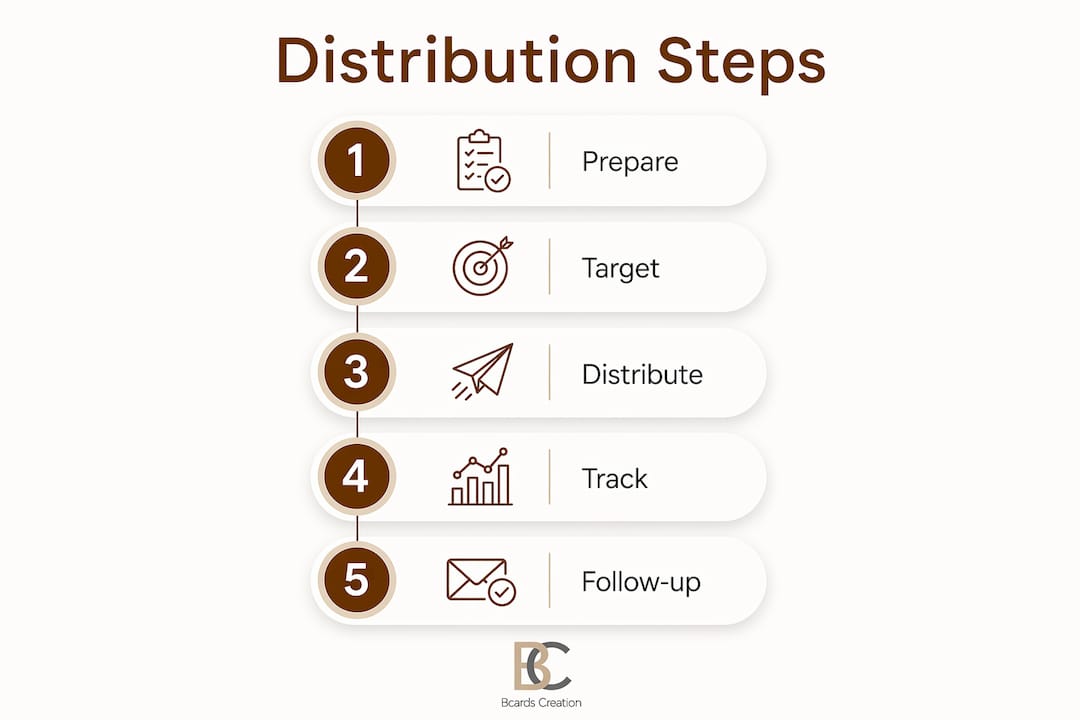
A business card distribution strategy produces results only when preparation, targeted placement, measurable tracking, and personalized follow-up work together as a single system.
| Point | Details |
|---|---|
| Targeted placement over volume | Distribute cards in contexts where your audience is present, not everywhere possible. |
| Design for the recipient | Limit contact info to seven elements and use dynamic QR codes linked to trackable pages. |
| Measure every channel | Assign unique QR codes per distribution context to identify what drives engagement. |
| Follow up within 48 hours | Personalized, specific follow-up converts exchanges into relationships far more reliably than generic outreach. |
| Match card quality to brand position | Tactile quality signals professionalism before a word is read; material choice is part of the strategy. |
Why I think most professionals are distributing cards wrong
Most people treat card distribution as a volume exercise. Print 500 cards, hand them out at every opportunity, and hope something sticks. That approach produces a low return and no data.
What actually works is treating each card as a deliberate introduction. I have seen professionals carry three versions of their card to a single event: one for potential clients, one for referral partners, and one for press or media contacts. Each version has a different QR code destination. After the event, they know exactly which type of contact engaged most. That is not overthinking it. That is how you build a distribution system that improves over time.
The biggest mistake I see is neglecting the physical quality of the card while investing heavily in digital follow-up tools. A card printed on thin stock with a standard finish gets discarded. A card with weight, texture, and a considered finish gets kept, placed on a desk, or photographed. The physical object is the first impression. If it does not hold up, the follow-up strategy has less to work with.
The second mistake is treating distribution as a one-time event rather than a consistent practice. Successful campaigns run over several weeks with multiple touchpoints. The same logic applies to card distribution. Showing up once at a networking group is less effective than attending consistently and building recognition over time.
Combine readiness with strategy. Always have cards. Distribute them with intention. Measure what you can. Follow up with specificity. That sequence, repeated consistently, is what turns a stack of cards into a functioning network.
— Kostiantyn
How Bcardscreation supports your distribution strategy
A distribution strategy is only as strong as the card behind it. If the physical object does not reflect your brand’s quality, the best follow-up system in the world starts at a disadvantage.
Bcardscreation designs and produces custom business cards built for professionals who treat cards as a positioning tool. Every project is developed individually, with material consultation, design guidance, and production control at every step. No templates. No automated editors. Options include specialty papers, luxury foil finishes, plastic cards, and clear cards, each suited to different distribution contexts and brand identities. If you want a card that earns its place in someone’s wallet, Bcardscreation is the place to start.
FAQ
What is a business card distribution strategy?
A business card distribution strategy is a planned approach to placing cards in targeted contexts, with specific audiences, using measurable methods to track engagement and follow-up outcomes. It combines physical distribution with digital tools like dynamic QR codes to produce data-driven networking results.
How often should you distribute business cards?
Distribution works best as a consistent practice rather than a one-time effort. Attending the same networking groups regularly and maintaining permission-based placements over several weeks produces more touchpoints and higher recognition than a single large distribution push.
What should you include on a business card for best results?
Focused cards with fewer elements generate three times more follow-ups. The recommended set is name, title, company, one phone number, email, website or LinkedIn URL, and a dynamic QR code linked to a trackable landing page.
How do you track business card distribution effectiveness?
Assign a unique dynamic QR code to each distribution channel or event, then monitor scan analytics in a tool like Bitly. This shows you which contexts drive engagement, allowing you to concentrate effort where results are strongest.
How soon should you follow up after exchanging business cards?
Follow up within 24 to 48 hours with a personalized message that references your specific conversation. Generic outreach significantly reduces response rates compared to context-specific messages that demonstrate genuine attention.


