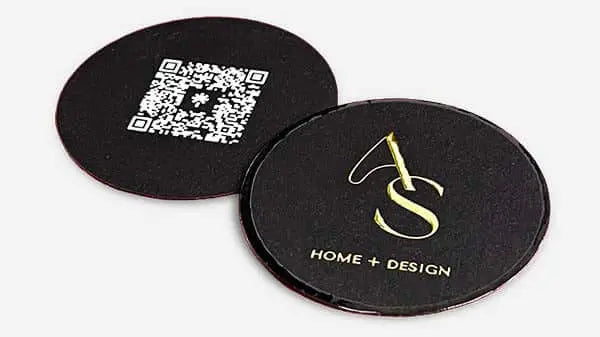


Business Card Marketing Step by Step for Entrepreneurs
TL;DR:
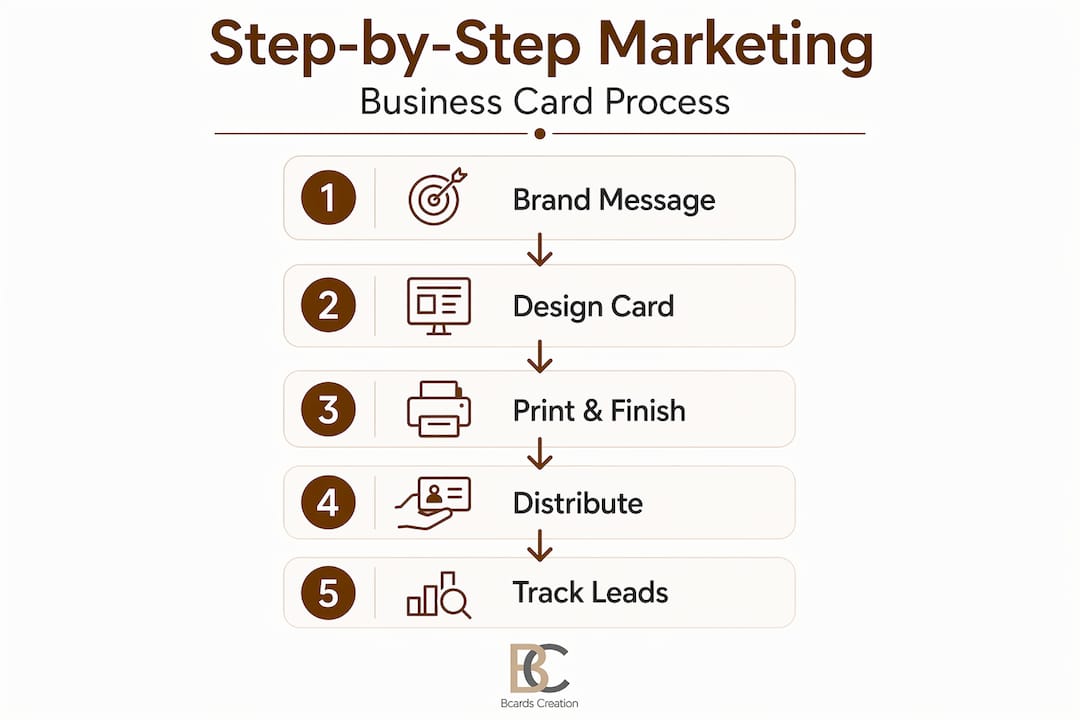
- Effective business card marketing starts with defining your brand message and strategic distribution methods.
- A well-designed card paired with a clear digital follow-up plan generates real leads and meaningful connections.
Most business owners collect a stack of business cards after a conference and never do anything with them. Their own cards sit in a drawer at the office, handed out randomly with no real plan behind the gesture. Business card marketing step by step is not about printing more cards and hoping for the best. It is about treating each card as a deliberate touchpoint in a larger brand and sales strategy. Done right, a well-designed card paired with a clear distribution and follow-up plan produces real conversations and real leads.
Table of Contents
- Key takeaways
- Preparation: what you need before you start
- Design and creation: building a card that works
- Execution: distributing cards and connecting to digital
- Verification: tracking what your cards are actually doing
- My take on business card marketing in 2026
- Get cards that do the work for you
- FAQ
Key takeaways
| Point | Details |
|---|---|
| Brand alignment comes first | Define your messaging and visual identity before you commission any design or order cards. |
| Design drives the first decision | Recipients decide in about 3 seconds whether to keep a card, so visual impact is non-negotiable. |
| Distribution needs a strategy | Contextual, intentional card giving outperforms bulk handouts at every networking event. |
| Digital integration multiplies reach | QR codes and NFC chips turn a physical card into an ongoing digital engagement tool. |
| Measure beyond card counts | Track contact saves, meetings booked, and form submissions to know what is actually working. |
Preparation: what you need before you start
The most common mistake in business card marketing is starting with the printer. You should start with your brand.
Before you finalize any design, get clear on three things: what you do, who it is for, and what you want the person holding your card to do next. That last point matters most. A card without a clear next step is just a piece of paper with your name on it.
Material and finish decisions reflect positioning
The physical card is part of your message. A premium tactile finish communicates quality before the recipient has read a single word. The table below outlines how material choices map to different brand positions.

| Material / Finish | Brand signal | Best suited for |
|---|---|---|
| Soft-touch coated paper | Understated, refined | Consultants, law firms, finance |
| Raised foil on thick stock | Luxury, high-end craft | Designers, luxury retail, agencies |
| Plastic or clear card | Modern, tech-forward | SaaS founders, architects, product brands |
| Double-layer colored paper | Creative, bold | Photographers, stylists, hospitality |
| Fine paper with real gold foil | Prestige, bespoke | C-suite executives, boutique firms |
Once you know your positioning, the material choice becomes much clearer.
Define your marketing objective per card set
Not every card needs to do the same job. Professionals serving multiple industries benefit from separate card sets or dynamic digital profiles to keep messaging sharp and avoid confusion. If you sell consulting to mid-size manufacturers and also speak at industry events, those two audiences need different calls to action.
- Primary goal: What action do you want the recipient to take? (Book a call, visit a page, scan a code)
- Audience segment: Who receives this specific card?
- Brand voice check: Does the card’s design match how you present yourself online?
- Information hierarchy: What gets the most visual weight?
Pro Tip: Before you order, pull up your website and LinkedIn profile side by side with your card design. If the colors, fonts, or tone feel mismatched, fix the card first. Inconsistent visual identity causes credibility friction that quietly kills follow-ups.
Design and creation: building a card that works
With your objectives and materials settled, the design process becomes focused rather than open-ended. A professional business card design framework follows a logical sequence that prevents the most common mistakes.
- Write the brief before opening any design tool. Document your brand colors, typefaces, logo files, and the specific call to action. If you are working with a designer, a clear brief cuts revisions in half. See how to brief a designer effectively before your first meeting.
- Establish information hierarchy. Your name and primary value statement take center stage. Contact details support it. Social handles and secondary information are the smallest elements. If everything is the same size, nothing is.
- Integrate a QR code or NFC chip with purpose. Do not add a QR code just because it looks current. Link it to a specific landing page built for the audience receiving that card. A portfolio, a booking link, or a short video introduction all outperform a generic homepage.
- Choose card shape and size deliberately. The standard 3.5 x 2 inch format fits wallets and card holders. A square or mini card stands out in a stack but may not fit standard holders. Know your context before going non-standard.
- Protect white space. Crowded cards feel low-budget regardless of print quality. Every element should have room to breathe. If you cannot remove anything, something does not belong there.
- Select a finish that survives handling. Soft-touch laminate resists fingerprints. Uncoated fine paper has a premium feel but can scuff. Plastic cards are essentially indestructible. Match the finish to where and how the card will be used.
Pro Tip: When creating impactful business cards, design the back of the card with the same intention as the front. A blank back is a missed opportunity. Use it for a single strong call to action, a key credential, or a visual element that earns a second look.
Execution: distributing cards and connecting to digital
Printing great cards is the easy part. Getting them into the right hands at the right moment takes real practice.
Distribution strategy for in-person networking
Business card networking ideas work best when the exchange feels natural and contextual. Hand your card after a genuine conversation, not before it. Giving a card too early signals that you are broadcasting rather than connecting. Wait until there is a clear reason to continue the conversation.
- Give one card at a time. Handing someone a stack signals that the gesture is routine, not personal.
- Ask for their card in return before offering yours. It puts the other person first and makes the exchange feel like a real two-way interaction.
- Write a brief note on the back of your card in the moment. A word or two referencing what you just discussed makes you memorable when they find it later.
- Carry cards in a dedicated case. Pulling a card from a crumpled pocket signals the opposite of what a premium card is supposed to say.
Using QR codes and NFC to extend the card’s life
Business cards bridge in-person and digital engagement in ways that a LinkedIn connection alone cannot replicate. A QR code linked to a booking page or a portfolio gives the recipient a specific next action at their own pace. NFC chips take it further by triggering a digital profile or contact save with a single tap, no camera required.
NFC chip placement varies by device model. iPhone models read NFC near the top camera. Most Android devices read near the center or back. Test your cards on multiple phone models before an event, not at one.
Pro Tip: Build your follow-up sequence before the event, not after. Know exactly what URL your QR code points to, confirm the NFC link is live, and have your CRM or contact app ready to log new connections the same day. Experts recommend blocking 30 minutes the morning after any networking event to send personalized follow-up messages while the conversation is still fresh.
Capture contacts digitally the day of the event. A name and a note in your phone beats a pile of cards on your desk every time.
Verification: tracking what your cards are actually doing
Handing out 200 cards at a trade show is not a marketing result. It is an activity. The question is what happened after.
Metrics that tell the real story
Tracking leads from business cards requires moving past card counts. Meaningful KPIs include contact saves, landing page visits from QR scans, form submissions, booked meetings, and conversion to proposal or sale. Scan counts alone measure curiosity, not intent.
| Tracking method | What it measures | Best tool |
|---|---|---|
| QR code with UTM parameters | Landing page visits, source attribution | Google Analytics, Bitly |
| NFC linked digital profile | Tap counts, contact saves | HiHello, Popl, Dot |
| CRM tagging by event | Contacts generated per event | HubSpot, Pipedrive |
| Meeting booking link | Conversion from card to scheduled call | Calendly, Acuity |
Common mistakes that break the loop
- Outdated phone numbers or email addresses on printed cards destroy credibility instantly. Audit your card information every six months.
- Mismatched branding between your card and your website creates the credibility gap that loses prospects before the first follow-up email even lands.
- Following up more than 72 hours after meeting someone drops recall dramatically. That window is real.
- Generic follow-up messages that could apply to anyone signal that the original conversation did not matter to you.
Refine your approach after each event. Note which conversations led to real follow-up, which card designs got compliments, and which calls to action actually converted. That feedback loop is how a step by step business card guide becomes a system, not just a checklist.
My take on business card marketing in 2026
I have seen a lot of businesses spend real money on card printing and get nothing from it. Not because the cards were bad. Because the strategy around them was nonexistent.
What I have learned is that the card is the least important part. The most important part is what happens in the 48 hours after you give it. Most people do not follow up at all, or they send a LinkedIn request with no message. That is the real gap. A stunning card with no follow-up plan is just an expensive piece of material.
The second thing I keep seeing is inconsistency between the physical card and the digital presence. Someone hands you a beautiful embossed card with clean typography and then their website looks like it was built in 2014. That gap does real damage to perception. Brand consistency across physical and digital touchpoints is not a design preference. It is a trust signal.
What actually works is treating the card as the starting point of a documented process. Know what you want the person to do. Build the digital destination before you print. Follow up fast and personally. Review results after each event and adjust. That is the whole system. Most people skip three of those four steps.
— Kostiantyn
Get cards that do the work for you
If you are ready to put a real strategy behind your cards, the physical product needs to match the effort you are putting into the process.
Bcardscreation designs and produces custom business cards built around your specific brand, audience, and goals. No templates, no automated editors. Every project includes material consultation, design guidance, and small-batch production with full quality control. If you want cards that communicate something before you open your mouth, explore luxury foil and fine paper options or browse plastic card formats built for a more modern positioning. Your card is the first impression. Make it count.
FAQ
How do I start business card marketing step by step?
Start by defining your brand message and target audience, then design a card with a clear call to action. Distribute intentionally at relevant networking events and follow up within 48 hours.
What makes a business card effective for marketing?
An effective card has a clear hierarchy, a single focused call to action, and a finish that reflects your brand’s positioning. Digital elements like QR codes or NFC chips extend its usefulness beyond the initial handshake.
How do I track whether my business cards are generating leads?
Use QR codes with UTM parameters linked to a specific landing page, and log new contacts in a CRM tagged by event. Track meetings booked and form submissions rather than card counts alone.
How many business cards should I hand out at a networking event?
Quality of exchange matters more than quantity. Give cards only after a genuine conversation, and focus on collecting the other person’s card first. Fifty intentional exchanges outperform 200 random handouts.
Should I have different business cards for different audiences?
Yes. Professionals serving more than one industry or client type benefit from separate card sets with tailored messaging. Distinct cards prevent brand confusion and improve response rates by keeping the message relevant to each recipient.


