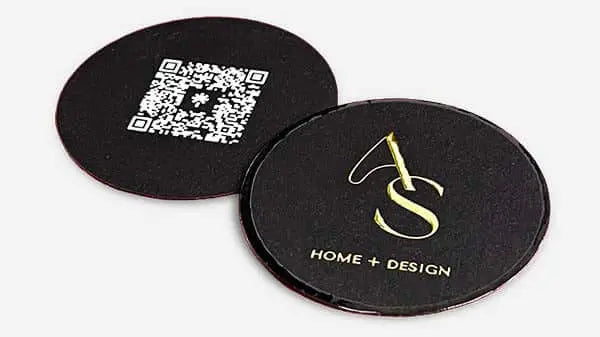


Defining modern business card materials for brand impact
TL;DR:
- Material choice communicates brand values and influences first impressions significantly.
- Premium textures, finishes, and sustainable options enhance perceived quality and trustworthiness.
- Always request samples to ensure the material’s physical feel aligns with brand messaging.
Defining modern business card materials for lasting brand impact
Most people treat business card material as an afterthought. Pick a paper, add your name, print. Done. But that mindset costs you more than you realize. The material your card is printed on sends a signal before anyone reads a single word. It communicates your attention to detail, your budget, and your brand positioning. Thin, flimsy cards say one thing. A thick, soft-touch card with foil says something completely different. This article breaks down every major material category, finish type, and sustainable option available in 2026 so you can make a choice that actually works for your brand.
Table of Contents
- The evolution of business card materials: Beyond basic paper
- Modern material options explained: Features, pros, and cons
- Finishes and tactile effects: From soft-touch to foil
- Sustainability and innovation: Eco options and performance
- Our perspective: Material matters more than you think
- Explore modern business card solutions with BcardsCreation
- Frequently asked questions
Key Takeaways
| Point | Details |
|---|---|
| Material signals quality | The material you choose for your card tells prospects a lot about your brand’s attention to detail. |
| Finish matters for perception | Finishes like soft-touch or foil transform feel and brand recall more than design alone. |
| Eco options are competitive | Modern sustainable cards offer strong quality, but check texture and color accuracy before choosing. |
| Balance usability and impressiveness | Extra-thick or exotic materials stand out but may sacrifice practicality in wallets or everyday use. |
The evolution of business card materials: Beyond basic paper
Business cards started as simple printed paper. For most of the 20th century, standard cardstock was the default. You picked a weight, chose a font, and sent the file to print. Material was rarely part of the conversation.
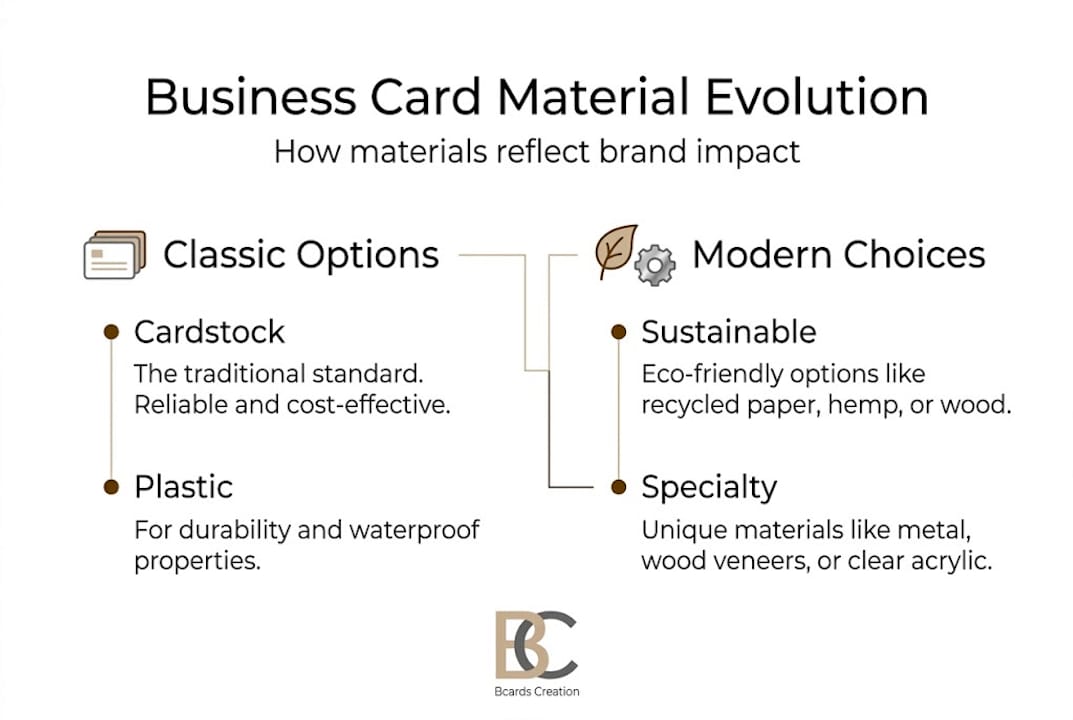
That changed as brands started competing harder on perception. Designers pushed for thicker stocks, unique textures, and specialty surfaces. Printers responded with new lamination techniques, foil stamping, and embossing. By the 2010s, the business card had shifted from a utility item to a brand artifact.
Today, material choice is a core part of branding strategies for serious businesses. The feel of a card in someone’s hand communicates something before they even look at the design. That tactile experience shapes their first impression of you and your business.
Here is a quick look at how business card materials have evolved:
| Era | Primary material | Key feature |
|---|---|---|
| Pre-2000s | Standard cardstock | Basic, functional |
| 2000s | Coated paper | Glossy finishes introduced |
| 2010s | Thick stocks, laminates | Soft-touch, matte, and silk coatings |
| 2020s | Specialty synthetics, eco materials | Plastic, wood, cotton, bamboo |
The shift toward tactile experience is not random. Research in consumer psychology consistently shows that physical texture influences perceived quality and trustworthiness. A card that feels premium signals a premium brand. One that feels cheap can undercut even the best visual design.
Understanding premium card materials explained helps you see why the material question matters long before your designer touches the file. Key factors driving material decisions in 2026 include:
- Weight and thickness: Heavier cards feel more substantial and credible
- Surface texture: Smooth, rough, soft, or hard each sends a distinct message
- Finish type: Matte, glossy, velvet, and foil create different visual and tactile signals
- Durability: How long the card holds up in a wallet or card holder matters
- Eco profile: Sustainability credentials are increasingly important to clients and partners
“Finishes define premium mechanics: soft-touch/velvet creates a tactile wow effect, matte and silk are smooth and durable, glossy/UV adds vibrancy but is hard to write on, foil and metallic add contrast and shine, and emboss/deboss creates 3D texture that needs thick stock.” Soft-touch vs. silk vs. matte laminate
Knowing why business card material matters is the first step toward making a selection that supports your brand rather than working against it.
Modern material options explained: Features, pros, and cons
With so many choices available, picking the right material can feel overwhelming. Here is a practical breakdown of the most common and advanced options available in 2026.
Standard and premium cardstocks
Cardstock remains the most widely used material. It comes in a range of weights, typically measured in points (pt). A 16pt card is standard. A 32pt card feels noticeably thick and premium. Cards thicker than 32pt are impressive to hold but can be difficult to fit into standard cardholders or wallets. Colored paper stocks add personality without specialty printing, but they limit your color palette for ink.

Plastic cards
Clear, frosted, and opaque plastic cards are durable and visually striking. Clear cards in particular create a sleek, modern look that works well for tech brands, architects, and creatives. The tradeoff is eco impact. Plastic is not biodegradable, and many eco-conscious clients notice. They are also harder to write on and can feel cold or impersonal depending on your brand tone.
Sustainable materials
Recycled paper, cotton fiber, and bamboo are growing in popularity as businesses look to align their materials with their values. These options vary significantly in texture and print quality. Cotton fiber cards have a soft, matte feel and absorb ink beautifully. Bamboo cards have a distinct natural look. Recycled paper is the most consistent in terms of print reproduction but may show flecks or texture variations.
Specialty materials
Wood, metal, and stone veneer cards occupy a niche but high-impact category. A thin wood card is genuinely memorable and often kept as a novelty item. Metal cards are heavy, distinctive, and used mainly by luxury brands. These are conversation starters, not everyday cards. They work best when your brand positioning supports the premium message they send.
Here is a comparison of the top material types:
| Material | Durability | Eco profile | Print quality | Best for |
|---|---|---|---|---|
| Standard cardstock | Medium | Moderate | Excellent | General use |
| Thick stock (32pt+) | High | Moderate | Excellent | Premium branding |
| Plastic | Very high | Poor | Good | High-contact roles |
| Recycled paper | Medium | Excellent | Good | Eco brands |
| Cotton fiber | Medium | Very good | Very good | Creative professionals |
| Wood veneer | Low | Fair | Limited | Luxury/niche |
| Metal | Very high | Poor | Limited | Ultra-premium |
Here is a simple selection process to follow:
- Define your brand positioning first. Premium, eco, or functional?
- Consider the environments where cards are handed out. High-contact settings need durability.
- Choose material before you finalize the design. Some finishes and effects require specific stocks.
- Request physical samples before committing to a full run.
- Factor in total cost per card, not just the base print price.
Pro Tip: Pair premium card finishes with a material that can handle the process. Foil stamping and embossing both require thick, firm stock. Thin paper will crack or warp under pressure.
Learning how premium materials boost brand impact makes it easier to match material to message.
Finishes and tactile effects: From soft-touch to foil
Once you have chosen a base material, the finish determines how the card actually feels and looks in hand. Finishes are applied on top of the printed surface and range from subtle to dramatic.
Soft-touch and velvet laminate
Soft-touch is one of the most popular premium finishes right now. It creates a velvety, matte surface that feels expensive without being flashy. The downside is that it scuffs on dark colors, and fingerprints show easily. Still, for most professional settings, it is a strong choice.
Matte and silk laminate
Matte laminate is smooth, durable, and easy to photograph. It does not reflect light, which makes it ideal for cards with heavy photographic content or dark backgrounds. Silk sits between matte and glossy. It reflects slightly more light than matte but is more subdued than gloss. Both hold up well in wallets and are resistant to scratching.
Glossy and UV coating
Glossy finishes make colors pop. They are vibrant, bold, and eye-catching. However, glossy UV finishes are nearly impossible to write on, which is a real problem if you add personal notes to cards. They also show fingerprints prominently. Spot UV is a smart compromise: applying gloss to specific elements while keeping the rest matte.
Foil and metallic finishes
Foil stamping adds a mirror-like metallic effect to specific areas of the card. Gold, silver, rose gold, and holographic foils are all available. Foil works best on matte backgrounds where the contrast is sharp. On a glossy surface, the foil effect is harder to see. Metallic inks are a more affordable alternative that simulates a shiny effect without full foil stamping.
Emboss and deboss
Embossing raises a design element above the surface. Debossing presses it below. Both create a three-dimensional tactile effect that is noticeable even before you read the card. These effects need thick stock to work properly. On thin paper, the pressure can cause cracking or distortion.
Here is a quick reference for finish selection:
- Soft-touch: Best for dark, minimal designs with a luxury positioning
- Matte: Versatile, professional, photo-friendly
- Silk: A step above matte with slight sheen, good all-rounder
- Glossy: High visual impact, not writeable
- Spot UV: Best of both: targeted shine on matte base
- Foil: Premium accent, needs high contrast background
- Emboss/deboss: Tactile luxury, requires thick stock
Pro Tip: Review the impactful finishes guide before signing off on a design. Some finishes require specific artwork adjustments to look correct in print. Your designer needs to know the finish before building the file, not after.
Understanding the full premium design breakdown helps you match finish decisions to your overall brand goals. The right finish amplifies your message. The wrong one just adds cost without impact. Physical texture is one of the few brand touch and feel signals you can control entirely.
Sustainability and innovation: Eco options and performance
Sustainability is no longer a niche interest. Many small business owners and creative professionals now want their materials to reflect their values. That includes the paper their business cards are printed on.
The most common eco-friendly options in 2026 include:
- Recycled paper: Made from post-consumer waste, widely available, consistent print quality
- Cotton fiber: Soft texture, excellent ink absorption, highly durable for a natural material
- Bamboo: Fast-growing and renewable, distinctive look and feel, limited color reproduction
- Seed paper: Plantable after use, unique novelty, but print surface is rough and limited
- FSC-certified paper: Standard paper with verified responsible forestry sourcing
The tradeoffs are real. Sustainable materials vary in print quality and texture. Bamboo cards, for example, can struggle with fine detail or tight typography because the surface is less uniform than coated paper. Seed paper is memorable but not appropriate for brands that need crisp, color-accurate output.
Cotton fiber is often the best balance of sustainability and performance. It takes ink well, feels distinctive, and holds up in everyday use. Recycled paper with a high post-consumer waste content is the most accessible eco option without sacrificing much in print quality.
“Sustainable materials vary in print quality and texture. Understanding those tradeoffs before printing is key to avoiding costly reprints or brand misalignment.” Explore sustainable card insights to separate real eco value from marketing claims.
Certifications matter. Look for FSC (Forest Stewardship Council) certification on paper products, and ask your printer to clarify the actual recycled content percentage. Some papers marketed as recycled contain only 10 to 30 percent post-consumer waste. That is a very different product from 100 percent recycled stock.
For brands that want to go eco without compromising on premium appeal, the solution is usually pairing a sustainable base stock with a well-chosen finish. Matte laminate on recycled paper looks and feels excellent. It signals both quality and responsibility. You do not have to choose between looking good and doing good.
Find more detail on eco business card options for small brands operating in the US market. The options are broader than most people expect.
Our perspective: Material matters more than you think
We have seen thousands of business card projects. And the pattern is consistent: brands that obsess over typography and layout but ignore material almost always end up with cards that underperform in the real world.
Here is what most people miss. When someone receives your card, they form an impression within the first two seconds. That impression is 80 percent physical and 20 percent visual. The weight of the card, the texture of the surface, the slight resistance of an embossed logo. These things register before the brain processes the words.
A stunning design on thin stock feels like a disappointment. A simple, clean layout on a thick soft-touch card feels intentional and credible. The material carries the message in ways that design alone cannot.
We have also noticed that clients who invest in creating unique cards with the right material consistently report that their cards get kept rather than discarded. That alone is a significant return on investment.
Our strongest advice: always request physical samples before committing to a production run. Looking at a material on screen tells you almost nothing. Holding it in your hand tells you everything. Material is not a detail. It is the foundation of everything else.
Explore modern business card solutions with BcardsCreation
If this guide helped you see material and finish decisions differently, you are ready to make smarter choices for your next card project.
At BcardsCreation, every project is built from scratch with material consultation as part of the process. No templates. No automated editors. Just expert guidance on custom business card design that fits your brand positioning. Whether you want soft-touch laminate on thick stock, real foil stamping, or a sustainable cotton fiber card, we work with you to find the right combination. Browse our range of luxury business cards to see what is possible. Your next card should do more than carry your name. It should carry your brand.
Frequently asked questions
What is the most durable material for modern business cards?
Plastic cards offer maximum durability and are ideal for high-contact environments, but they carry a poor eco profile compared to premium thick cardstocks or sustainable alternatives.
Which finishes work best for branding impact on business cards?
Soft-touch, matte, and foil finishes consistently deliver strong tactile and visual impact, making them the most effective choices for brand-forward cards that leave a lasting impression.
Are sustainable business cards as high-quality as traditional ones?
Sustainable cards can absolutely rival traditional options in quality, though sustainable materials vary in print vibrancy and surface texture depending on the fiber source and coating used.
What thickness of card stock is recommended for a premium feel?
Card stocks over 32pt feel genuinely premium in hand, but thick stocks exceed standard wallet dimensions and may be impractical for everyday carry situations.


