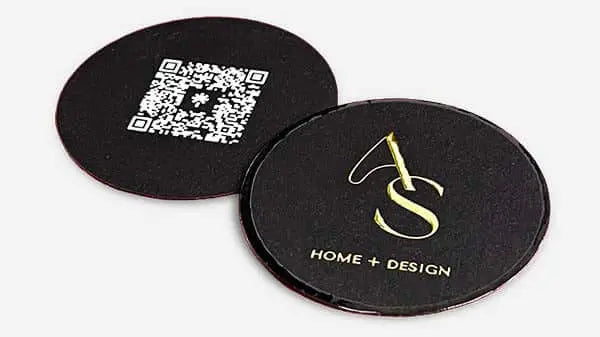


Why business card material matters for brand impact
TL;DR:
- Material choice influences perceptions of credibility, professionalism, and brand values before reading the text.
- Premium materials like metal or cotton enhance brand retention and can generate more referrals.
- Selecting the wrong material can harm credibility and should align with brand identity and context.
Most people redesign their business cards when they feel something’s off. They tweak fonts, swap colors, adjust layouts. But the card still doesn’t land the way they want it to. The reason is usually not the design. It’s the material. Business card material communicates brand values and professionalism before a single word is read, acting as a tactile first impression that shapes perception instantly. This guide breaks down exactly how material choices work, what each option signals, and how to avoid the costly mistakes that quietly undermine even the best-designed cards.
Table of Contents
- How business card material shapes perception
- Comparing premium vs. standard business card materials
- The direct impact of material on brand retention and ROI
- Pitfalls, edge cases, and expert tips for material selection
- Our view: Beyond visual design—Tactility as a storytelling tool
- Bring your brand to life with custom luxury card materials
- Frequently asked questions
Key Takeaways
| Point | Details |
|---|---|
| Material signals brand values | Your choice of business card material speaks for your brand before a single word is read. |
| Premium cards boost retention | Luxury materials are proven to stick in clients’ minds and get shared more often. |
| Align material with message | Pick a card material that matches your audience, brand values, and practical needs. |
| Sampling is essential | Always get real material samples since screens can’t show texture or true weight. |
How business card material shapes perception
Hand someone a card and watch what happens. Before they read your name or title, they feel the weight, the texture, the finish. That split-second sensory response already forms a judgment. It’s not conscious. It’s instinctive. And it happens every time.
This is where material becomes a branding tool, not just a printing decision. The impact of premium cards on brand perception is significant because our brains associate physical weight with credibility. A thick, solid card signals stability. A flimsy one signals something less considered.
Material communicates without text:
- Heavy stock signals permanence, confidence, and high standards
- Textured surfaces suggest creativity, craft, and attention to detail
- Smooth, coated finishes read as clean, modern, and corporate
- Raw, uncoated paper communicates authenticity and transparency
- Plastic or metal conveys innovation, exclusivity, or boldness
None of this is accidental when done right. Luxury brands and forward-thinking professionals use material as a deliberate extension of their identity. A financial consultant who hands out a thick cotton card isn’t just being fancy. They’re communicating trustworthiness before they say a word. A creative director using a translucent plastic card is telling you they think differently before you see a single logo.
“Your card is touched before it’s read. Material is your first sentence.”
The goal is alignment. Your material should match what your business actually stands for. If you design for brand impact, the visual and the physical need to tell the same story. Misalignment is where brands lose credibility. A high-end law firm with a thin, standard paper card creates cognitive dissonance. Something feels off, even if the prospect can’t name why.
Creating memorable cards for luxury brands starts at the material selection stage, not the design stage. Treat it that way from the start.
Comparing premium vs. standard business card materials
Understanding the power of material, it’s essential to compare the effects and impressions of various premium versus standard options.
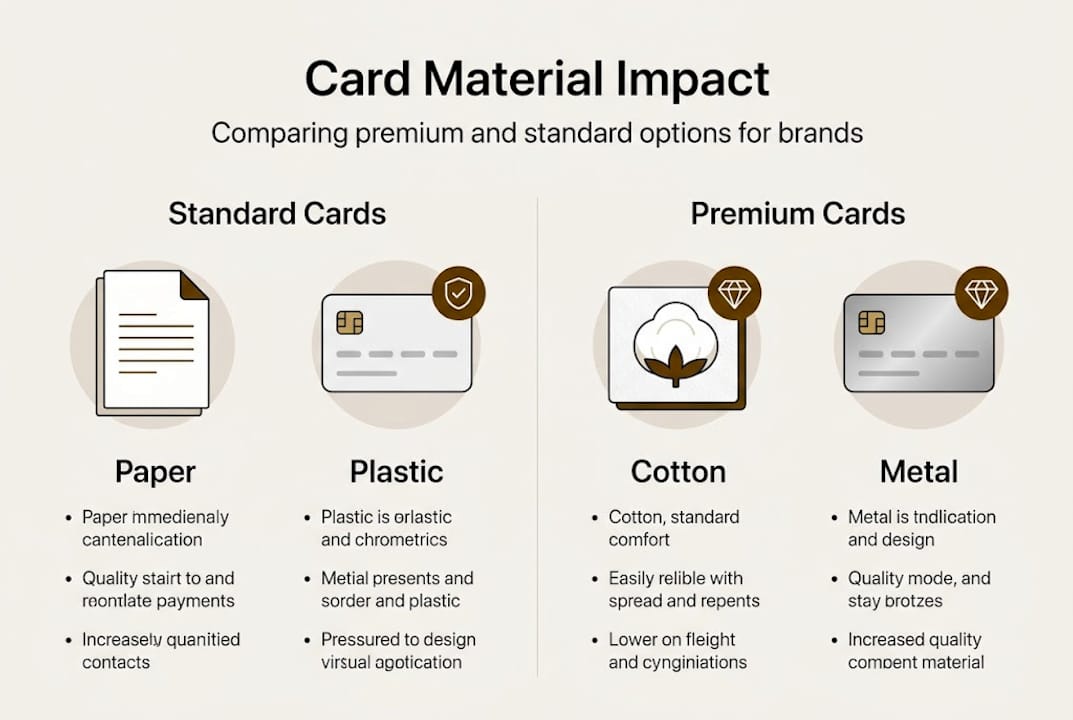
| Material | Feel | Brand signal | Eco option | Relative cost |
|---|---|---|---|---|
| Standard paper (90gsm) | Thin, light | Budget, accessible | Recycled available | Low |
| Thick paper (400gsm+) | Solid, premium | Professional, confident | FSC-certified available | Medium |
| Cotton stock | Soft, warm | Traditional luxury | Recycled cotton available | Medium-high |
| Plastic/PVC | Smooth, rigid | Innovative, bold | Limited | Medium-high |
| Metal/composite | Heavy, cold | Exclusive, elite | Rare | High |
As the luxury materials breakdown shows, cotton signals traditional luxury, plastic signals innovation, and metal communicates exclusivity. Each material says something specific. The question is whether it’s saying what you want.
When choosing a material for a luxury or creative business card, consider:
- Uniqueness: Will this stand out in a stack of cards?
- Durability: Will it survive a wallet, a bag, a desk for months?
- Print compatibility: Not every finish works with every printing technique. Material choices and compatibility vary widely between foil stamping, letterpress, and digital printing
- Sustainability: Is the eco-footprint aligned with your brand values?
Sustainability deserves a closer look. Recycled cotton stock offers a warm, organic feel with genuine eco-credentials. Recycled paper is widely available at lower price points. Metal and composite cards remain difficult to produce sustainably, which matters if your brand prioritizes environmental responsibility.

You can explore the full premium materials guide for a deeper breakdown of how each option performs across different production methods and finishing techniques.
The direct impact of material on brand retention and ROI
Once you’ve matched material to your brand, it’s crucial to know how these choices line up with real-world outcomes for your business.
Here’s the core argument for investing in premium material: people keep cards that feel worth keeping. A standard paper card gets pocketed and forgotten. A metal card gets shown to someone else at the same event. That’s not sentiment. That’s a referral mechanism built into the object itself.
The numbers reflect this clearly. The luxury business card market was valued at $170 million in 2024, growing at a 12.8% CAGR toward $504 million by 2033, with 48% of consumers willing to pay more for metal or leather card options. This is a market driven by people who understand the ROI of a premium physical impression.
| Material tier | Average card lifespan | Likelihood to be kept | Referral potential |
|---|---|---|---|
| Standard paper | Days to weeks | Low | Minimal |
| Thick specialty paper | Weeks to months | Medium | Moderate |
| Cotton or plastic | Months | Medium-high | Good |
| Metal or composite | Years | Very high | Strong |
Pro Tip: If you’re in a high-ticket service business, the cost difference between a standard card and a premium one is negligible compared to the value of a single retained client. Treat the card as a silent sales tool, not a printing expense.
The luxury card workflow that high-performing brands follow always starts with material selection tied to audience expectations. A card that gets kept gets your name in front of someone again weeks or months later. That’s compounding brand value from a one-time production cost.
Pitfalls, edge cases, and expert tips for material selection
To get the most benefit and avoid costly mistakes, it’s vital to consider these expert tips and real-world challenges.
Not every premium material is right for every context. Choosing wrong can cost you more than money. It can cost you credibility.
The top three material risks to know:
- Metal cards scratch easily. Surface marks accumulate quickly in wallets and card holders. Without a protective coating, a metal card that looked stunning in production can look worn within weeks. Always ask about scratch-resistant finishes.
- Cotton stock is moisture-sensitive. High humidity or wet conditions can affect cotton cards noticeably. If you network in outdoor or humid environments regularly, factor this in before committing.
- Plastic warps under heat. PVC and plastic cards can deform if left in a hot car, a sun-facing window, or near direct heat sources. As edge case guides on premium cards note, heat avoidance is a real consideration for plastic card owners.
Pro Tip: Always request physical samples before finalizing your order. Screens cannot replicate how a material feels in your hand. Test cards in real contexts, such as sliding them in and out of a card holder, handing them to someone across a table, and checking how they look under different lighting.
Another common mistake is overdoing it. A card covered in foil, embossing, die-cutting, and spot UV on a heavy metal base can look impressive in isolation. In context, it may read as excessive or unclear about what the brand actually does. The business card printing process should be guided by intentional restraint, not maximum features.
Sustainability tradeoffs are real too. Eco-friendly materials often limit finishing options. Recycled stock may not be compatible with foil stamping. Understanding design process constraints for luxury cards early prevents costly reprints. Review the Shopify business card paper guide for a general breakdown of stock weights and their practical implications.
Our view: Beyond visual design—Tactility as a storytelling tool
Most branding advice focuses on visuals. Color theory. Typography. Logo proportion. These things matter. But they miss something important: the physical experience of receiving a card is a story told through touch.
We’ve seen brands invest thousands in visual identity and then print on 90gsm stock to save a few dollars. The disconnect is immediate to anyone who handles the card. It’s like a luxury hotel with a beautiful facade and cheap carpet inside. The details betray the story.
Our view is that material is memory glue. People remember how something felt. They may forget your tagline. They rarely forget holding a card that surprised them with its weight, texture, or finish. That’s the luxury card essentials principle that separates forgettable from unforgettable.
There’s also a contrarian point worth making. Premium material strategies are not universal. A brand built on accessibility or affordability should not hand out metal cards. The mismatch sends the wrong message. Material works when it reinforces what’s already true about your brand, not when it pretends to be something else.
The actionable takeaway: always test materials in real networking contexts before committing to a full print run. What looks right on screen and feels right in your hand alone may feel different in the moment of exchange.
Bring your brand to life with custom luxury card materials
Material is what separates a card that gets filed away from one that gets kept, shown off, and talked about. The right choice amplifies everything else you’ve built into your brand.
At BcardsCreation, every card is developed individually from material selection through production. No templates. No automated editors. Just focused design guidance and the right materials for your brand. Browse custom business card design options, explore creative luxury cards with specialty foiling and finishes, or see our full range of premium plastic cards for something that stands apart. Your brand deserves a card that works as hard as you do.
Frequently asked questions
What are the most durable business card materials?
Metal and high-grade plastic are the most durable, resisting bends and moisture far better than standard paper. For context, heavier stocks signal luxury and durability at 300 to 600gsm or 16 to 32pt thickness.
Does card thickness actually impact perceived quality?
Yes. Thicker cards are felt as higher-quality and more professional, instantly setting them apart from typical business cards. Thicker stocks at 300 to 600gsm are the standard benchmark for premium positioning.
What material works best for eco-conscious brands?
Recycled cotton or paper card stock is ideal for eco-conscious brands prioritizing sustainability alongside quality. Recycled cotton stock appeals specifically to eco-conscious brands while maintaining a premium feel.
Can the wrong card material hurt my brand image?
Absolutely. A material mismatch undermines your message even when the design is strong. Design must suit the material for print compatibility, and a mismatch risks sending the wrong signal entirely.


