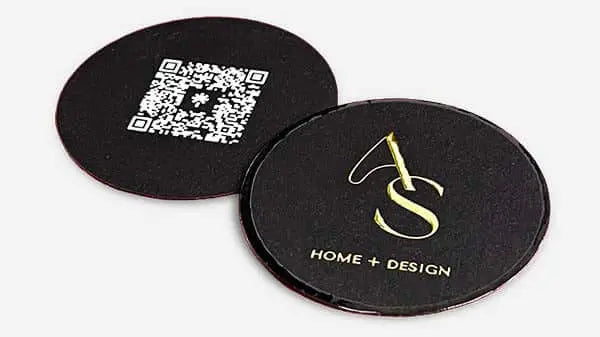


Top sustainable business card options for small USA brands
TL;DR:
- Sustainable business cards now offer luxury feel with verified eco certifications like FSC and Green Seal.
- Materials such as recycled paper, bamboo, hemp, seed paper, and cotton linters are popular for premium eco cards.
- US providers like MOO and Clubcard Print offer certified sustainable options, boosting brand credibility and engagement.
Choosing a business card that looks premium and holds up to real eco scrutiny is harder than it sounds. Many small business owners end up with cards labeled “recycled” that feel cheap, carry no certifications, and do nothing for brand perception. The good news: the sustainable card market has matured. Today you can get cards that feel luxurious, carry verified credentials, and signal that your brand takes quality seriously. This guide walks you through what to look for, which materials perform best, which US providers deliver, and how to avoid the most common pitfalls.
Table of Contents
- How to evaluate sustainable business card options
- Top premium sustainable business card materials
- Best sustainable business card providers in the USA
- Cost, branding impact, and common pitfalls
- A fresh perspective: Why sustainability is now the premium
- Upgrade your business cards the sustainable way
- Frequently asked questions
Key Takeaways
| Point | Details |
|---|---|
| Choose certified materials | Opt for business cards made with FSC-certified, recycled, or plant-based fibers for true sustainability. |
| Premium eco cards drive business | Cards made from luxury eco materials increase brand recall and sales conversations by up to 30%. |
| Beware of common pitfalls | Uncoated or natural eco stocks can show fingerprints or color shifts, so test proofs before final printing. |
| Select the right provider | Use USA-based eco card printers with verified certifications and tactile sample options. |
How to evaluate sustainable business card options
Not all eco claims are equal. Some cards use a tiny percentage of recycled content and call it “green.” Others carry third-party certifications that actually mean something. Knowing the difference saves you money and protects your brand.
Key materials to know:
- 100% PCW (post-consumer waste) recycled paper: Made from paper already used by consumers. Reduces energy by 60% and water use by 50% compared to virgin stock.
- FSC-certified paper: Sourced from responsibly managed forests. The FSC label is one of the most recognized and verified in the industry.
- Bamboo fiber: Grows fast, requires no pesticides, and produces the lowest CO2 of major card stocks at roughly 0.12 kg per 100 cards.
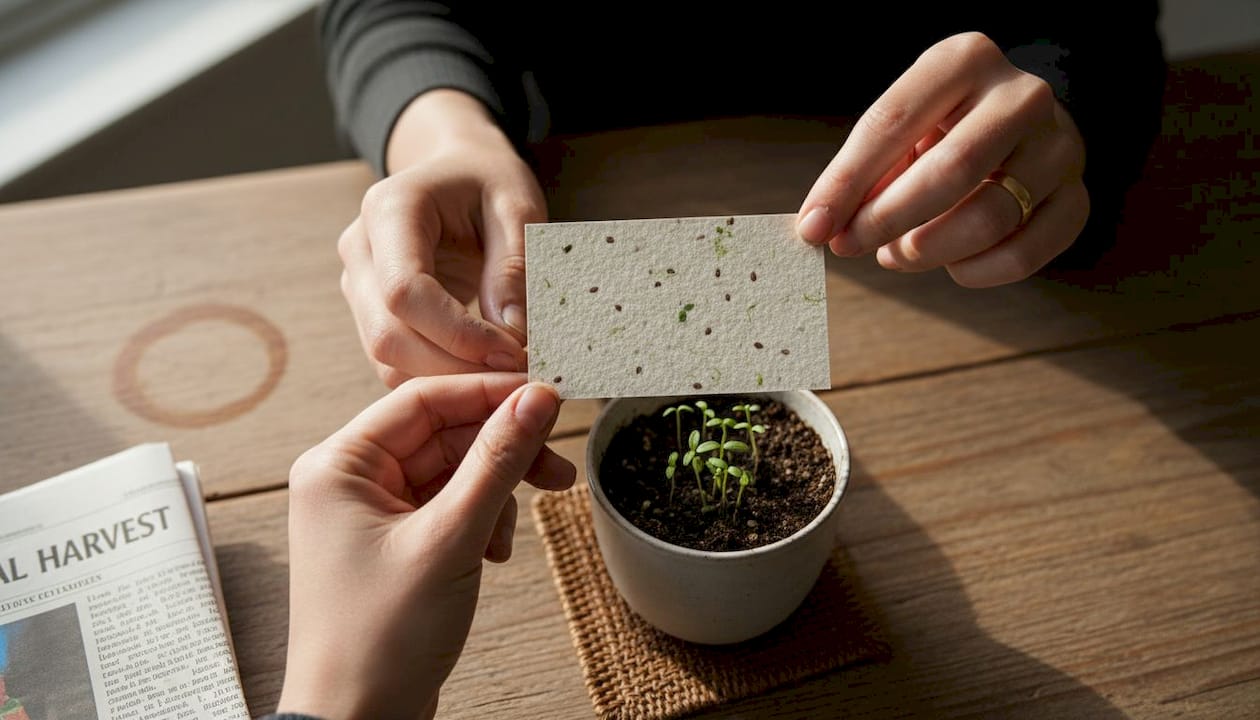
- Seed paper: Fully plantable. Zero waste after use. Works well for brands with a nature or wellness identity.
- Hemp and cotton: Both offer a distinctive tactile feel. Cotton uses linters (a byproduct of cotton processing), making it a low-waste option with a soft, luxurious texture.
Key sustainable materials for premium business cards include recycled paper, bamboo fiber, hemp blends, seed paper, and cotton. Each brings a different combination of feel, eco value, and print compatibility.
Certifications that matter:
Look for FSC, Green Seal, Green-e, and Processed Chlorine-Free (PCF) labels. Soy and vegetable-based inks, along with FSC and Green Seal certifications, are the baseline markers of a genuinely sustainable print process. Avoid providers who can’t produce documentation.
Printing choices also count. Digital printing uses less ink and energy than offset. Uncoated finishes skip chemical coatings entirely. Minimalist designs use less ink overall, which reduces waste and often looks sharper on natural stocks. Understanding what matters in eco materials helps you cut through marketing noise fast.
Pro Tip: Always request paper and ink certifications in writing, plus a printed sample before placing your full order. What looks good on screen often reads differently on natural, uncoated stock.
Top premium sustainable business card materials
With evaluation criteria in mind, here’s how the leading sustainable materials actually compare in practice.
| Material | Tactile feel | Durability | Custom finishes | Best for |
|---|---|---|---|---|
| Recycled paper | Smooth to textured | Moderate | Limited coatings | Budget-conscious brands |
| Bamboo fiber | Slightly grainy | High | Letterpress, foil | Eco-forward brands |
| Cotton | Soft, premium | High | Hot foil, deboss | Luxury, professional services |
| Hemp | Rough, natural | Moderate | Minimal finishes | Creative, artisan brands |
| Seed paper | Fibrous, handmade | Low | Minimal | Nature, wellness brands |
Cotton cards use linters for a luxury feel, seed cards are plantable and zero waste, and bamboo blends are highly renewable. Each has a clear use case.
Which material fits your brand?
- Luxury or professional services: Cotton with minimal hot foil. Feels expensive. Holds detail well.
- Eco-forward or B Corp brands: Bamboo or hemp. The texture itself communicates your values.
- Wellness, floral, or nature brands: Seed paper. Clients can plant it. Zero guilt, zero waste.
- Budget-conscious but still premium: FSC-certified recycled paper with a bold, minimal design.
Bamboo, recycled cotton, and hemp cards each offer unique textures, durability, and eco profiles that suit different brand identities. The choice isn’t just environmental. It’s a design and positioning decision.
For brands investing in luxury design with sustainable cards, the material choice is often the first conversation. It shapes every other decision, from ink type to finish to card weight.
Pro Tip: Combine cotton stock with minimal hot foil stamping. You get an unmatched tactile experience, strong visual contrast, and a card that’s still recyclable. It’s one of the most effective combinations for designing for premium impact.
Seed paper is worth a closer look if your brand story involves growth or nature. Plantable seed paper eliminates end-of-life waste entirely, which is a genuine differentiator in client conversations.
Best sustainable business card providers in the USA
Matching the right provider to your material choice and brand style is just as important as the material itself. Here’s how the top US options compare.
| Provider | Key materials | Certifications | Min. order | Standout feature |
|---|---|---|---|---|
| MOO | Cotton, recycled | FSC | 50 cards | Premium feel, $31/50 |
| Clubcard Print | Bamboo, hemp, specialty | FSC, PCF | 100 cards | Wide finish options |
| 123Print | PCW recycled | Green Seal | 100 cards | Low cost entry point |
| GreenerPrinter | PCW recycled | FSC, Green-e | 250 cards | Carbon offset program |
| EcoEnclose | Algae ink, recycled | FSC, PCF | 50 cards | Algae-based ink option |
MOO, Clubcard Print, 123Print, EcoEnclose, and GreenerPrinter are the leading providers for small US businesses, with costs running 10 to 40% higher than standard cards. That premium, however, tends to pay back.
“Eco cards cost more but drive up to 30% more conversations and leads.”
For a deeper look at provider pros and cons across print quality, turnaround, and customer service, independent print reviews are worth checking before committing to a large order.
What to watch for when choosing a provider:
- Does the provider offer printed samples before full orders?
- Are certifications listed on the product page or available on request?
- Do they offer soy or algae-based inks, or only standard offset?
- What’s the return or reprint policy if color shifts occur on natural stock?
For business card provider insights specific to premium and small-batch needs, it’s worth going beyond the big-name print shops. Custom studios often offer material consultation and design review that mass-market providers skip entirely.
Cost, branding impact, and common pitfalls
Let’s break down real cost-benefit scenarios and important caveats before you make your choice.
Sustainable cards cost more. That’s real. But the return is also real. Eco cards cost 10 to 40% more than standard options but yield 25 to 30% more conversations and make brands more memorable. Brands in solar energy reported up to 23% more leads after switching to eco cards. Architecture firms saw 78% higher brand mentions when using tactile, certified stock.
Common pitfalls to avoid:
- Fingerprints on uncoated stock. Natural papers show oils from hands. Design with this in mind. Darker backgrounds hide it better.
- Color shifts on natural stocks. Warm-toned papers shift cool colors. Always proof on the actual stock before full production.
- Moisture sensitivity. Hemp and seed paper absorb humidity. Store cards properly and avoid humid environments for distribution.
- Heavy ink coverage. Large solid color blocks on uncoated stock can crack or peel. Minimalist designs perform better.
- No certification documentation. “Eco-friendly” without paperwork is just marketing. Always verify.
Color shifts, fingerprinting, and moisture sensitivity on natural stocks are the most common complaints. They’re avoidable with the right design approach.
66% of consumers prefer brands with a clear sustainability commitment, and recycled cards reduce CO2 output by up to 40% compared to virgin stock. That’s not a small number. It’s a real signal your clients notice.
For tips on avoiding design pitfalls specific to premium card production, the details matter more than most owners expect. And design restraint tips can make the difference between a card that looks polished and one that looks busy.
Pro Tip: Order a test run of 50 cards before committing to 500. Use high-contrast, minimal designs to reduce ink coverage issues and maximize the natural texture of the stock.
A fresh perspective: Why sustainability is now the premium
Here’s what most guides miss. Sustainability isn’t a compromise you make for the environment. It’s the new signal of a premium brand.
For years, plastic cards with gloss UV coating were the default “luxury” choice. That’s no longer true. Today’s buyers, especially in professional services, design, and wellness, associate tactile, certified eco cards with credibility. A matte cotton card with a clean layout says more than a shiny plastic card ever could.
Small brands have a real advantage here. You can move faster, choose better materials, and tell a more specific story than a large competitor printing 50,000 generic cards. Use that.
The biggest mistake we see: ordering a generic “recycled” card with no certification, no distinguishing design, and no tactile quality. It signals nothing. It’s forgettable. The second biggest mistake: overdesigning on natural stock and losing the material’s best quality, which is its texture.
Understanding the full design workflow insights behind a premium sustainable card helps you avoid both traps. Certification plus restraint plus material quality. That’s the formula.
Sustainability in 2026 is not a trend. It’s a baseline expectation from serious clients.
Upgrade your business cards the sustainable way
You now have the criteria, the material options, the provider comparison, and the pitfalls mapped out. The next step is putting it into practice.
At BcardsCreation, every card is designed individually. No templates, no automated editors. We work with you on material selection, design direction, and finish choices to produce something that actually represents your brand. Whether you want cotton with foil, bamboo with letterpress, or seed paper with a clean minimal layout, we handle it from brief to final print.
Explore custom sustainable business cards or browse premium creative business cards to see what’s possible. Sample orders are available. Certifications are always on file.
Frequently asked questions
What are the best sustainable materials for business cards?
Top options include 100% post-consumer recycled paper, bamboo fiber, hemp blends, plantable seed paper, and cotton linters. Each offers verified eco credentials with strong tactile appeal.
Do sustainable business cards cost more than traditional ones?
Eco cards cost about 10 to 40% more up front, but they tend to generate better brand recall and more business conversations over time.
Will print quality or finishes be lower with eco cards?
Many sustainable stocks support premium finishes like foil and debossing. However, uncoated natural stocks may show fingerprints or color shifts, so minimal, bold designs and proofing are strongly recommended.
Which US-based printers are trusted for sustainable cards?
Leading providers include MOO, Clubcard Print, 123Print, EcoEnclose, and GreenerPrinter, each offering specific eco materials and third-party certifications for small business orders.


