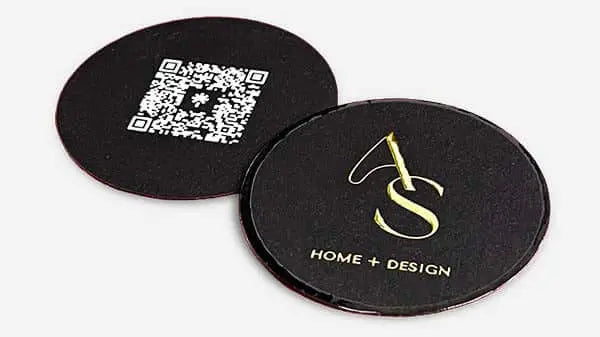


What Are Layered Business Cards? A Professional Guide
TL;DR:
- Layered business cards are premium multi-ply cards with a visible colored edge, offering a substantial weight and rigid feel. They enhance brand perception by conveying quality through physical presence and durability, especially in luxury or professional sectors. Design choices like edge color and shape maximize impact, but careful planning is essential before ordering due to their thickness and finishing considerations.
Layered business cards are premium multi-ply cards constructed by bonding two or more sheets of cardstock together, producing a finished thickness of 32pt or 600gsm and above that far exceeds the 14pt to 16pt standard of conventional single-layer cards. The result is a card with substantial weight, a rigid feel, and a visible colored edge where the bonded layers meet. That edge, often called the sandwich or colored core, is the defining visual feature of this card format. For professionals who treat a business card as a branding tool rather than a contact slip, layered cards offer a level of presence that standard print simply cannot match.
What are layered business cards and how are they built?
A layered business card is made by permanently bonding two or more sheets of cardstock using adhesive or pressure lamination. The most common configuration is a triple-layer construction: two outer sheets with a colored core sheet sandwiched between them. When the card is trimmed, the colored core becomes visible along all four edges, creating the signature stripe effect that makes these cards instantly recognizable.
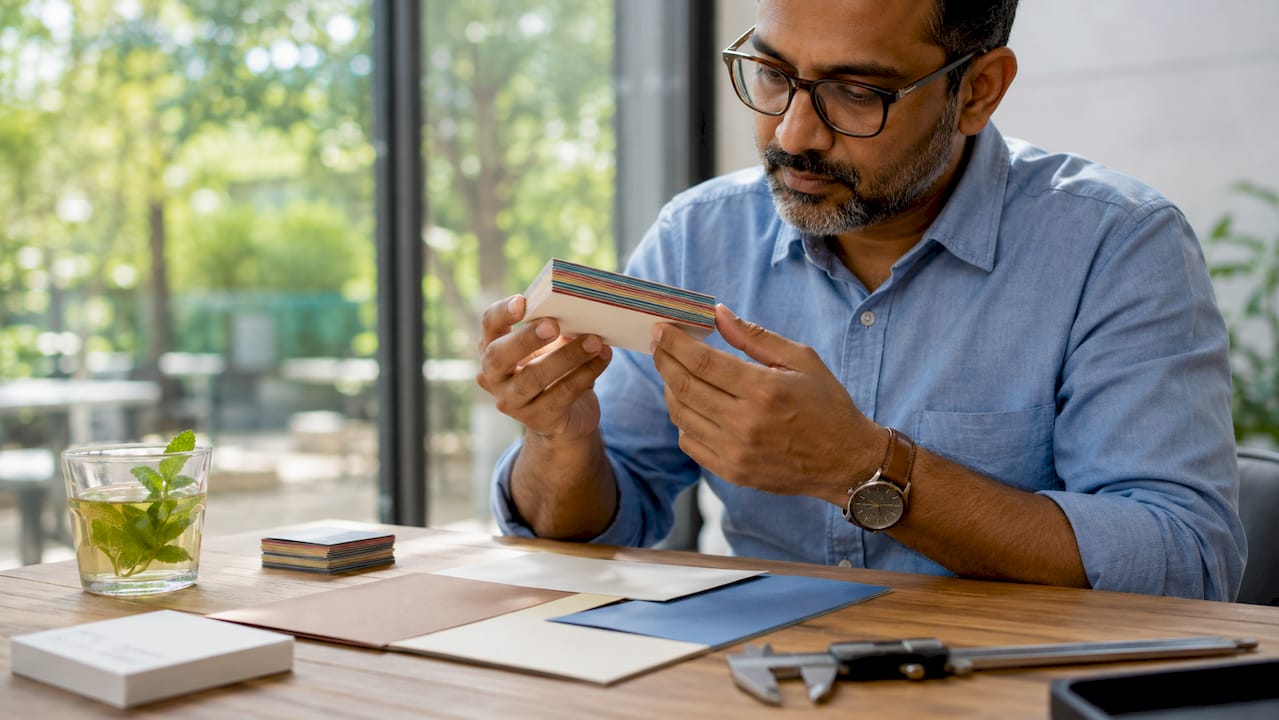
Thickness and weight are the first things you notice when you hold one. Standard single-ply cards run between 14pt and 16pt. Layered cards start at 32pt and can reach 810gsm or beyond, depending on the number of plies and the paper stock used. That weight communicates quality before a single word is read.
The outer layers are typically printed on coated or uncoated art paper, kraft stock, or laminated sheets. Each combination produces a different surface feel and print result. Uncoated stock gives a matte, tactile finish. Coated stock supports sharper color reproduction. Kraft adds a natural, earthy texture that suits certain brand aesthetics well.
The colored core options typically span 10 to 12 standard hues, including black, orange, red, pink, yellow, turquoise, green, purple, blue, and pastel green. Black cores are the most requested because they create strong contrast against white or light outer layers. Bright cores like orange or turquoise work well for brands that want a bolder, more expressive edge.
- Lamination types: Soft-touch matte, gloss, and satin are the most common outer finishes.
- Paper weights: Outer sheets typically range from 300gsm to 400gsm per ply before bonding.
- Core sheet: Usually a solid-color uncoated stock, 100gsm to 200gsm, chosen for color intensity.
- Bonding method: Cold or heat lamination, depending on the printer’s equipment and the finish required.
Pro Tip: Soft-touch lamination on the outer layers adds a velvety feel that reinforces the premium quality of the card. It also improves durability by protecting the printed surface from scuffs and moisture.
What benefits do layered business cards offer over standard cards?
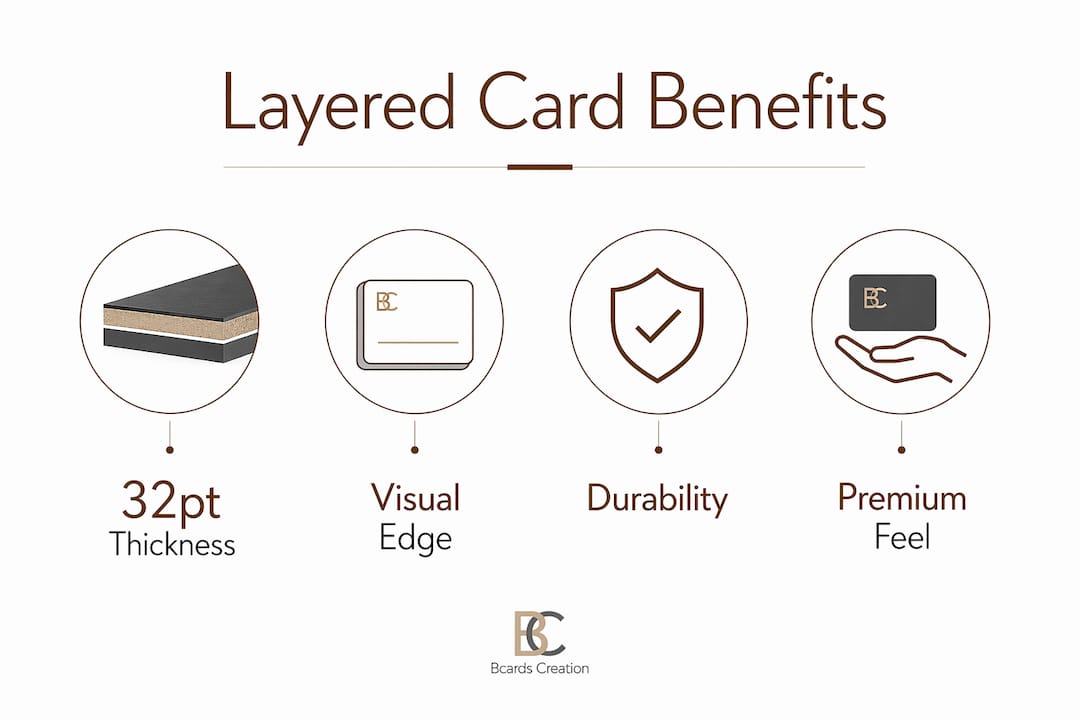
The most direct benefit is physical presence. A layered card at 32pt feels noticeably heavier and more rigid than a standard 16pt card. When someone picks it up, the weight registers immediately. That tactile signal shapes how the card, and by extension the person handing it over, is perceived.
Durability is a practical advantage that often goes unmentioned. Bonded multi-layer construction resists bending, creasing, and edge wear far better than a single ply. A card that survives a week in a wallet or a conference bag still looks intentional when it resurfaces.
The colored core edge is the feature that generates the most attention. It is a visual detail that is rarely achievable with standard single-layer cards, and it creates an immediate point of difference. Recipients notice it. They comment on it. That moment of recognition is exactly what a networking tool should produce.
Luxury brands, hospitality groups, finance professionals, and exclusive membership organizations are the heaviest users of layered cards. The format aligns with industries where perceived quality and exclusivity are part of the value proposition. Handing over a card that feels and looks premium reinforces the message that the service or product behind it is premium too.
Here is how the benefits break down by professional sector:
- Creative professionals (designers, photographers, architects): The card itself becomes a portfolio piece, demonstrating taste and attention to material detail.
- Finance and legal professionals: The weight and rigidity signal stability and precision, qualities clients in those fields actively look for.
- Hospitality and luxury retail: A layered card with a black core and soft-touch finish matches the sensory experience of the brand environment.
- Founders and executives: The card functions as a physical extension of the brand identity, not just a contact delivery mechanism.
How can design choices maximize the impact of layered cards?
Design for layered cards works differently than design for standard print. The card has three visible surfaces: front, back, and edge. Each one is a design decision. Ignoring the edge means leaving the most distinctive feature of the format underused.
Color psychology matters at every layer. The color choices for business cards affect how the brand is read before any text is processed. A deep navy outer layer with a gold or white core edge reads as authoritative and refined. A white outer layer with a bright red core reads as bold and direct. The contrast between outer and core color is the primary visual statement the card makes.
Die-cut shapes add another dimension. Industry-relevant shaped cards, such as a roof silhouette for a roofing contractor or a window frame cutout for an interior designer, communicate the business category without words. That instant recognition reduces the cognitive load on the recipient and increases recall. The shape becomes the brand signal.
“A card that shows what you do before the recipient reads a word is doing more work than most marketing materials ever will.” This is the standard layered card design should aim for.
Practical design considerations for layered cards include:
- Safe zones: Keep critical text and logos at least 4mm from the card edge to account for trimming variation across bonded layers.
- Edge color alignment: Choose a core color that either contrasts sharply with the outer layer or complements it. Avoid colors that are too similar, as the edge effect becomes invisible.
- Finish consistency: Match the lamination finish to the brand tone. Gloss finishes suit high-energy brands. Matte and soft-touch suit brands built on restraint and precision.
- Typography scale: Heavier card stock supports bolder typography. Thin, delicate fonts can feel mismatched against a card with significant physical weight.
Pro Tip: Before finalizing your layered card design, request a physical sample of your chosen core color and outer lamination combination. Colors shift between screen and print, and the edge effect looks different in person than it does in a digital mockup. Explore printing techniques for cards to understand how finish choices interact with layered construction.
What to know before ordering layered business cards
Standard layered cards are produced at 85x55mm, the same footprint as a conventional business card. This matters because recipients can file them in standard cardholders and wallets without friction. Custom shapes and sizes are available, but they add cost and can create storage challenges for the recipient.
Printing techniques compatible with layered cards include digital offset, UV printing, foil stamping, and spot UV coating. Not all finishing options work equally well on every lamination type. Foil stamping, for example, adheres best to matte or soft-touch surfaces and can lift on high-gloss laminates over time. Confirm compatibility with your printer before specifying a finish combination.
Here are the key practical steps to work through before placing an order:
- Confirm thickness requirements. Decide whether a double-layer or triple-layer construction suits your brand. Triple-layer cards at 32pt are the most common choice for a premium result.
- Select your core color. Review physical swatches if possible. Digital color representations of core stocks are often inaccurate.
- Choose your outer finish. Soft-touch matte is the most versatile. Gloss adds vibrancy but shows fingerprints more readily.
- Check mailing implications. Increased thickness and weight affect postage rates and envelope fit if you plan to mail cards directly. Factor this into your budget and logistics.
- Set a realistic budget. Layered cards cost more than standard cards. The premium reflects the materials, bonding process, and finishing work involved. Treat it as a brand investment with a per-card cost that reflects the quality delivered.
- Order a proof or sample run. Small-batch production before a full order protects against color or finish surprises. The luxury card printing process involves multiple stages where a physical proof adds real value.
Key takeaways
Layered business cards deliver a measurable brand advantage through physical weight, colored core edges, and durable multi-ply construction that standard single-layer cards cannot replicate.
| Point | Details |
|---|---|
| Construction and thickness | Layered cards bond two or more cardstock sheets, reaching 32pt or 600gsm and above. |
| Colored core edge | A sandwiched color sheet creates a visible edge stripe in up to 12 standard hues. |
| Brand perception benefit | Physical weight and rigidity signal quality before any text is read by the recipient. |
| Design decisions matter | Edge color, lamination finish, and card shape each carry distinct brand communication value. |
| Practical ordering steps | Confirm thickness, core color, finish compatibility, and mailing implications before production. |
Why layered cards changed how I think about first impressions
I have reviewed hundreds of business card projects over the years. The ones that generate the most consistent feedback from recipients are not the ones with the most complex design. They are the ones where the physical object itself communicates something before it is read.
Layered cards do that reliably. When a client hands over a 32pt card with a black core and soft-touch finish, the person receiving it pauses. That pause is not accidental. It is the result of a deliberate material decision. The card feels different, and that difference registers as intentional quality.
What I find most underused is the edge. Most professionals who order layered cards focus entirely on the front and back design, then treat the core color as an afterthought. That is a missed opportunity. The edge is the first thing visible when the card is pulled from a stack or a cardholder. It is the detail that makes someone look twice.
The other thing worth saying directly: layered cards are not for every brand. A brand built on accessibility and approachability may find that the weight and formality of a layered card creates a slight disconnect with its audience. The format suits brands where premium positioning is already part of the message. If that is your brand, the investment is straightforward to justify. If it is not, a well-designed standard card with a strong finish may serve you better.
The decision should come from the brand strategy, not from the desire to have an impressive card for its own sake.
— Kostiantyn
Custom layered business cards from Bcardscreation
Bcardscreation produces fully custom layered business cards for professionals and brands who treat print as a branding decision, not a commodity purchase. Every project is developed individually, with material consultation, core color selection, and finish guidance built into the process.
You choose the construction, the core color from a full palette, and the outer finish. Bcardscreation handles production in controlled small batches, without templates or automated editors. The result is a card that reflects your brand with precision. If you are ready to move forward, explore the custom business card design service to start your project. For a broader look at available formats and finishes, browse the full business cards collection.
FAQ
What is a layered business card?
A layered business card is a multi-ply card made by bonding two or more sheets of cardstock, producing a finished thickness of 32pt or more. The bonded construction creates a visible colored edge where the layers meet, known as the sandwich or colored core effect.
How thick are layered business cards compared to standard cards?
Standard single-layer cards run between 14pt and 16pt. Layered cards start at 32pt and can reach 810gsm or above, making them roughly twice as thick or more than a conventional card.
What core colors are available for layered cards?
Most printers offer 10 to 12 standard core colors, including black, red, orange, pink, yellow, turquoise, green, purple, blue, and pastel green. Black is the most popular choice because it creates strong contrast against light outer layers.
Can layered business cards be mailed?
Yes, but their increased thickness and weight affect postage rates and standard envelope fit. If you plan to mail cards directly, confirm postage implications and envelope dimensions before finalizing your order.
Are layered cards suitable for all industries?
Layered cards work best for brands where premium positioning is already part of the message, including luxury retail, finance, hospitality, creative services, and executive roles. Brands built on accessibility may find the format creates a tone mismatch with their audience.
Recommended
- Unique Business Card Ideas Guide for Strategic Branding – BcardsCreation
- How business card thickness impacts your professional image – BcardsCreation
- Why use thick business cards: a small business owner’s guide – BcardsCreation
- Business Card Thickness Selection Guide for Professionals – BcardsCreation


