

Why use thick business cards: a small business owner's guide
TL;DR:
- Choosing the right card thickness influences first impressions and brand perception significantly. Thicker cards, like 16pt and above, increase tactile engagement, trust, and memorability, especially when paired with premium finishes. Selecting the appropriate thickness depends on your brand image, usage context, and wallet compatibility to maximize impact and professionalism.
Most small business owners spend hours choosing fonts and colors but never think about card thickness. That’s a mistake. The reason to use thick business cards isn’t aesthetic preference. It’s about the first three seconds after you hand someone your card. Before they read your name, before they see your logo, their fingers are already forming an opinion. Thickness creates that first impression. This guide breaks down what card thickness means, what the numbers tell you, and how to pick the right option for your brand.
Table of Contents
- What thickness means for your business card
- How thick business cards boost brand perception and memorability
- Choosing the right thickness: balancing brand impact and practicality
- How construction and finishes amplify the thick card advantage
- Practical tips for using thick business cards effectively
- Our take: thickness is the detail that changes how clients see you
- Get the right thickness for your brand with BcardsCreation
- Frequently asked questions
Key Takeaways
| Point | Details |
|---|---|
| Thickness signals quality | Thicker business cards convey professionalism and make a stronger first impression through tactile weight. |
| 16pt is the standard | A 16pt cardstock balances premium feel with practicality, ideal for most small business networking. |
| Thicker cards increase retention | Cards 16-20pt thick are held longer and kept more often by recipients, improving brand recall. |
| Construction affects feel | Bonded laminated layers create true luxury thickness, supporting advanced finishes without stiffness. |
| Test physical samples | Always review actual card samples to ensure thickness fits your brand needs and client usage scenarios. |
What thickness means for your business card
Card thickness is measured in points (pt). One point equals 1/1000 of an inch. So a 16pt card is 0.016 inches thick. That sounds minor, but the difference between a 12pt and a 16pt card is immediately noticeable when you hold both.
Standard business card thicknesses in the US market run from 12pt to 32pt. Here’s how they stack up:
- 12pt: Lightweight, flimsy feel. Common for mass-distributed cards or entry-level print runs.
- 14pt: A step up. Decent for everyday use but still lacks a premium feel.
- 16pt: The most popular choice for professionals. 16pt is roughly 130lb cover and considered premium business card thickness.
- 18pt and above: Noticeably substantial. Used by brands that want their card to make a physical statement.
- 32pt: Luxury tier. Feels more like a small piece of cardboard than a paper card.
Thickness also relates to card weight, measured in pounds (lb) or grams per square meter (GSM). Weight describes density, while points describe physical dimension. A 16pt card can have different weights depending on its construction, especially if it uses bonded layers or lamination. Understanding the business card thickness impact on how your card is perceived starts with knowing these numbers.
How thick business cards boost brand perception and memorability
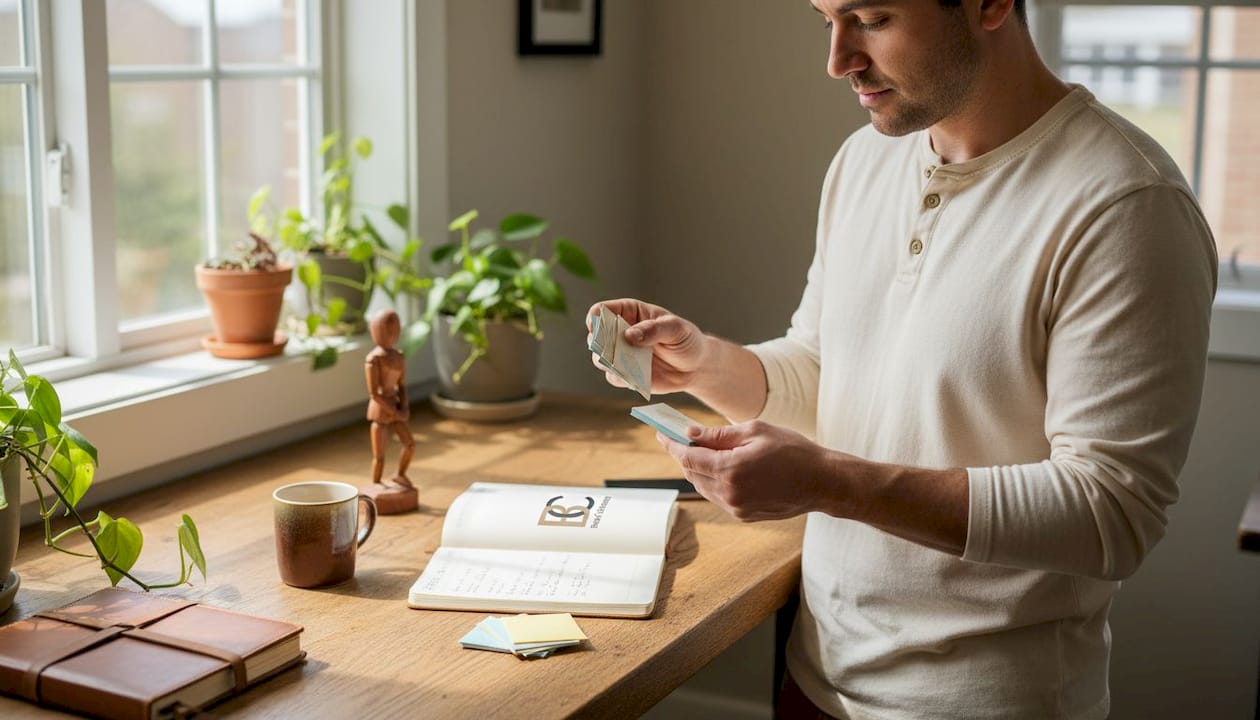
Here’s something most people don’t know: thickness changes how long someone holds your card. Tactile thick cards (16-20pt) are held 6-9 seconds compared to 3-4 seconds for standard cards, with 15-25% higher pocket retention rates.
Those extra seconds matter. When someone holds your card longer, they read more. They notice your details. They’re more likely to pocket it instead of setting it down on a table to be forgotten.
A thick card communicates investment before a single word is read. It tells the recipient: this person takes their brand seriously.
The benefits of thick business cards go beyond retention. They also signal quality nonverbally. When someone picks up your card and it has real heft, their brain immediately registers effort and professionalism. It works the same way a firm handshake does. You can’t fake it.
Key reasons thick cards improve brand perception:
- Tactile engagement: Texture and weight trigger a physical response that increases attention.
- Nonverbal trust: Heavier cards read as more credible before any content is absorbed.
- Longer retention: Cards that feel premium stay in wallets and desks longer.
- Brand differentiation: Most cards people receive are thin and forgettable. Yours won’t be.
Pairing thickness with the right premium business card materials amplifies all of these effects significantly.
Choosing the right thickness: balancing brand impact and practicality
Not every brand needs a 32pt card. The right thickness depends on how you use your cards, who you’re handing them to, and what your brand is actually communicating.
| Thickness | Feel | Best for | Wallet fit |
|---|---|---|---|
| 14pt | Light, basic | High-volume distribution | Yes |
| 16pt | Solid, professional | Most small businesses | Yes |
| 18pt | Substantial, premium | Client-facing professionals | Usually |
| 32pt | Luxury, statement | High-end brands, creatives | Often no |
16pt balances cost and premium feel, lasting 2-3x longer than 14pt cards in wallets. For most small business owners, 16pt is where the investment starts paying off without going overboard.
For brands targeting luxury clients or creative industries, 18pt and above make more sense. 32pt cards double the heft of 16pt and are ideal for luxury branding and advanced finishes. They’re bonded from two laminated sheets, which is what allows them to carry foil stamping, embossing, or edge painting cleanly.
Factors to consider when choosing thickness:
- Distribution volume: High volume favors 14-16pt for cost control. Limited-run premium events favor 18-32pt.
- Finishing plans: Foil and embossing need heavier stock to hold the treatment without warping.
- Client type: Executives and creative directors notice the difference immediately.
- Wallet fit: Cards above 18pt often won’t sit flush in standard slots. Vertical or slim designs help.
The business card thickness impact on your brand depends on matching thickness to context. A 32pt card handed to a potential client at a boutique hotel feels right. The same card handed out at a busy trade show might get left behind due to bulk.
Pro Tip: Order samples at 14pt, 16pt, and 18pt before committing to a print run. Hold them. Put them in your wallet. Bend them. The right choice becomes obvious in 30 seconds. Why choose premium cards without knowing exactly what you’re paying for?
Also check out how your thickness choice pairs with business card material matters to ensure the full sensory experience aligns.
How construction and finishes amplify the thick card advantage
Thick cards and premium finishes aren’t separate decisions. They work together. The advantages of heavy cardstock come partly from what that thickness allows you to do with the surface.
Here’s how construction and finishes interact:
- Laminated bonding: 32pt cards are bonded from two 16pt laminated sheets, enabling durable foil, embossing, and soft-touch finishes that thinner single-layer stock cannot support cleanly.
- Soft-touch lamination: Soft-touch lamination creates a velvet feel that resists fingerprints and adds perceived value. On a thick card, this finish is dramatically more effective than on thin stock.
- Foil stamping: Requires a base that won’t flex or warp during the press process. Thicker cards hold the impression cleanly.
- Embossing and debossing: The raised or recessed effect needs card depth to register clearly. Thin cards often crack or distort under this process.
- Edge painting: Only works on cards with enough physical depth to carry the paint coat on the side. Typically 18pt and above.
These finishes aren’t just decorative. They extend the tactile experience from the moment someone picks up your card to the moment they examine it. Every detail they touch reinforces your brand positioning. You can see how raised print embossing and similar techniques translate into a physical brand moment.
Pro Tip: If you’re investing in foil or embossing, don’t save money by dropping to 14pt stock. The finish quality will suffer and the card will feel inconsistent. Go to at least 16pt, ideally 18pt, to let the finish perform correctly. Premium materials boost impact most when paired with the right card weight.
Practical tips for using thick business cards effectively
Knowing why use thick business cards is one thing. Using them well is another. Here’s how to get the most from your investment.
- Test samples before ordering. Bring physical samples to client meetings, as screens can’t convey the exact heft and feel. The same logic applies before you commit to a run of 500 cards.
- Check wallet compatibility. Cards thicker than 18pt may not fit standard wallets. Slim or vertical designs alleviate this issue and often look more intentional anyway.
- Match thickness to your brand tone. A photographer shooting editorial fashion needs a different card than a residential contractor. Both can use thick cards, but the finishing, design, and thickness tier should reflect their client’s world.
- Plan for longer production times. Thicker cards with specialty finishes take more time to produce. Don’t order a 32pt foil card expecting a 48-hour turnaround. Build your timeline with that in mind.
- Use the handoff intentionally. Thick cards create a moment. Present yours face-up, with purpose. The physical weight draws attention naturally. Let the card do its job.
These business card impression tips apply whether you’re ordering your first premium run or upgrading from a thin card you’ve used for years.
Pro Tip: If you’re a creative professional, use thick card design ideas that lean into the material. Edge color, textured back, spot UV on the front. The card becomes a portfolio piece in miniature. Every design decision should telegraph your visual standards.
Our take: thickness is the detail that changes how clients see you
Most branding advice focuses on what people see. Very little focuses on what they feel. That’s where card thickness becomes genuinely important.
We work with small business owners and creative professionals who have tried the standard thin cards. They look fine on screen. They print fine. But they don’t hold up in the real world, physically or in terms of lasting impression. When clients switch to 16pt or above, the feedback they get from recipients changes immediately. “Nice card” becomes a real comment, not a pleasantry.
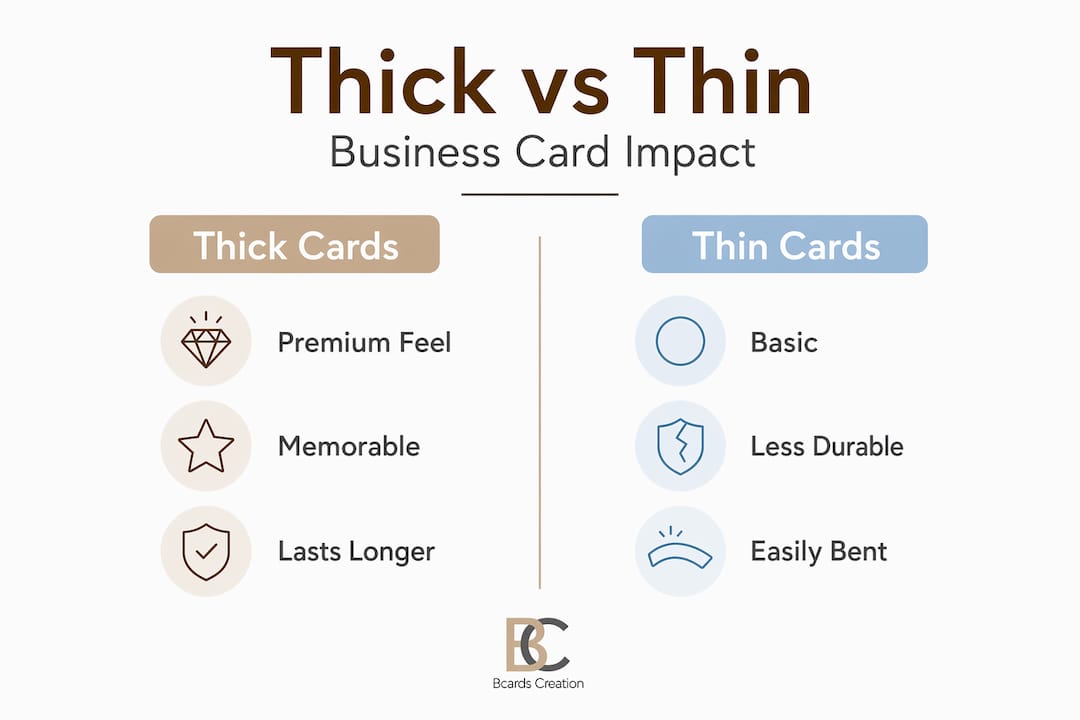
Here’s the uncomfortable truth: a thin card can undermine an otherwise strong brand. You can spend thousands on a logo, a website, a professional photo, and then hand someone a flimsy 12pt card that bends when they hold it. That card is the last thing they touch when they walk away from you. It should feel like the rest of your brand looks.
Thick vs thin business cards isn’t a luxury debate. It’s a consistency question. Your card should match the quality signal every other touchpoint in your brand is sending. If it doesn’t, it’s working against you.
Get the right thickness for your brand with BcardsCreation
Choosing card thickness is easier when you can see and feel the options before you order.
At BcardsCreation, every project starts with a material and design consultation. We work with you to identify the right thickness, construction, and finish combination for your specific brand goals. No templates. No automated editors. Each card is developed individually, from the first brief to the final production check. If you’re ready to upgrade from generic to genuinely impressive, explore our custom business card options and request a sample pack to feel the difference before you commit.
Frequently asked questions
What thickness is best for small business cards that balance cost and quality?
16pt cardstock balances cost and premium feel for USA small businesses and lasts 2-3x longer in wallets than 14pt. It’s the most practical starting point for professionals who want a noticeable upgrade without a luxury price tag.
Do thicker business cards really improve how long recipients keep them?
Yes. Thick cards (16-20pt) have 15-25% higher pocket retention rates compared to standard cards, and recipients hold them 6-9 seconds versus 3-4 seconds, which directly increases the chance they remember your contact details.
Can ultra-thick cards like 32pt fit in regular wallets?
Often no. Thick cards over 18pt may not fit standard wallet slots, so testing pocket fit before ordering is recommended. Vertical orientation or slim card dimensions can help work around this.
Why is bonded laminated construction important for 32pt business cards?
32pt cards are made by bonding two laminated 16pt sheets to deliver density and finish compatibility. This construction is what allows foil, embossing, and soft-touch finishes to perform cleanly and consistently at that thickness.
How do finishes like soft-touch lamination enhance thick business cards?
Soft-touch lamination creates a velvet feel that resists fingerprints and boosts perceived value. On a thick card, the combination of heft and surface texture produces a sensory experience that thin laminated stock simply cannot replicate.


