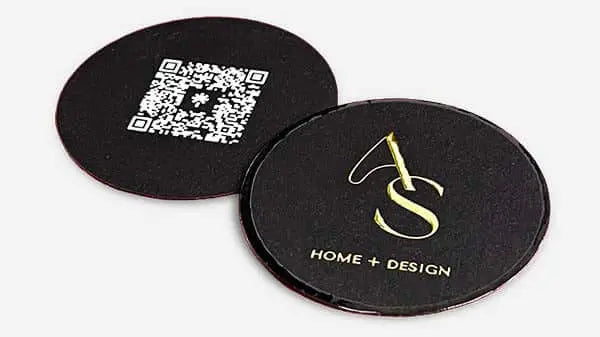


What is digital foil for business cards? Elevate your brand
Most people assume that metallic foil on a business card means a long wait, a big minimum order, and a steep price tag. That assumption is outdated. Digital foil applies metallic or colored foil using digital technology, with no custom metal dies or plates required. The result is a shiny, premium finish that used to be reserved for large print runs and big budgets. Today, you can get foil on as few as one card, with next-day turnaround in some cases. This article breaks down how digital foil works, what it looks like, and why it is one of the smartest branding moves you can make right now.
Table of Contents
- What is digital foil? The basics explained
- How does the digital foil process work?
- Business benefits: Why choose digital foil for your cards?
- Design possibilities: Colors, effects, and creative applications
- Digital foil vs traditional foil: Which should you choose?
- Pro tips for maximizing impact with digital foil cards
- Bring your ideas to life: Custom digital foil business cards
- Frequently asked questions
Key Takeaways
| Point | Details |
|---|---|
| No dies required | Digital foil allows for custom metallic business cards without the high cost or time of metal die setup. |
| Flexible and fast | It’s perfect for short runs and quick turnarounds, supporting projects as small as 1 card. |
| Creative possibilities | Choose from a variety of metallic colors and personalize each card for standout branding. |
| Economical premium effect | Digital foil delivers high-end, memorable shine affordably, making luxury branding accessible to any size business. |
What is digital foil? The basics explained
Digital foil is a modern printing technique. It fuses metallic foil directly onto a card surface using heat and a digital printer, with no dies or plates involved. That is the key difference from traditional hot foil stamping, which requires a custom metal die to press foil into the paper.
Because there are no dies to make, setup is fast and affordable. You can order a small batch, change your design between runs, or test different foil colors without paying for new tooling each time. That flexibility is a big deal for small businesses and independent professionals.
The finish itself is clean and flat. As noted in the digital foiling process, digital foil produces a smooth metallic surface without debossing or texture, unlike traditional foil which creates an indented effect. Some people prefer the raised, tactile feel of hot foil stamping. But for a sleek, modern look, digital foil delivers.
For a deeper look at how these two methods compare, see our guide on foil stamping vs digital foil.
| Feature | Digital foil | Traditional hot foil |
|---|---|---|
| Setup required | No dies or plates | Custom metal die needed |
| Minimum quantity | As low as 1 card | Usually 250+ |
| Turnaround | Next day possible | Several days to weeks |
| Finish | Flat, smooth metallic | Indented, tactile |
| Cost for small runs | Low | High |
| Design flexibility | High | Limited after die is made |
“Digital foil is a printing technique that applies metallic or colored foil to business cards and other substrates using digital technology, without requiring custom metal dies or plates used in traditional hot foil stamping.”
How does the digital foil process work?
The process is straightforward. Each step is controlled digitally, which is why it is so fast and flexible.
Here is how a digital foil business card is made:
- Print the base design. Your full-color artwork is printed digitally onto the card stock.
- Apply a coating. A laminate or soft touch coating is added to protect the print and prepare the surface for foil adhesion.
- Print the foil layer. A black toner or adhesive is printed precisely over the areas where foil should appear, such as your logo or name.
- Apply heat and foil. The card passes through a heat press. The foil bonds only to the toner or adhesive areas, leaving the rest of the card untouched.
This four-step production method is what makes digital foil so precise and repeatable. Every card comes out consistent, whether you order 10 or 500.
One major advantage is variable data. Because the foil layer is printed digitally, you can change the content on each card. That means personalized names, job titles, QR codes, or even unique serial numbers, all with foil accents. See how full color and foil personalization works in practice.
Pro Tip: If you want the foil to really pop, ask for a soft touch or matte coating on the base card. The contrast between the velvety surface and the shiny foil is striking and memorable.
Business benefits: Why choose digital foil for your cards?
Digital foil is not just a visual upgrade. It changes what is practical for your business.
Here is what makes it worth considering:
- Small quantities, fast. Short runs of 1 to 500 cards are easy to produce, with next-day turnaround possible. No need to order 1,000 cards just to make the economics work.
- No die costs. Traditional foil stamping requires a custom die for every design. Digital foil skips that entirely, keeping costs low even for one-off orders.
- Easy iteration. Want to test two versions of your card? Change your title? Update your QR code? You can do that between runs without extra fees.
- Wide foil color range. Gold, silver, copper, blue, and holographic are all available. Mix and match with your brand palette.
- Stands out instantly. A metallic foil card looks and feels different from a standard matte card. That difference matters when you are handing cards to potential clients or partners.
Research consistently shows that premium metallic finishes enhance brand identity by adding a level of perceived quality that plain cards simply cannot match. Up to 92% of people report that premium-finish business cards feel more memorable than standard ones. That is not a small edge.
For teams or events where you need affordable short-run foiling, digital foil is the most practical path.
Design possibilities: Colors, effects, and creative applications
Digital foil gives you real creative range. You are not locked into gold on white. The options are broader than most people expect.
Available foil colors include gold, silver, copper, blue, and holographic. Each creates a different mood. Gold reads as classic and authoritative. Silver feels modern and clean. Holographic is bold and eye-catching, great for creative industries.
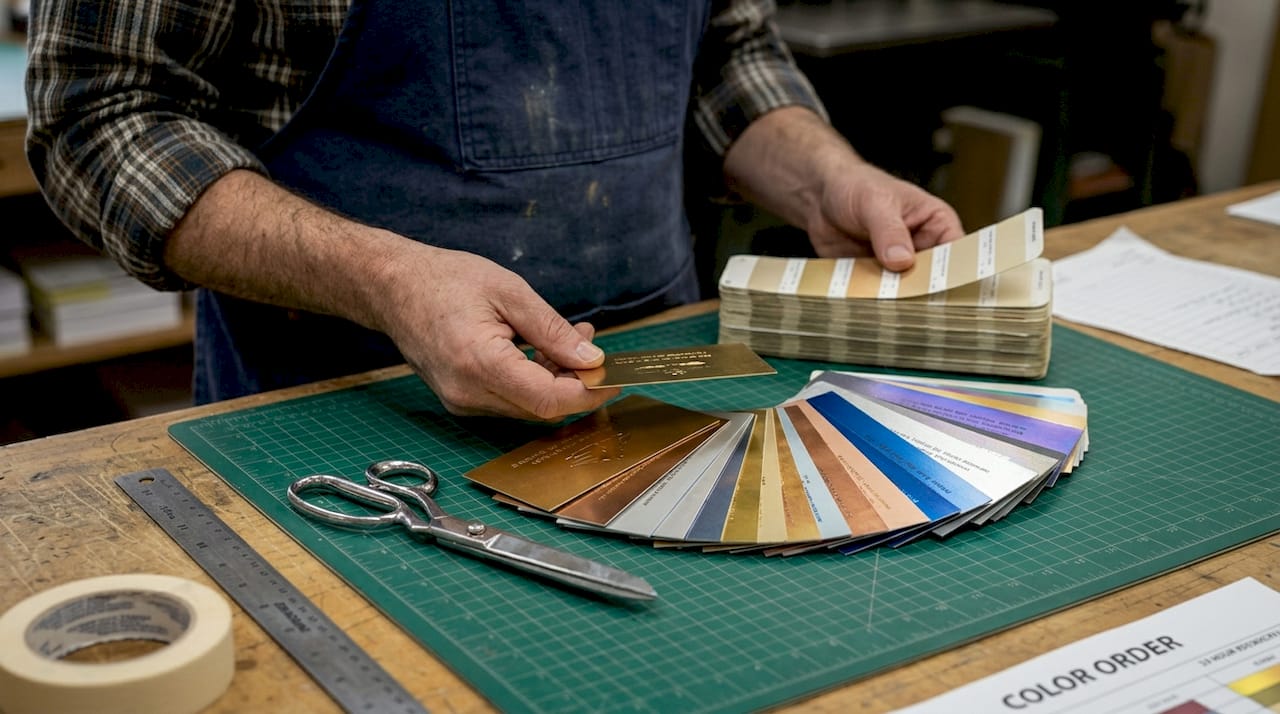
You can also layer foil over full-color print for a mixed-media effect. A deep navy card with gold foil on the logo, for example, reads as high-end without being loud. Pairing metallics with the right paper stock matters too. Soft touch, matte, and colored papers all create different levels of contrast. For guidance on this, our article on choosing foil colors is a good starting point. You can also check luxury color trends for 2026 inspiration.
Here are five ways to use digital foil creatively on your business cards:
- Logo shine. Apply foil only to your logo mark for a clean, focused premium effect.
- Name highlight. Foil your name or title to make it the first thing people notice.
- QR code accent. A foiled QR code looks intentional and draws the eye naturally.
- Two-tone foil. Use two different foil colors, such as gold and holographic, for a layered, dynamic look.
- Signature accents. Foil thin lines, borders, or geometric shapes to frame your card design.
If you want to explore using colored paper as a base for your foil design, that opens up even more contrast options.
Digital foil vs traditional foil: Which should you choose?
Both methods produce metallic business cards. But they are built for different situations.
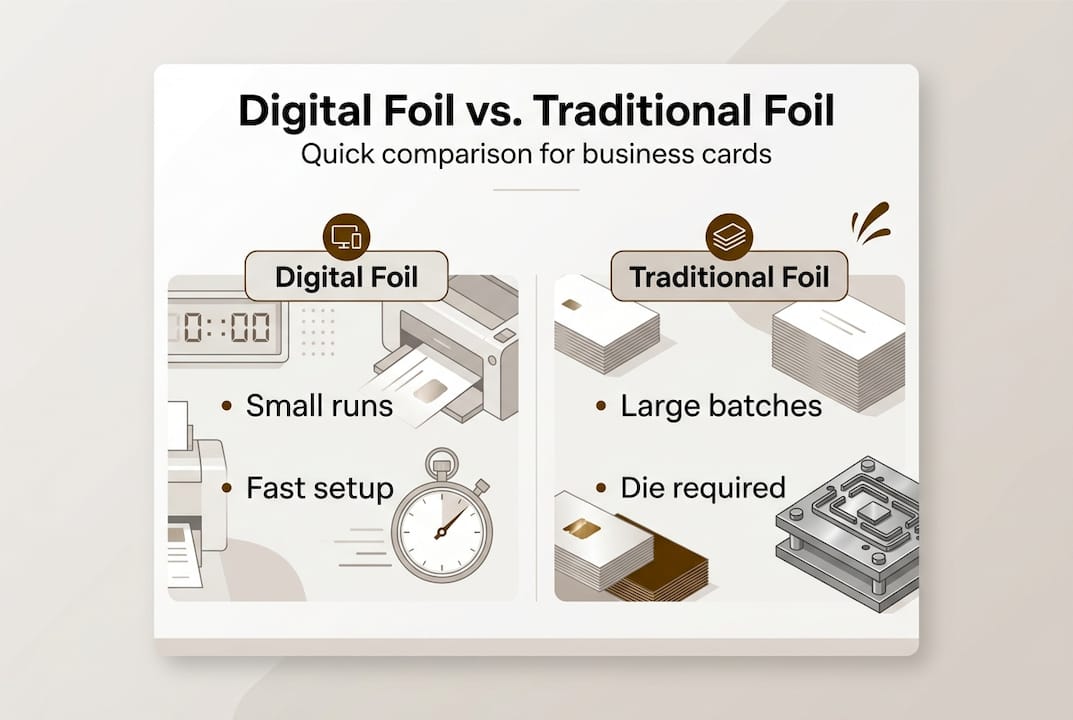
Digital foil is the right choice when you need speed, flexibility, or small quantities. It is also better when your design changes frequently or when you want to personalize cards for different people or events. The flat, smooth finish suits modern, minimal design styles well.
Traditional hot foil stamping is worth considering for very large runs where the die cost becomes a smaller percentage of the total. It also produces a tactile, indented finish that some luxury brands specifically want. If that raised texture is part of your brand identity, traditional foil delivers it. See our comparison of mirror vs foil cards and our deep dive into hot foil stamping for more context.
| Factor | Digital foil | Traditional foil |
|---|---|---|
| Best for | Small runs, fast projects | Large runs, luxury tactile feel |
| Cost per card (small run) | Lower | Higher |
| Finish texture | Flat and smooth | Raised and indented |
| Personalization | Yes, variable data | No |
| Design changes | Easy, no extra cost | Requires new die |
| Turnaround | Fast, next day possible | Slower, days to weeks |
For luxury beauty foiling or high-volume campaigns, traditional foil may still win. For most professionals ordering under 500 cards, digital foil is the smarter option.
Pro tips for maximizing impact with digital foil cards
Getting the most from digital foil is about smart design choices, not just picking a shiny color.
- Be selective with foil placement. Foil everything and nothing stands out. Use it on one or two key elements: your logo, your name, or a single accent line.
- Keep foil areas clean. Fine details and thin lines can lose definition. Bold shapes and clear letterforms work best with foil.
- Use color theory. Warm foils like gold and copper pair well with dark, rich backgrounds. Cool foils like silver and blue work on lighter or neutral stocks. Our guide on color psychology in branding explains the logic behind these pairings.
- Test before you commit. Order a small run first. Digital foil makes this affordable. Use it to check how the foil reads in real light before ordering 500 cards.
- Use variable data for events. Print personalized cards for specific clients or conferences. Premium metallic shine combined with a personalized name makes a strong first impression.
Pro Tip: Ask for a matte or soft touch laminate on the base card. The contrast between the flat, velvety surface and the reflective foil makes both elements look sharper and more intentional.
Bring your ideas to life: Custom digital foil business cards
You now know how digital foil works, what it looks like, and how to use it well. The next step is putting it into practice.
At BcardsCreation, every card is built from scratch. No templates, no automated editors. You choose the foil color, the paper, the finish, and the layout, and we handle the rest. Whether you need 25 cards for a product launch or 500 for a full team, we work with flexible quantities and a wide range of finishes. Start with our custom business card design service, explore creative business cards with foiling options, or browse the business card guide to find the right direction for your brand.
Frequently asked questions
Is digital foil as durable as traditional hot foil stamping?
Digital foil holds up well for everyday business card use. Traditional foil may have a slight edge in long-term durability under heavy handling, largely because the indented finish is physically pressed into the paper.
Can I print variable data (like personalized names) with digital foil?
Yes. Because the foil layer is applied digitally, each card can carry unique information, such as a name, title, or QR code, with no new dies or extra setup required. Variable data support is one of digital foil’s strongest advantages.
What colors and effects are available with digital foil?
Available foil colors include gold, silver, copper, blue, and holographic. Effects range from solid metallic coverage to accent foiling on specific design elements.
How fast can I get business cards with digital foil?
For small runs, next-day turnaround is possible because there is no die to produce. Larger or more complex orders may take a few additional days depending on finishing options.


