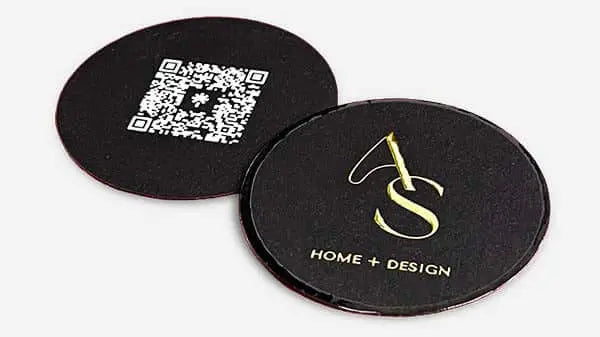


When mirror business cards work: insights for creatives 2026
Many believe mirror business cards are flashy but impractical. Yet surveys show 62% of professionals abandoned mirror cards due to low quality, while 78% recommend high-grade options for premium branding. Effectiveness depends on material quality and design choices. This guide helps creative professionals and boutique beauty brands evaluate when mirror cards boost their presence and when alternatives serve better.
Table of Contents
- Introduction To Mirror Business Cards
- Why Mirror Business Cards Work For Creative And Beauty Brands
- When Mirror Business Cards Don’t Work: Common Pitfalls And Misuse
- Design Principles For Effective Mirror Business Cards
- Mirror Cards Compared To Other Premium Business Card Types
- Practical Use Cases And Case Studies
- Common Misconceptions About Mirror Business Cards
- Conclusion And Stepwise Recommendations
- Discover Premium Custom Business Card Solutions
- Frequently Asked Questions About Mirror Business Cards
Key takeaways
| Point | Details |
|---|---|
| Mirror cards convey luxury but need high-quality materials | Low-grade options tarnish quickly and damage brand perception. |
| Design contrast and font choice critically impact readability | Bold typography with 70-80% contrast ensures legibility on reflective surfaces. |
| Not suitable if quick info access or low-light use is essential | Glare and reflections can slow reading speed by 25-40%. |
| Acrylic and stainless steel offer distinct benefits | Acrylic is lighter and customizable; stainless steel is more durable and prestigious. |
| Avoid low-quality mirror cards to prevent negative impressions | Poor materials exhibit 50% faster degradation than premium alternatives. |
Introduction to mirror business cards
Mirror business cards stand out through their reflective surfaces and premium materials. These cards are made from polished stainless steel, aluminum, or acrylic coated with reflective finishes. They offer durability and a tactile experience that paper cards cannot match.
Metal mirror cards typically measure 0.3 to 0.5 mm thick, providing substantial weight and presence. Stainless steel mirror cards typically last several years without visible wear, making them ideal for long-term brand representation.
Common users include:
- Photographers seeking cards that reflect their creative vision
- Interior designers and architects emphasizing modern aesthetics
- Luxury beauty brands reinforcing high-end positioning
- Corporate executives projecting authority and innovation
- Creative studios demonstrating attention to visual detail
The reflective surface creates an immediate visual impact. Recipients often pause to examine the card, increasing engagement time and memorability. This tactile and visual premium positions your brand above competitors using standard paper cards.
For creative professionals, mirror effect business cards serve as physical proof of your commitment to quality. The substantial feel communicates professionalism before any words are read. Understanding mirror cards durability helps you make informed material choices that align with your brand standards.
Why mirror business cards work for creative and beauty brands
Mirror business cards succeed when they reinforce your existing brand identity. For creative professionals and boutique beauty brands, these cards amplify messages of innovation, precision, and luxury. The reflective surface becomes a brand statement, not just a gimmick.
Key advantages include:
- Durable construction that withstands repeated handling without degradation
- Tactile premium feel that conveys professionalism and prestige
- Unique visual impact that sparks conversations and social sharing
- Functional design opportunities like integrated mini mirrors for beauty brands
- Symbol of innovation and confidence in your creative or service expertise
Mirror cards are increasingly popular with photographers, designers, and luxury sellers because they symbolize attention to detail and high brand confidence. When a beauty consultant hands a client a mirror card, the card itself becomes a useful tool, creating a memorable touchpoint.
Social media amplification matters. Unique cards get photographed and shared, extending your reach beyond the initial exchange. A distinctive mirror card can generate organic visibility as recipients post images to Instagram or LinkedIn, showcasing their new connection.
Pro Tip: If your brand emphasizes sustainability, choose recycled stainless steel or eco-friendly coatings. Communicate this choice through subtle design elements or accompanying materials to reinforce your values without compromising the premium aesthetic.
For beauty brands specifically, luxury business cards beauty brands explains how material choices signal service quality. Your card preview the experience clients can expect. Understanding broader business cards beauty industry trends helps position your cards strategically within competitive markets.
External validation matters too. Research on beauty branding natural impact shows how physical brand touchpoints influence client perceptions of service quality and attention to detail.
When mirror business cards don’t work: common pitfalls and misuse
Mirror cards fail when design choices prioritize aesthetics over function. Understanding these pitfalls helps you avoid costly mistakes that damage rather than enhance your brand.
Common failure scenarios:
- Low contrast typography creates readability problems, especially in varied lighting.
- Fine or script fonts become illegible against reflective backgrounds.
- Glare can reduce reading speed by 25-40% compared to matte cards.
- Poor quality materials scratch easily, signaling carelessness rather than luxury.
- Style mismatch between card aesthetic and brand personality confuses recipients.
Poor quality mirror cards exhibit 50% faster visual degradation than high-grade alternatives. Scratches, tarnishing, and coating failures undermine the premium impression you intended. This degradation actively harms brand perception, suggesting you cut corners or lack attention to quality.
Practical limitations matter for certain use cases. If clients need to quickly access contact information in dim venues or while multitasking, reflective surfaces create friction. Busy professionals may prefer matte cards they can read instantly without adjusting angles or lighting.
Pro Tip: Test your design by printing a sample and examining it in different lighting conditions. Check readability in bright sunlight, office fluorescents, and evening indoor lighting. If you struggle to read key information in any scenario, redesign before committing to a full order.
Mirror cards demand thoughtful design. When executed poorly, they become obstacles to communication rather than facilitators of connection. Prioritize function alongside form to ensure your card serves its core purpose: making it easy for people to remember and contact you.
Conservative industries or traditional corporate environments may view mirror cards as overly casual or attention-seeking. Know your audience. If clients expect understated professionalism, a high-quality matte or letterpress card may better align with their expectations and your positioning.
Design principles for effective mirror business cards
Effective mirror card design balances visual impact with practical readability. Start with typography that commands attention without sacrificing clarity.
Typography guidelines:
- Use medium to thick fonts with 70-80% contrast against the reflective background
- Choose sans-serif fonts for body text; bold serifs work for names or headlines
- Maintain minimum 10pt font size; smaller text becomes illegible on reflective surfaces
- Avoid script or decorative fonts that rely on fine details
Material selection directly impacts durability and brand perception. Stainless steel offers maximum longevity and weight, projecting authority and permanence. Acrylic provides design flexibility with laser-cut shapes and lighter weight, appealing to creative professionals who prioritize artistic expression.
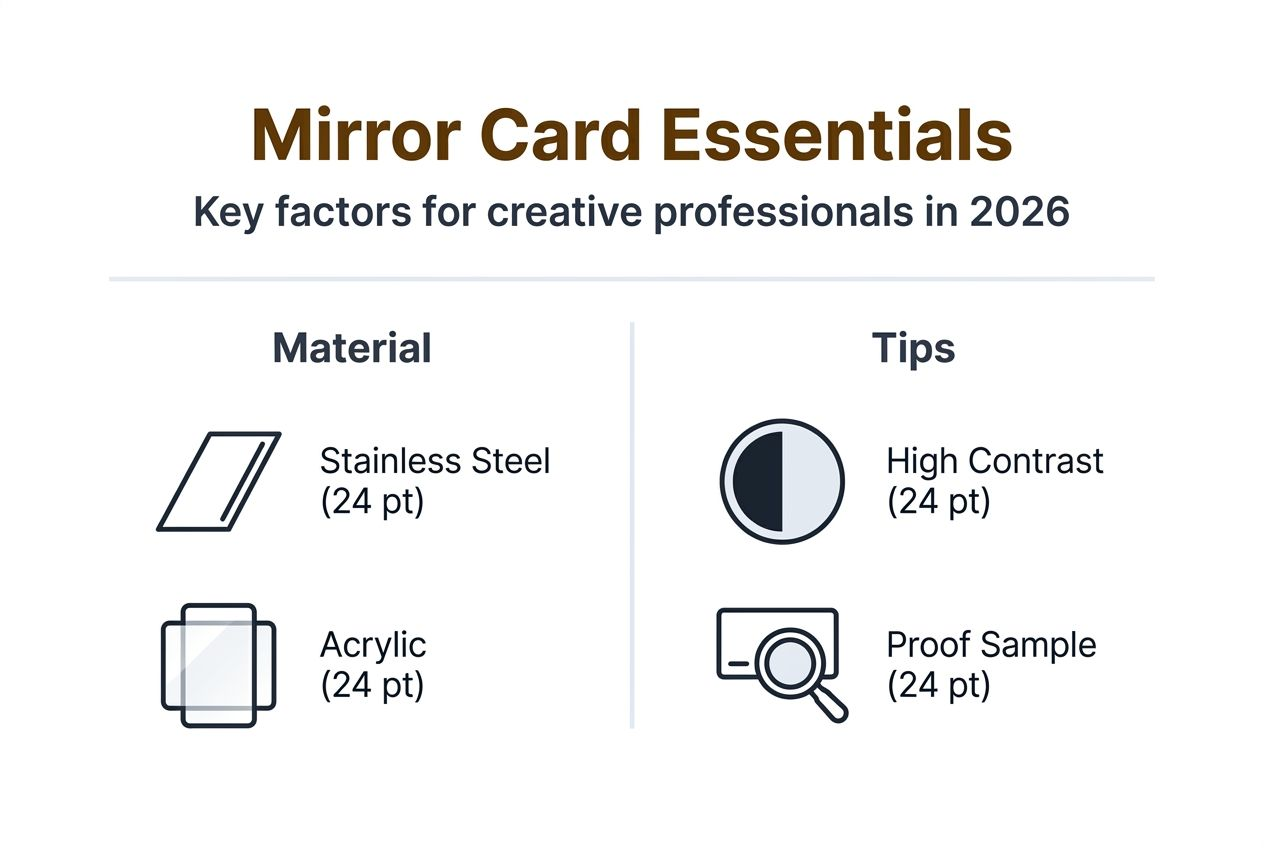
Color strategy requires careful consideration. High-contrast combinations like black text on silver, white on gold, or dark blue on mirror surfaces ensure legibility. Subtle pastels or low-contrast brand colors may look sophisticated on paper but fail on reflective materials.
Pro Tip: Request a physical proof before committing to a large order. Digital mockups cannot accurately represent how light interacts with reflective surfaces. A physical sample reveals readability issues and finish quality that screens cannot show.
Functional branding elements increase memorability. Beauty brands might incorporate a small functional mirror area. Photographers could use die-cut shapes that echo their visual style. Architects might feature geometric patterns that demonstrate design sensibility.
Balance aesthetics with wear resistance. Rounded corners prevent bent edges. Protective coatings reduce fingerprints and scratches. These practical choices extend card life while maintaining the premium aesthetic that justifies mirror materials.
Mirror cards compared to other premium business card types
Mirror business cards occupy a specific position within the premium card market. Understanding how they compare to alternatives helps you choose materials aligned with your brand strategy and budget.
| Material | Weight | Durability | Cost | Design Flexibility | Best For |
|---|---|---|---|---|---|
| Stainless Steel | Heavy | Highest | High | Limited shapes | Executive brands, maximum prestige |
| Acrylic Mirror | Light | Moderate | Medium | High | Creative studios, unique shapes |
| PVC Mirror | Light | Low | Low | Moderate | Budget-conscious, short-term use |
| Premium Paper | Very Light | Low | Low to Medium | Highest | Traditional industries, frequent distribution |
Stainless steel mirror cards deliver unmatched durability and prestige. They communicate permanence and substantial investment in brand presentation. However, they cost more and weigh more, making them less practical for high-volume distribution.
Acrylic mirror cards weigh approximately 40% less than metal cards and allow intricate laser-cut designs. This material suits creative professionals who want distinctive shapes or translucent effects. The tradeoff is lower scratch resistance compared to stainless steel.

PVC mirror cards offer budget-friendly entry into reflective cards. They work for short-term campaigns or testing mirror aesthetics before committing to premium materials. However, they lack the tactile weight and durability that justify premium positioning.
Consider your distribution strategy. If you hand out cards selectively to high-value prospects, stainless steel’s cost per card becomes justified by its impact. If you distribute broadly at events, lighter acrylic or even premium paper with metallic accents may serve better.
For deeper analysis, explore mirror business cards luxury brand impact to understand how material choices influence client perceptions. Compare mirror vs foil business cards to evaluate whether full mirror surfaces or selective foil accents better suit your design. Review luxury business card materials for comprehensive material comparisons across premium options.
Practical use cases and case studies
Real-world examples demonstrate when mirror cards succeed and when they fall short. These scenarios help you anticipate outcomes for your brand.
Success stories:
- A boutique spa using rose gold stainless steel mirror cards reported 40% more client inquiries about services after switching from paper cards. The tactile luxury aligned perfectly with their premium massage and skincare positioning.
- An architectural photographer chose die-cut acrylic mirror cards shaped like camera apertures. The unique design generated social media shares, leading to three high-value commercial projects from visibility alone.
- A makeup artist incorporated a functional mirror section into her card design. Clients used the mirror during consultations, creating practical touchpoints that reinforced her professional expertise.
Failures and lessons:
- A graphic designer ordered budget PVC mirror cards with script font. Poor contrast made the cards illegible in most lighting. Clients struggled to read contact information, defeating the card’s purpose.
- A consultant targeting conservative financial clients received feedback that mirror cards felt too flashy for their industry. The mismatch between card style and client expectations created awkward impressions.
- A beauty brand chose low-quality acrylic that scratched within weeks. Tarnished cards distributed to clients created negative associations with the brand’s attention to quality.
These examples reveal a pattern: mirror cards succeed when material quality, design execution, and brand positioning align. They fail when any element falls short or mismatches audience expectations.
Social media amplification provides measurable benefits. Unique mirror cards get photographed and tagged, extending reach beyond direct distribution. One creative studio tracked Instagram mentions and found their laser-cut mirror cards generated five times more social visibility than previous paper cards.
Common misconceptions about mirror business cards
Several myths prevent professionals from considering mirror cards strategically. Clearing these misconceptions enables better decisions.
Myth 1: Mirror cards are prohibitively expensive. Reality: While premium stainless steel costs more than paper, high-quality options offer scalable pricing based on order volume. Acrylic mirror cards often cost only 30-50% more than premium paper with specialty finishes.
Myth 2: Reflective surfaces make all mirror cards unreadable. Reality: Well-designed cards using bold fonts with 70-80% contrast remain practical. Poor readability stems from design errors, not the material itself.
Myth 3: Mirror cards are environmentally irresponsible. Reality: Recycled stainless steel and eco-friendly coatings exist. Mirror cards’ longevity means fewer replacements, potentially reducing waste compared to paper cards reprinted annually.
Myth 4: Only flashy brands can use mirror cards. Reality: Minimalist designs on mirror surfaces create sophisticated, understated elegance. The material suits various brand personalities when design aligns with positioning.
Myth 5: Mirror cards are a passing trend. Reality: 78% of professionals recommend high-grade mirror cards for niche premium branding. Their staying power comes from functional durability and memorable impact, not temporary fashion.
Understanding these truths helps you evaluate mirror cards objectively. Base decisions on your specific brand needs, audience expectations, and design execution rather than assumptions or outdated information.
Conclusion and stepwise recommendations
Mirror business cards work when they strategically reinforce your brand identity and meet practical communication needs. Follow this checklist to make informed decisions.
Actionable steps:
- Evaluate whether tactile luxury and visual impact align with your brand positioning and client expectations.
- Choose stainless steel for maximum durability and prestige, or acrylic for lighter weight and design flexibility.
- Design with bold, high-contrast typography ensuring readability in varied lighting conditions.
- Request physical proofs to verify finish quality and legibility before ordering quantities.
- Include unique brand elements like functional mirrors, custom shapes, or meaningful patterns that increase memorability.
- Balance material cost against marketing ROI by considering client value and distribution volume.
Mirror cards serve as physical brand ambassadors. They work best for creative professionals, beauty brands, and boutique businesses where visual identity and premium positioning matter. They work poorly in conservative industries, high-volume distribution scenarios, or when quick information access is critical.
Test before committing. Order samples in different materials and lighting conditions. Gather feedback from trusted colleagues or clients. Iterate design until readability and aesthetic impact both meet your standards.
Your business card represents you when you’re not present. Choose materials and design that authentically reflect your brand values and resonate with your ideal clients. Mirror cards, when executed thoughtfully, become powerful tools for differentiation and memorable first impressions.
For comprehensive guidance, explore why invest in premium business cards to understand broader strategic considerations. Review the business card guide for detailed specifications and design best practices across materials.
Discover premium custom business card solutions
Ready to elevate your brand with mirror business cards designed specifically for your identity? BcardsCreation specializes in fully custom, small-batch business cards using advanced materials and refined finishing techniques.
Every project receives individual attention without templates or automated editors. Work directly with design experts who understand how material choices, typography, and finishing techniques combine to create cards that represent your brand authentically. Explore custom business card design services tailored to creative professionals and boutique brands.
Choose from multiple premium materials including stainless steel, acrylic, and specialty finishes. Whether you need creative business cards printing and foiling or distinctive mirror effect business cards, expert guidance ensures your cards balance visual impact with practical function. Transform your networking with cards that clients remember and value.
Frequently asked questions about mirror business cards
What materials are best for durable mirror business cards?
Stainless steel offers the highest durability, lasting several years without visible wear, tarnishing, or scratching. Acrylic provides good durability with lighter weight, making it suitable for intricate designs, though it scratches more easily than metal. For maximum longevity and prestige, choose stainless steel with protective coatings.
How can I ensure my card is readable despite the reflective surface?
Use bold, sans-serif fonts with at least 70-80% contrast against the mirror background. Keep font size at 10pt minimum. Test physical proofs in varied lighting conditions before finalizing your order. Avoid script fonts, fine details, or low-contrast color combinations that create readability problems.
Are mirror business cards suitable for eco-conscious brands?
Yes, when you choose recycled stainless steel or eco-friendly reflective coatings. Mirror cards’ longevity means fewer replacements compared to paper cards reprinted annually. Communicate your material choices to clients through subtle design elements or accompanying materials to reinforce your sustainability commitment.
Can mirror business cards fit different budgets?
Mirror cards range from budget-friendly PVC options to premium stainless steel. Acrylic mirror cards typically cost 30-50% more than premium paper with specialty finishes, offering accessible entry into reflective materials. Order volume affects pricing, with larger quantities reducing per-card costs significantly.
What design elements increase memorability without sacrificing function?
Incorporate functional features like mini mirrors for beauty brands or unique die-cut shapes that reflect your creative specialty. Use geometric patterns or negative space that demonstrate design sensibility. Balance visual creativity with practical readability by maintaining clear hierarchy and sufficient contrast for contact information.
Recommended
- Mirror Business Cards 2026: 35% Higher Luxury Brand Impact – BcardsCreation
- Mirrored Business Cards – BcardsCreation
- Are Mirror Business Cards Durable? 35% More Bend Resistant – BcardsCreation
- Mirror vs foil business cards 2026: 35% luxury boost – BcardsCreation
- Beauty Branding: Building Impactful Natural Brands – Didis Beauty Center


