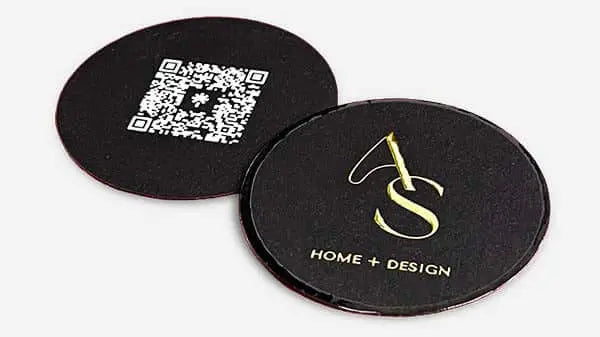


Why invest in custom business cards for networking
TL;DR:
- Custom business cards significantly increase engagement and memorability over digital alternatives.
- Tactile design elements signal professionalism and create stronger first impressions.
- Strategic design, premium materials, and branding consistency enhance networking effectiveness.
Everyone assumes business cards are a relic. The pitch is simple: go digital, save money, skip the print run. But the data tells a different story. Custom cards with NFC/QR boost engagement by 38% over standard cards. That gap is hard to ignore. In 2026, the professionals who stand out at events and meetings are not the ones with the slickest app. They are the ones handing over something worth holding. This article covers the real advantages of custom cards, how tactile design works on the brain, and how to get the most value from every card you give out.
Table of Contents
- Why custom business cards outperform digital alternatives
- The science of first impressions: Tactile and visual signals
- Branding and differentiation: Making memorable connections
- Practical guide: Maximizing ROI on your custom cards
- A fresh perspective on custom business cards
- Ready to create your custom business cards?
- Frequently asked questions
Key Takeaways
| Point | Details |
|---|---|
| Tactile engagement wins | Physical custom cards create deeper, longer-lasting impressions than digital alternatives. |
| Premium materials signal quality | Heavy, textured cards immediately boost perceived professionalism at networking events. |
| Memorability drives results | Unique designs and finishes make you and your brand more memorable and credible. |
| Strategic use maximizes ROI | Thoughtful design and targeted distribution ensure every card supports your business goals. |
Why custom business cards outperform digital alternatives
The case for going fully digital sounds reasonable. No printing costs. Easy updates. Instant sharing. But there is a problem: digital cards get forgotten fast.
Custom printed cards extend interaction time from 2.3 seconds with a digital exchange to 8.7 seconds with a tactile card. That extra time is not trivial. It is the difference between a glance and a moment of genuine attention. People touch the card, read it, and often comment on it. That conversation starter is something no QR code can replicate.
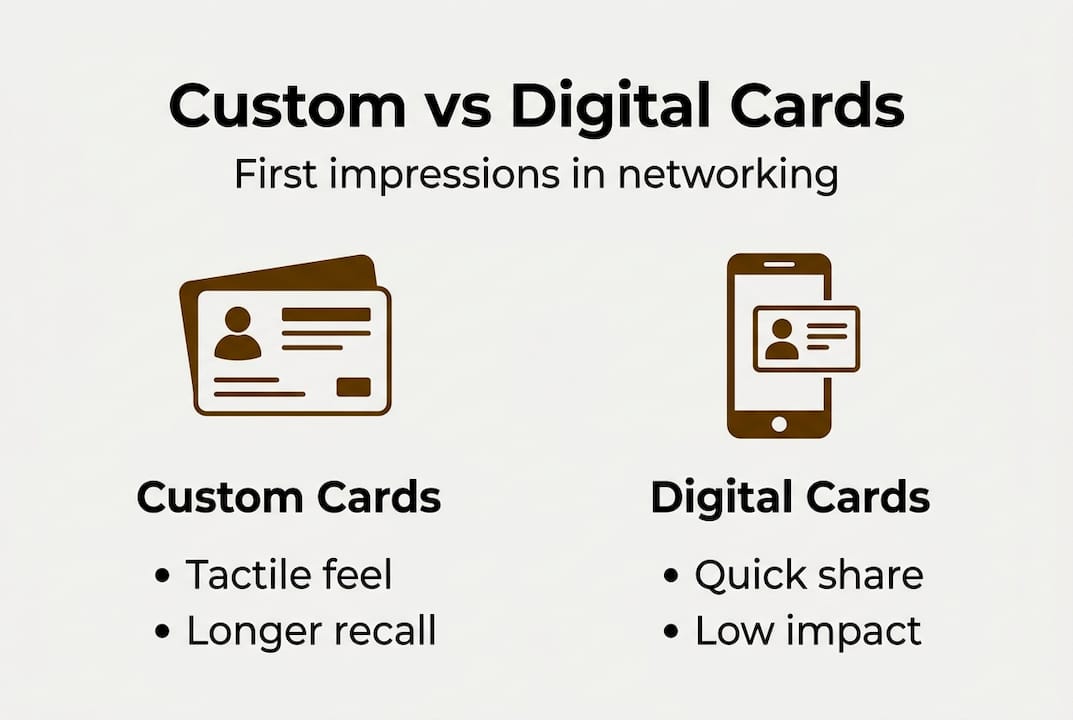
Yes, the digital card market is growing, especially among eco-conscious buyers. That is a real trend. But eco-friendly does not automatically mean effective for networking. The two goals are different.
Here are the real-world scenarios where physical cards consistently win:
- Client meetings: A well-designed card left on the table stays in view long after you leave.
- Trade shows: You are competing with hundreds of people. A distinctive card cuts through the noise.
- High-trust introductions: Handing over something physical signals confidence and preparation.
- Follow-up triggers: A card on someone’s desk is a daily reminder. A contact saved in a phone is easy to scroll past.
A custom card is not just contact info. It is a physical representation of how seriously you take your brand.
| Factor | Custom printed card | Digital card |
|---|---|---|
| Interaction time | 8.7 seconds average | 2.3 seconds average |
| Professionalism perception | High, especially with premium materials | Moderate |
| Brand recall | Strong, tactile memory | Lower, competes with screen noise |
| Cost per unit | Higher upfront | Lower long-term |
| Networking impact | Immediate and lasting | Convenient but forgettable |
The value of premium business cards for branding comes down to one thing: presence. And business card materials directly shape how that presence is perceived.
Pro Tip: Pair your custom card with a digital option like a QR code on the back. You get the tactile impact of print and the convenience of digital, all in one exchange.
The science of first impressions: Tactile and visual signals
First impressions happen fast. Within seconds, your contact has already formed an opinion. The card you hand over is part of that judgment, whether you intend it to be or not.
The brain processes physical objects differently than screens. When you touch something, the somatosensory cortex activates. This is the part of the brain that handles texture, weight, and surface. That activation creates a stronger memory trace. A card printed on 32pt stock with a soft-touch laminate does not just feel premium. It registers as premium at a neurological level.
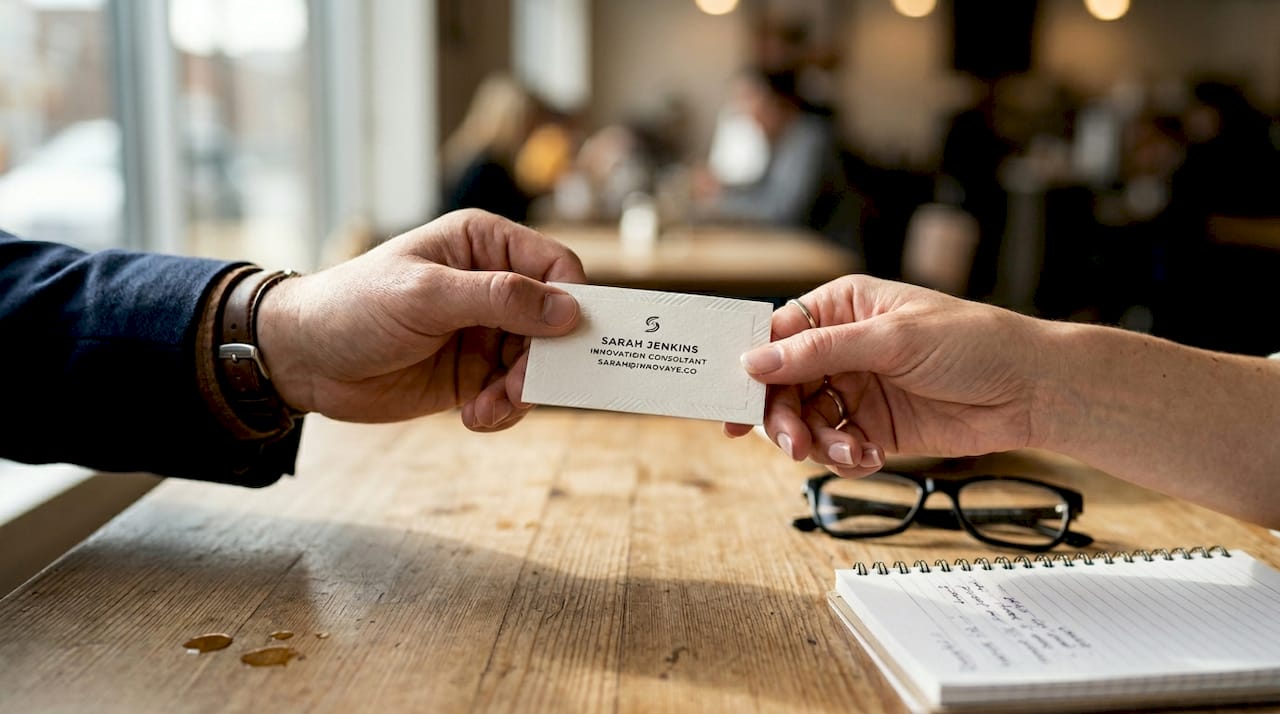
Heavy, textured cards signal professionalism to 78% of executives. That is not a minor preference. It is a majority response that directly affects how you are perceived before you say another word.
Here is how common design elements translate into real-world impact:
| Design element | Effect on recall | Effect on trust |
|---|---|---|
| 16-32pt card stock | High, weight signals quality | Strong, feels substantial |
| Foil stamping | Very high, visual contrast stands out | Elevated, suggests investment |
| Embossing/debossing | High, tactile memory trigger | Strong, adds dimension |
| Soft-touch laminate | Moderate to high, pleasant texture | Positive, feels refined |
| Standard 14pt matte | Low to moderate | Neutral |
Exploring luxury business card materials is not about showing off. It is about choosing materials that do a specific job: communicate your value before you speak. And looking into impactful business card features helps you match design choices to your actual brand goals.
Pro Tip: Do not stack every premium effect on one card. Foil plus emboss plus die-cut can overwhelm the message. Pick one or two signature elements that align with your brand personality and let them do the work.
Branding and differentiation: Making memorable connections
A business card is a branding tool first. Contact info is secondary. Most people forget this.
Your card should reflect the same visual language as your website, your packaging, and your presentations. When everything aligns, recognition builds. When your card looks generic, it signals that branding is not a priority for you. That is a message you probably do not want to send.
Custom cards boost engagement by 38% over standard variants. In a room full of professionals exchanging cards, that difference shows up in who gets called back and who gets forgotten.
Here are the top 3 features that drive memorability:
- Unique material. Plastic, metal, or thick cotton paper immediately separates your card from the stack. People notice and comment on it.
- Custom finish. Spot UV, foil, or soft-touch laminate adds a sensory layer that standard printing cannot match. It changes how the card feels, not just how it looks.
- Creative design. A layout that breaks the standard grid, uses negative space boldly, or integrates your logo in an unexpected way sticks in memory longer.
Consider what happens at a busy industry conference. Two consultants meet the same potential client. One hands over a standard white card with black text. The other hands over a thick, dark card with foil lettering and a clean, confident layout. A week later, the client remembers the second one. Not because of the foil alone, but because the card matched the confidence of the person holding it.
Following branding best practices means treating every touchpoint as part of your identity. Your card is one of the most personal touchpoints you have. Getting the must-have details on business cards right and understanding premium business card design principles both play into how effectively your card does its job.
Practical guide: Maximizing ROI on your custom cards
A great card is only as effective as the strategy behind it. Here is how to make sure every card you hand out works as hard as possible.
- Define your goal first. Are you trying to get a follow-up meeting? Drive traffic to your website? Introduce a new service? Your goal shapes every design decision, from layout to the information you include.
- Tailor the design to your audience. A card for a creative industry contact should look different from one for a financial services prospect. Know who you are handing it to and design accordingly.
- Distribute strategically. Do not hand cards out randomly. Give them in moments that matter: after a meaningful conversation, at the end of a meeting, or when someone specifically asks for your contact info.
- Update regularly. An outdated card with an old title or wrong number damages credibility fast. Treat your card like your website. Keep it current.
Premium features like foil and raised ink extend dwell time and perceived value. Adding NFC chips to your card is another strong move. It lets you bridge physical and digital without sacrificing the tactile advantage.
Knowing when a business card stops being effective is just as important as knowing how to design a good one. And revisiting the fundamentals of lasting impact business card design keeps your approach sharp over time.
Pro Tip: After exchanging cards, send a short personalized note within 24 hours. Reference something specific from your conversation. The card got you remembered. The follow-up gets you hired.
A fresh perspective on custom business cards
Here is what most professionals get wrong: they treat the business card decision as a cost question. Print or digital, cheap or expensive. That framing misses the point entirely.
The real question is what you want the other person to feel when they hold your card. That feeling is a business outcome. It affects whether they call you, recommend you, or file you away and forget you.
We have seen clients switch from digital to custom printed cards and report a noticeable shift in how prospects engage with them. Not because the card is magic, but because it signals something. It says you made a deliberate choice. You invested in how you show up.
The environmental concern is real and worth taking seriously. But it does not have to be an either/or decision. Small-batch, high-quality printing with responsible materials is a viable path. Understanding what luxury business cards actually means in practice helps clarify where the investment goes and why it matters for long-term professional relationships.
The professionals who build the strongest networks are not the ones who went fully digital. They are the ones who understood that physical presence still carries weight.
Ready to create your custom business cards?
You now have a clear picture of what makes custom cards work and how to use them effectively. The next step is putting that knowledge into a card that actually represents you.
At BcardsCreation, every card is built from scratch. No templates. No automated editors. Just expert design guidance, material consultation, and careful production. Whether you want custom business card design, creative cards with foiling, or want to browse the full business cards collection, you will find options built for professionals who treat their brand seriously. Your card should work as hard as you do.
Frequently asked questions
Are custom business cards still relevant in 2026?
Yes. Custom cards remain highly effective for building trust and making strong first impressions. Custom cards boost engagement and extend interaction time well beyond what digital-only exchanges deliver.
What features make a business card stand out at events?
Premium materials, finishes like foil or emboss, and embedded NFC or QR codes increase memorability. 16-32pt stock with foil extends dwell time and perceived value in competitive networking environments.
How do custom business cards help my brand?
They reinforce your professional image and differentiate you at critical moments. Heavy textured cards signal professionalism to 78% of executives, which directly shapes how you are perceived before any conversation begins.
Are digital business cards a better long-term investment?
Digital cards are cost-effective and eco-friendly for high-volume use, but digital lacks tactile trust-building that custom printed cards deliver at the moment of first contact.
Recommended
- Why invest in business card design for lasting impact – BcardsCreation
- What are raised print business cards and why choose them – BcardsCreation
- Transparent business cards: enhance image and networking impact – BcardsCreation
- Why Invest in Premium Business Cards for Branding – BcardsCreation
- The Importance of Having a Professional Website for Your Business - Solution Clime


