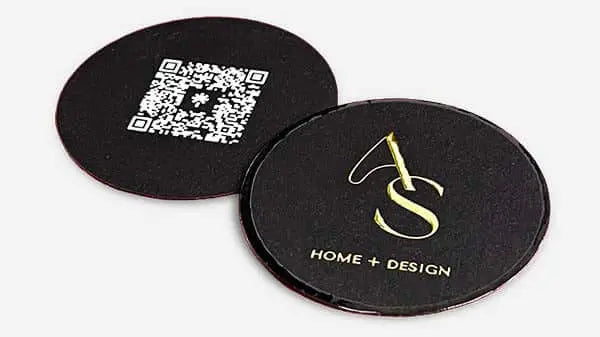


Must-have details on business cards for brand impact
A missed connection often comes down to one thing: a card that either says too little or tries to say too much. For brand-conscious professionals, your business card is a physical extension of your identity. It works for you when you are not in the room. Essential details on business cards include your full name, job title, company name and logo, mobile number, professional email, and website URL. Get these right, and your card becomes a tool. Get them wrong, and it ends up in the trash.
Table of Contents
- The essential elements: What every premium business card needs
- Expert design mechanics: Layout, legibility, and visual hierarchy
- Premium materials and finishes: Elevate your card (and your brand)
- Smart extras and industry-specific tweaks
- Physical vs. digital: Making the right impression in 2026
- Elevate your brand with custom business cards
- Frequently asked questions
Key Takeaways
| Point | Details |
|---|---|
| Focus on essentials | Keep business cards to 5-7 must-have details for maximum follow-up rates. |
| Design for clarity | Use clean layouts and hierarchy so critical details are instantly noticed. |
| Invest in quality | Premium materials and finishes greatly improve perceived value and retention. |
| Customize smartly | Add industry extras and avoid clutter to boost brand trust. |
| Bridge physical and digital | Leverage QR codes and hybrid formats for modern, memorable networking. |
The essential elements: What every premium business card needs
Every card you hand out is a micro-pitch. The details you choose to include either build authority or dilute it. There is no neutral ground.
Here are the core elements every premium card should carry:
- Full name. Your first and last name, clearly readable. No nicknames unless that is your professional identity.
- Job title. Be specific. “Founder” or “Senior Architect” signals more than “Consultant.”
- Company name and logo. Your brand mark anchors the card visually and builds recognition.
- Mobile number. Direct access matters. Skip the switchboard.
- Professional email. Your company domain only. A Gmail address reduces credibility by 50% compared to a branded domain.
- Website URL. One clean URL. No subpages, no tracking codes.
Cards with 5 to 7 elements generate three times more follow-ups than cards with ten or more items. In fact, 90% of card usage comes from just those core five elements. More is not better. More is noise.
For some industries, extras apply. Attorneys may add a bar number. Healthcare professionals may include a license or specialty. Real estate agents often benefit from a headshot. Know your field and add only what builds trust.
Pro Tip: Always use your company domain email. It signals that you are serious about your brand. Free email domains like Gmail tell people you are not fully invested.
For a full breakdown of what to leave off, see what to leave off your card. And if you want a structured approach to building your card from scratch, the step-by-step framework covers the full process.
Expert design mechanics: Layout, legibility, and visual hierarchy
With your must-have details selected, you need a layout that makes them work. Good design is not decoration. It is function.
The 60-30-10 rule is a proven starting point: 60% white space, 30% text, and 10% design elements. This ratio keeps cards scannable and prevents visual overload. Your logo should sit top-left or centered. Font sizes should follow a clear hierarchy, typically 14 to 18pt for your name, 10 to 12pt for supporting details.
Here is a quick comparison of poor versus optimal layout choices:
| Feature | Poor layout | Optimal layout |
|---|---|---|
| White space | Minimal, crowded | 60% of card surface |
| Font sizes | Uniform, no hierarchy | Tiered: name > title > contact |
| Logo placement | Random or absent | Top-left or centered |
| Color use | 4+ colors | 2 to 3 brand colors max |
| Text alignment | Mixed | Consistent left or centered |
Typography tips that matter:
- Use sans-serif fonts for body text. They read cleanly at small sizes.
- Avoid more than two font families per card.
- Keep minimum font size at 8pt. Anything smaller is unreadable in print.
- Use bold weight for your name only. Everything else stays regular or light.
“Clutter kills. Scannability wins. A card that takes more than three seconds to read has already failed.”
Print specs matter too. Always design in CMYK color mode at 300 DPI. Include a 3mm bleed on all sides. These are not optional for professional print quality. For deeper guidance on card design principles and how hierarchy and layout affect perception, both resources are worth reviewing before you finalize your design.
Pro Tip: Before sending to print, zoom your design to 100% on screen. If you struggle to read any element, your printer will too.
Premium materials and finishes: Elevate your card (and your brand)
After perfecting your info and layout, material choices make your card unforgettable. The stock you choose communicates something before anyone reads a single word.

Premium cards at 350 to 400gsm with cotton stock, foil stamping, or embossing are consistently rated as more valuable and memorable by recipients. The weight alone signals quality.
Top material options to consider:
- Cotton stock. Soft, tactile, and distinctive. Holds ink beautifully.
- Soft touch laminate. Velvety surface that invites handling. Hard to put down.
- Textured paper. Adds dimension without specialty printing costs.
- Metal or plastic cards. Bold, durable, and impossible to ignore.
Here is how standard and premium options compare:
| Spec | Standard card | Premium card |
|---|---|---|
| Stock weight | 250 to 300gsm | 350 to 400gsm |
| Finish | Gloss or matte | Soft touch, foil, emboss |
| Material | Coated paper | Cotton, textured, or plastic |
| Retention rate | Average | Up to 10x more likely to be kept |
| Brand perception | Functional | High-value, memorable |
41% of professionals rate premium texture and finish as a key factor in how they perceive a brand. Cards with unique colors and finishes are 10 times more likely to be retained. That is not a small margin.
For professionals in sustainability-focused industries, recycled cotton or FSC-certified stocks offer a premium feel with an eco-conscious message. It is a smart signal for the right audience. Explore premium materials and materials explained for a full breakdown of what each option delivers.
Smart extras and industry-specific tweaks
Beyond the basics, here is how to tailor your card for your industry and maximize retention with smart extras.
Some additions are field-specific and genuinely useful:
- Headshots boost real estate callbacks by 32%. In a relationship-driven industry, a face builds trust fast.
- License numbers are expected in legal and healthcare. Include them if your clients need that reassurance.
- QR codes increase contact saves by up to 69%. Link to your portfolio, booking page, or LinkedIn profile.
What to avoid:
- Home address. It is a privacy risk and adds no professional value.
- Personal social profiles. Unless your Instagram is your business, leave it off.
- Motivational quotes. They fill space without adding credibility.
- Gmail or free email addresses. They undercut your brand immediately.
For more on what to cut, see details to avoid. For QR code strategy, using QR codes covers the best practices in detail.
Before you approve your final design, run through this checklist:
- Confirm all contact details are current and accurate.
- Check that your email uses your company domain.
- Test your QR code on two different devices.
- Review font sizes at actual print scale.
- Order a physical sample before your full print run.
Pro Tip: Always print a sample first. 90% of DIY card errors are only visible in hand, not on screen. Spacing, color shifts, and bleed issues show up in print, not in your design file.
Physical vs. digital: Making the right impression in 2026
Now that you know what to include, decide how to present your details. Physical, digital, or both.
Physical cards remain the standard for high-trust, in-person networking. 78% of professionals use them regularly. The tactile experience creates a moment that a shared contact on a phone simply cannot replicate.
Digital cards are easy to update and share instantly. But they lack physical presence. They are easy to forget and easy to delete.
The hybrid approach is where most brand-conscious professionals land. A premium physical card with a QR code bridges both worlds. 36% of cards now include a QR code, and Gen Z professionals use physical cards at a 55% weekly rate. The demand is not going away.
When to use each format:
- Physical card. Conferences, client meetings, formal introductions, and any high-stakes first impression.
- Digital card. Remote networking, follow-up after an initial meeting, or when you need to update details frequently.
- Hybrid card. When you want the trust of a physical card and the flexibility of a digital profile.
“Minimalist, unique cards are 10 times more likely to be kept. The card that gets remembered is the one that respects the reader’s attention.”
For creative hybrid approaches, see hybrid cards and creative card ideas for inspiration on formats that stand out.
Elevate your brand with custom business cards
You now know exactly what belongs on your card, how to lay it out, and what materials make it memorable. The next step is putting it all together with a card that actually reflects your brand.
At BcardsCreation, every card is built from scratch. No templates. No automated editors. Just expert design guidance, material consultation, and controlled production for professionals who treat their card as a branding asset. Whether you need a single executive card or a small-batch run for your team, we handle every detail. Start with custom business card design or explore creative business cards with premium foiling and finishing options. Your card should work as hard as you do.
Frequently asked questions
What are the top five must-have details on a business card?
Your full name, job title, company name with logo, direct mobile number, and professional email are the five core essentials. These five elements cover everything recipients need to follow up with confidence.
Should I add a QR code to my business card?
Yes. QR codes enhance digital connectivity and boost contact rates by 69% without adding visual clutter to your card.
Do premium card materials really make a difference?
Yes. Heavy stock and luxury finishes make cards appear more valuable, with 41% of professionals rating premium texture as a key factor in brand perception.
What details should I never include on my business card?
Avoid home address, personal social profiles, motivational quotes, and free email domains like Gmail. These reduce credibility and dilute your professional image.
Is a physical card still relevant in 2026?
Absolutely. Physical cards create personal impact and are favored by 78% of professionals, especially when paired with a QR code for digital follow-up.


