

Business Cards in Photography Marketing: 2026 Guide
TL;DR:
- Business cards serve as tangible brand extensions that effectively showcase a photographer’s niche, style, and contact information.
- Combining printed cards with NFC or QR codes maximizes tactile impact and digital lead capture during face-to-face networking.
- The most successful cards are simple, focused, and reflect the photographer’s brand identity through thoughtful design choices.
Business cards are defined as physical or digital contact tools that serve as direct brand extensions for photographers, connecting them with clients, vendors, and collaborators in a way no social media profile fully replicates. The role of business cards in photography marketing goes beyond sharing a phone number. A well-designed card communicates your niche, your visual style, and your professional positioning in the time it takes someone to glance at it. Platforms like Wave Connect and Blinq have expanded what a photographer’s contact card can do, adding portfolio links, inquiry forms, and NFC sharing to the traditional printed format. Face-to-face networking combined with a card exchange produces 3x higher conversion rates than digital cold outreach alone. That single fact reframes the business card from a relic to a precision tool.
How do business cards support brand visibility for photographers?
A business card is a mini-portfolio in your pocket. Visual impact on a card engages a potential client far more effectively than a URL they may never type. For photographers, this means the card itself must reflect the work: a wedding photographer’s card should feel romantic and refined, while a commercial photographer’s card should feel clean and corporate.
Cards support brand visibility in several concrete ways:
- Niche signaling. The card’s design, paper weight, and finish tell the recipient what kind of photographer you are before they read a single word.
- Appointment and referral utility. Cards doubling as appointment reminders or referral tools are kept longer than standard contact cards. That extended physical presence keeps your name in circulation.
- Digital portfolio access. A QR code or NFC chip on a printed card removes the friction of multi-step website visits. The recipient taps or scans and sees your work immediately.
- Lead capture at events. Digital cards with integrated inquiry forms let you capture qualified leads on the spot. One documented case recorded 73 qualified leads in a single day using this setup. That is a number no stack of plain paper cards can match.
Pro Tip: Set up your digital card’s inquiry form to collect event date, venue, budget, and project type. This lets you prioritize follow-ups before you leave the event.
The combination of physical presence and digital depth is what makes a photographer’s contact card setup genuinely useful as a marketing tool, not just a formality.
What types of business cards should photographers use?
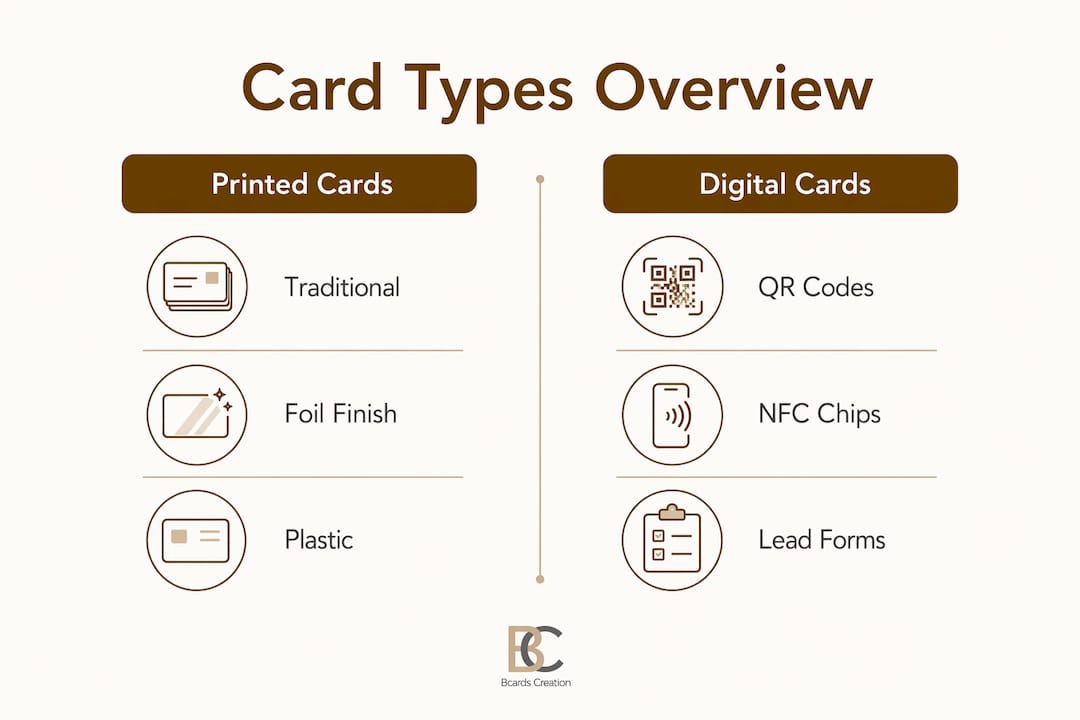
Photographers have more card options today than at any point before. Each format serves a different purpose, and the right choice depends on your workflow, your client base, and how you network.
| Card type | Best use case | Key limitation |
|---|---|---|
| Traditional printed card | In-person handoffs, tactile brand impact | No real-time portfolio access |
| QR-coded printed card | Bridging physical and digital quickly | Requires a working smartphone scan |
| NFC-enabled card | Fast tap-to-share at events, tech-forward impression | Higher per-unit cost |
| Fully digital card | Real-time updates, lead capture forms, analytics | No physical presence or tactile experience |
| Hybrid (print + digital) | Maximum reach across all networking contexts | Requires managing two formats |
Top photographers maintain both high-quality printed cards for physical impact and NFC-enabled cards for real-time digital portfolio sharing. This hybrid approach is not redundant. It is strategic. The printed card leaves a tangible impression in someone’s hand. The NFC card closes the gap between that impression and your actual work.
A few practical notes on each format:
- Setup time for digital cards is low. A photography-optimized digital card typically takes 20 minutes to configure, including 10 to 20 high-resolution images compressed under 500KB for fast loading.
- Printed cards require lead time and a fixed design, so they work best when your brand identity is stable.
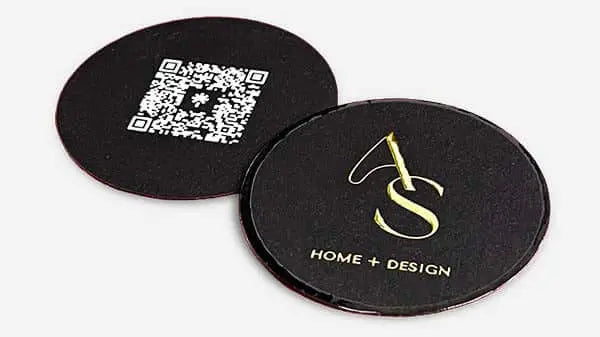
- Plastic cards and specialty paper cards offer a tactile differentiation that standard matte or gloss cards cannot. A clear plastic card from a portrait photographer, for example, creates an immediate visual metaphor for transparency and precision.
The most practical approach for most photographers is a printed card with a QR code or NFC chip, backed by a digital card profile for event-specific lead capture.
How to design a photographer’s business card that drives client action
Design clarity drives retention more reliably than flashy aesthetics. A card that communicates one clear message, with one clear next step, outperforms a card that tries to show everything at once. This is a principle that applies to all business card design for creatives, but it is especially true for photographers whose work already speaks visually.
Every photographer’s card should include:
- Full name and specialty. “Wedding photographer” or “Brand photographer” is more useful than just “Photographer.”
- Primary contact method. One phone number or email, not both unless space allows cleanly.
- Website URL. Short, direct, and memorable.
- One social handle. The platform where your portfolio is most active, not all of them.
- A visual hook. One strong image, a color field, or a finish that reflects your photographic style.
What to leave off: secondary emails, fax numbers, multiple social handles, lengthy taglines, and anything that competes with the visual hook for attention.
Material and finish choices carry as much brand weight as the printed design itself. A soft-touch matte finish signals understated refinement. Real foil stamping signals premium positioning. A colored edge on a thick paper card signals attention to detail. These are not decorative choices. They are brand communication decisions. Photographers who understand why design matters to a card’s success treat the physical object as a branding asset, not a contact sheet.
Pro Tip: If you are working with a designer on your card, prepare a one-page brief covering your niche, your three main competitors’ visual styles, your brand colors, and the one emotion you want the card to trigger. A structured brief produces better results faster. You can find a practical framework for this in Bcardscreation’s guide on briefing a card designer.
White space is not wasted space. It is what makes the elements you do include feel intentional and premium.
What is the best way to use business cards at photography events?
The role of business cards at photography events is to open conversations, not close sales. That distinction changes how you use them. Handing a card to someone you just met is a transaction. Handing a card after a genuine exchange about their project or event is a warm lead.
Photographers who add value at events, such as offering quick headshots or running short mini-workshops, see 65% attendee recall compared to 15% for those who only distribute cards. That gap is significant. It means the card alone is not the tool. The card combined with a memorable interaction is the tool.
Practical strategies for event card use:
- Target beyond photographers. Event planners, marketing directors, graphic designers, and brand managers are all potential clients or referral sources. Networking in photography means expanding your circle past your peers.
- Use your digital card for lead capture. When someone expresses genuine interest, share your digital card and ask them to fill in the inquiry form on the spot. Inquiry forms with project fields like event date, venue, and budget let you qualify and prioritize leads before you leave the room.
- Align the card with your pitch. If you specialize in corporate headshots, your card should look like it belongs in a boardroom. If you shoot editorial fashion, it should look like it belongs in a magazine spread.
- Follow up within 24 hours. The card creates the connection. The follow-up converts it.
“One good in-person conversation can outperform a month of online engagement.” — Freeform House Photography Networking Guide
Photographers who network beyond their peers grow their professional opportunities more consistently than those who stay within photography circles. Your card is the physical proof that you showed up, that you are real, and that you are worth calling.
Key takeaways
Business cards remain one of the highest-converting physical marketing tools available to photographers when paired with strong design, clear positioning, and active in-person networking.
| Point | Details |
|---|---|
| Cards as brand extensions | Your card’s material, finish, and design communicate your niche before a word is read. |
| Hybrid format wins | Combining printed cards with NFC or QR-coded digital cards maximizes both tactile impact and lead capture. |
| Design clarity over complexity | Cards with one clear visual hook and one clear next step outperform cluttered, multi-message designs. |
| Event strategy matters | Adding value at events (headshots, workshops) raises attendee recall from 15% to 65% compared to card distribution alone. |
| Digital forms qualify leads | Inquiry forms on digital cards capturing event date, budget, and project type let you prioritize bookings on-site. |
Why I think most photographers underuse their business cards
I have seen photographers invest heavily in their website, their Instagram feed, and their gear, then hand out a flimsy card that undercuts all of it. The card is the last physical object a potential client holds after meeting you. It carries the full weight of that first impression.
The photographers I have observed who get the most from their cards treat them as a deliberate branding decision, not an afterthought. They match the card’s finish to their photographic style. A fine art photographer using a double-layered paper card with real foil reads as someone who cares about craft. A commercial photographer using a clean clear plastic card reads as precise and modern. These are not accidents. They are choices.
The hybrid approach, carrying both a premium printed card and a digital card with a lead form, is the most practical setup I have seen work consistently. The printed card handles the tactile moment. The digital card handles the follow-through. Neither replaces the other.
One thing I would push back on: the idea that a card needs to be visually complex to be memorable. The most recalled cards I have encountered are the simplest ones. One strong image, one clean typeface, one finish that feels different in the hand. Simplicity is not a budget constraint. It is a design decision. Photographers who build unique cards around their brand understand this instinctively.
The future of photography marketing tools will keep adding digital layers, NFC chips, and portfolio integrations. But the physical card is not going anywhere. It is the only marketing tool that someone can hold, feel, and keep in a drawer for months.
— Kostiantyn
How Bcardscreation helps photographers build cards that work
Bcardscreation builds custom business cards for photographers who treat their card as a branding tool, not a commodity print job. Every card is developed individually, with material consultation, design collaboration, and controlled small-batch production.
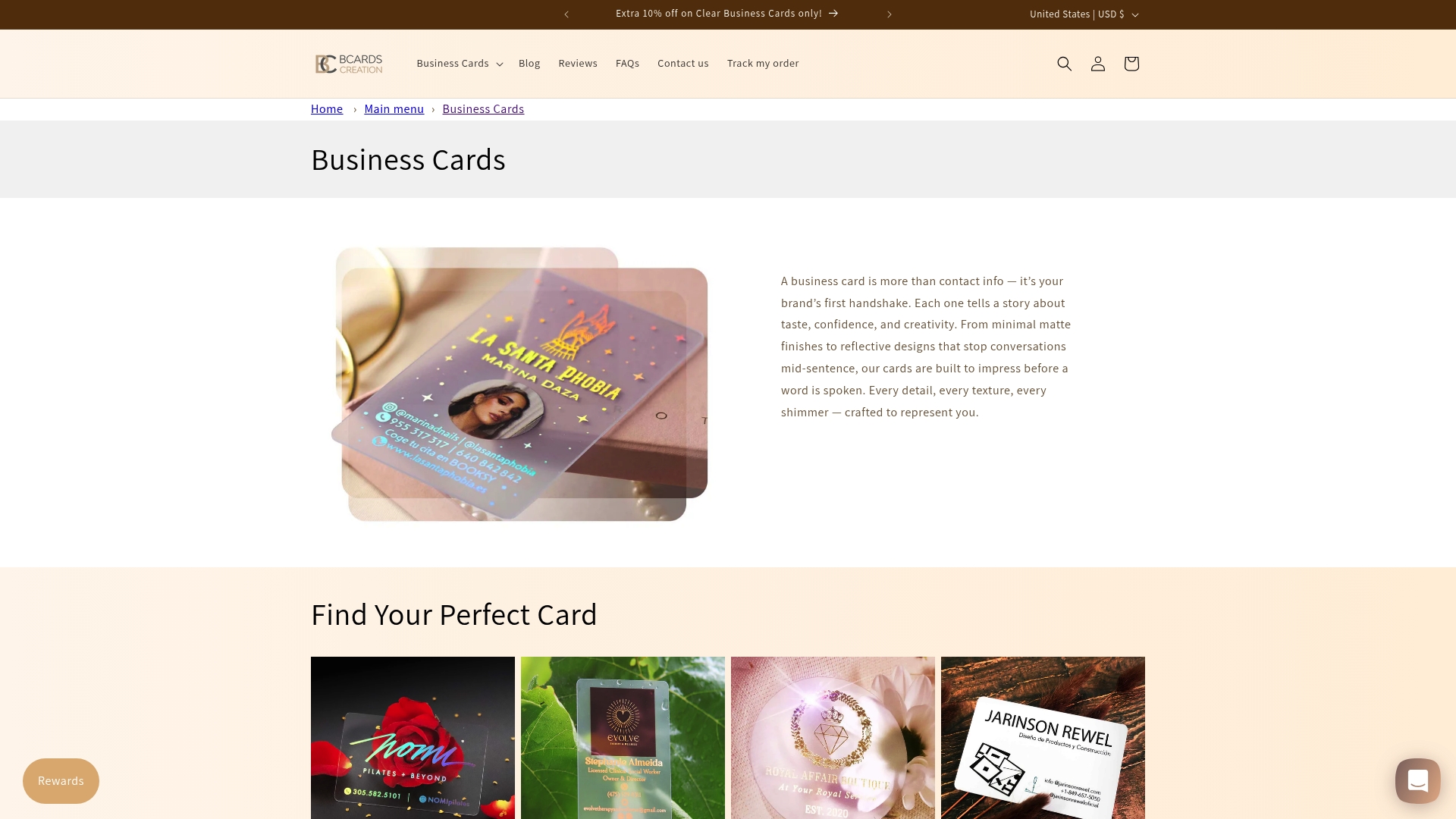
Options include fine paper cards with real foil, clear plastic cards for a modern transparent aesthetic, and double-layered cards with colored cores for photographers who want a card that feels as considered as their work. If you are ready to build a card that reflects your actual brand, start with Bcardscreation’s custom business card design service.
FAQ
What is the role of business cards in photography marketing?
Business cards serve as physical brand extensions that communicate a photographer’s niche, style, and contact details in a single tangible object. They support client engagement, networking, and lead capture in ways digital-only tools cannot replicate.
What should a photographer include on a business card?
A photographer’s card should include their name, specialty, primary contact method, website URL, one social handle, and a visual hook that reflects their photographic style. Keeping the design focused on one clear next step improves retention and response rates.
Are digital business cards better than printed ones for photographers?
Neither format is universally better. Digital cards offer real-time portfolio access and lead capture forms, while printed cards provide tactile brand presence. The most effective setup combines both, using a printed card for in-person handoffs and a digital card for event-based lead qualification.
How do business cards help photographers at networking events?
Cards open conversations and provide a physical follow-up prompt after face-to-face interactions. Photographers who pair card distribution with value-added activities like quick headshots see 65% attendee recall, compared to 15% for card distribution alone.
How long does it take to set up a digital photography business card?
A photography-optimized digital card takes roughly 20 minutes to configure, including uploading 10 to 20 portfolio images compressed under 500KB for fast loading and adding an inquiry form for lead capture.


