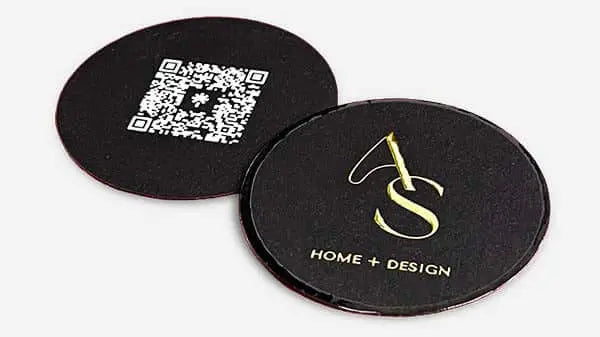


What is hybrid business card design? Modern networking, elevated
TL;DR:
- Hybrid business cards combine physical premium materials with embedded NFC chips for instant digital sharing.
- They enhance brand perception by blending tactile impact with seamless digital connection.
- Proper design, material choice, and device testing are crucial for optimal NFC functionality and user experience.
Physical business cards were never supposed to die. While the networking world went all-in on QR codes and LinkedIn URLs, a quieter evolution was happening at the intersection of print and technology. Hybrid business card design combines premium physical cards with embedded NFC chips that instantly share your digital profile. For brand managers and entrepreneurs who understand that a first impression is also a brand statement, this format is not just a novelty. It is a sharp, strategic tool that works in the real world while staying connected to your digital presence.
Table of Contents
- Defining hybrid business card design
- Physical and digital fusion: How hybrid cards work
- Design principles for standout hybrid business cards
- Practical considerations and pitfalls to avoid
- Why hybrid business card design is the new status symbol
- Ready to upgrade? Discover premium hybrid business card options
- Frequently asked questions
Key Takeaways
| Point | Details |
|---|---|
| Hybrid cards explained | They combine premium physical cards with embedded NFC for seamless digital sharing. |
| Material choice matters | Card material and finish are vital for both tactile impression and NFC function. |
| Design for impact | Great hybrid cards balance brand identity, readability, and reliable NFC integration. |
| Device compatibility | Test NFC functionality across smartphones to avoid user experience pitfalls. |
Defining hybrid business card design
The term gets used loosely, so let’s be precise. Hybrid business card design refers to physical business cards embedded with NFC chips that link to dynamic digital profiles. That’s the clearest working definition you’ll find.
The experience in a real meeting looks like this: you hand someone your card. They tap their phone to it. Your digital profile opens instantly on their screen. No app. No scanning. Just a clean, instant exchange.
“As we step into the digital era, many have questioned whether physical business cards are still relevant. Hybrid cards answer that with a confident yes.”
This is different from a card with a QR code printed on it. QR codes require a camera app, decent lighting, and a steady hand. NFC is seamless. The contact details, links, or portfolio load in one tap. That friction-free experience communicates something about your brand before you’ve said a word.
The key benefits of hybrid business card design include:
- Tactile impact: A well-made physical card still carries weight, literally and figuratively. Thick stock, metal finishes, and custom textures make an impression before the tap.
- Immediate digital sharing: No need to type out URLs or spell your name twice. One tap delivers everything.
- Updatable profiles: Change your job title, phone number, or portfolio link without reprinting. The card stays the same; the data updates.
- Premium material flexibility: Hybrid cards are produced in PVC, bamboo, metal, and specialty papers, giving you serious design options.
For brand managers, this format signals innovation and precision. If your premium business card design already reflects your brand values, embedding NFC technology takes it one step further. It shows you’ve thought about the full networking experience, not just how the card looks.
Physical and digital fusion: How hybrid cards work
With the basics of hybrid business cards defined, let’s explore how their physical and digital features come together.
The materials matter more than most people expect. NFC chips enable tap-to-share contact info, vCards, and links across materials including PVC, bamboo, and metal, and each brings trade-offs in weight, feel, and signal performance.
Here’s a quick comparison of common hybrid card materials:
| Material | Feel | NFC performance | Best for |
|---|---|---|---|
| PVC | Smooth, flexible | Excellent | Everyday networking |
| Bamboo | Warm, organic | Good | Eco-conscious brands |
| Metal | Premium, heavy | Requires plastic layer | Luxury positioning |
| Specialty paper | Tactile, printable | Moderate | Creative industries |
The NFC chip itself is a small passive chip embedded inside the card. It stores a URL, vCard data, or other digital payloads. No battery. No power source needed. The phone’s NFC reader activates it on contact. You can learn more about NFC card technology details to understand how the chip encoding process works.
The workflow at a meeting goes like this:
- Hand your card to the contact, face up.
- They tap their phone to the card’s NFC zone (usually marked subtly or positioned near the center).
- Their phone reads the chip and opens the linked profile or contact data.
- They save or interact with the information instantly.
From a design standpoint, premium card materials affect how the chip is embedded and how the card holds up over time. Thicker cards protect chips better. Luxury card materials like metal require an added non-metallic layer behind the chip area to prevent signal interference.
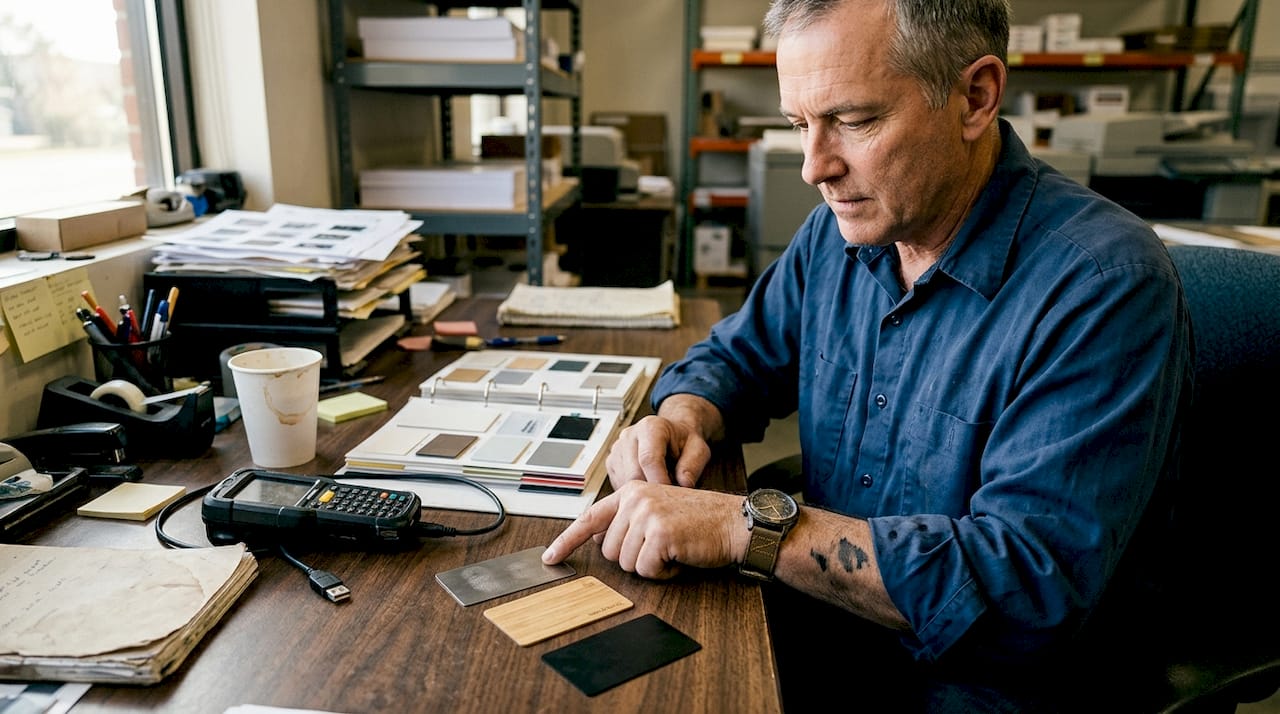
Pro Tip: Always specify chip type and memory capacity with your printer before ordering. A chip storing only a URL uses minimal memory, but a chip encoding a full vCard with photo and multiple contact fields needs more capacity. Match the chip spec to your actual data needs.
Design principles for standout hybrid business cards
Understanding how hybrid cards function enables you to focus on design. Here’s what makes a hybrid card truly stand out.
The visual design still drives the first impression. Before anyone taps, they see the card. Color, typography, finish, and layout must all work together. But hybrid cards introduce one additional design constraint: NFC chip placement.
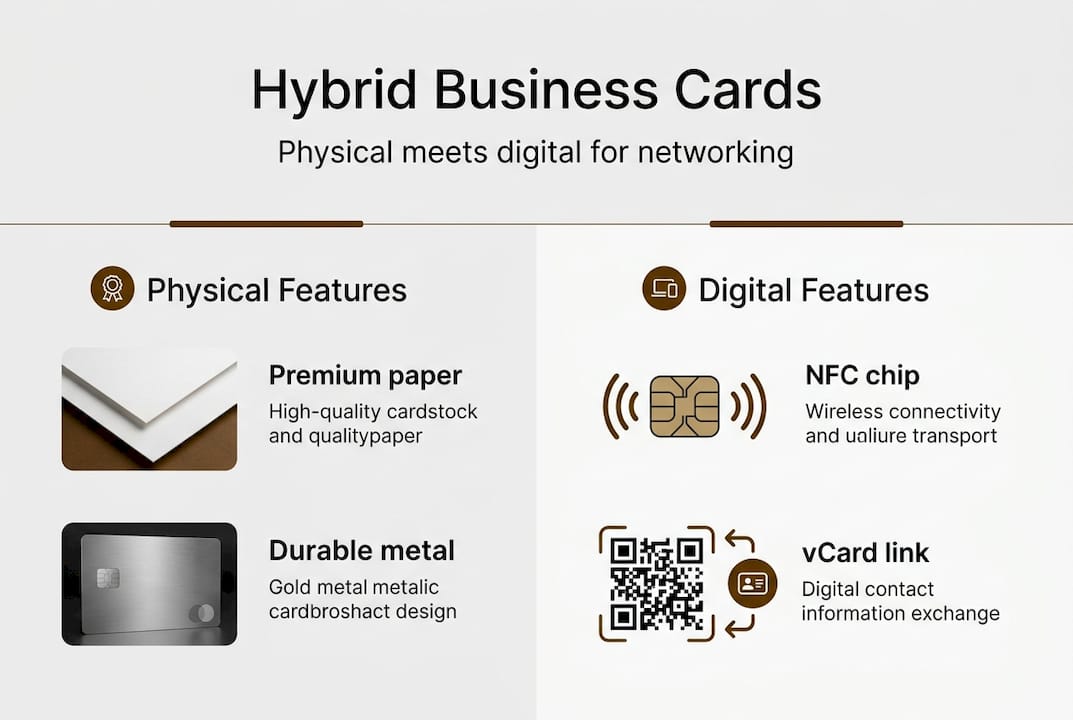
Here’s how traditional and hybrid design priorities compare:
| Design element | Traditional card | Hybrid card | |—|—|—|—| | Layout focus | Contact info density | Clean zones + chip area | | Finish options | Matte, gloss, foil | Same, plus metal and PVC | | Typography | Brand-led | Brand-led + readability for tap zone | | Material thickness | Standard | Thicker preferred for chip durability |
For hybrid cards, the NFC tap zone needs to be accessible. Avoid placing heavy metallic foil or thick embossing directly over the chip. This can reduce signal performance.
Common design pitfalls to avoid:
- Metallic interference: Full metal cards block NFC signals unless a plastic inlay layer is used behind the chip
- Chip placement errors: The chip should sit where a phone is likely to make contact, usually center or upper half of the card
- Cluttered layouts: A card doing too much visually distracts from the tap interaction
- Incompatible digital destinations: Sending users to a desktop-only page after a mobile tap creates a poor experience
For iOS users specifically, edge cases in NFC design show that vCard support is limited on some iOS versions. The safest approach is to encode a URL rather than a raw vCard, letting the user’s browser handle the data. This improves compatibility across devices.
When you design to elevate your brand identity, think of the card as a two-stage experience: the visual first impression, then the digital follow-through. Both need to feel intentional. Knowing business card mistakes to avoid helps you sidestep the common errors that undercut an otherwise strong design.
Practical considerations and pitfalls to avoid
Even brilliant design can fall short unless you avoid key pitfalls. Here’s what to watch for before your order goes to print.
The top mistakes in hybrid card production:
- Using incompatible chips: Not all NFC chips work the same way. NTAG213 and NTAG216 are widely compatible standards. Avoid off-brand chips with poor documentation.
- Skipping device testing: A card that works on Android but fails on iOS is a problem in the field. Test early.
- Poor card layout: Placing design elements over the chip zone or cramming too much text reduces both readability and NFC performance.
- Encoding vCards for iOS: As noted in NFC compatibility testing, iOS has limited native vCard support through NFC. Encode a URL instead.
- Metal cards without signal management: A full metal card without a plastic inlay behind the chip will block signal entirely.
Pro Tip: Before any large print run, produce 5 to 10 test cards and tap them with multiple Android and iOS devices. Try both new and older phones. This catches chip or encoding errors before they become expensive mistakes.
On the ROI side, the business card design importance goes beyond aesthetics. A hybrid card that works flawlessly in a meeting creates a moment. The contact remembers the experience. That stickiness translates directly into better networking outcomes and stronger brand recall.
Device compatibility at a glance:
- Android: Broad NFC support across most devices from 2018 onward
- iOS (iPhone 7 and later): NFC supported, but use URL encoding for best results
- Older iPhones: NFC reader behavior is limited; URL-based profiles work most reliably
- Metal card signal issues: Require a plastic inlay layer to function correctly
When you plan your card order, factor in chip memory, URL length, and whether your digital profile destination is mobile-optimized. These details are easy to overlook but critical to performance.
Why hybrid business card design is the new status symbol
Now that we’ve examined the nuts and bolts, here’s a perspective worth considering. Hybrid cards are not just a technology upgrade. They are a positioning move.
In high-stakes networking, what you hand someone communicates more than your contact details. It communicates how you think. A well-executed hybrid card, with premium materials and a seamless tap experience, tells the room you understand both craft and technology. That combination is rare.
Most professionals are still handing out flat, printed cards with outdated information. A handful are going fully digital with tap-to-share apps on their phones. But those who get it right choose the middle ground: physical quality that triggers a digital experience. That’s where premium cards for branding create a lasting impression.
The contrarian view? Going digital-only in networking is not forward-thinking. It’s forgettable. A phone screen is white noise. A beautifully made card that also taps to your full portfolio is a conversation starter. For brand managers who obsess over every brand touchpoint, the hybrid card is the only format that respects both the physical and digital experience simultaneously.
Ready to upgrade? Discover premium hybrid business card options
If you’re ready to modernize your networking and back it with premium production, we can help.
At BcardsCreation, every card is designed individually, with no templates and no automated editors. We consult on materials, chip selection, and finishing techniques to match your brand’s positioning. Whether you want to explore custom business card design, browse luxury business cards, or shop all business card options, the next step is straightforward. Tell us what your brand needs, and we build from there.
Frequently asked questions
What makes a business card ‘hybrid’?
A hybrid business card combines a premium physical card with an embedded NFC chip that links to your digital profile, enabling instant contact sharing with a single tap.
Which materials can be used for hybrid business card designs?
Common materials include PVC, bamboo, and metal, but metal cards require a plastic inlay layer behind the chip to prevent signal interference.
Are hybrid business cards compatible with all smartphones?
Most modern Android and iOS devices support NFC, but iOS has limited vCard support through NFC, so encoding a URL rather than a raw vCard delivers the most reliable experience.
Are hybrid business cards secure for sharing contact information?
Yes. Choose reputable NFC chips with standard encryption and avoid unverified chips with poor security credentials to keep your contact data sharing safe.
Can hybrid cards include company branding and custom design?
Absolutely. Hybrid cards support full branding, including custom colors, logos, typography, and premium finishing options like foil, matte laminate, or spot UV.
Recommended
- Why invest in business card design for lasting impact – BcardsCreation
- Transparent business cards: enhance image and networking impact – BcardsCreation
- Business Cards as Brand Signals: Elevate Luxury Identity – BcardsCreation
- How to Design Business Cards That Elevate Your Brand Identity – BcardsCreation
- How design drives impact in modern advertising campaigns


