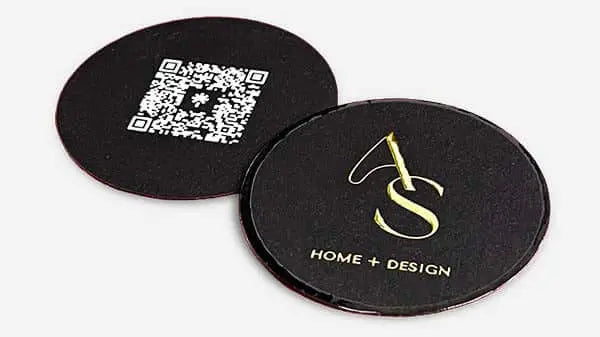


How business cards drive success in creative industries
TL;DR:
- Physical business cards create tangible memories that digital tools can’t match.
- Creative professionals should design cards that showcase their style and skills to attract clients.
- Strategic distribution at industry events maximizes the impact of unique, well-designed cards.
Your digital portfolio is polished. Your Instagram feed is curated. Your LinkedIn profile is complete. So why do some creative professionals still walk away from events with new clients, while others walk away with nothing? The answer often fits in a pocket. A well-designed, physically distinct business card remains one of the sharpest tools for first impressions and brand recall in creative fields. Unique tactile techniques like letterpress, stained glass effects on plastic, and tarot-style formats help creatives showcase their skills in a way no QR code can replicate. This article breaks down exactly how business cards still work, and how to use them better.
Table of Contents
- Why business cards still matter in creative industries
- How business cards elevate creative branding
- Key design elements that make business cards unforgettable
- Making business cards work: Distribution and networking strategies
- Why most creatives underestimate the power of business cards
- Bring your creative business card visions to life
- Frequently asked questions
Key Takeaways
| Point | Details |
|---|---|
| Tangible impressions | Business cards create lasting first impressions that digital contacts often can’t match. |
| Showcase creativity | Unique materials and designs instantly reveal your creative identity and skills. |
| Brand-building tool | Thoughtful business cards anchor your personal brand in every introduction. |
| Effective networking | Cards remain powerful tools for forging and reinforcing creative industry connections. |
Why business cards still matter in creative industries
Digital tools are everywhere. LinkedIn connections, digital portfolios, and NFC cards all have their place. But none of them create a moment. A physical card handed over during a genuine conversation does something a link cannot: it creates a tangible memory.
Think about the last time you connected with someone at a creative event. You may have shared a LinkedIn profile or a website URL. How many of those digital exchanges led to a follow-up? Now think about the last time someone handed you a card that felt remarkable. You probably still remember it.
Creative professionals have a specific advantage here. Your card is not just contact information. It is a sample of your work. A graphic designer who hands over a card with precision die-cuts and foil detailing communicates skill before saying a word. A photographer who uses a card printed on matte black stock with edge gilding sets a tone immediately.
“A business card that reflects your design sensibility is doing marketing work around the clock. It sits on someone’s desk, gets passed to a colleague, and sparks a conversation you were not even present for.”
Here is what physical cards consistently deliver that digital alternatives cannot:
- Immediate visual and tactile impact at the moment of meeting
- Persistent physical presence in wallets, on desks, and in creative studio spaces
- Personal recall tied to the memory of the interaction
- Credibility that feels more deliberate than dropping a link
Research on visual branding impact consistently shows that tangible, well-designed brand materials create stronger associations than purely digital ones. This is especially relevant in creative industries where visual and sensory experiences carry real weight.
Custom cards for networking also serve as a qualifying tool. The person who keeps your card is already interested. That is a warmer lead than a social connection made out of professional courtesy.
Case studies of designers in sound, web, and graphic fields confirm that creative techniques on cards such as letterpress or transparent plastic designs consistently generate more follow-up conversations than standard print. The card becomes a conversation starter rather than a formality.
There is also the digital fatigue factor. Inboxes are full. Feeds are crowded. A distinctive physical card cuts through in a way that another email or follow request simply does not. Creative professionals who stand out with business cards are working smarter, not harder.
How business cards elevate creative branding
A business card is not just a card. For creative professionals, it functions as a three-second brand pitch. Every choice, from the paper weight to the color palette to the finishing technique, communicates something specific about who you are and what you do.

Consider two scenarios. A freelance web designer hands over a standard white card with black text. Another hands over a translucent plastic card with a clean layout and a subtle gradient that mirrors their brand palette. Both cards carry the same information. Only one feels like it was designed by a web designer.
Case studies for creative professionals in sound design, illustration, and graphic work show a consistent pattern. Professionals who invest in card design that reflects their specific aesthetic attract clients who already resonate with that aesthetic. The card does pre-qualification work.
Here is a practical comparison of how traditional and creative industry cards typically differ:
| Feature | Traditional card | Creative professional card |
|---|---|---|
| Paper stock | Standard 300gsm | Specialty, textured, or plastic |
| Shape | Standard rectangle | Die-cut, rounded, or custom format |
| Finish | Gloss or matte | Foil, letterpress, soft-touch, or uncoated |
| Color | One or two colors | Full color, gradient, or transparent |
| Information density | Name, title, contact | Curated, design-led, minimal or bold |
| Brand consistency | Often generic | Directly tied to portfolio style |
The difference in brand perception is significant. A strong brand photography guide notes that consistent visual choices across all brand touchpoints, including print materials, build trust and recognition over time. Your business card is one of those touchpoints.
Designing cards for brand identity means thinking beyond layout. It means asking what material, finish, and format best represents the work you do. A motion graphics artist might choose a card with animated QR content on one side and a striking static image on the other. An architect might opt for a heavy cotton stock card with an embossed structural graphic.
Pro Tip: Before finalizing your card design, compare it directly against your website, portfolio, and social presence. If the visual language does not match across all three, the card will feel disconnected. Alignment builds brand credibility.
Innovative card design also functions as a filter. When your card clearly represents your style and niche, it naturally attracts the clients and collaborators who value that specific approach. It repels poor-fit prospects, which saves time on both sides.
Key design elements that make business cards unforgettable
With the foundation for branding set, it is vital to know which creative choices separate memorable cards from forgettable ones. The physical and visual elements you choose each carry their own weight.
Material and paper stock often make the first impression before someone even reads the card. Heavy stock, cotton paper, or transparent plastic all signal a different level of care and intentionality. A card that feels flimsy communicates the wrong thing, regardless of what it says.
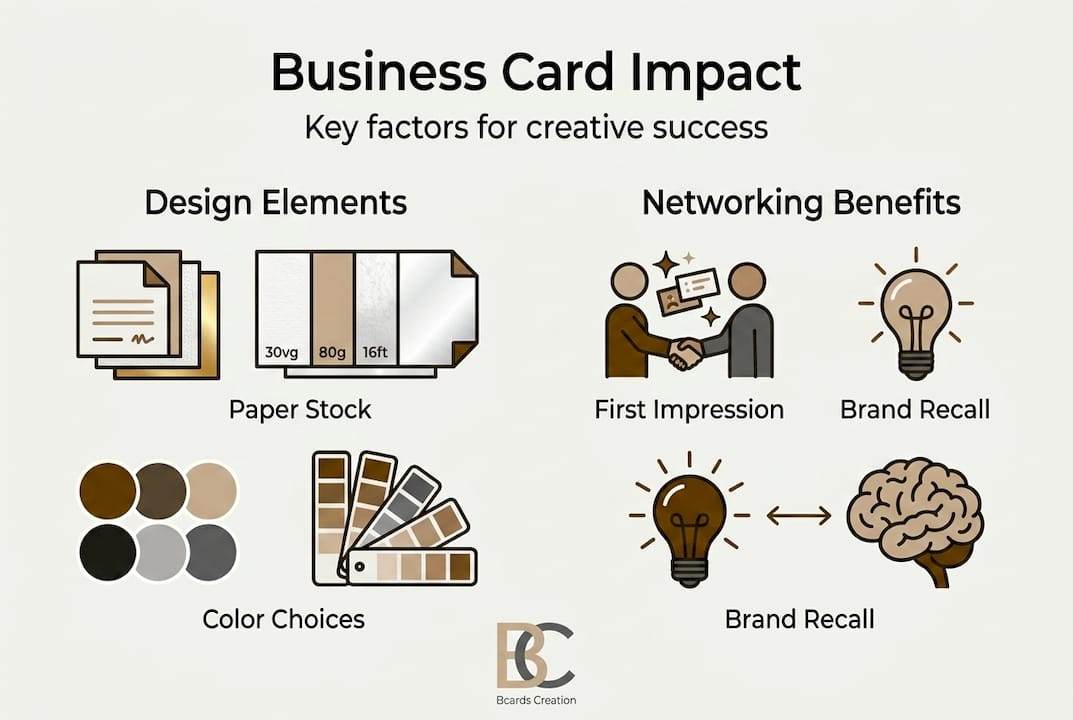
Shape and format are the next level of differentiation. Standard rectangle cards get lost in a stack. A card with a custom die-cut silhouette, a rounded corner, or an unconventional proportion gets picked up first. A tarot-card-style vertical format or a square card immediately signals that the person behind it thinks differently.
Finishing techniques are where most of the tactile magic happens. Here are the key options worth knowing:
- Letterpress printing creates an indented, ink-pressed texture that is immediately noticeable by touch
- Foil stamping adds metallic or holographic accents that catch light and communicate premium quality
- Soft-touch lamination gives a velvety matte feel that is hard to put down once picked up
- Spot UV coating applies glossy highlights over a matte base for a high-contrast visual effect
- Edge painting adds a color pop to the side of thick stock cards, visible when stacked or held
- Transparent and frosted plastic creates stained-glass-style effects or clean, modern minimalism
Color choices need to serve both brand recognition and print accuracy. What looks right on screen often prints differently. Working with a studio that handles print production directly helps avoid costly surprises.
Creative techniques like letterpress and plastic card effects allow creatives to showcase skills immediately, making the card a portfolio sample in itself. For designers and visual artists especially, this is a direct proof of craft.
Knowing how to set your brand apart through design choices is a process that rewards deliberate thinking. The goal is not to add every finish or effect. It is to choose the combination that speaks most clearly for your brand.
Unique stand-out techniques work best when they serve the brand, not just the visual. A technique that surprises but also communicates something relevant about your work creates a lasting impression.
Pro Tip: Limit yourself to two or three distinctive design choices per card. Layering too many effects creates visual noise and dilutes the impact of each individual element. Restraint in execution shows confidence.
The advantages of unique business cards extend beyond the moment of exchange. A well-designed card becomes a physical artifact of your brand, something people hold onto, share, and reference weeks or months later.
Making business cards work: Distribution and networking strategies
Once you have an unforgettable business card, the next step is making sure it gets into the right hands in ways that spark opportunity. A great card sitting in your bag is just paper.
Distribution strategy matters as much as design. The most effective moments for creative professionals to hand out cards are specific and intentional.
The right settings for creative networking:
Portfolio reviews, gallery openings, design conferences, industry meetups, client presentations, brand shoots, and collaborative studio sessions are all high-value moments. These settings attract people who already understand and value creative work, which means your card lands in a receptive context.
How to make the card exchange meaningful:
- Wait for a natural break or conclusion in the conversation before reaching for a card
- Present the card face-up with both hands, or at minimum your dominant hand, to signal respect
- Say something brief about what makes the card specific to your work, one sentence is enough
- If you receive a card, take a moment to look at it before putting it away, this shows respect and creates a pause that the other person will notice
- Follow up within 24 to 48 hours with a short email or message that references the specific conversation
This sequence makes the exchange feel intentional rather than automatic. In creative industries, where relationship quality matters as much as the contact itself, that distinction is significant.
Here is how live and digital networking compare for creative professionals:
| Factor | Live card exchange | Digital connection |
|---|---|---|
| First impression | Immediate, sensory, personal | Delayed, visual, impersonal |
| Brand recall | High, linked to physical memory | Lower, competes with feed content |
| Conversation quality | Deeper, face-to-face | Often surface-level |
| Follow-up likelihood | Higher when card is distinctive | Variable, often missed |
| Creative impression | Card itself demonstrates skill | Profile requires active exploration |
Business card tips for creatives consistently point to one truth: the card only works if you actually use it. Many creatives invest in a great design and then hold back in live settings out of habit or hesitation.
Photographers, for example, often rely on Instagram for discovery. But handing a card to a potential editorial client at a brand event, rather than just saying “check my Instagram,” signals professionalism and preparation. It also captures the moment before the algorithm gets in the way.
Understanding the creative business card design process is also about knowing your distribution volume. Small batches, used deliberately and given only to the right people, create more impact than mass distribution at every event.
Strong branding in business photography and other visual fields reinforces the idea that every brand touchpoint, including the card handoff, should reflect the same professional standard.
Why most creatives underestimate the power of business cards
Many creatives skip cards entirely, thinking their portfolio page or social profile covers the same ground. Others print a basic card as an afterthought, treating it as a formality rather than a tool.
This is a real missed opportunity. The assumption that a portfolio-only approach is enough ignores how introductions actually work in person. Nobody pulls out a laptop at a gallery opening to browse your Behance.
The creatives who consistently get referrals and new client inquiries from events share one habit: they carry cards that reflect their work with enough distinction that people remember them. Tactile techniques and creative formats spark conversations that a URL never would. The card gives someone something to hold, something to look at, and something to pass to a colleague.
Design’s impact on card success is well-documented. Yet many creatives who would never compromise on their portfolio presentation still settle for a generic card. The logic does not hold. Your card is part of your brand. It deserves the same level of thought.
The shift is simple: stop treating the card as a backup option and start treating it as a first impression tool. That mindset change, more than any specific design choice, is what separates creatives who get follow-ups from those who do not.
Bring your creative business card visions to life
If you’re ready to elevate your presence with a business card as original as your work, BcardsCreation is built for exactly that.
Every card is developed individually, without templates or automated editors. You get expert design guidance, material consultation, and hands-on production control. Whether you want letterpress on cotton stock, transparent plastic with foil, or a fully custom die-cut format, the process is built around your brand. Explore the full range of custom premium business cards designed for creative professionals who want their first impression to do real work. Small batches, fully custom, and made to represent you at your best. Browse current options and start your project today.
Frequently asked questions
What makes a business card effective for creatives?
Unique shapes, tactile elements, and creative techniques such as letterpress and transparent plastic quickly grab attention and showcase your creative identity in a way a link cannot.
Is a physical business card still necessary in the digital age?
Physical cards create personal connections and are more memorable than digital-only introductions, especially in creative networking where first impressions and sensory recall carry strong weight.
How can I make sure my business cards stand out?
Choose bold materials, imaginative formats, and finishes like foil or transparent plastic to directly reflect your personal style and signal the quality of your work at a glance.
Where should creatives distribute business cards for maximum impact?
Share cards at industry events, creative showcases, client presentations, and collaborative sessions to reach people who already value and understand creative work.


