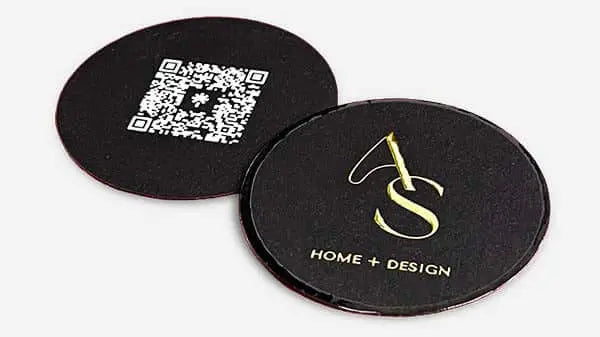


Custom illustration for business cards: elevate your branding
TL;DR:
- Custom illustration transforms business cards into memorable branding tools that attract attention and foster connections.
- The design process involves collaboration, concept development, digital execution, and careful print preparation.
- Choosing the right style, materials, and finishes enhances impact, but clarity and brand consistency remain essential.
Most business cards end up in a drawer or a trash can. They look the same, feel the same, and say nothing memorable about the person who handed them over. Custom illustration changes that. It turns a small piece of cardstock into a branding tool that people actually keep. This article covers what custom illustration is, how the design process works, which styles and materials give you the most impact, and what mistakes to avoid. Whether you’re a creative professional or a brand owner, you’ll walk away knowing exactly how to make your next card worth keeping.
Table of Contents
- What is custom illustration for business cards?
- The custom illustration design process explained
- Key decisions: Illustration styles, materials, and finishing options
- Mistakes to avoid and best practices for standout custom cards
- The real value of custom illustration: What most miss
- Bring your business card vision to life
- Frequently asked questions
Key Takeaways
| Point | Details |
|---|---|
| Custom art stands out | Original illustrations make your business card distinct and memorable compared to templates. |
| Design process matters | A stepwise approach ensures your card is on-brand, readable, and print-ready. |
| Material and style influence impact | Choices in illustration type and finishing options directly affect how your card is perceived. |
| Best practices boost results | Testing readability and simplicity lead to cards that impress while remaining functional. |
What is custom illustration for business cards?
Not all visual design is equal. There’s a big difference between dropping a logo onto a template and commissioning original artwork built around your brand. Custom illustration for business cards refers to bespoke, hand-drawn or digitally created artwork tailored specifically to a brand’s identity, used as the primary visual element to differentiate from generic templates or stock images.
Here’s what sets it apart:
- Original artwork: Every element is created from scratch for your brand, not pulled from a stock library.
- Brand alignment: The illustration reflects your tone, industry, and personality, not a generic aesthetic.
- Storytelling potential: A single visual can communicate what you do, who you are, and what you value, without a single extra word.
- Memorability: People remember images far better than text alone, and a distinctive illustration sticks.
Think about a freelance illustrator handing out a card that features a miniature version of their signature style on the back. That card is a mini-portfolio. It shows skill and taste before a word is spoken. The same logic applies to a boutique architect, a brand strategist, or a specialty food business. The illustration does the work of positioning.
“A well-executed illustration on a business card signals that you invest in your brand. It communicates professionalism and attention to detail before the conversation even starts.”
Generic designs don’t do that. A unique business card design creates an emotional connection that a standard template simply cannot replicate. The goal isn’t decoration. It’s differentiation. And in a room full of identical white cards, differentiation is everything.
For a solid foundation on layout and content basics, reviewing business card design basics helps you understand what structure to build your illustration around.
The custom illustration design process explained
Knowing what custom illustration is only gets you so far. The real value comes from understanding how it’s built. The process is structured, collaborative, and technical. Here’s how it typically unfolds:
- Brand analysis: The designer reviews your existing brand assets, color palette, target audience, and tone. This shapes every creative decision that follows.
- Concept development: Initial sketch directions are explored, usually two or three distinct approaches. You choose the direction that fits best.
- Sketching and refinement: The chosen concept is developed into a detailed sketch, then refined based on your feedback.
- Digital execution: The sketch moves into software like Adobe Illustrator. Business card format in Illustrator uses vector-based artwork, which scales without quality loss.
- Typography and text integration: Your name, title, and contact details are placed with careful attention to hierarchy and readability.
- Print preparation: The design process involves CMYK color mode, 0.125in bleeds, and 300 DPI resolution to ensure clean, accurate print results.
Here’s a quick reference for US standard print specs:
| Spec | Standard value |
|---|---|
| Card size | 3.5 x 2 inches |
| Color mode | CMYK |
| Bleed | 0.125 inches |
| Resolution | 300 DPI minimum |
| File format | Vector PDF or AI |
Collaboration matters throughout. The best results come when you’re actively involved in feedback rounds, not just approving a final file. A clear brief at the start saves time and avoids costly revisions. Learning how briefing your designer works properly is one of the most practical steps you can take before the project begins.
Pro Tip: Always request vector files for your final artwork. Vector graphics scale to any size without losing quality, which means your illustration works on a business card today and a banner tomorrow.
Following the business card design steps in order keeps the project on track and prevents last-minute surprises at the print stage.
Key decisions: Illustration styles, materials, and finishing options
With the process clear, the next step is choosing style and production details that fit your brand. These decisions shape how your card looks, feels, and lands with the person receiving it.
Illustration styles to consider:
- Minimalist line art: Clean, modern, and versatile. Works well for consultants, tech professionals, and architects.
- Abstract or geometric: Bold and conceptual. Strong for brand strategists and designers.
- Portrait illustration: A stylized likeness of you. Highly personal and memorable, popular with coaches and speakers.
- Brand mascot: A character that represents your business. Excellent for retail brands and service businesses with a distinct personality.
Here’s a quick comparison of styles and their best-fit professions:
| Style | Best for | Visual impact |
|---|---|---|
| Minimalist line art | Consultants, architects | Clean, professional |
| Abstract/geometric | Designers, strategists | Bold, conceptual |
| Portrait illustration | Coaches, speakers | Personal, memorable |
| Brand mascot | Retail, service brands | Playful, distinctive |
Material and finish choices are just as important as the artwork itself. Premium materials like 100lb cover stock, matte lamination, soft touch coating, and foil stamping enhance tactile appeal and make your card feel as good as it looks. A foil-stamped illustration on a thick matte card is a completely different experience from a standard glossy print.
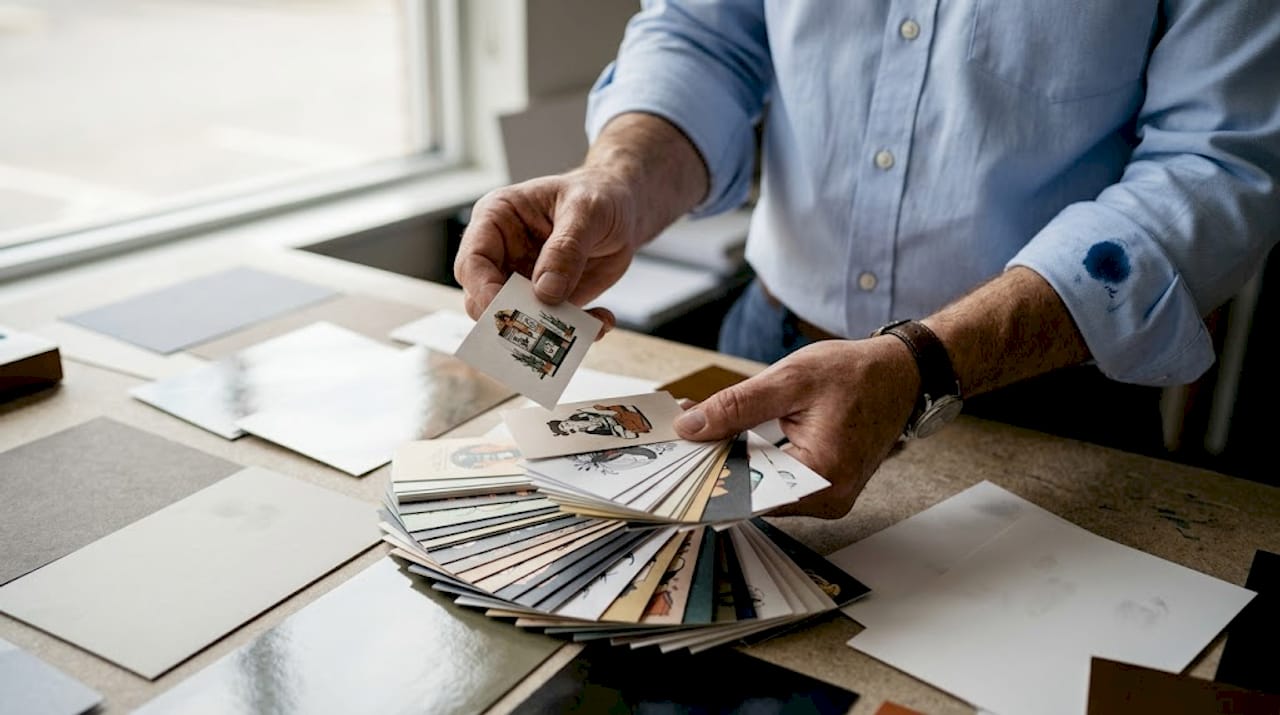
Pairing the right finish with the right style amplifies both. Soft touch lamination with minimalist line art feels refined and understated. Foil stamping over a detailed portrait illustration feels luxurious and bold.
For more on pairing styles with finishes, the business card finish guide breaks down the options clearly.
Pro Tip: Don’t let the illustration crowd out your contact information. Designate a clean zone for your name, title, and contact details. Clutter kills readability, and a beautiful card that’s hard to read defeats the purpose.
For more creative direction, the design tips for creatives resource covers practical approaches specific to visual professionals.
Mistakes to avoid and best practices for standout custom cards
Understanding your choices is only effective when you avoid common mistakes and apply proven best practices. Even the most talented illustrators can produce cards that underperform if the execution isn’t dialed in.
Common mistakes:
- Too much detail at small scale: Intricate linework that looks great on screen can blur or muddy in print. Overly intricate designs reduce readability, especially at business card size.
- Busy layouts: Illustration plus pattern plus multiple fonts plus icons equals visual noise. Pick one hero element.
- Hard-to-read fonts: Decorative fonts may match the illustration style but fail at small sizes. Stick to clean, legible typefaces for contact info.
- Ignoring shape compatibility: Round corners, square cards, and die-cut shapes all affect how your illustration is cropped. Design with the final shape in mind from the start.
Best practices:
- Use the three-foot rule: Hold the card at arm’s length. If the key information is still readable, you’re in good shape.
- Test in real-world lighting, not just on a bright monitor. Print a proof and look at it under office and natural light.
- Increase white space around text to improve contrast and readability.
- Keep the illustration aligned with your overall brand identity. A card that looks unrelated to your website or other materials creates confusion.
- Integrate your signature or logo seamlessly into the illustration rather than placing it as a separate element.
Custom cards are remembered more than generic ones. That statistic alone justifies the investment. The unique business card factors that drive memorability are consistent across industries: originality, quality, and clarity. And why design matters goes beyond aesthetics. It directly affects whether someone keeps your card or discards it.
For inspiration on cards that rely purely on type and layout, typography-only card examples show how restraint can be just as powerful as illustration.
The real value of custom illustration: What most miss
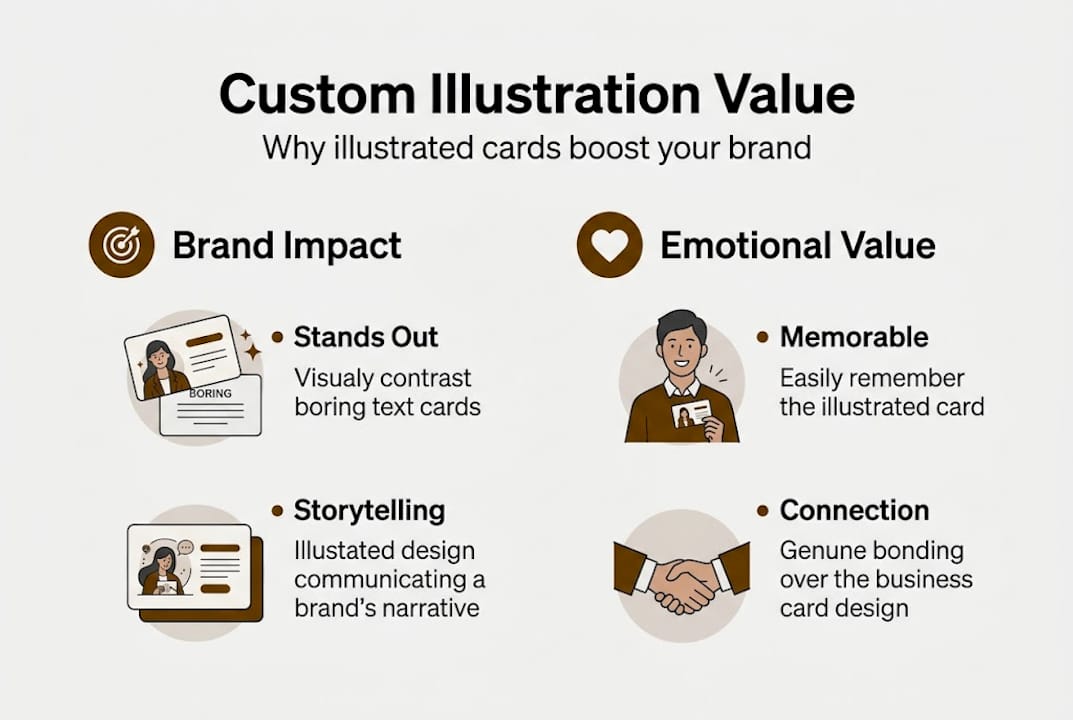
Here’s what most articles on this topic skip. Custom illustration isn’t just a design upgrade. It’s a signal. When you hand someone a card with original artwork, you’re telling them you take your brand seriously. You invest in details. That message lands before they read a single word.
We’ve seen US professionals across industries, from independent architects to boutique consultants, report stronger follow-up rates after switching to illustrated cards. Not because the card was prettier, but because it started conversations. People asked about the artwork. That question opened the door.
Custom illustration boosts branding beyond graphic design alone by supporting storytelling and emotional connection. That’s the part most overlook. A card isn’t just contact information. It’s a physical artifact of your brand.
The professionals who get the most out of illustrated cards treat them as a long-term asset, not a one-time print run. They refine the artwork over time, update finishes as the brand evolves, and partner with skilled illustrators who understand brand strategy. See how the full journey works, from idea to finished card, and you’ll understand why the investment pays off well beyond the first handshake.
Bring your business card vision to life
Ready to bring your brand to life with a card that people actually remember? At BcardsCreation, every project starts with your brand, not a template. We develop original illustrations, guide you through material and finish choices, and handle production from start to finish.
Our custom business card design service covers the full process, from concept to print-ready file. If you want premium materials and specialty finishes, explore our luxury creative cards for foil stamping, soft touch, and small-batch production. A card built around original illustration doesn’t just represent your brand. It elevates it.
Frequently asked questions
How is custom illustration different from a logo on a business card?
Custom illustration can integrate brand motifs, mascots, or storytelling visuals to differentiate from standalone logos. A logo is a single graphic element, while illustration adds narrative depth and visual richness across the entire card.
What file formats do I need for print-ready illustrated business cards?
Use vector files like PDF or AI, set up in CMYK color mode. The preferred format includes a 0.125in bleed and a minimum of 300 DPI for clean, accurate print output.
Which industries benefit most from custom illustrated cards?
Custom illustration acts as a mini-portfolio, especially for creatives and service professionals. That said, any brand focused on memorability and differentiation can benefit, regardless of industry.
What is the typical cost range for commissioning a custom illustrated card design?
Premium custom cards command higher cost due to tailored artwork and specialty finishes. Expect to invest more than you would for template-based designs, reflecting the bespoke art and professional time involved.
Recommended
- How to Design Business Cards That Elevate Your Brand Identity – BcardsCreation
- Role of Design in Business Cards: Elevating Luxury Brands – BcardsCreation
- Design a unique business card that sets your brand apart – BcardsCreation
- 7 Luxury Business Card Ideas to Elevate Your Brand – BcardsCreation
- Večnamenska kartica - A+Majice


