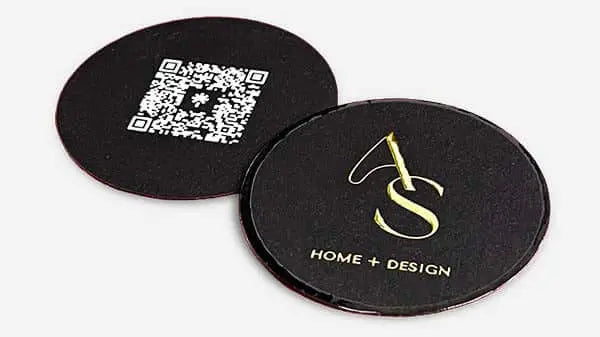


How business cards elevate startup branding in 2026
TL;DR:
- Premium business cards boost startup brand recall by up to 34 percent.
- High-quality, well-designed cards convey professionalism, stability, and brand clarity.
- Using both physical and digital cards strategically enhances networking effectiveness.
Premium business cards generate 34% higher recall rates than standard alternatives, yet many founders still hand out flimsy, template-made cards at their most important meetings. That disconnect is costly. For startups, every touchpoint is a branding moment. The card you hand to an investor or potential partner sends a signal before you say another word. Design quality, material weight, and finish all communicate something about your company. Getting that signal right matters more than most founders realize.
Table of Contents
- Why business cards matter for startups
- Business cards as networking catalysts
- Designing business cards that reinforce your brand
- Common business card pitfalls for startups
- Fresh perspective: Rethinking business cards in the digital-first startup era
- Elevate your startup brand with premium business cards
- Frequently asked questions
Key Takeaways
| Point | Details |
|---|---|
| Premium business cards boost recall | Investing in quality materials and unique design creates memorable first impressions and increases follow-up rates. |
| Effective networking requires tangible cards | Physical cards facilitate real connections at startup events and act as reminders for further engagement. |
| Brand-aligned design maximizes impact | Minimalist layouts, QR codes, and custom finishes reinforce your brand and differentiate your startup. |
| Avoid common mistakes | Don’t use cheap materials or overload information, and always follow up after exchanging cards. |
| Hybrid card strategies deliver best ROI | Combine physical and digital business cards to maximize memorability and scalability. |
Why business cards matter for startups
A business card is not just a way to share your phone number. For a startup, it is a physical representation of your brand. It tells people whether you take your company seriously before you have a track record to prove it.
Consider what happens at a demo day or pitch competition. You meet dozens of people. So does everyone else. What separates you? Often, it is the small physical detail that sticks. A card printed on thick, textured stock with clean design says something different than a thin, glossy rectangle with a stock photo background.
78% of executives associate heavy textured cards with established companies. For a startup trying to project confidence and credibility, that association matters. It positions you alongside more mature businesses, even if you launched six months ago.
Here is what a strong business card signals:
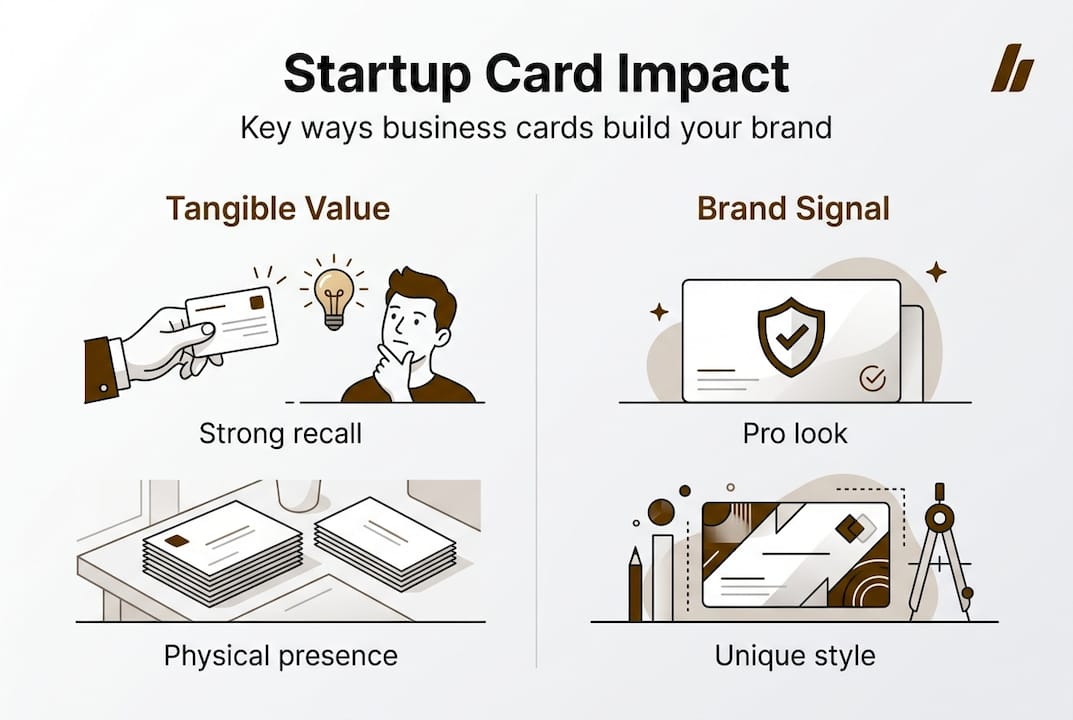
- Professionalism. A well-designed card shows attention to detail, which investors and partners read as a sign of how you run your business.
- Stability. Premium stock and refined finishes suggest you are here for the long term, not just testing an idea.
- Brand clarity. A focused, minimal design shows you know who you are and what you stand for.
- Seriousness. Cheap cards send the opposite message. They suggest you cut corners.
“Your card is often the first physical product someone associates with your brand. Make it count.”
Investing in premium business cards for branding is not a luxury for startups. It is a strategic decision. The cost difference between a generic card and a premium one is minimal compared to the impression gap they create. Founders who treat cards as an afterthought often pay for it in missed connections and weaker brand recall.
The bottom line: cheap cards can actively hurt you. If your card looks like it was made in five minutes, people will wonder what else at your company was done in five minutes.
Business cards as networking catalysts
Startup networking moves fast. At accelerator events, trade shows, or investor meetings, you might have two minutes to make an impression before someone else pulls the person away. A business card bridges that gap. It gives people something physical to hold onto after the conversation ends.
Business cards at high-stakes events act as tangible reminders that prompt follow-ups. That is different from a LinkedIn connection request, which gets buried in a feed within hours. A card sits on a desk. It gets picked up again. It triggers memory.
Here is a quick comparison of physical versus digital cards:
| Feature | Physical cards | Digital cards |
|---|---|---|
| Memory impact | High tactile recall | Lower sensory engagement |
| Ease of sharing | In-person only | Instant, any device |
| Follow-up prompt | Strong physical cue | Easily forgotten in inbox |
| Brand expression | Material, finish, design | Limited by screen format |
| Data tracking | None | Possible with smart tools |
Neither format wins outright. Each serves a different purpose. For startups, the smartest move is using both. Physical cards for high-value, in-person moments. Digital for scale and convenience.
Here is how to make business cards work harder at networking events:
- Be selective. Don’t hand your card to everyone in the room. Give it after a real conversation.
- Add a handwritten note. A short note on the back of the card when you hand it over is memorable.
- Follow up within 24 hours. Reference something specific from your conversation.
- Review what works. Track which events generate the most follow-up activity from card exchanges.
Avoid common business card pitfalls like including too much information or skipping follow-up altogether. The card opens the door. You still have to walk through it. Understanding the unique business card advantages beyond aesthetics helps founders use them more strategically at every stage.
Designing business cards that reinforce your brand
Design is not decoration. For a startup card, every choice — font, color, finish, layout — communicates something about your brand. Getting those choices right requires intentionality, not guesswork.
The strongest startup cards tend to follow a clear formula. Minimalism, premium materials at 350gsm and above, and unique elements like foil or embossing can boost retention by 25 to 40%. That is not a minor lift. That is the difference between being remembered and being recycled.
Here is a breakdown of design choices and their brand impact:
| Design element | Brand signal | Recommended for |
|---|---|---|
| Heavy card stock (350gsm+) | Established, credible | All startups |
| Foil stamping | Premium, innovative | Tech, finance, luxury |
| Embossing | Tactile depth, quality | Design-forward brands |
| QR code | Modern, digital-savvy | Startups with portfolios |
| Minimal layout | Confident, clear | B2B, SaaS, consulting |
A QR code on your card is one of the smartest additions for a startup. It connects the physical card to your pitch deck, portfolio, or website in one scan. It gives recipients a clear next action without cluttering the card with URLs or extra text.
Key design principles to follow:
- Keep it focused. Name, title, one email, one phone number, and a QR code. That is usually enough.
- Match your visual identity. Font and color choices should mirror your brand exactly.
- Choose unique card design tips that reflect your positioning. A fintech startup and a creative agency should not use the same card template.
- Invest in premium materials insights. The feel of the card is part of the message.
Pro Tip: Before finalizing your card design, hold competitor cards in your hand next to yours. The physical comparison reveals whether your card actually stands out or just blends in.
Also consider impactful business card features like spot UV coating, which creates a contrast between matte and glossy surfaces. These small details create a sensory experience that keeps your card out of the trash.
Common business card pitfalls for startups
Even founders who understand the value of business cards make avoidable mistakes. These mistakes cost you more than you might expect, because the damage happens silently, in moments you never see.
Mistake 1: Cheap card stock
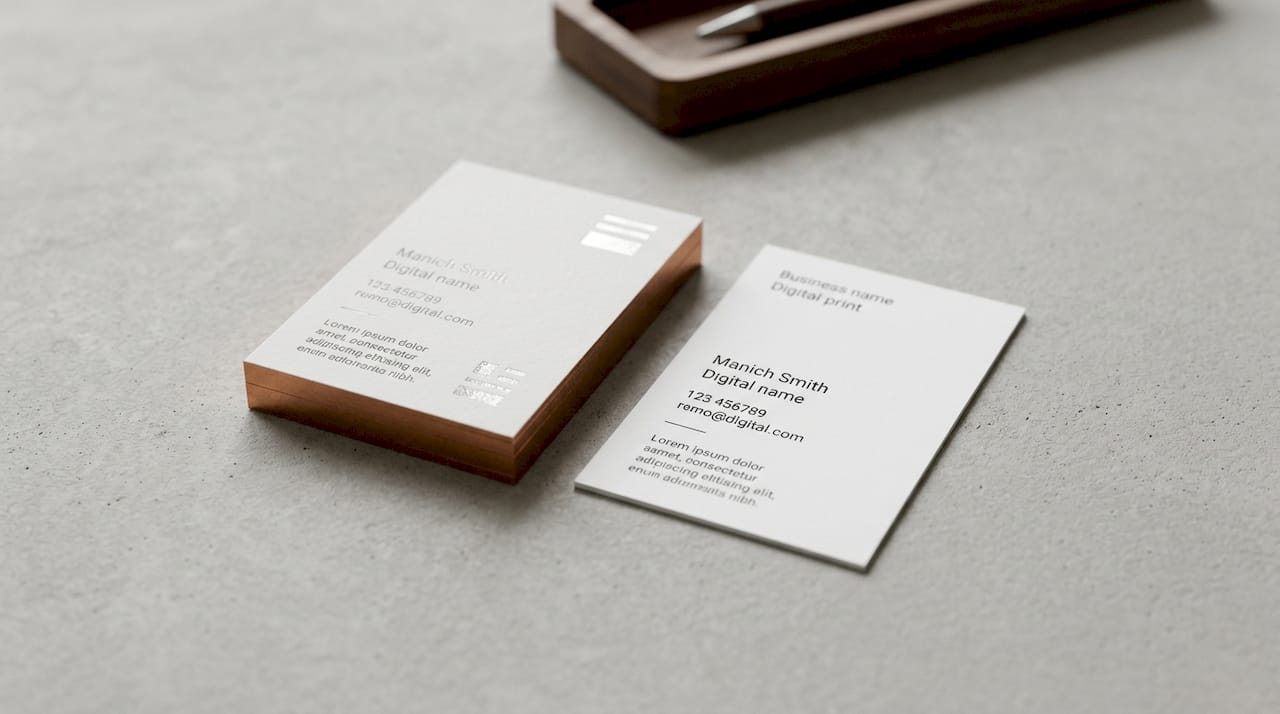
Cheap stock signals inexperience and undermines your brand before you leave the room. A flimsy card communicates that you cut corners. Investing in custom design aligned with your brand can drive up to 10x better recall through unique features. The ROI is clear.
Mistake 2: Information overload
Too much text on a card creates noise. It makes the card harder to read and harder to remember. Your card is not a resume. It is an invitation to connect. One email, one number, your name, your title, and a QR code. That is it.
Mistake 3: No follow-up
Collecting cards without follow-up is ineffective networking. Cards should initiate relationships, not replace them. Exchanging cards is just the first step. The conversation and follow-up are what actually build the connection.
Here is what strong card practices look like versus weak ones:
- Strong: Custom design, heavy stock, minimal layout, followed by a personal email within 24 hours.
- Weak: Generic template, thin paper, cluttered information, no follow-up.
Review what not to do on business cards to catch mistakes before they go to print. Whether you are an early-stage founder or scaling fast, check design steps for startups to make sure your cards reflect your current brand, not your launch-week version.
Pro Tip: Order a small batch first. Test the card at two or three events before committing to a large print run. Feedback from real conversations is more valuable than internal opinions. See creative design tips for practical refinements you can apply before your next print.
Fresh perspective: Rethinking business cards in the digital-first startup era
Here is the view most articles skip: digital cards are not replacing physical ones. They are filling a different role entirely.
Physical cards offer sensory memory anchors that digital formats simply cannot replicate. A card with texture, weight, and a distinctive finish creates a multi-sensory moment. Digital cards scale faster and integrate with CRM tools, but they rarely leave a lasting impression on their own.
For startups, the right move is not choosing one over the other. It is understanding when each format serves you best. Physical cards belong at investor meetings, demo days, and high-value introductions. Digital cards work well at high-volume events where speed matters more than depth.
The founders who get the most out of both understand something important: design importance in cards is amplified in a world full of digital noise. A beautifully crafted physical card is rarer now than it was ten years ago. That rarity makes it more powerful, not less. In a sea of digital exchanges, the card you can hold is the one people remember.
Elevate your startup brand with premium business cards
You now have a clear picture of what makes business cards work for startups: premium materials, focused design, smart follow-up, and a hybrid approach that pairs physical and digital formats. The next step is applying it.
At BcardsCreation, every card is designed individually, with no templates and no automated editors. You get expert design guidance, material consultation, and controlled production built around your brand. Explore custom business card design to start a project tailored to your startup. Browse creative business cards with premium foiling and finishing options. Or explore the full business cards collection to find the format that fits your brand.
Frequently asked questions
What makes a business card effective for startups?
An effective startup business card uses premium materials and minimalism, combined with elements like QR codes and foil finishes, to boost retention by 25 to 40%.
Should startups use physical or digital business cards?
A hybrid approach works best. Physical and digital formats serve different purposes, with physical cards delivering stronger in-person recall and digital cards offering easy sharing at scale.
How does card quality affect startup branding?
Card quality sends an immediate signal about your company. Premium card stock improves recall and professionalism, while cheap materials can damage your credibility before a word is spoken.
What are common business card mistakes for startups?
The most common mistakes are using low-quality stock, overcrowding the card with too much information, and failing to follow up with contacts after exchanging cards.
Recommended
- How to Design Business Cards That Elevate Your Brand Identity – BcardsCreation
- Master the creative business card design process in 2026 – BcardsCreation
- Why invest in business card design for lasting impact – BcardsCreation
- Why translucent business cards elevate your brand in 2026 – BcardsCreation
- Digital branding tips for South African SMBs in 2026


