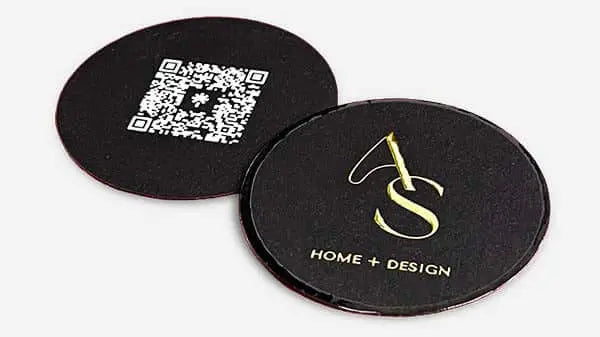


How tactile design transforms your business cards
TL;DR:
- Tactile business cards create stronger brand connections by engaging the sense of touch and enhancing memorability. Choosing appropriate materials and finishes involves balancing impact, durability, and production constraints to avoid costly mistakes. Measuring success relies on observing recipient behaviors and seeking honest feedback rather than solely relying on digital metrics.
Most business cards get a quick glance and end up forgotten in a drawer. The ones that get kept? They feel different. There is something physical about them that stops the recipient from tossing them. Touch is the sense most overlooked in branding, yet why design is crucial for card success goes well beyond what you can see. This article breaks down exactly how tactile design works, what materials and finishes to consider, where production can go wrong, and how to measure whether your card strategy is actually delivering results.
Table of Contents
- Why tactile design matters for business cards
- Premium materials and tactile finishes: Balancing impact and practicality
- Production constraints and hidden pitfalls
- Avoiding costly mistakes: Quality vs. overdesign
- Measuring success: What metrics and behaviors matter
- Why most business card advice misses the tactile factor
- Design your own tactile premium business card
- Frequently asked questions
Key Takeaways
| Point | Details |
|---|---|
| Touch boosts brand recall | Business cards with tactile design can create stronger psychological connections and make recipients more likely to remember your brand. |
| Premium effects require balance | Luxurious finishes elevate brand perception but must be chosen for durability and practicality to avoid negative trade-offs. |
| Production impacts outcomes | Embossing and specialty finishes need careful setup and longer timelines to achieve quality and avoid costly mistakes. |
| Measure real-world impact | Track how recipients interact with your cards—dwell time and retention offer more insight than conversion testimonials. |
| Execution matters most | Overdone or poorly produced tactile effects can harm your branding, so invest in precision and premium materials. |
Why tactile design matters for business cards
Visual design gets all the attention. Logo placement, font choice, color combinations. These things matter, but they only activate one sense. A card that someone touches, holds, and runs their fingers across activates something deeper.
Research on touching tangible objects in service contexts supports the idea that the opportunity to physically touch high-aesthetic objects can increase psychological connection and behavioral intentions. In plain terms: when a card feels premium, the person holding it forms a stronger connection to your brand. That connection influences whether they remember you, reach out, or pass the card along.
“Touch is the sense that closes the loop. You can see a beautiful card from across the table, but the moment you pick it up, the real brand impression begins.”
This is not a small effect. Color psychology for brand perception is widely studied, but the role of physical texture in brand recall is just as significant. The two work together. A well-designed visual paired with a tactile finish creates a layered experience that purely digital tools cannot replicate.
Benefits of tactile business cards at a glance:
- Memorability. A card with raised text or a soft-touch coating stands out from a stack of flat cards. Recipients remember the feeling, not just the look.
- Perceived value. A heavy card with embossed lettering communicates investment. It signals that you take your brand seriously.
- Brand differentiation. In a room full of professionals exchanging standard cards, a tactile card creates an instant distinction.
- Conversation starter. People comment on a card that feels unusual. That comment keeps your name in the conversation.
- Retention. People are less likely to discard a card that feels worth keeping.
The business case is straightforward. If your card generates a stronger impression, it does more work for you long after the conversation ends.
Premium materials and tactile finishes: Balancing impact and practicality
Knowing that tactile design works is one thing. Choosing the right material and finish is where most people get stuck. The options are broader than most professionals realize, and each comes with real trade-offs.
Luxury card materials range from thick cotton stocks to metal composites, each producing a distinct feel. The most common tactile treatments include soft-touch lamination, spot UV coating, embossing, debossing, foil stamping, and letterpress. Each creates a different sensory result, and each has specific durability characteristics.

As noted in premium business card reviews, tactile design and material choices are constrained by durability and wallet-handling realities. Raised elements can flatten with storage. Soft-touch coatings may show wear. Premium tactile effects trade off against edge durability and scuffing risk.
Here is a practical comparison to help you evaluate your options:
| Finish / Material | Tactile effect | Durability | Practical concern |
|---|---|---|---|
| Soft-touch lamination | Velvety, smooth | Moderate | Shows fingerprints, scuffs over time |
| Embossing | Raised texture on surface | Moderate to low | Can flatten with wallet storage |
| Debossing | Recessed impression | Better than embossing | Subtler tactile feel |
| Spot UV coating | Glossy raised spots | Good | High contrast look but edges wear |
| Foil stamping | Metallic, smooth | Good | Cold or hot foil; production setup time |
| Thick stock (32pt+) | Substantial weight | High | May not fit standard card holders |
| Plastic or clear stock | Rigid, cool to touch | Very high | Different aesthetic; not for every brand |
| Cotton stock | Soft, paper-like | Moderate | Distinctive feel; limited coating options |
Exploring premium business card materials and modern card materials will give you a deeper look at each category with real examples. The right choice depends on your industry, how the card will be used, and how often it will be handled.
Pro Tip: If your card will live in a wallet for weeks before someone acts on it, prioritize durability. A soft-touch card that looks worn before anyone calls you is working against you. Match your finish to how the card will actually be used, not just how it looks in a photoshoot.
Production constraints and hidden pitfalls
Once you choose your material and finish, it is essential to consider production realities. Tactile effects are not just design choices. They are manufacturing processes. Each one adds steps, time, and potential failure points.
Embossing and debossing tooling and die creation mean longer turnaround and increased setup and registration complexity. Some vendors also note physical constraints like minimum thickness requirements and limited feasibility for rush timelines. If you need cards by next week, some tactile options are simply off the table.
Here is a breakdown of typical production timelines compared to standard cards:
| Production type | Typical turnaround | Setup complexity |
|---|---|---|
| Standard digital print | 2 to 5 business days | Low |
| Soft-touch lamination | 5 to 7 business days | Low to moderate |
| Spot UV | 7 to 10 business days | Moderate |
| Foil stamping | 10 to 14 business days | High |
| Emboss or deboss | 10 to 14 business days | High |
| Die-cut custom shape | 14+ business days | Very high |
Common production pitfalls to watch for:
- Misalignment between foil or emboss and the printed design. Even small registration errors are visible on premium cards and immediately signal low quality.
- Stock too thin for the chosen effect. Embossing on thin stock tears or produces a weak impression. Always confirm minimum thickness requirements with your vendor.
- Rush orders forcing shortcuts. Skipping production steps to meet a deadline results in visible defects that undermine the entire investment.
- Inconsistent batch quality. Small-batch premium production requires quality checks at multiple stages. Without them, cards within the same order can look and feel different.
- Color shift under lamination. Soft-touch and gloss coatings change how colors appear. Always request a proof before approving a full run.
For more detail on what to expect from different techniques, reviewing what is embossing and embossed debossed card options will give you a clearer production picture. And a full guide to card finishes can help you prioritize which effects actually deliver for your specific use case.
Pro Tip: Before placing a full order, ask your vendor for a physical sample of the specific material and finish combination you are planning to use. A digital mockup does not replicate the actual feel. If they cannot provide a sample, that is a red flag.
Avoiding costly mistakes: Quality vs. overdesign
With production complexity in mind, there is one more category of risk that does not get enough attention. Overdesign. More is not always better with tactile elements.
Every premium finish needs room to breathe. When you stack embossing, foil, spot UV, and soft-touch all on one card, the effects compete. None of them reads clearly. The result feels busy and cheap rather than refined and intentional.
Poor execution amplifies the problem. Tactile effects can backfire if overdone or if execution is poor. Misalignment, flimsy stock, or visible wear can cheapen perception and undermine the premium signal you paid to create.
“Misalignment or soft-touch wear can actually cheapen the brand signal. The card that was meant to impress becomes the card that raises questions about your attention to detail.”
Review a premium card design guide before finalizing your design to avoid these traps.
Top mistakes to avoid:
- Overdone embossing on thin stock. The raised area looks weak and can tear at edges during handling.
- Applying foil to low-contrast areas. Foil needs a strong design anchor. On busy backgrounds it disappears.
- Soft-touch lamination on cards that will be written on. Ink and pencil do not adhere well to soft-touch surfaces, which frustrates recipients trying to add a note.
- Mixing too many finishes. Each added effect increases production complexity and risk of error.
- Choosing effects based on trend rather than brand fit. A holographic foil card might suit a creative agency but send the wrong signal for a law firm.
The goal is always a card that feels intentional. Every element should serve a purpose. When in doubt, subtract rather than add.
Measuring success: What metrics and behaviors matter
Avoiding mistakes is only half the battle. You also need a way to know whether your tactile card strategy is working.
The honest answer is that measuring card performance is harder than measuring a digital campaign. You do not get click-through data. But you can observe behavior and gather direct feedback.
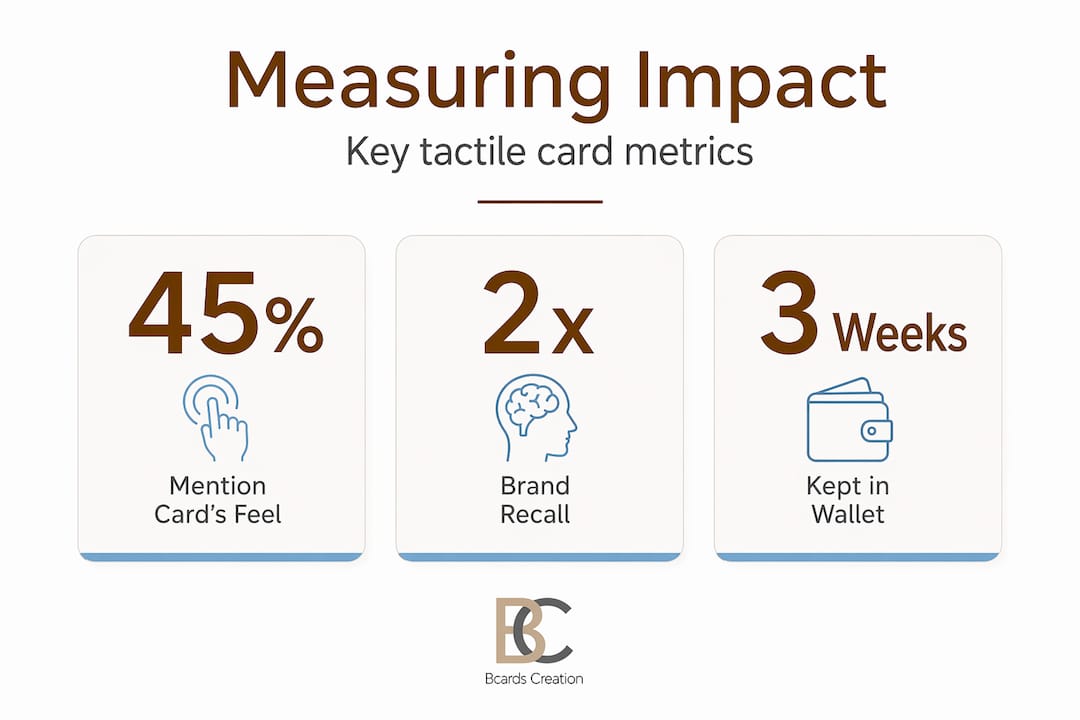
Measure success using experience-based metrics, like dwell time and whether recipients keep or pocket the card, but be cautious. Many conversion numbers you see online are vendor testimonials. The stronger evidence base comes from adjacent touch and tangible-object studies combined with careful experimental setups.
Metrics that actually matter:
- Card retention. Do people keep your card, or does it end up on the table after you walk away? You can often observe this directly.
- Dwell time. How long does someone hold the card and examine it? Longer engagement suggests the tactile or visual design is doing its job.
- Unsolicited comments. When someone says “this card is really nice,” that is measurable signal. Track how often it happens across events or meetings.
- Follow-up reference. Pay attention to whether people mention your card in follow-up emails or calls. It means they looked at it again.
- Direct recipient feedback. Ask a small group of trusted contacts what they think of the card. Their honest reaction tells you more than any vendor claim.
Pro Tip: After your next event or meeting, make a habit of noting how many people commented on your card unprompted. Set a simple baseline. Then test a design change and compare. It is low-tech but reliable.
Why most business card advice misses the tactile factor
Most mainstream design guides focus on visual layout. Typography hierarchy, white space, logo sizing. These are valid. But they describe only what you can see on a screen. A business card is a physical object. It exists in the real world, handled by real people.
The gap in most advice is that it treats card design as a digital design problem. You finalize a layout in a design app, export a PDF, and send it to print. The material is an afterthought, often selected by default based on whatever the printer offers as standard.
That approach misses where material’s impact on brand actually lives. The physical qualities of a card communicate before any text is read. Weight signals stability. Texture signals craft. Temperature, flexibility, and surface finish all trigger immediate subconscious judgments about the person who handed you the card.
Professionals who understand this use tactile elements sparingly and precisely. They do not pile on effects. They choose one or two that reinforce the brand positioning they want to own. A wealth manager might choose a heavy uncoated cotton stock with subtle letterpress. A product designer might choose a clear plastic card with a single matte element. Both are tactile strategies. Both are deliberate.
The missed opportunity in typical advice is this: most guides treat the card as the end product. The better frame is to treat the card as a signal. Every material and finish choice is part of that signal. Used well, tactile design is one of the most cost-effective ways to communicate premium positioning. Used carelessly, it is just expensive printing.
Design your own tactile premium business card
Tactile design is a specific craft. Getting it right means choosing the right materials, matching finishes to how the card will be handled, and working with a production process that has controls in place.
At BcardsCreation, every project starts with a conversation about what the card needs to communicate, not just what it should look like. Our custom card design process covers material selection, finish options, and production specs from the start, so there are no surprises at the end. If you want to explore foil, embossing, or specialty coatings, our foil and creative cards options let you go as bold or as refined as your brand calls for. For brands that want something genuinely different, our clear card options deliver a tactile and visual experience you cannot get from standard print. No templates. No automated editors. Just cards built around your brand.
Frequently asked questions
What are tactile design elements in business cards?
Tactile elements include raised printing, embossing, debossing, soft-touch finishes, and unusual materials that engage the sense of touch. These production techniques require tooling, die creation, and added production steps beyond standard flat printing.
How can tactile business cards improve brand perception?
Touching high-quality cards boosts psychological connection and brand recall, making recipients more likely to remember your business. Research supports the idea that physically touching high-aesthetic objects increases psychological connection and behavioral intentions.
What are the risks of using premium tactile finishes?
Premium finishes can show wear or lose their impact if poorly executed or overloaded, potentially harming brand perception. Tactile effects can backfire when misalignment, flimsy stock, or visible wear undermines the premium signal you are trying to create.
Are thick business cards always better for tactile design?
Thick cards feel premium but can have portability issues, and some vendors require minimum thickness for certain effects. As premium card reviews note, raised elements can flatten with storage and soft-touch coatings may show wear, so thickness alone does not guarantee durability.
What metrics actually show the impact of tactile business cards?
Track recipient behaviors like card retention and engagement time instead of relying solely on testimonials or conversion claims. Experience-based metrics such as dwell time and whether recipients keep the card give you more reliable signal than vendor-supplied conversion data.


